
Run loaded-unit density through the freight class scale, calculate CWT linehaul, then layer in fuel surcharge and accessorials. That sequence gets you within roughly 20% of a real carrier quote in most cases, close enough to budget and negotiate with confidence. The gap between a calculator number and an invoice usually comes down to one of three things: wrong dimensions, missed accessorials, or a reclassified freight class at the terminal. Before touching any calculator, get four numbers locked down: total weight, loaded dimensions, pallet count, and any accessorial needs like a liftgate or residential delivery.
TL;DR:
- The accuracy of online freight estimates typically falls within plus or minus 20 percent of the final carrier invoice, largely due to reclassification errors or missed accessorials.
- Precise shipment data including weight, dimensions, pallet count, and accessorial needs must be confirmed before calculating an estimate or requesting a quote.
- Freight class primarily depends on density, but handling difficulty, fragility, or stacking issues can cause shipments to be reclassified at the terminal, affecting costs.
- For high-value, irregular, or international freight, a binding quote offers greater reliability than calculator estimates, which are best suited for predictable, palletized shipments.
- Documenting loaded dimensions, weight, and NMFC item numbers before pickup provides protection against reclassification disputes and unexpected invoice increases.
Table of Contents
- How Do You Calculate an Estimate for Freight Shipping Cost?
- How Does LTL Freight Class Affect What You Pay?
- What’s Actually in a Freight Invoice?
- How Do You Validate a Calculator Estimate Before Booking?
- Or-ner’s Tools for Verifying a Freight Estimate
- When Is a Calculator Enough, and When Do You Need a Binding Quote?
- Get a Verified Freight Estimate Before You Book
- Where to Confirm the Rules Yourself
- Sources
- FAQ
How Do You Calculate an Estimate for Freight Shipping Cost?
The math is straightforward once you have accurate shipment data. Here’s the sequence carriers and calculators both run behind the scenes.
- Measure the loaded unit, not just the product. Include the pallet, any overhang, and shrink wrap. A skid with loaded dimensions around standard pallet size is a different number than the box dimensions on the packing slip.
- Calculate cubic feet. Multiply length by width by height in inches, divide by 1,728, then multiply by the number of identical units.
- Calculate density. Divide total weight in pounds by total cubic feet. This single number, expressed as pounds per cubic foot, drives almost everything downstream.
- Map density to a provisional freight class using the current 13-tier density bands set under the NMFC classification system. Denser freight gets a lower class number and a cheaper rate; light, bulky freight climbs toward class 400 and costs more per hundredweight.
- Calculate billed weight and apply the CWT formula: (Billed weight ÷ 100) × Rate per CWT = linehaul cost.
- Add the fuel surcharge percentage and any accessorials to get an all-in estimate.
Here’s a worked example. A typical pallet weighing several hundred pounds with loaded dimensions near standard size may have a density yielding a class around 100. Using a base CWT rate leads to a linehaul estimate, to which a fuel surcharge is added for an all-in estimate before accessorials. A calibrated LTL rate model built this way typically lands within plus or minus 20% of the eventual carrier invoice, which is the accuracy band you should expect from any online calculator, including your own.
How Does LTL Freight Class Affect What You Pay?
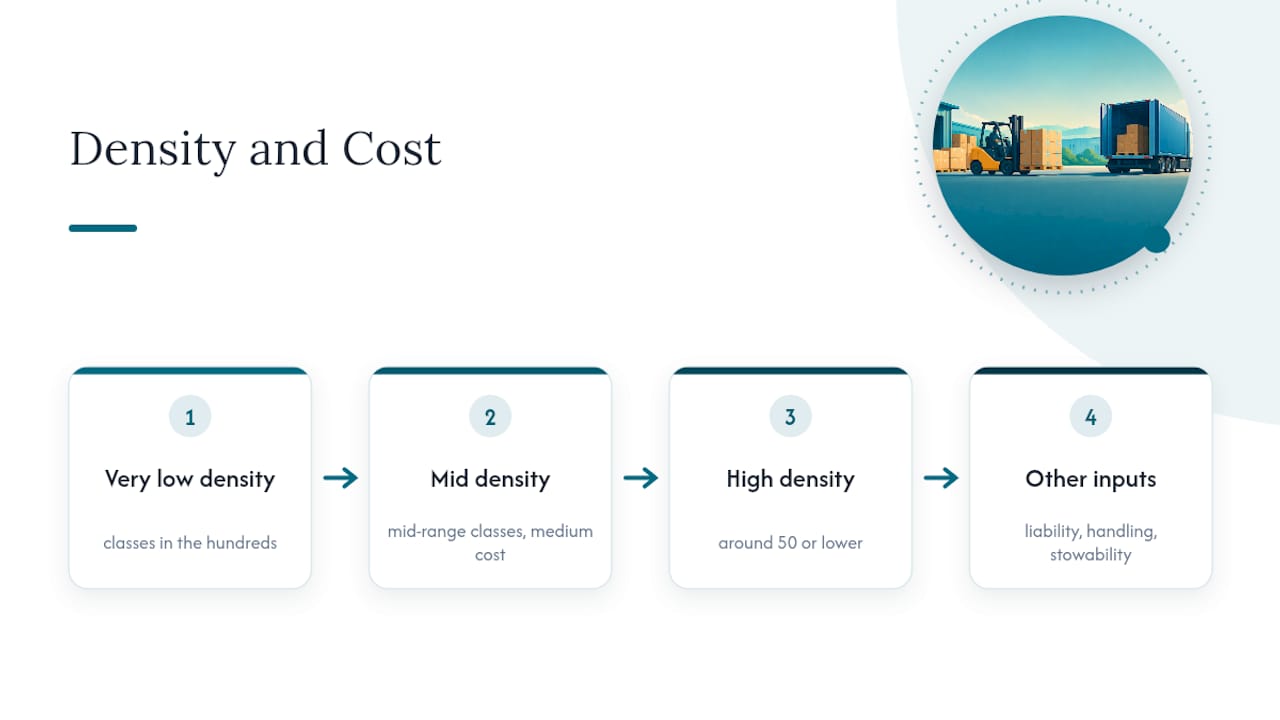
Density is the primary lever in the current classification system, but it’s not the only one. Liability, handling difficulty, and stowability also factor into a commodity’s assigned National Motor Freight Classification (NMFC) item, and that item, not just your density math, is what ultimately determines the freight class on the bill.
That distinction trips up a lot of shippers. Two commodities can have identical density and still land in different classes if one is fragile, oddly shaped, or harder to stack. Terminals measure the loaded handling unit including pallet and packaging, which is why your dock numbers need to match what an inspector would find.
The density bands range from very low density classes in the hundreds, which are the most expensive, to high density classes around 50 or lower, which are the least expensive.
Carriers routinely reweigh and reclassify shipments at the terminal, and a corrected class after inspection is one of the most common reasons an invoice comes in higher than the quote.
Pro Tip: Take a scale ticket and a photo of the loaded pallet at pickup, and write the specific NMFC item number on the bill of lading instead of a vague description. That combination is your best evidence if a carrier tries to reclass the shipment later.
For a deeper look at how carriers assign classes item by item, see this breakdown of freight class determination.
What’s Actually in a Freight Invoice?
A calculator estimate and a real invoice diverge most often at the line-item level, not the linehaul math. Four components make up the bulk of any LTL bill.
- Linehaul: your CWT rate times billed weight, adjusted by lane multipliers and weight-breaks that reward heavier, denser shipments with lower per-hundredweight rates.
- Fuel surcharge: a percentage of linehaul tied to a diesel price index, updated weekly and prone to sharp swings when diesel prices spike.
- Accessorials: liftgate service, residential delivery, inside delivery, limited access sites, lumper fees, and hazmat handling all carry separate flat or percentage-based charges.
- Minimum charge: a floor rate that kicks in on small shipments, meaning a 200-pound pallet might get billed at the minimum rather than the calculated CWT amount.
Ask whether a quoted number is linehaul-only or all-in before you compare it to anything else. That one clarification prevents most of the sticker shock logistics managers report after booking.
How Do You Validate a Calculator Estimate Before Booking?
Treat the calculator output as a starting point, not a final number. Work through this sequence before you commit to a carrier.
- Gather your shipment data first: loaded dimensions, total weight, pallet count, packaging type, pickup and delivery access details, both ZIP codes, and your preferred transit window.
- Read the calculator’s output fields carefully. Note whether it’s showing per-pallet or per-pound pricing, and which fuel surcharge schedule it applied.
- Request a written quote from the carrier that states the declared freight class, the NMFC item number, and whether the number is linehaul-only or all-in.
- Ask which fuel surcharge schedule applies and get accessorial definitions in writing, since “limited access” and “residential” can mean different things to different carriers.
- Compare the written quote against your calculator estimate. Expect spot-market quotes to land within about ±20% of your estimate; contract accounts with negotiated discounts will run tighter and more predictably.
Pro Tip: If you ship the same lanes regularly, ask your carrier or 3PL for a contract rate instead of relying on spot quotes every time. Volume-based negotiated shipping rates usually cut both the price and the variance.
The truck freight calculator on Or-ner walks through this same density-first estimate and flags likely accessorials before you request a formal quote.
Or-ner’s Tools for Verifying a Freight Estimate
Or-ner builds the density-check math directly into its freight shipping estimate tool, so logistics managers get a provisional class and CWT calculation without running the numbers by hand.
- A density calculator that converts your dimensions and weight into a provisional freight class instantly.
- Storage for scale tickets, dock photos, and BOL entries tied to each shipment, so you have documentation ready if a carrier tries to reclass or reweigh.
- Templates for naming scale photos, declaring NMFC items on the bill of lading, and capturing accessorial charges before pickup.
- Freight booking that carries your verified estimate straight into carrier selection, cutting the back-and-forth between quote and invoice.
When Is a Calculator Enough, and When Do You Need a Binding Quote?
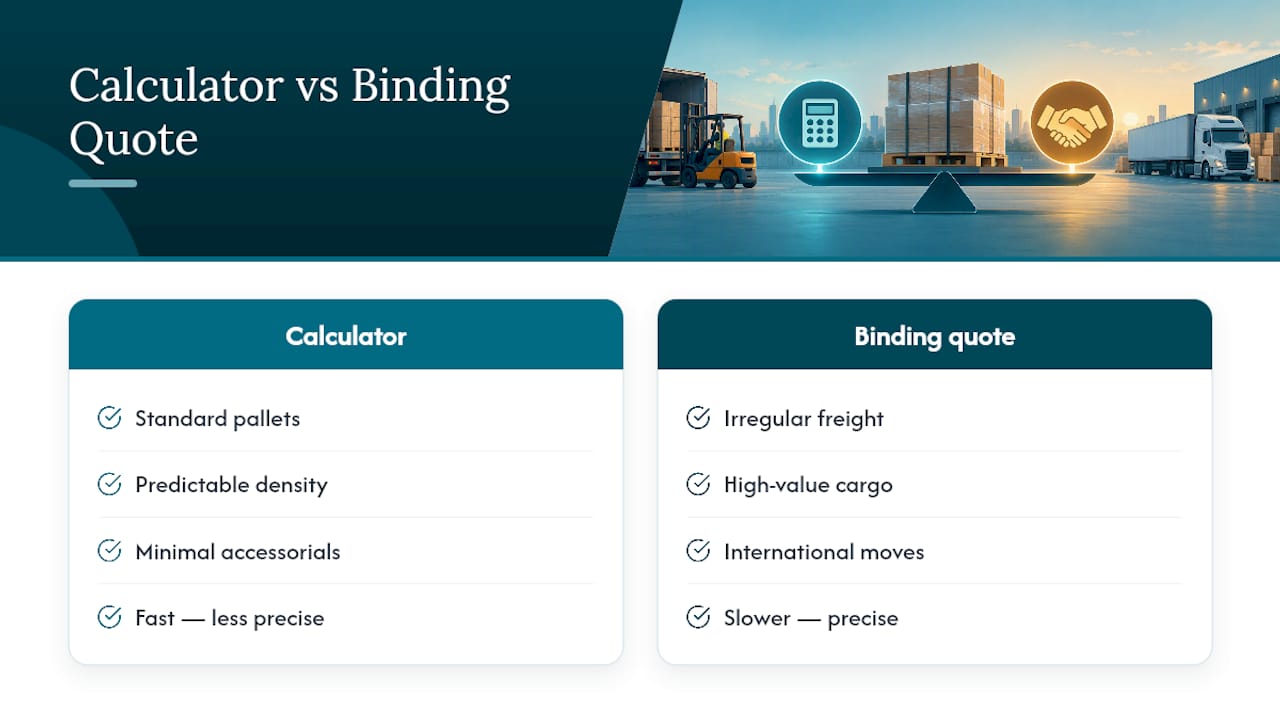
Standard pallets with predictable density and minimal accessorials are fine to book off a calculator estimate. Irregular freight, high-value cargo, international moves, or any shipment where the dollar risk is real deserves a binding written quote or a 3PL engagement instead. Speed favors the calculator; precision favors the quote. Know which one your shipment actually needs before you book.
Get a Verified Freight Estimate Before You Book
Or-ner exists for the moment right after you’ve run the density math and still need a number you can trust before committing freight to a carrier. Unlike a standalone calculator that stops at an estimate, Or-ner carries that estimate straight into freight booking, so the class and dimensions you verified are the ones attached to the shipment, not re-entered from scratch by a booking agent.

That matters most when a shipment gets reweighed at the dock. Because storing scale tickets, photos, and BOL entries against the original estimate, shippers can have documentation on hand if a carrier tries to reclassify a load, instead of digging through email threads after the fact. The platform also covers what happens after the truck leaves: real-time tracking, customs clearance for cross-border moves, and warehousing if your freight needs a stop before final delivery.
If you’re ready to move from estimate to booking, start with a freight shipping estimate on Or-ner or reach out to a logistics specialist through the main platform to talk through a shipment with unusual accessorials or higher liability.
Where to Confirm the Rules Yourself
- FMCSA guidance on estimates and mover protections
- DAT’s breakdown of LTL rate calculation and accessorials
- Carrier and 3PL fuel surcharge schedules, checked directly with your provider before booking
Sources
- FMCSA: Protect Your Move — Subpart D
- Warehousingcosts
- What Is LTL Freight Class? How NMFC Density Determines What You Pay | Yuzhao (David) Zhang
- How to Calculate LTL Freight Rates – DAT
FAQ
How Much Does a 40-Pound Package Cost to Ship via LTL?
A small package rarely ships as standalone LTL freight since most carriers apply a minimum charge floor that makes small parcels expensive per pound. At low weights, courier or parcel service is typically cheaper than LTL; if it’s palletized with other freight, the minimum charge usually applies rather than a true CWT calculation.
How Do You Calculate Air Freight Shipping Costs?
Air freight pricing uses chargeable weight, which is the greater of actual weight or volumetric weight calculated with the airline’s dimensional weight formula. That chargeable weight figure then gets multiplied by a per-kilogram or per-pound rate that varies heavily by route, fuel cost, and carrier surcharges.
How Do You Calculate an LTL Freight Rate?
Calculate cubic feet from the loaded pallet dimensions, divide weight by cubic feet to get density, then map that density to a provisional freight class. Multiply billed weight by your CWT rate for linehaul, then add the fuel surcharge percentage and any accessorials to reach an all-in freight shipping cost estimate.
Why Does My Freight Invoice Differ From the Calculator Estimate?
The most common causes are a reclassified freight class after terminal inspection, an accessorial that wasn’t included in the original estimate, or a fuel surcharge schedule that differs from what the calculator assumed. Keeping scale tickets, photos, and a clearly declared NMFC item on the bill of lading is the best defense against an unexpected reclass charge.
Does Or-ner Charge a Fee to Estimate Freight Costs?
Pricing for freight booking and related services isn’t published, so current rates are available directly on the Or-ner site when you request an estimate.