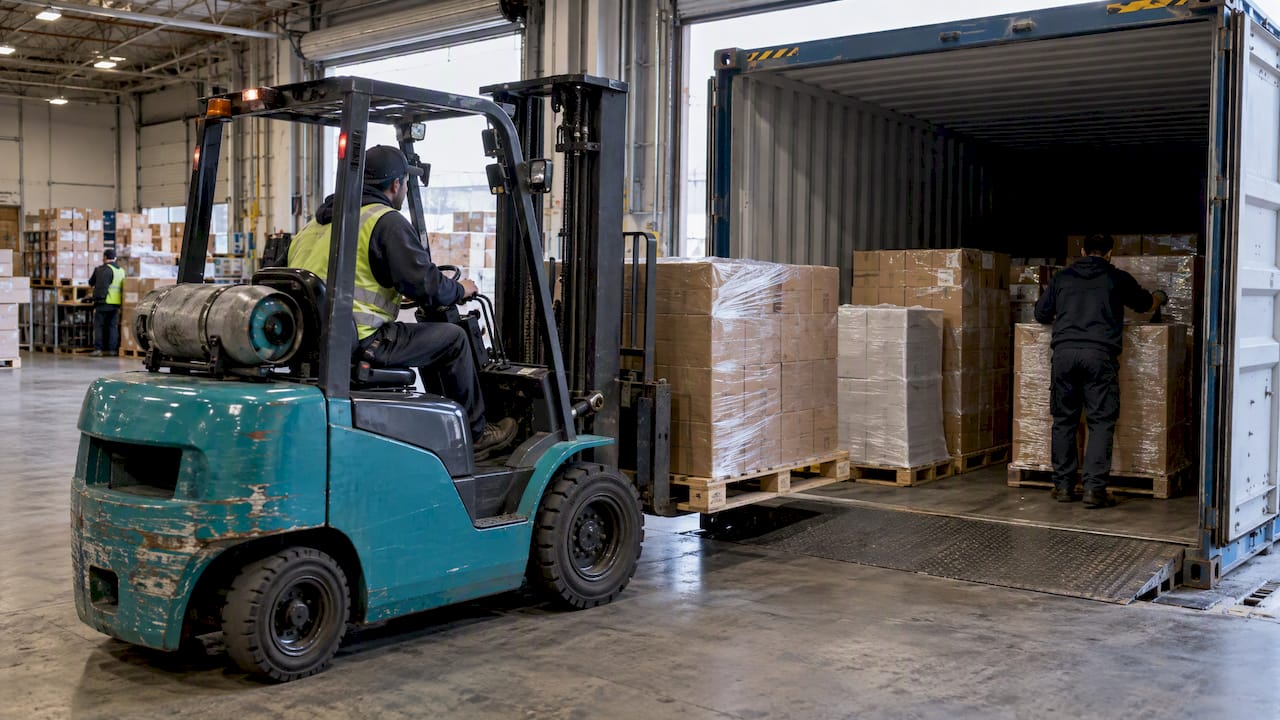
The fastest way to reliably scale delivery is an integrated managed logistics platform that combines courier and last-mile service, fulfillment, warehousing, and real-time tracking under one contract. Or-ner builds that model specifically for ecommerce sellers, wholesalers, and manufacturers who need predictable landed cost and cross-border reach without stitching together five vendors. Score your current setup against the checklist below, then request a pilot before you sign anything long-term.
TL;DR:
- Proper fulfillment software manages the entire delivery chain, including warehousing, order picking, carrier access, tracking, returns, and customs, through a single platform.
- It is essential to verify a partner’s network coverage, full cost transparency, detailed SLA reporting, operational flexibility, and real-world references before signing a contract.
- Onboarding should include a 30 to 90 day pilot on a small SKU set, with parallel operation and careful data and inbound shipment audits, to reduce transition risks.
- Key SLA targets include 99.5% order accuracy at the SKU level, 95% on-time shipping, and inventory errors below 0.3%, with detailed reporting to identify failure points.
- Long-term contract protections should cover full inventory value, enforce meaningful SLA credits, set short termination windows, and clearly define accessorial fee rates.
Table of Contents
- What Is Courier Delivery Management Software for Ecommerce?
- Selection Checklist: Eight Criteria Every RFP Should Answer
- How Do You Onboard a New Fulfillment Partner?
- What KPIs and SLA Targets Should Be in Your Contract?
- What Contract Terms Protect You Long-Term?
- Or-Ner’s Perspective: Reducing Vendor Risk Through One Integrated Platform
- Ready to Pilot a Managed Fulfillment Partner?
- Sources
- FAQ
What Is Courier Delivery Management Software for Ecommerce?
Courier delivery management software, in the sense that matters to a growing brand, is not a dispatcher tool for routing drivers. It is an outsourced platform that manages the whole delivery chain: warehousing, pick-and-pack, carrier access, tracking, returns, and cross-border customs, all visible through one dashboard.
Brands that outgrow spreadsheets and single-carrier accounts, usually somewhere beyond typical small-to-mid order volumes, are the ones who feel the gap first. So do wholesalers juggling retail compliance and manufacturers shipping direct-to-consumer for the first time.
The bundle typically covers:
- Warehousing and inventory storage across one or more nodes
- Pick-and-pack fulfillment with SKU-level accuracy tracking
- Carrier access and rate negotiation across ground, air, and ocean
- Real-time shipment tracking and proof of delivery
- Returns intake and disposition
- Cross-border customs clearance and documentation
Reliable courier services built on this model tend to reduce the operational drag that comes from managing carriers, warehouses, and customs brokers separately.
Selection Checklist: Eight Criteria Every RFP Should Answer
Brands scaling past $5 million to $10 million in revenue routinely discover their first 3PL selection framework can’t handle peak volume, multi-node inventory, or a spike in returns. The fallout shows up as hidden fees and slow SLA drift that nobody notices until Q4. Build your RFP around these eight questions before you sign anything.
- Network fit. Does the partner run multiple fulfillment nodes, or does one warehouse hold your entire inventory hostage during a regional disruption?
- Technology depth. Do they offer a direct Shopify or Shopify Plus connector, webhook-based inventory sync, and EDI support for wholesale or retail channels? A 2026 baseline includes inventory write-back to your storefront in under 60 seconds during peak spikes.
- Full landed cost. Can they show you storage cost per cubic foot, per-order pick-and-pack fees, receiving fees per pallet, and returns processing per unit, not just a headline rate?
- SLA reporting granularity. Will they report pick accuracy and on-time shipping by SKU, not as a blended average that hides problem categories?
- Operational flexibility. Do they support kitting, temperature-controlled storage, or subscription box workflows if you need them next year even if you don’t now?
- References in your tier. Will they connect you with a client shipping similar order volume, and can they describe how they handled a peak-season or returns surge?
- Contract protections. What’s the liability cap on lost inventory, the SLA credit formula, and the termination notice window?
- Implementation timeline. What’s the realistic go-live date, and what counts as pilot acceptance versus a soft launch?
Pro Tip: Ask every finalist to run a live demo of their exception workflow, not just their tracking dashboard. How a partner handles a missed pickup or a damaged pallet tells you more about their operation than any brochure.
3PL advantages include faster scaling and negotiated carrier rates, but only when you’ve modeled the full cost stack, including accessorials, ahead of signing.
How Do You Onboard a New Fulfillment Partner?
Migrating to a new logistics partner without a structured plan is how brands end up with stockouts mid-transition. Here’s a realistic 30 to 90 day playbook.
- Define your operational profile before the first vendor call. Document average order value, units per order, total SKU count, peak-to-average volume ratio, return rate, and any special handling needs (fragile, hazmat, oversized).
- Run a 30-day pilot on a single SKU or small cluster. Keep the pilot live alongside your existing operation and validate the full order-to-delivery flow before committing more inventory. This parallel-run approach is the single biggest risk reducer in a transition.
- Complete integration tasks in sequence. Map your product and order data fields, test API or webhook connections, run EDI test flows if you sell wholesale, and confirm label formatting and tracking number handoff actually work end to end.
- Audit the inbound shipment. Send a SKU-level manifest with your first inventory shipment and require count verification within 72 hours. Escalate immediately if the discrepancy exceeds 0.5%.
- Set a weekly cadence for the first 90 days. One point of contact on each side, a shared KPI dashboard, and a standing weekly call catch small issues before they become chargebacks.
Timelines vary by complexity. A simple direct-to-consumer setup can go live in a few weeks, while an omnichannel or regulated operation often takes several months, largely driven by integration testing rather than warehouse readiness.
What KPIs and SLA Targets Should Be in Your Contract?
Numbers in a sales deck mean nothing until they’re written into a contract with a measurement cadence attached. These are the targets worth insisting on:
- Order accuracy: 99.5% or higher on a rolling 30-day basis, reported at the SKU level, not blended across your whole catalog.
- On-time ship rate: 95% or higher against your contractual cutoff window, not the warehouse’s internal cutoff.
- Inventory accuracy: monthly cycle counts with discrepancy tolerance under 0.3%.
- Receiving lead time: under 72 hours from dock arrival to available-to-sell; escalate any partner who consistently runs longer.
- Returns processing: disposition recorded within 48 hours of the item hitting the returns dock.
- Cost per order: recalculated quarterly across storage, receiving, pick-and-pack, packaging materials, carrier access fees, and returns.
By the numbers: SLA thresholds worth writing into any fulfillment performance contract include 99.5%+ order accuracy on a rolling 30-day basis, a 95%+ on-time ship rate, and under 0.3% monthly inventory discrepancy.
Demand SKU-level pick accuracy reporting rather than a single blended number. A partner averaging 99.5% across 200 SKUs can still be silently failing on your ten best sellers, and a blended figure will never show you that.
What Contract Terms Protect You Long-Term?
Most fulfillment contracts are written to protect the vendor first. A few defaults show up constantly: liability caps that barely cover a fraction of your inventory’s actual value, SLA credit formulas too small to matter, automatic renewal clauses, and termination notice windows stretching 90 days or more.
Push back on all four before you sign:
- Negotiate inventory liability coverage at full landed cost, not a flat per-unit rate that ignores your actual product value.
- Ask for SLA credits of 10% to 15% for sustained underperformance, not a token 2% credit that a vendor can absorb without changing behavior.
- Request a 30 to 45 day termination window once an initial diagnostic period has passed, rather than a rolling long-term lock-in.
- Get accessorial fee definitions in writing, with rate freezes tied to clear volume or performance benchmarks, so a “fuel surcharge” can’t quietly become a catchall.
Pro Tip: Attach your pilot’s acceptance criteria and onboarding milestones directly to the contract as exhibits. If the SLA numbers only live in a sales email, they’re unenforceable the moment a dispute starts.
Require client references from brands shipping similar volume as a contract exhibit too, not just a verbal reference call during the sales process.
Or-Ner’s Perspective: Reducing Vendor Risk Through One Integrated Platform
Most of the risk in outsourced logistics comes from the seams between vendors, not from any single vendor’s incompetence. A warehouse that doesn’t talk to your carrier, a carrier that doesn’t talk to your tracking tool, a returns process that lives in a separate spreadsheet. Or-ner was built around collapsing those seams: freight booking, warehousing, last-mile courier service, real-time tracking, and inventory management run through one connected system instead of four disconnected vendor relationships.
That matters most during a pilot, when data mapping and integration testing expose exactly where a fragmented stack breaks down. A global warehouse network, direct ecommerce platform integrations including Amazon, and dedicated support for ecommerce growth and catalog management give a brand fewer handoffs to audit and fewer places for an error to hide.
If you’re evaluating a new partner, run the pilot on a real order volume before you commit fully. Watch how quickly discrepancies get resolved, not just how clean the dashboard looks.
— Maayan
Ready to Pilot a Managed Fulfillment Partner?
Everything in the checklist above, network fit, landed cost modeling, SLA reporting, and contract protections, points to one conclusion: the safest path forward is a single accountable partner rather than four vendors you’re stitching together yourself. Or-ner runs that model end to end, combining freight booking, warehousing, and courier delivery under one contract with one dashboard for tracking and inventory.
Start by working through Or-ner’s freight booking guide to see exactly how the process runs from booking to delivery, then request a pilot on a real SKU cluster before committing your full catalog. If you’re also expanding into new markets, pair that with a look at cross-border logistics planning so customs and duty handling don’t become the next bottleneck. Getting a working demo scheduled now costs you nothing and gives you a real benchmark to compare against your current setup.
Sources
- How to Build a 3PL Selection Framework That Scales Past $10M – Ecommerce Times
- Advantages of 3PL: 7 Benefits of Outsourcing Logistics – Freightwaves Checkpoint
FAQ
What Does Courier Delivery Management Software Actually Include?
It covers warehousing, pick-and-pack fulfillment, carrier access, real-time tracking, returns processing, and often customs clearance for cross-border shipments, all managed through one platform rather than separate vendors.
How Long Should a Fulfillment Pilot Run Before Full Cutover?
Run a pilot for at least 30 days on a single SKU or small SKU cluster, alongside your existing operation, to validate integration and order accuracy before moving your full catalog.
What Order Accuracy Rate Should I Expect From a Fulfillment Partner?
Target 99.5% or higher on a rolling 30-day basis, reported at the SKU level rather than as a blended average across your catalog.
How Do I Model the True Cost of Outsourced Fulfillment?
Add storage cost per cubic foot, receiving fees per pallet, pick-and-pack fees per order, returns processing per unit, and accessorial charges, since headline pick-and-pack rates alone routinely understate total cost.
Does Or-Ner Support Cross-Border and Wholesale Shipping?
Yes. Or-ner’s platform includes freight booking, customs clearance, and EDI-capable integrations that support both direct-to-consumer and wholesale or retail channel requirements.