TL;DR:
- The best logistics technologies enhance shipment visibility, reduce costs, and increase supply chain resilience.
- AI, RFID, and digital tools automate decision-making and real-time responses, transforming operations.
The best logistics technologies are defined as tools that improve shipment visibility, cut operational costs, and shift supply chains from reactive to resilient. AI-powered predictive analytics, RFID tracking, transportation management systems, warehouse automation, and hybrid shipping methods now form the core of modern supply chain management. Platforms like Or-ner integrate these capabilities into end-to-end solutions that give logistics managers real-time control across ocean, air, and land freight. The gap between teams using these tools and those still relying on manual processes is widening fast.
1. What are the best logistics technologies driving supply chain performance?
The strongest supply chain tools share three traits: they generate real-time data, act on that data automatically, and adapt when conditions change. AI, RFID, IoT sensors, digital twins, and advanced logistics management software each contribute a distinct layer of capability. Together, they replace guesswork with evidence at every stage of the freight cycle. Supply chain advancements in 2026 show adoption accelerating across all freight modes.
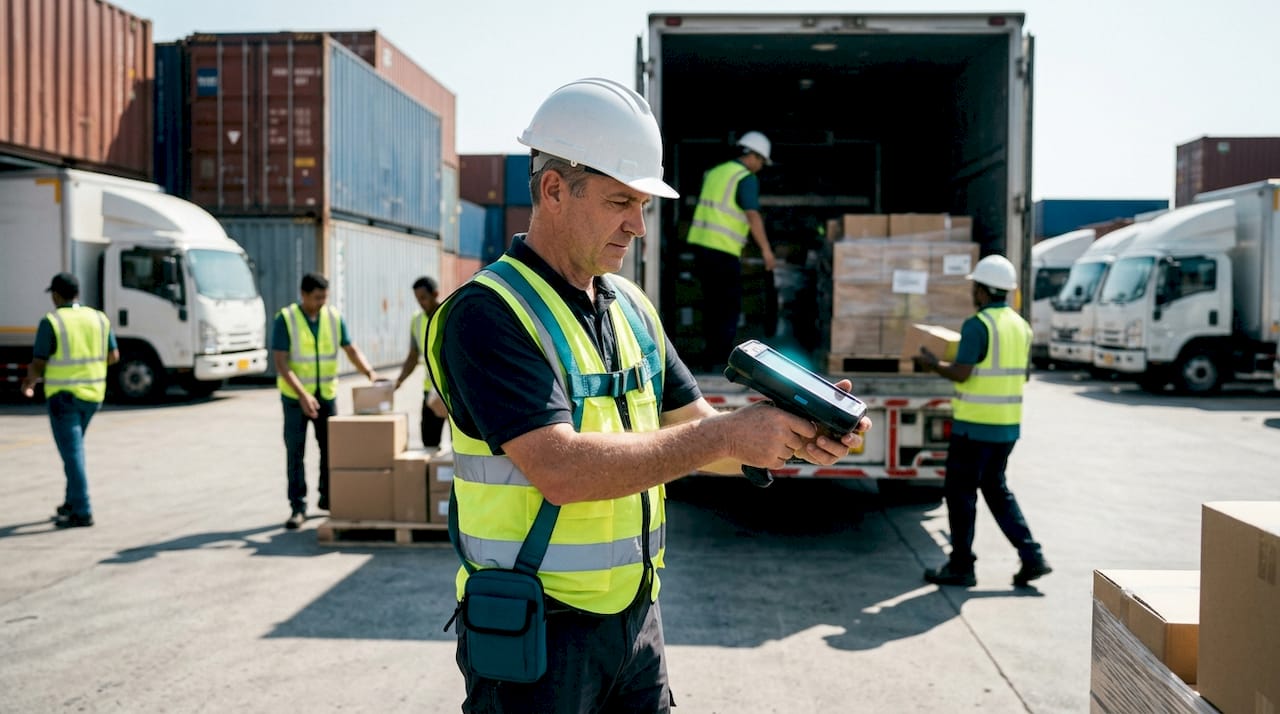
The industry standard has shifted. Predictive AI is now essential for anticipating weather events, port congestion, and geopolitical disruptions before they hit operations. That shift means logistics managers who wait for problems to surface are already behind.
2. How AI-powered predictive analytics transforms logistics operations
Predictive analytics is the practice of using historical data and machine learning to forecast future events before they occur. In logistics, that means anticipating demand spikes, equipment failures, and network disruptions days or weeks in advance. The result is fewer emergency decisions and more planned responses.
UPS operates one of the clearest examples of this at scale. The company runs an AI digital twin of its entire network, updated continuously, that functions as a self-healing logistics system. When a disruption appears, the model reroutes freight automatically rather than waiting for a dispatcher to notice.
Agentic control towers take this further. These systems combine data feeds, predictive models, and connected carrier services to flag and resolve disruptions across multi-carrier networks without human intervention at every step. That capability is what separates resilient supply chains from reactive ones.
- Demand forecasting reduces overstock and stockout events by aligning inventory to predicted order volumes.
- Route optimization engines recalculate paths in real time based on traffic, weather, and carrier capacity.
- Proactive maintenance uses vehicle sensor data to schedule repairs before breakdowns disrupt active routes.
- Disruption alerts surface port delays, weather events, and geopolitical risks before they affect shipments.
Pro Tip: Connect your predictive analytics platform to your transportation management system so that forecast outputs trigger automatic re-planning rather than manual alerts that sit in an inbox.
3. How RFID technology improves shipment accuracy and visibility
RFID (Radio Frequency Identification) uses embedded tags and readers to track packages, pallets, and vehicles without line-of-sight scanning. Unlike barcodes, RFID reads multiple items simultaneously and works through packaging materials. That speed and accuracy make it one of the most practical warehouse automation technologies available today.
UPS embedded RFID sensors across its delivery vehicles and facilities. The result was a nearly 70% reduction in package misloads over three years. That single metric translates directly into fewer redeliveries, lower labor costs, and higher customer satisfaction scores.
| RFID benefit | Operational impact |
|---|---|
| Automated package scanning | Eliminates manual barcode scans at each checkpoint |
| Misload detection | Flags wrong-vehicle loads before departure |
| Real-time location data | Feeds AI systems with package-level visibility |
| Inventory accuracy | Reduces cycle count time in warehouse environments |
When RFID data feeds into an AI platform, the combination produces near real-time package-level visibility across the entire network. Logistics managers can see exactly where a shipment is, which vehicle it is on, and whether it is on schedule. Or-ner’s RFID warehousing capabilities apply this same logic to inventory management, reducing shrinkage and improving order accuracy for ecommerce fulfillment.
Pro Tip: Deploy RFID readers at dock doors rather than only at conveyor belts. Door-level reads catch misloads at the point of loading, which is the cheapest place to fix an error.
4. Why hybrid shipping methods reduce cost without sacrificing speed
Full truckload (FTL), less-than-truckload (LTL), and partial truckload are not competing options. They are complementary tools, and the best logistics managers use all three based on shipment attributes rather than habit. Defaulting to one mode regardless of load size wastes money on every lane.
FTL works best for large, time-sensitive, or fragile shipments that fill a trailer and cannot share space. LTL suits smaller loads that do not justify a full trailer but still need reliable transit times. Partial truckload sits between the two: it fills more trailer space than LTL but does not require a full load, which improves trailer utilization and lowers per-unit cost.
- Choose FTL when shipment weight exceeds 15,000 pounds or when cargo requires exclusive handling.
- Choose LTL for loads under 10,000 pounds on lanes with consistent carrier options.
- Choose partial when speed matters but load size does not justify FTL rates.
- Freight consolidation combines smaller shipments into one trailer to reduce cost per unit across multiple origins.
The practical risk is lane-level bias. Teams that always book FTL because it feels safer, or always choose LTL because it is cheaper, leave money and service quality on the table. Selecting mode by shipment attributes and lane consistency is the approach that expert logistics professionals recommend. Or-ner’s guide on LTL vs FTL distinctions walks through the decision criteria in detail.
5. Which transportation management platforms drive real-time synchronization
Transportation management systems (TMS) have evolved well beyond load planning and rate shopping. The current generation uses AI to synchronize signals, plans, and execution decisions across every layer of a logistics network simultaneously. That capability is called concurrency, and it is the defining feature of modern orchestration platforms.
Concurrent AI platforms synchronize all decision layers in real time, enabling faster and more aligned responses to changing conditions. The practical effect is that a carrier delay in one lane triggers automatic replanning across connected shipments rather than a manual escalation chain. Kinaxis Maestro is one example of a platform built on this architecture, applying concurrency to supply chain planning and execution at enterprise scale.
Key features that define high-performance transportation management platforms include:
- Real-time route optimization that recalculates based on live traffic, weather, and carrier availability.
- Heuristic evaluation engines that compare thousands of routing scenarios in seconds.
- Simulation tools that model network changes before committing to new carrier contracts or lane structures.
- Agentic AI that executes approved decisions automatically without waiting for human confirmation at each step.
- Exception management dashboards that surface only the decisions that require human judgment.
Real-time data integration is the foundation that makes all of these features work. Without clean, current data flowing into the platform, even the best AI produces unreliable outputs.
6. How automation and digital tools improve end-to-end logistics performance
Warehouse automation covers a wide range of tools: autonomous mobile robots (AMRs), conveyor sorting systems, automated storage and retrieval systems (AS/RS), and AI-powered picking software. Each removes a category of repetitive manual work and replaces it with consistent, measurable performance. The compounding effect across a full warehouse operation is significant.
Digital twins extend automation beyond the warehouse floor. A digital twin is a live virtual model of a physical logistics network. It ingests data from IoT sensors, carrier feeds, and warehouse management systems to simulate performance and flag problems before they affect real shipments. UPS uses its digital twin to adjust operations continuously, which is what enables the network to self-correct rather than wait for human intervention.
AI customs brokerage is one of the clearest examples of automation delivering measurable results at the border. UPS’s AI-powered customs system achieves a 97% first-day clearance rate. That figure means nearly all shipments clear customs on the day they arrive, eliminating the delays that cascade into missed delivery windows and customer complaints. Or-ner’s customs clearance resources cover how these processes apply to cross-border ecommerce shipments specifically.
The combined impact of robotics, digital twins, and AI automation shows up in three places: faster order cycle times, lower error rates, and better customer delivery experiences. These are not incremental gains. They represent a structural shift in what a logistics operation can deliver.
Key takeaways
The most effective supply chain operations in 2026 combine AI-powered predictive analytics, RFID tracking, concurrent transportation management, and hybrid shipping modes to build resilience, cut costs, and maintain real-time visibility across every freight lane.
| Point | Details |
|---|---|
| Predictive AI builds resilience | Use AI to anticipate disruptions before they occur, not after they affect shipments. |
| RFID cuts misload errors | Embedded RFID sensors reduced UPS misloads by nearly 70%, a direct cost and service improvement. |
| Match shipping mode to shipment | Choose FTL, LTL, or partial based on load size, urgency, and lane consistency, not default preference. |
| Concurrency enables real-time response | AI platforms that synchronize all decision layers simultaneously outperform sequential planning systems. |
| Automation compounds across operations | Digital twins, AMRs, and AI customs brokerage each reduce errors and speed cycle times at scale. |
The part most logistics teams get wrong about technology adoption
The technology is rarely the problem. I have seen operations invest in best-in-class AI platforms and still produce mediocre results because the underlying data was dirty, siloed, or delayed. A predictive analytics engine fed stale carrier data does not predict anything useful. It just produces confident-sounding errors faster.
The second mistake is treating these tools as independent purchases rather than a connected system. RFID data becomes far more valuable when it feeds a TMS. A TMS becomes far more powerful when it connects to a digital twin. The compounding effect only happens when the layers talk to each other. Teams that buy tools in isolation and wonder why adoption stalls are usually missing the integration layer, not the technology itself.
My honest recommendation is to start with data quality before adding new tools. Map your current data flows, identify where gaps or delays exist, and fix those first. Then layer in AI or automation on top of a clean foundation. The teams I have seen do this in the right order get results within months. The teams that skip it spend years troubleshooting.
Balanced adoption also matters. Not every operation needs enterprise-grade orchestration on day one. A mid-size ecommerce shipper may get more value from RFID-enabled inventory accuracy and a solid predictive analytics guide than from a full agentic control tower. Match the technology to your operational profile, then scale from there.
— Maayan
Or-ner’s freight tools for logistics managers ready to act
Or-ner gives logistics managers and ecommerce teams the tools to put these technologies to work without building from scratch.
The freight booking step-by-step guide covers the full process from carrier selection to documentation, with practical checklists built for ecommerce shipping volumes. Or-ner’s shipment tracking resources connect visibility tools to delivery performance, so your team always knows where freight is and when it will arrive. The platform supports ocean, air, and land freight across a global warehouse network, with real-time data and exception management built in. If you are ready to move from reactive to planned logistics operations, Or-ner is a practical starting point.
FAQ
What are the best logistics technologies for 2026?
The leading tools are AI-powered predictive analytics, RFID tracking systems, concurrent transportation management platforms, warehouse automation (including AMRs and digital twins), and hybrid shipping mode selection. Each addresses a distinct layer of supply chain performance.
How does RFID improve logistics accuracy?
RFID sensors track packages and vehicles automatically without manual scanning. UPS reduced package misloads by nearly 70% after integrating RFID across its fleet and facilities.
What is the difference between FTL, LTL, and partial shipping?
FTL fills an entire trailer and suits large or fragile loads. LTL consolidates smaller shipments from multiple shippers. Partial truckload fills more space than LTL but less than FTL, improving trailer utilization and reducing per-unit cost.
How does AI customs brokerage speed up clearance?
AI customs systems classify goods, prepare documentation, and submit filings automatically. UPS’s AI customs platform achieves a 97% first-day clearance rate, eliminating most border delays before they affect delivery windows.
What is concurrency in logistics management software?
Concurrency is the ability of an AI platform to synchronize plans, signals, and decisions across all operational layers at the same time. It replaces sequential planning with real-time alignment, enabling faster responses to disruptions and changing carrier conditions.