TL;DR:
- Cargo consolidation combines multiple shipments into one load to reduce costs and improve delivery predictability. It involves grouping and dispatching smaller shipments together, often using methods like LTL, FTL, ocean LCL, or air freight, depending on volume and urgency. Success requires active management, proper documentation, and real-time tracking to realize its full savings and operational benefits.
Cargo consolidation is the process of combining multiple smaller shipments into one larger load to cut transport costs and improve delivery predictability. Known in the industry as freight consolidation, this practice applies across Less Than Truckload (LTL), Full Truckload (FTL), ocean Less than Container Load (LCL), and air freight modes. For ecommerce sellers and logistics professionals, it is one of the most direct ways to reduce per-unit shipping costs without sacrificing supply chain control. The core logic is simple: combining smaller shipments into one larger load maximizes vehicle space and improves delivery predictability.
1. What is cargo consolidation and how does it work?
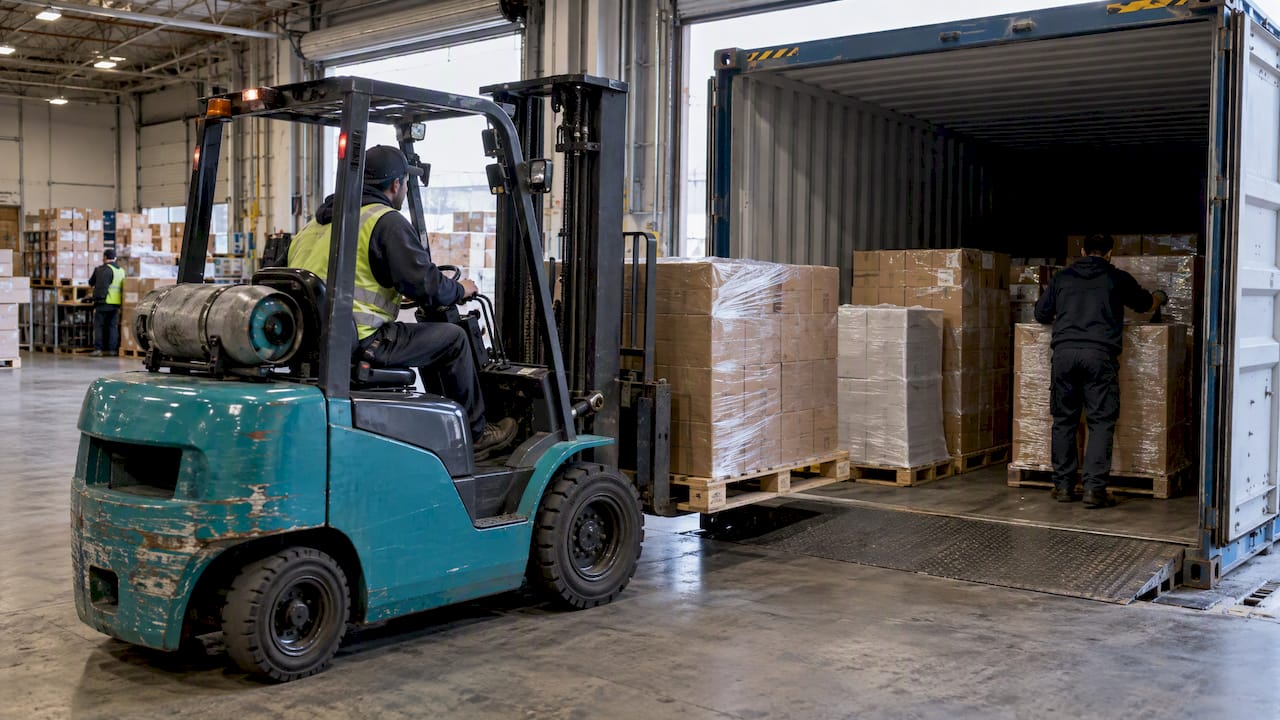
Cargo consolidation groups separate orders or shipments from one or more shippers into a single transport unit. A freight forwarder or third-party logistics provider (3PL) collects individual loads at a consolidation point, sorts them by destination or delivery window, and dispatches them together on one vehicle, container, or aircraft.

The cargo consolidation process has three core stages. First, shipments are collected and staged at a warehouse or freight terminal. Second, loads are matched by destination, weight, or delivery priority. Third, the consolidated unit moves as one shipment to its destination, where it is deconsolidated and distributed to individual recipients.
Consolidation methods include LTL and FTL grouping, ocean LCL shipments, and air cargo consolidation. Each method suits a different shipment volume and geographic range. The right choice depends on your order frequency, destination density, and tolerance for transit time.
2. Top freight consolidation methods compared
Choosing the right method is the most consequential decision in any consolidation plan. Each approach trades off cost, speed, and operational complexity differently.
LTL (Less Than Truckload) consolidation combines multiple shippers’ freight on one truck. It works best for shipments too large for parcel carriers but too small to fill a full truck. LTL is the standard entry point for ecommerce sellers moving regional inventory.
FTL (Full Truckload) consolidation fills an entire truck with freight from one or more shippers heading to the same destination. FTL is preferred for high-volume shipments that need fewer handling touchpoints and faster transit. It reduces damage risk because cargo is not transferred between vehicles.
Ocean LCL (Less than Container Load) consolidation groups multiple shippers’ cargo inside one ocean container. It is the standard method for cross-border ecommerce importing from Asia or Europe when volumes do not justify a full container.
Air cargo consolidation combines smaller air freight shipments into one master air waybill. It costs more per kilogram than ocean freight but delivers speed for high-value or time-sensitive goods.
| Method | Best for | Cost level | Transit speed |
|---|---|---|---|
| LTL | Regional, mid-volume | Low to medium | Medium |
| FTL | High-volume, same destination | Medium | Fast |
| Ocean LCL | Cross-border, low to mid volume | Low | Slow |
| Air consolidation | Urgent, high-value goods | High | Very fast |
Pro Tip: Group shipments by destination ZIP cluster first, then by delivery window. This single step reduces deconsolidation time and cuts last-mile costs more than any other sorting method.
3. Key benefits of cargo consolidation for ecommerce businesses
The financial case for freight consolidation is direct. Half-empty vehicles cost the same as fully loaded ones, so consolidation spreads fixed transport costs across more units. That math alone makes it the default cost-saving tool for high-SKU ecommerce operations.
The benefits extend well beyond cost per shipment:
- Lower fuel and emissions. Fewer trips and fuller loads reduce fuel burn and carbon emissions per unit shipped. For brands with sustainability reporting requirements, this is a measurable operational gain.
- Fewer handling touchpoints. Consolidated shipments move as one unit for most of their journey. Fewer transfers mean lower damage rates and fewer opportunities for loss.
- Improved delivery accuracy. Grouping by destination reduces misrouting. Logistics operators report fewer delivery exceptions when shipments are sorted and labeled at the consolidation stage rather than mid-route.
- Better supply chain visibility. A single consolidated shipment is easier to track than a dozen separate parcels. Sellers get one status update instead of managing multiple tracking numbers across different carriers.
- Predictable scheduling. Consolidation forces a regular dispatch cadence. That predictability helps ecommerce sellers plan inventory replenishment and avoid stockouts caused by erratic inbound freight timing.
For sellers on platforms like Amazon, where inbound freight timing directly affects inventory availability scores, the scheduling benefit alone justifies the switch to a structured consolidation program.
4. Common challenges when implementing cargo consolidation
Consolidation adds complexity before it delivers savings. The extra handling and grouping add lead time compared to direct shipping. Sellers who need to move urgent stock replenishments often find that waiting for a consolidation window costs more in lost sales than it saves in freight.
The main operational challenges include:
- Longer preparation time. Consolidation requires coordinating multiple shipments before dispatch. That coordination adds one to three days of preparation time in most LTL and LCL programs.
- Documentation complexity. Each shipment in a consolidated load needs its own documentation. A single container with ten shippers’ cargo requires ten sets of packing lists, commercial invoices, and customs declarations. Errors in any one set can delay the entire load.
- Scheduling rigidity. Consolidation programs run on fixed departure windows. Missing a cutoff means waiting for the next cycle, which can be days or weeks for ocean LCL.
- Damage risk at deconsolidation. Cargo handled by multiple parties at the deconsolidation point faces higher damage exposure than freight on a dedicated vehicle.
Pro Tip: Build a two-day buffer into every consolidation cutoff date. Suppliers who miss the window by hours can delay an entire container. A buffer protects your schedule without requiring you to hold freight indefinitely.
For cross-border shipments, documentation errors are the single largest source of delay. Or-ner’s customs clearance support covers document preparation and compliance checks before cargo reaches the port, which removes the most common consolidation bottleneck.
5. How technology and 3PLs improve consolidation outcomes
Logistics experts stress that consolidation is more than physical cargo grouping. It is an information-intensive operation requiring real-time tracking at the SKU level for error-free execution. Without digital tools, the coordination overhead erases the cost savings.
The most effective technology approach is the “control tower” model. A control tower system gives logistics managers a single dashboard showing every purchase order, shipment status, and carrier update in real time. It tracks cargo down to individual SKU level, flags exceptions before they become delays, and automates carrier communication.
Digital freight platforms and 3PL providers improve consolidated shipment planning and execution by reducing misrouting and improving delivery accuracy. Technology enables real-time tracking and better coordination across carriers and warehouses. That coordination is what separates a well-run consolidation program from one that saves money on paper but creates chaos in the warehouse.
A typical technology-enabled consolidation flow works as follows:
- Seller places purchase orders through a freight platform.
- Platform matches orders by destination and volume threshold.
- 3PL collects cargo at the consolidation warehouse.
- Digital manifest is generated with SKU-level detail.
- Consolidated shipment departs on a scheduled carrier.
- Real-time tracking updates flow back to the seller’s dashboard.
- Deconsolidation instructions are sent to the destination warehouse automatically.
Or-ner supports this full flow through its freight booking and tracking platform. Sellers using cloud logistics platforms gain visibility across ocean, air, and land modes without managing separate carrier portals. For ecommerce sellers managing multiple SKUs across multiple origins, that single-pane visibility is the difference between a consolidation program that scales and one that breaks under volume.
Pro Tip: Ask your 3PL for SKU-level tracking, not just shipment-level tracking. If your provider can only tell you where the container is, not which products are inside it, you will lose inventory accuracy at deconsolidation.
For sellers new to working with third-party providers, Or-ner’s 3PL guide for retailers explains how to evaluate and onboard a provider without locking into the wrong contract structure.
6. Intermodal and cross-border consolidation considerations
Intermodal cargo consolidation combines two or more transport modes, typically ocean and road or rail and road, within a single consolidated shipment. It is the standard approach for cross-border ecommerce importing from Asia into North America or Europe.
The key advantage of intermodal consolidation is cost. Ocean LCL rates are significantly lower than air freight for non-urgent goods. Adding a rail leg between a port and an inland distribution center reduces final-mile trucking costs further. The trade-off is transit time, which typically runs four to six weeks for transpacific ocean LCL versus four to six days for air.
Customs clearance is the critical variable in cross-border consolidation. A single container with multiple shippers’ cargo clears customs as one unit in most jurisdictions. If one shipper’s documentation is incorrect, the entire container can be held. Sellers using LCL consolidation for cross-border shipments should verify that every co-loader in their container uses the same customs broker or at minimum the same document standards.
7. How to choose the right consolidation strategy for your volume
Volume is the primary variable in any consolidation decision. LTL consolidation makes sense when your shipment weight falls below the FTL threshold, typically under 15,000 pounds per load. Above that threshold, switching to FTL reduces touchpoints and speeds delivery.
For ecommerce sellers, the practical decision tree looks like this. If you ship fewer than five pallets per week to a single region, LTL consolidation through a freight forwarder is the most cost-effective option. If you ship ten or more pallets per week to the same destination, FTL consolidation gives you better control and lower per-pallet cost. For international imports under a full container load, ocean LCL is the default. For time-sensitive restocks, air consolidation is the only viable option regardless of cost.
Delivery frequency also matters. Sellers who replenish inventory weekly benefit from a standing consolidation program with fixed departure windows. Sellers with irregular order patterns do better with on-demand LTL until their volume stabilizes enough to justify a fixed program.
Key takeaways
Cargo consolidation cuts shipping costs by filling transport capacity and sharing freight expenses across multiple shipments, making it the most direct cost-reduction tool available to ecommerce logistics operations.
| Point | Details |
|---|---|
| Match method to volume | Use LTL under 15,000 pounds, FTL above it, and ocean LCL for cross-border imports. |
| Build in lead time | Add a two-day buffer to every consolidation cutoff to absorb supplier delays. |
| Require SKU-level tracking | Shipment-level tracking is not enough; SKU visibility prevents inventory errors at deconsolidation. |
| Fix documentation first | Errors in one shipper’s paperwork can hold an entire consolidated container at customs. |
| Use a control tower system | A single dashboard tracking all purchase orders and carriers is what makes consolidation scale. |
Why most sellers underestimate what consolidation actually demands
Most articles on freight consolidation focus on the cost savings and stop there. That framing is accurate but incomplete. After working across ecommerce logistics operations of different sizes, the pattern I see most often is this: sellers adopt consolidation for the savings, then abandon it six months later because the coordination overhead was not what they expected.
The savings are real. The complexity is also real. Consolidation is not a passive discount. It requires active management of departure windows, documentation accuracy, and carrier coordination. Sellers who treat it as a set-and-forget arrangement end up with delayed shipments, inventory discrepancies, and frustrated customers.
The businesses that get consolidation right treat it as a process, not a service. They assign someone to own the consolidation calendar. They audit documentation before every cutoff. They use a platform that surfaces exceptions before cargo moves, not after it arrives at the wrong warehouse.
The overlooked benefit I see most often is scheduling discipline. Consolidation forces sellers to plan their inbound freight on a fixed cadence. That discipline, more than the freight savings, is what improves inventory predictability and reduces emergency air freight orders. The sellers who complain that consolidation is too slow are usually the same ones paying premium rates for last-minute air shipments they could have avoided with better planning.
Start with one lane, one method, and one provider. Prove the process before scaling it. The cost savings will follow.
— Maayan
Or-ner’s freight booking tools for consolidation planning
Ecommerce sellers who want to put consolidation into practice need more than a strategy. They need a booking workflow that matches shipments to the right method, tracks cargo at the SKU level, and surfaces documentation issues before departure.
Or-ner’s platform covers the full freight booking process, from initial rate comparison through customs clearance and final delivery. The step-by-step freight booking guide walks ecommerce sellers through every stage of booking a consolidated shipment, including how to select the right consolidation method for your volume and destination. For sellers ready to move from ad hoc shipping to a structured consolidation program, Or-ner’s freight consolidation strategies guide covers the operational setup in detail.
FAQ
What is cargo consolidation in simple terms?
Cargo consolidation combines multiple smaller shipments into one larger load to reduce transport costs and improve delivery efficiency. The consolidated shipment travels as one unit for most of its journey, then is separated at the destination.
How does LCL differ from LTL consolidation?
LCL (Less than Container Load) applies to ocean freight, grouping multiple shippers’ cargo inside one container. LTL (Less Than Truckload) applies to road freight, combining multiple shippers’ loads on one truck.
What are the main benefits of cargo consolidation?
The primary benefits are lower freight costs per unit, reduced fuel consumption and emissions, fewer handling touchpoints, and more predictable delivery scheduling. Filling vehicle space spreads fixed transport costs across more shipments.
When should I avoid freight consolidation?
Avoid consolidation for urgent shipments that cannot wait for a departure window, and for fragile goods that face higher damage risk from multiple handling events. Direct shipping is faster and safer for time-critical or high-value restocks.
How do I track a consolidated shipment?
Use a digital freight platform or 3PL that provides SKU-level tracking, not just container-level status. A control tower approach tracks every purchase order and individual item within a consolidated load in real time.