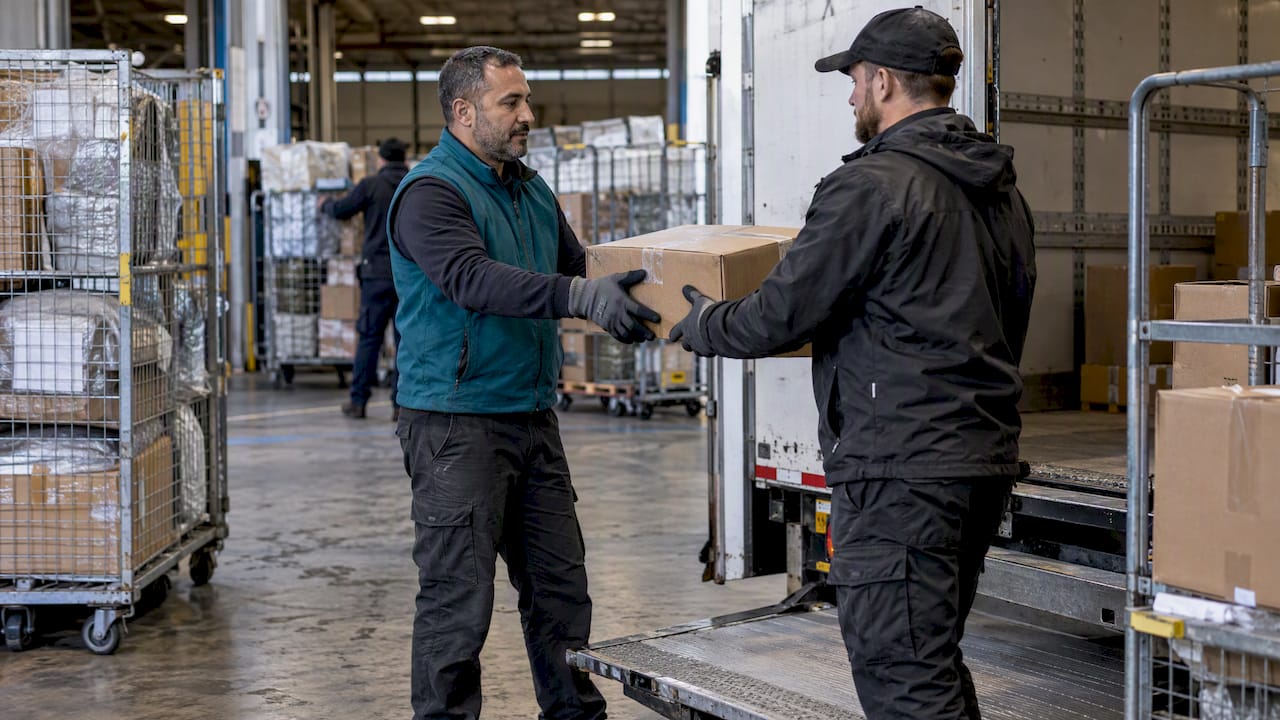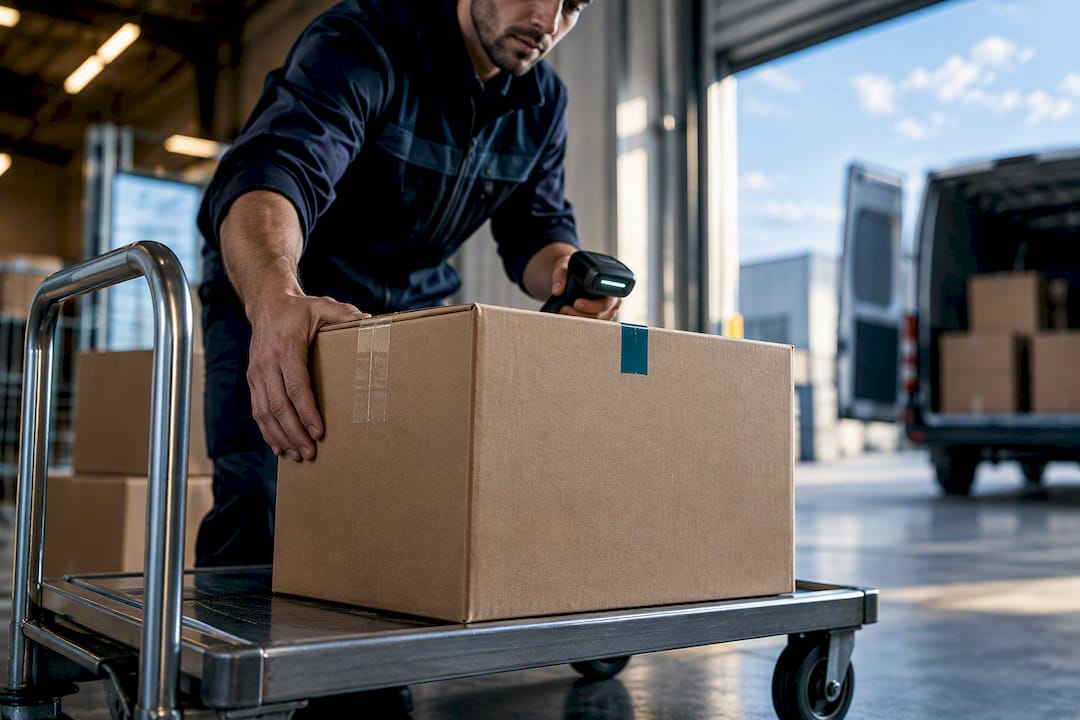
One-day delivery means your order arrives within 24 hours, typically the next business day after you place it, while same-day delivery gets it to you before midnight on the exact day you ordered. The two get confused constantly at checkout because retailers use the terms loosely. The catch that trips up most shoppers: “next-day” almost always runs on business days, not calendar days, so a Friday-night order rarely means a Saturday knock at the door.
TL;DR:
- Next-day delivery typically counts only business days, so orders placed late on Friday or during weekends often arrive after the expected next business day.
- Same-day delivery guarantees arrival before midnight on the order date, making it calendar-bound regardless of the day of the week.
- Retailers rely on warehouse proximity, automated fulfillment, and carrier density to consistently deliver one-day service, which can vary greatly by region and SKU.
- The cut-off time for orders usually falls between 10 AM and 5 PM local time, determining whether an order qualifies for next-day or same-day delivery.
- Verifying the actual delivery date at checkout outweighs trusting labels, as unmet promises often stem from missed cut-offs or weekend delays.
Table of Contents
- What Is One-Day Delivery, Exactly?
- Cut-Off Times and What They Actually Mean for Your Order
- How Retailers Actually Pull Off One-Day Delivery
- Is Paying for One-Day Delivery Worth It?
- Picking the Right Delivery Speed for Your Situation
- How Or-ner Helps Merchants Get One-Day Delivery Right
- What Actually Matters Here
- Make Fast Delivery a Promise You Can Actually Keep
- Sources
- FAQ
What Is One-Day Delivery, Exactly?
One-day delivery, often labeled “next-day” at checkout, guarantees your package arrives within roughly 24 hours of dispatch. That sounds simple until you notice the fine print: most carriers count in business days. Order something on a Wednesday afternoon and it lands Thursday. Order it Friday evening and it may not show up until Monday, because Saturday and Sunday don’t count as delivery days for standard next-day service.
Same-day delivery works differently. It promises arrival before the same calendar day ends, no matter what day that is, according to fulfillmenttools’ glossary definition. Same-day is calendar-bound; next-day is business-bound. That distinction explains almost every confused customer-service call about “why didn’t my order come yesterday.”
Checkout pages throw around several labels, and they don’t all mean the same thing:
- Next-day delivery: arrives the following business day, subject to cut-off times.
- One-day shipping: usually interchangeable with next-day, though some retailers use it for calendar-day promises.
- Same-day delivery: arrives before midnight on the order date itself.
- Expedited shipping: a vaguer term, often meaning “faster than standard” without a firm date attached.
- Two-day delivery: a slower guarantee, common for heavier or lower-margin items where next-day isn’t economical.
Retailers rarely define these consistently, which is exactly why checking the actual delivery date shown at checkout matters more than trusting the label on the button.
Cut-Off Times and What They Actually Mean for Your Order
Every fast-delivery promise runs on a clock, and that clock is the cut-off time. Miss it, and your “next-day” order quietly becomes a two-day order with no warning banner to tell you.
Cut-offs commonly fall somewhere between about 10 AM and 5 PM local time, according to Shopify’s breakdown of same-day delivery. Retailers set the window based on how long picking, packing, and handing off to a carrier actually takes at their specific warehouse. A smaller warehouse with manual picking might need a 10 AM cut-off to hit an evening truck; a highly automated fulfillment center can push that to late afternoon.
Here’s how timing plays out in practice:
- Order placed Wednesday at 9 AM (before a noon cut-off): ships same day, arrives Thursday under next-day terms.
- Order placed Wednesday at 4 PM (after cut-off): ships Thursday morning, arrives Friday.
- Order placed Friday at 8 PM: misses the weekend entirely and typically arrives the following Monday or Tuesday, since next-day service usually skips Saturday and Sunday.
- Order placed Sunday: often processed as if placed Monday morning, pushing the “next day” to Tuesday.
Pro Tip: Dispatch is not delivery. A retailer showing “ships today” only confirms the package left the warehouse. Always check the actual delivery date estimate at checkout rather than the shipping confirmation, because same-day dispatch doesn’t guarantee same-day arrival once a carrier’s own network gets involved.
How Retailers Actually Pull Off One-Day Delivery
Fast delivery isn’t magic. It’s a function of where inventory physically sits relative to your address, and how quickly a warehouse can move an item from a shelf to a truck.
Retailers that reliably hit one-day windows lean on a few structural advantages:
- Distributed fulfillment centers: stock is placed in multiple regional or urban micro-fulfillment locations instead of one central warehouse, shrinking the distance a package has to travel.
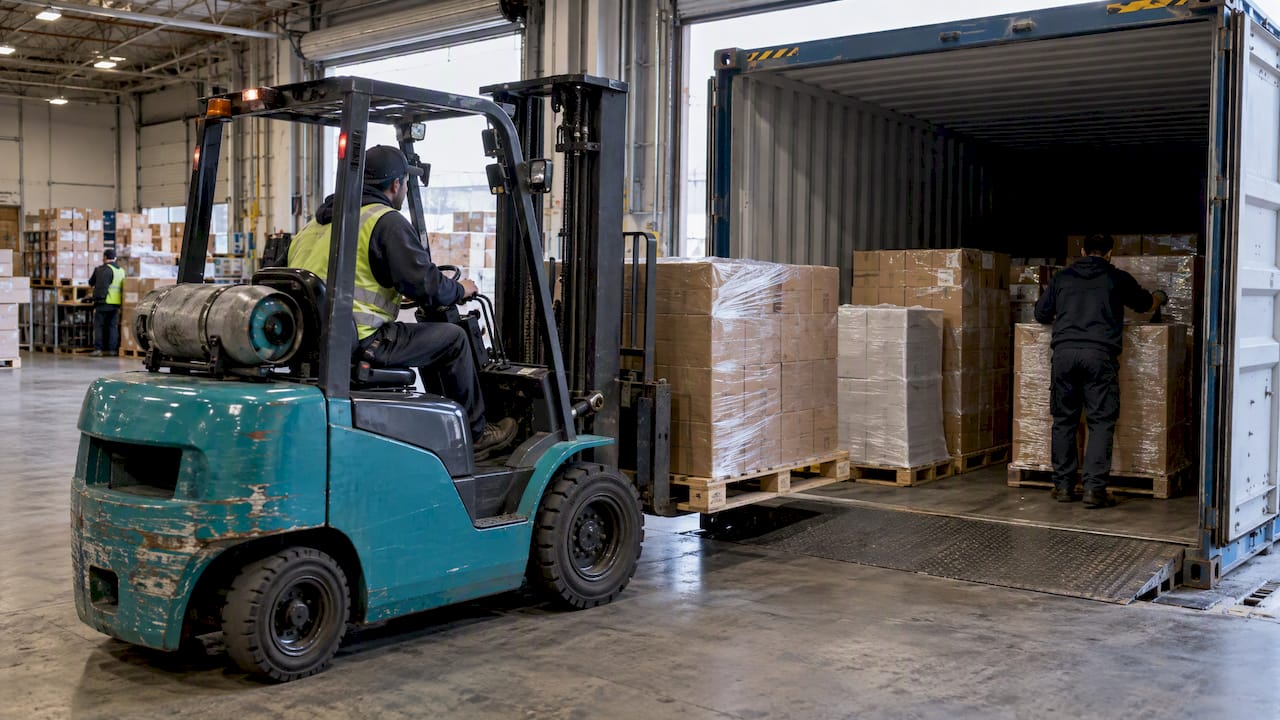
- Automated picking and sortation: robotic and conveyor-based systems dramatically increase how many orders a warehouse can process per hour, which is a major enabler of fast delivery wherever demand is dense enough to justify the investment.
- Carrier network density: more local delivery routes and drivers in a metro area mean shorter last-mile hops.
- SKU placement logic: fast-moving items get stocked closer to customers; slower sellers stay in cheaper, farther-out storage.
This is why the same retailer can offer one-day delivery in a major city and only standard shipping two states over. Amazon’s network is the clearest public example: its speed advantage comes largely from stocking high-demand items in dense urban fulfillment centers close to where orders actually originate, according to analysis of Amazon’s logistics model. Few sellers can replicate that footprint on their own, which is exactly why warehousing strategy matters as much as carrier choice.
Supply Chain Management Review frames this as a deliberate network design choice rather than a customer-service promise. Building a faster delivery window means adding facilities, safety stock, and staff, and those costs rise nonlinearly as the delivery window shrinks.

Is Paying for One-Day Delivery Worth It?
Speed costs money, and the reasons run deeper than “faster equals pricier.” Getting a single order out the door in hours instead of days often means dedicated staff time, express carrier rates, and inventory held in expensive urban real estate instead of a cheap regional warehouse.
What you actually gain:
- Certainty on timing, useful for gifts, medication, or event deadlines.
- A better chance the package arrives intact and on schedule, since expedited shipments usually get handled with fewer transfer points.
- Less mental overhead. No refreshing a tracking page for three days.
What it costs beyond the shipping fee:
- A price premium that can run several times the cost of standard shipping, since expedited capacity is scarce.
- A larger environmental footprint per package, from more frequent, lower-fill delivery runs and expedited air or ground transport.
Consumer expectations have shifted hard toward expecting fast, often free, delivery as standard, and that shift is putting real pressure on retailer margins. For merchants, that pressure shows up directly in conversion rates tied to fast fulfillment. For shoppers, the honest advice is simpler: save the upgrade for orders where the date genuinely matters.
Picking the Right Delivery Speed for Your Situation
Before paying extra for speed, run through a short mental checklist. It takes thirty seconds and saves you from an unnecessary upgrade or a missed deadline.
- How urgent is this, really? A birthday gift arriving a day late rarely matters; a prescription refill often does.
- Are you ordering before or after the site’s cut-off time today?
- Is the item actually eligible for expedited shipping, or is it stocked somewhere too far to qualify?
- Does the checkout page show a specific delivery date, or just a shipping speed label?
| Situation | Best fit | Why |
|---|---|---|
| Gift needed by tomorrow morning | Same-day delivery | Calendar-day promise, no next-day gap |
| Routine restock, no deadline | Standard shipping | Lower cost, no urgency premium |
| Order placed Friday night | Neither, without checking | Cut-offs and weekends often push both options to Monday |
| Business supplies for Monday meeting | One-day delivery, ordered by Thursday | Avoids weekend gap in business-day counting |
The checkout page’s stated delivery date always beats the label on the shipping method. If it says “next-day” but shows a date two days out, believe the date.
How Or-ner Helps Merchants Get One-Day Delivery Right
Advertising a delivery promise you can’t consistently hit does more damage than not offering the option at all. Before flipping on a one-day badge at checkout, merchants need to confirm three things: warehouse proximity to the customer base, which SKUs actually qualify for fast handling, and whether the carrier’s cut-off time actually syncs with the warehouse’s own pick-and-pack schedule.
Practical checks worth running before launch:
- Map order density against current warehouse locations to spot coverage gaps.
- Audit SKU-level pick times; slow-moving or oversized items often can’t meet expedited windows.
- Confirm the carrier pickup schedule lines up with the promised cut-off, not just the warehouse’s ideal schedule.
Or-ner’s fulfillment network is built around exactly this kind of eligibility check, pairing inventory management with routing decisions so a one-day promise on the product page matches what actually happens in the warehouse.
What Actually Matters Here
Speed sells, but a broken promise sells worse. The gap between what a checkout button claims and what a warehouse can physically deliver is where most shopper frustration and most merchant reputation damage actually happens. If you’re a shopper, check the date, not the label. If you’re a seller, don’t advertise a window your fulfillment network can’t back up.
— Maayan
Make Fast Delivery a Promise You Can Actually Keep
The platform is designed for merchants who need one-day and same-day promises to hold up in the real world, not just on a marketing page. Instead of guessing whether a warehouse setup can support faster shipping, it runs the eligibility math by checking inventory placement, SKU readiness, and carrier cut-off alignment before the promise is made public.
The platform combines warehousing and inventory management with courier partnerships and real-time tracking, so a one-day badge on your storefront reflects what your fulfillment network can genuinely execute. Automation trends discussed in broader ecommerce and AI coverage are already reshaping how fast small sellers can compete with larger networks, and pairing that automation with the right 3PL partner is what closes the gap.
If you’re planning to launch or expand fast-delivery options, start with a freight and fulfillment estimate to see what’s realistic for your product mix and customer locations.
Sources
- Next-/Same-Day-Delivery Definition | fulfillmenttools
- Same Day Delivery vs Next Day Delivery Explained (August 2026)
- What Is Same-Day Delivery? How Same-Day Delivery Works (2025) – Shopify
- Delivery Promise Engineering: The economics behind same-day and next-day fulfillment – Supply Chain Management Review
FAQ
Is One-Day Delivery the Same as Next-Day Delivery?
Yes, retailers use these terms interchangeably in most cases. Both typically mean the package arrives within about 24 hours, usually the next business day, according to fulfillmenttools.
Why Did My “Next-Day” Order Take Three Days?
You likely ordered after the site’s cut-off time, or your order fell on a weekend when business-day counting pauses. Missing a cut-off typically converts a faster promise into a slower one without an obvious warning at checkout.
Does One-Day Delivery Cost More Than Standard Shipping?
It almost always does, because expedited capacity, closer inventory placement, and dedicated staff time all add cost to the fulfillment network. The premium reflects the nonlinear cost of shrinking delivery windows rather than an arbitrary markup.
Can Every Seller Offer One-Day Delivery?
No. It depends heavily on warehouse proximity to customers, SKU eligibility, and carrier network density in that specific region. Or-ner works with merchants to check fulfillment eligibility before a one-day promise goes live on a storefront.
What Should I Check Before Trusting a One-Day Delivery Promise?
Look at the actual delivery date shown at checkout, not just the shipping method name. If the date lands more than a day out despite a “next-day” label, the cut-off has already passed or the order spans a weekend.