

Just In Time inventory management has become the secret engine driving many modern manufacturing and retail giants. Imagine this. Some companies have slashed their inventory costs by nearly 10 percent using JIT methods, freeing up huge amounts of cash that used to sit idle on stockroom shelves. Most people think less inventory sounds risky and stressful and yet these systems actually make businesses faster, more flexible, and better able to handle surprise spikes in demand.
Table of Contents
- Understanding What Is Just In Time Inventory
- Key Benefits And Risks For Modern Businesses
- How To Implement Just In Time Inventory
- Examples And Best Practices For 2025
Quick Summary
| Takeaway | Explanation |
|---|---|
| Embrace Just In Time principles for efficiency | JIT focuses on receiving goods only when needed, minimizing excess inventory and storage costs. |
| Invest in technology for effective implementation | Robust ERP systems and real-time tracking technologies are essential for supporting JIT processes effectively. |
| Cultivate strong supplier relationships | Reliable suppliers are foundational for JIT; build trust and collaboration to ensure consistent and timely deliveries. |
| Develop sophisticated forecasting capabilities | Advanced demand forecasting helps adapt production schedules swiftly to changing market dynamics. |
| Balance risk with strategic resilience | Identify potential disruptions and implement robust risk management protocols to maintain operational stability under JIT. |
Understanding What Is Just In Time Inventory
Just In Time (JIT) inventory represents a strategic approach to inventory management that has transformed how businesses handle production and supply chain operations. At its core, JIT is a methodology designed to improve efficiency by receiving goods and materials precisely when they are needed in the production process, minimizing excess inventory and reducing associated storage costs.
The Fundamental Principles of JIT Inventory
The concept of Just In Time inventory goes beyond mere logistics management. According to the Corporate Finance Institute, JIT originated in Japan and has since become a global manufacturing strategy that focuses on eliminating waste and optimizing production workflows. This approach requires precise coordination between suppliers, manufacturers, and distributors to ensure materials arrive exactly when required.
Key principles of JIT inventory include reducing inventory holding costs, minimizing waste, improving product quality, and increasing overall operational efficiency. By maintaining minimal stock levels, businesses can significantly reduce storage expenses, decrease the risk of product obsolescence, and free up capital that would otherwise be tied up in excess inventory.
How JIT Transforms Business Operations
The implementation of JIT inventory management fundamentally changes how businesses approach production and supply chain strategies. As the U.S. Government Accountability Office explains, JIT systems are designed to streamline manufacturing processes by receiving goods only as they are needed. This approach requires robust communication systems and strong relationships with suppliers who can deliver components with exceptional reliability and precision.
Businesses adopting JIT must develop sophisticated forecasting capabilities and maintain flexible production systems. This means having the ability to quickly adjust production schedules based on real time demand signals. The goal is to create a lean, responsive manufacturing environment where inventory is treated as a dynamic resource rather than a static asset.
For companies considering just in time delivery strategies, understanding the intricate balance between supply and demand becomes crucial. JIT is not simply about reducing inventory but creating a more intelligent, responsive production ecosystem that can adapt rapidly to market changes.
The benefits of JIT extend beyond cost reduction. By maintaining minimal inventory, businesses can respond more quickly to market trends, reduce the risk of holding outdated stock, and allocate resources more strategically. However, this approach also requires sophisticated planning, strong supplier relationships, and advanced technological infrastructure to manage potential supply chain disruptions.
While JIT offers significant advantages, it is not without challenges. Companies must invest in robust communication technologies, develop strong partnerships with reliable suppliers, and create flexible production systems capable of rapid adjustments. The potential rewards include improved cash flow, reduced waste, enhanced product quality, and a more agile business model that can quickly respond to changing market demands.
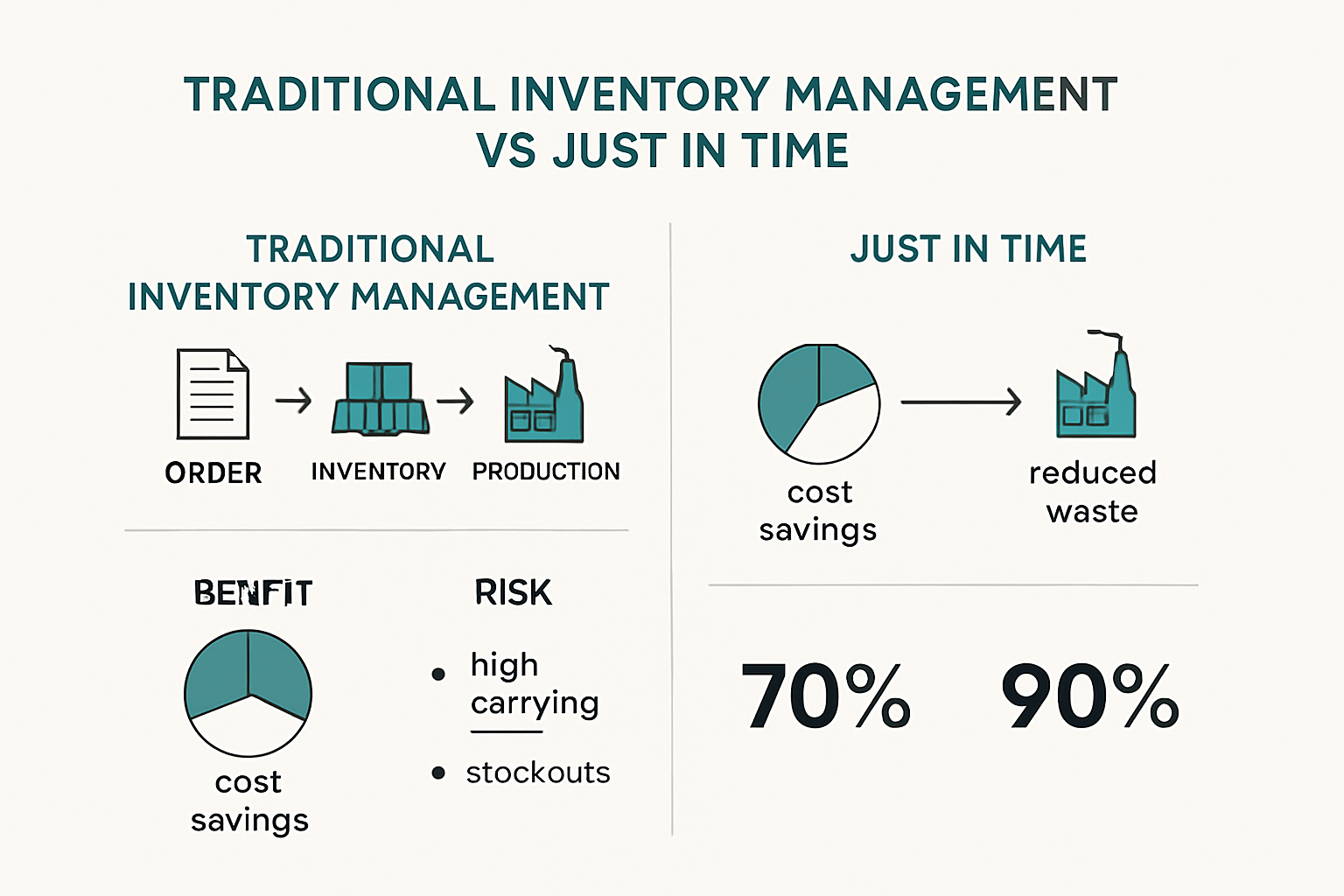
Key Benefits and Risks for Modern Businesses
Just In Time (JIT) inventory management presents a complex landscape of opportunities and challenges for modern businesses seeking operational optimization. While the strategy offers significant potential for efficiency and cost reduction, it simultaneously demands sophisticated risk management and strategic planning.
Strategic Advantages of JIT Implementation
Businesses adopting JIT inventory strategies can unlock substantial financial and operational benefits. According to ResearchGate, JIT enhances efficiency by reducing waste and improving production chain connections. The core advantages include dramatic cost savings, improved cash flow, and increased production flexibility.
Key strategic benefits encompass minimized inventory holding costs, reduced warehouse space requirements, and enhanced product quality control. Companies can redirect capital previously locked in excess inventory toward innovation, research, and strategic growth initiatives. By maintaining lean inventory levels, businesses become more agile and responsive to market fluctuations.
Navigating Potential Risks and Challenges
Despite its compelling advantages, JIT inventory management is not without significant risks. Investopedia highlights that JIT systems are particularly vulnerable to supply chain disruptions. A single supplier breakdown can potentially stall entire production lines, creating cascading operational challenges.
The National Center for Biotechnology Information research indicates that while JIT can generate substantial savings (approximately 10% in some sectors), it requires zero tolerance for mistakes. This means businesses must develop robust contingency plans and maintain exceptional supplier relationships to mitigate potential risks.
Risks include potential production interruptions, increased dependency on supplier reliability, and reduced ability to respond to unexpected demand spikes. Companies must invest in advanced logistics technologies to create real time visibility and rapid response capabilities.
Successful JIT implementation demands a holistic approach. Organizations must develop comprehensive risk management strategies, including:
- Cultivating multiple supplier relationships
- Implementing advanced forecasting technologies
- Creating flexible production systems
- Developing rapid response protocols
- Maintaining strategic buffer inventory for critical components
Modern businesses considering JIT must conduct thorough risk assessments and develop nuanced implementation strategies. While the potential rewards are significant, success requires sophisticated planning, technological infrastructure, and a commitment to continuous improvement.
Ultimately, JIT is not a one size fits all solution. Each organization must carefully evaluate its unique operational context, supply chain complexity, and risk tolerance. The most successful implementations balance lean inventory principles with strategic resilience, enabling businesses to optimize efficiency without compromising operational stability.
To clarify the distinctions between the benefits and risks of JIT inventory management, here’s a summary table for quick reference.
| Category | Key Points |
|---|---|
| Benefits | – Reduced inventory and storage costs |
- Enhanced cash flow
- Improved product quality
- Minimized waste
- Increased responsiveness to demand
- More agile operations |
| Risks | – Vulnerability to supply disruptions - Reliance on supplier reliability
- Potential for production interruptions
- Difficulty handling sudden demand spikes
- Need for robust risk management protocols |
How to Implement Just In Time Inventory
Implementing Just In Time (JIT) inventory requires a strategic and comprehensive approach that goes beyond simple inventory management. Success demands a holistic transformation of organizational processes, technological infrastructure, and operational mindset.
Foundational Planning and Assessment
Before launching a JIT inventory strategy, businesses must conduct a thorough organizational readiness assessment. Research from ResearchGate emphasizes that successful implementation pivots on understanding your current operational landscape and identifying potential challenges.
Key initial steps include:
- Analyzing current inventory management practices
- Evaluating existing supplier relationships
- Assessing technological capabilities
- Identifying potential bottlenecks in production processes
- Determining organizational flexibility and adaptability
Businesses must develop a comprehensive implementation roadmap that addresses technological, human, and process related transformation requirements. This involves creating detailed transition plans that minimize operational disruption and maximize potential efficiency gains.
Technology and Communication Infrastructure
Technology serves as the critical backbone of successful JIT inventory implementation. Companies need robust enterprise resource planning (ERP) systems, real time tracking technologies, and advanced communication platforms that enable seamless information exchange between suppliers, manufacturers, and distributors.
Investing in just in time delivery technologies becomes crucial for creating responsive and adaptive inventory management systems. These technologies should provide:
- Real time inventory tracking
- Predictive demand forecasting
- Automated reordering mechanisms
- Supplier performance monitoring
- Dynamic inventory allocation capabilities
Effective communication infrastructure allows businesses to respond rapidly to market changes, manage supplier relationships, and maintain operational continuity. This requires developing integrated digital platforms that facilitate instant information sharing and collaborative decision making.
Supplier Relationship Management
Building strong, reliable supplier relationships represents a fundamental prerequisite for JIT inventory success. Organizations must transition from transactional supplier interactions to strategic partnerships characterized by transparency, mutual trust, and shared performance objectives.
Key strategies for effective supplier relationship management include:
- Conducting comprehensive supplier audits
- Establishing clear performance metrics
- Creating collaborative forecasting processes
- Developing contingency planning frameworks
- Implementing transparent communication channels
Businesses should focus on cultivating a limited number of high quality suppliers rather than maintaining extensive, fragmented supplier networks. This approach enables more predictable and reliable inventory flows while reducing complexity and potential disruption risks.
Successful JIT inventory implementation is not a one time event but a continuous journey of refinement and adaptation. Organizations must maintain flexibility, invest in ongoing training, and remain committed to continuous improvement. By developing a holistic approach that balances technological innovation, strategic planning, and collaborative relationships, businesses can transform their inventory management from a cost center to a competitive advantage.
To help visualize the implementation process, here’s a step-by-step table outlining the key stages of adopting JIT inventory management.
| Step | Description |
|---|---|
| 1. Organizational Assessment | Analyze current practices, supplier relationships, and technology |
| 2. Implementation Planning | Develop a roadmap and transition plan |
| 3. Technology & Infrastructure Development | Invest in ERP, tracking, and communication tech |
| 4. Supplier Engagement | Audit suppliers, establish metrics, develop forecasting collaboration |
| 5. Risk Management Strategy | Identify risks, create contingency and buffer inventory plans |
| 6. Training & Continuous Improvement | Educate staff and refine processes over time |
Examples and Best Practices for 2025
As businesses navigate the complex landscape of inventory management in 2025, Just In Time (JIT) inventory strategies continue to evolve, incorporating advanced technologies and adaptive methodologies that redefine traditional supply chain approaches.
Technological Integration and Advanced Forecasting
Supply Chain Dive highlights that modern inventory management requires a strategic approach to SKU stratification and AI driven demand planning. Organizations are increasingly leveraging sophisticated technologies to create more responsive and intelligent inventory systems.
Advanced forecasting techniques now incorporate multiple data sources, including:
- Machine learning algorithms
- Real time market trend analysis
- Predictive demand modeling
- IoT sensor data integration
- Social media sentiment tracking
According to research from Adobe Business, successful implementation involves automating basic warehousing processes using technologies like scanners, barcodes, IoT sensors, and collaborative robots. These technologies dramatically reduce human error and improve overall inventory accuracy.
Innovative Inventory Optimization Strategies
The landscape of inventory management is rapidly transforming. Cutting edge research from ArXiv demonstrates emerging methodologies for inventory optimization, including advanced algorithms like Time Series, Random Forest, and Deep Reinforcement Learning. These approaches enable businesses to create more dynamic and responsive inventory management systems.
Key optimization strategies for 2025 include:
- Implementing zero base inventory reviews
- Developing adaptive supply chain models
- Creating flexible inventory allocation systems
- Establishing real time tracking mechanisms
- Integrating predictive maintenance protocols
Businesses are moving beyond traditional inventory management, focusing on creating sustainable logistics solutions that balance efficiency with environmental responsibility. This approach requires a holistic view of inventory management that considers not just cost and availability, but also long term sustainability and adaptability.
Building Resilient Supply Chain Ecosystems
The most successful organizations in 2025 are those that view JIT inventory not as a static strategy, but as a dynamic, continuously evolving ecosystem. This means developing robust supplier relationships, creating flexible production capabilities, and maintaining technological infrastructure that can quickly adapt to unexpected market changes.

Effective JIT implementation now requires:
- Comprehensive risk management protocols
- Diversified supplier networks
- Advanced communication technologies
- Continuous training and skill development
- Agile decision making frameworks
The future of JIT inventory management lies in its ability to balance technological innovation with human expertise. Organizations must invest in both cutting edge technologies and the human skills necessary to leverage these tools effectively. By creating adaptive, intelligent inventory systems that can quickly respond to market dynamics, businesses can transform inventory management from a cost center to a strategic competitive advantage.
Ultimately, success in 2025 will belong to those organizations that can seamlessly integrate advanced technologies, maintain strong collaborative relationships, and remain committed to continuous learning and improvement.
Frequently Asked Questions
What is Just In Time (JIT) inventory management?
Just In Time (JIT) inventory management is a strategy that focuses on receiving goods only as they are needed in the production process, thereby minimizing excess inventory and reducing storage costs.
What are the key benefits of implementing JIT inventory?
The key benefits of implementing JIT inventory include reduced inventory holding costs, improved cash flow, enhanced product quality, and increased responsiveness to demand fluctuations.
What risks are associated with JIT inventory management?
JIT inventory management carries risks such as vulnerability to supply chain disruptions, increased dependency on supplier reliability, and challenges in handling sudden spikes in demand.
How can businesses successfully implement JIT inventory?
Successful implementation of JIT inventory requires thorough planning, strong supplier relationships, advanced technology for real-time tracking, and continuous monitoring and adjustment of production processes.
Future-Proof Your Just In Time Inventory With Reliable Courier Services
Are you worried about supply chain disruptions, unexpected delays, or rising costs as you implement Just In Time inventory strategies? The article highlights how even the best JIT systems demand lightning-fast delivery, transparent tracking, and flawless coordination to avoid running out of stock at a critical moment. With businesses under pressure to cut waste and boost flexibility, many struggle to find logistics partners who truly support efficient, real-time inventory management.

You do not have to risk supply chain headaches or miss out on JIT’s benefits. Make your operations smoother and more resilient by teaming up with reliable courier services built for ecommerce, retail, and manufacturing growth. Our platform offers global warehouses, real-time shipment tracking, and a single dashboard for all your delivery needs. Ready to manage your JIT inventory confidently? Visit https://or-ner.com and see how our logistics solutions accelerate your business today.