
TL;DR:
- Delivery confirmation verifies the exact date, time, and location when a package is marked as delivered. It provides a definitive record that helps resolve disputes, prevents loss, and confirms safe receipt. Enhanced options like signature or photo proof offer stronger security for high-value or theft-prone shipments.
Delivery confirmation is defined as an electronic record that verifies the exact date, time, and location when a carrier officially marks your package as delivered. Understanding what is delivery confirmation matters because it is the final milestone in the shipment tracking lifecycle, distinct from the ongoing updates you see while a package is in transit. It functions like a digital receipt for your doorstep. Knowing how it works protects you against lost packages, supports dispute resolution, and gives you real confidence that your order arrived safely.
What is delivery confirmation in ecommerce shipping?
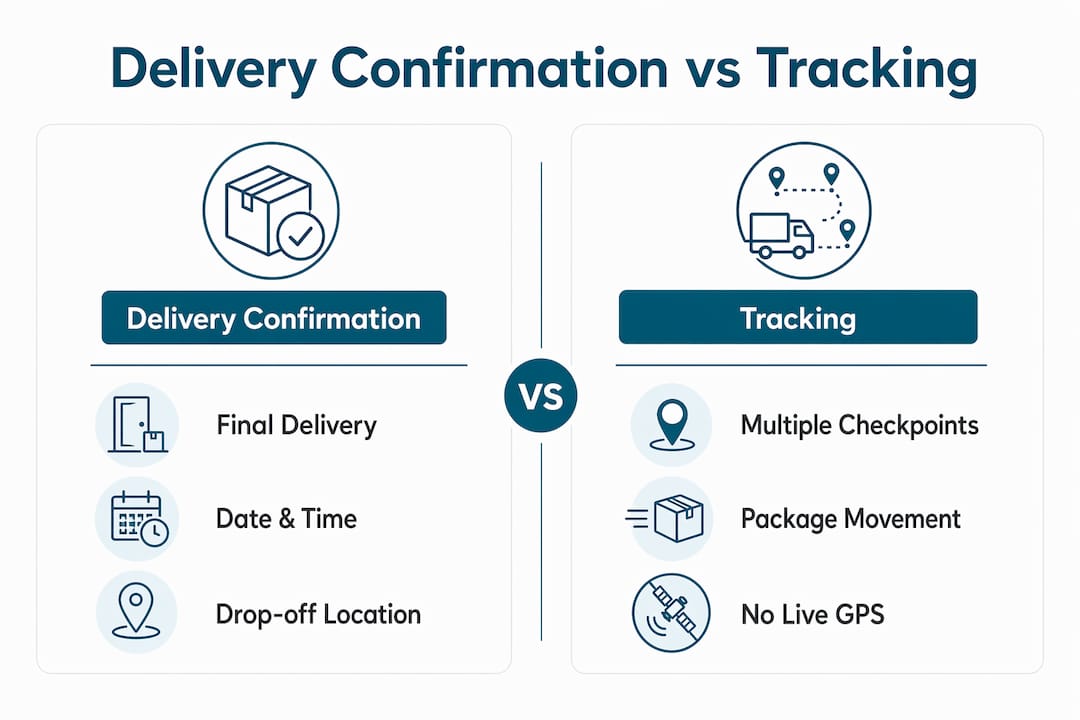
Delivery confirmation is the final delivery milestone in the tracking lifecycle, recording the date, time, and physical location of a package’s drop-off. Think of it as the store receipt you get after a purchase. Tracking shows the journey; delivery confirmation closes it. The status often includes specific drop-off notes such as “Front Door,” “Mailbox,” or “With Receptionist,” adding a layer of accountability for both the sender and the recipient.
This confirmation is not the same as live GPS monitoring. Carrier milestone events power tracking status updates, not a continuous satellite feed. That distinction matters because it explains why your tracking page may show no movement for hours before suddenly flipping to “Delivered.”
How does delivery confirmation work?
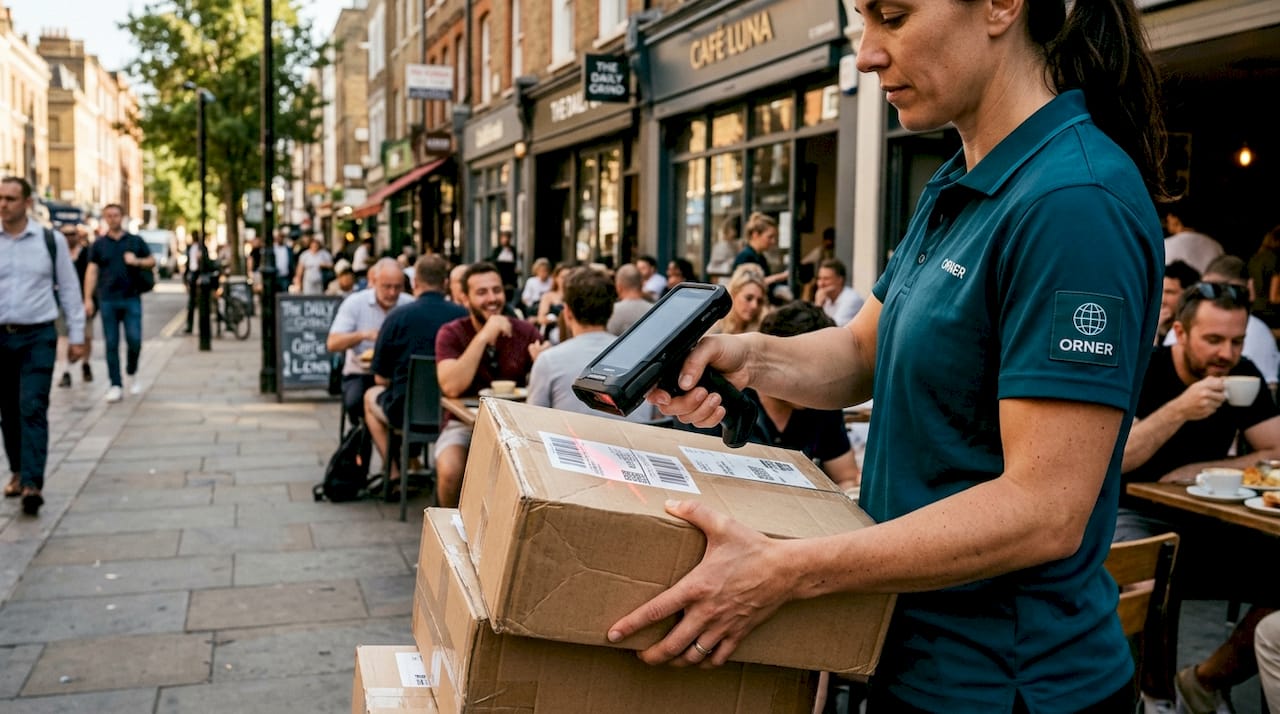
The process begins the moment a carrier driver scans your package’s barcode at the point of final drop-off. That scan sends a data packet to the carrier’s system, which records the timestamp and location. The carrier’s platform then updates the shipment status and pushes a notification to you.
Here is the step-by-step flow:
- Barcode scan at delivery. The driver scans the package at your address, triggering the delivery event in the carrier’s database.
- Data capture. The system logs the date, time, and drop-off location automatically.
- Status update. The carrier’s platform changes the shipment status from “Out for Delivery” to “Delivered.”
- Notification sent. You receive an email, SMS, or in-app alert depending on your notification preferences.
- Record stored. The delivery record stays accessible in the carrier’s system for future reference, including dispute resolution.
Electronic confirmation options integrate directly with merchant databases, so sellers receive automated status updates without manual checking. Retail customers, by contrast, access confirmation by visiting a carrier’s website or calling customer service.
Pro Tip: Set up SMS notifications with your carrier before your package ships. You will get the delivery confirmation the moment the scan happens, not hours later when you happen to check your email.
Delivery confirmation vs. tracking vs. proof of delivery
These three terms describe different stages and levels of verification. Shoppers often use them interchangeably, but they mean different things and carry different weight in a dispute.
| Service | What it records | Security level | Common use case |
|---|---|---|---|
| Package tracking | Checkpoint scans throughout transit | Basic | Monitoring progress in transit |
| Delivery confirmation | Final drop-off date, time, and location | Standard | Confirming a package arrived |
| Proof of Delivery (POD) | Signature, photo, or both at delivery | High | High-value or theft-prone shipments |
| Signature confirmation | Electronic recipient signature at delivery | Highest | Valuables, legal documents, medications |
Tracking is checkpoint-based, not a real-time GPS feed. Packages can go hours or even days between scan events at hubs or inside delivery vehicles. A gap in updates does not mean your package is lost. Delivery confirmation, by contrast, is a single definitive event. It fires once, when the package is physically dropped off.
Proof of Delivery goes further by including a recipient’s signature, a photo of the package at the door, or both. Carriers and merchants typically request POD for mid-value to high-value shipments or in neighborhoods with a history of package theft. Many ecommerce retailers now use photo POD as a standard practice, even for everyday orders, because it dramatically reduces “I never got it” disputes.
Signature confirmation sits at the top of this hierarchy. It requires the recipient to sign electronically at the door. That signature is stored digitally and accessible to both the shipper and the carrier. No signature means no delivery. This makes it the strongest form of delivery verification available for standard parcel services.
Understanding this hierarchy helps you choose the right service level for what you are shipping or receiving. A birthday card needs basic confirmation. A $2,000 laptop needs signature confirmation.
Why is delivery confirmation important for online shoppers?
Delivery confirmation gives shoppers certainty. Without it, you have no official record that a package arrived. That gap creates real problems when a package goes missing or a dispute arises with a seller or carrier.
Key benefits for online shoppers include:
- Peace of mind. You know exactly when and where your package landed, without guessing or refreshing the tracking page repeatedly.
- Dispute protection. Delivery confirmation supports dispute resolution with carriers and sellers, protecting you against fraud and lost-item claims.
- Theft response. If a package is marked “Delivered” but is not at your door, the drop-off location note gives you a starting point. It may have gone to a neighbor, a mailroom, or a secure locker.
- Chargeback defense. For sellers, a delivery confirmation record is the primary evidence used to contest a chargeback when a buyer claims non-delivery.
- Accountability. Carriers are more careful with packages when every delivery generates a timestamped record.
A common misconception is that seeing “Out for Delivery” on a tracking page is the same as confirmation. It is not. “Out for Delivery” means the package is on a truck. Delivery confirmation only fires after the final scan at your address. Many shoppers assume their package is confirmed delivered when it is still on a vehicle.
Pro Tip: If your delivery confirmation shows a drop-off location that does not match your address, contact the carrier immediately. The timestamped record makes it far easier to locate a misdelivered package within the first 24 hours.
Retailers that clearly communicate delivery confirmation details to their customers see fewer support tickets and stronger repeat purchase rates. A clear ecommerce delivery policy that explains what shoppers will receive after delivery, including confirmation notifications and what to do if something goes wrong, builds trust before a problem ever occurs.
What are enhanced delivery confirmation options?
Standard delivery confirmation records a drop-off. Enhanced options add layers of verification that protect both the shopper and the seller when the stakes are higher.
The main enhanced options available through most major carriers include:
- Signature confirmation. The recipient signs electronically at the door. The signature is stored digitally and accessible to shippers and carriers as legal proof of receipt. Carriers will not leave the package unattended if no one answers.
- Photo proof of delivery. The driver photographs the package at the delivery location before leaving. This is now standard practice for many carriers on residential deliveries and provides visual evidence of placement.
- Electronic proof of delivery (ePOD). A digital document combining timestamp, GPS coordinates, and signature or photo. Enterprise shippers and logistics platforms use ePOD for full audit trails.
- Adult signature required. Used for age-restricted products like alcohol or tobacco. An adult must be present and show ID. This is a regulatory requirement in many states, not just a carrier option.
Ecommerce sellers typically choose signature confirmation for orders above a certain value threshold, for items that are difficult to replace, or for shipments going to addresses with a documented history of theft claims. Standard delivery confirmation, which allows unattended drop-offs, works well for everyday orders where the risk of loss is low.
The right choice depends on the item’s value, the delivery address, and the seller’s return and dispute policies. Or-ner works with ecommerce sellers to match shipment types with the appropriate confirmation level, so neither the seller nor the shopper is left without a clear record when it matters most.
Key Takeaways
Delivery confirmation is the definitive electronic record that closes a shipment, capturing the exact date, time, and location of drop-off, and it is the foundation of dispute resolution for both shoppers and sellers.
| Point | Details |
|---|---|
| Delivery confirmation defined | It records the final drop-off date, time, and location as a single, official delivery event. |
| Tracking is not confirmation | Tracking shows checkpoint scans in transit; confirmation fires only at the moment of final delivery. |
| Proof of Delivery adds security | POD includes a signature or photo, providing stronger evidence than basic confirmation alone. |
| Shoppers gain dispute protection | A delivery confirmation record is the primary evidence used to resolve lost-package claims. |
| Enhanced options match risk level | Signature confirmation and photo POD are best for high-value or theft-prone shipments. |
The detail most shoppers overlook
Most articles about delivery confirmation stop at the definition. After years of working in ecommerce logistics, the gap I see most often is not a lack of confirmation technology. It is a lack of shopper education about what that confirmation actually means.
Shoppers regularly contact sellers claiming non-delivery when the carrier’s system shows a confirmed drop-off with a location note. The problem is rarely a missing package. It is a package left at a side door, a mailroom, or a secure building locker that the shopper did not check. The delivery confirmation was accurate. The shopper just did not know how to read it.
My honest view is that ecommerce sellers underinvest in post-purchase communication. Sending a delivery confirmation email that simply says “Your order was delivered” is not enough. That email should include the drop-off location note, a link to the carrier’s tracking page, and a clear next step if the package is not found. That one change eliminates a significant share of “where is my package” tickets.
For shoppers, the practical lesson is this: when you see “Delivered,” check the location note before calling anyone. Then check every possible drop-off point at your address. The confirmation system is more accurate than most people give it credit for.
— Maayan
Shipping confidence starts with the right logistics partner
Knowing what delivery confirmation means is only part of the picture. The other part is working with a logistics setup that generates reliable confirmation data from the start.
Or-ner gives ecommerce sellers end-to-end visibility across every shipment, from freight booking through final delivery confirmation. The platform integrates with major carriers and ecommerce operators, so delivery status updates reach both sellers and their customers automatically. Whether you are managing a single product line or scaling across borders, Or-ner’s practical freight booking guide walks you through the full shipping process, including how to set up confirmation notifications that protect you and your customers. You can also use Or-ner’s shipment tracking tools to monitor every milestone from dispatch to confirmed delivery.
FAQ
What does delivery confirmation mean?
Delivery confirmation is an electronic record that verifies the date, time, and drop-off location when a carrier officially marks a package as delivered. It serves as the official close of the shipping process.
Is delivery confirmation the same as tracking?
No. Tracking records checkpoint scans throughout a package’s journey, while delivery confirmation is a single event that fires only at the moment of final drop-off.
What is a delivery receipt?
A delivery receipt, also called proof of delivery, is a document that includes a recipient’s signature, a photo, or both, providing stronger evidence of receipt than a basic delivery confirmation record.
How do I get delivery confirmation for my package?
Most carriers send delivery confirmation automatically via email or SMS when the final barcode scan occurs. You can also check the carrier’s website or app using your tracking number.
Is delivery confirmation reliable?
Delivery confirmation is reliable as a record of the carrier’s final scan event. If a package is marked “Delivered” but is not found, the drop-off location note in the confirmation is the first place to check, followed by contacting the carrier directly.