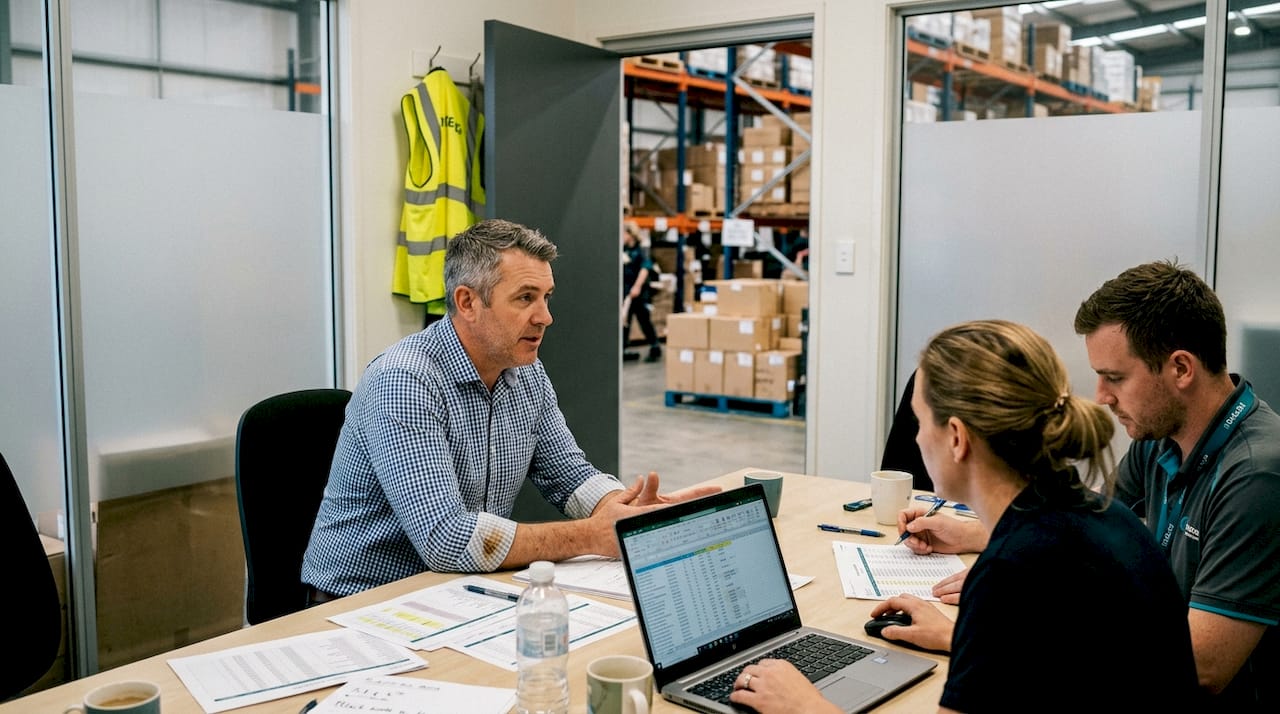
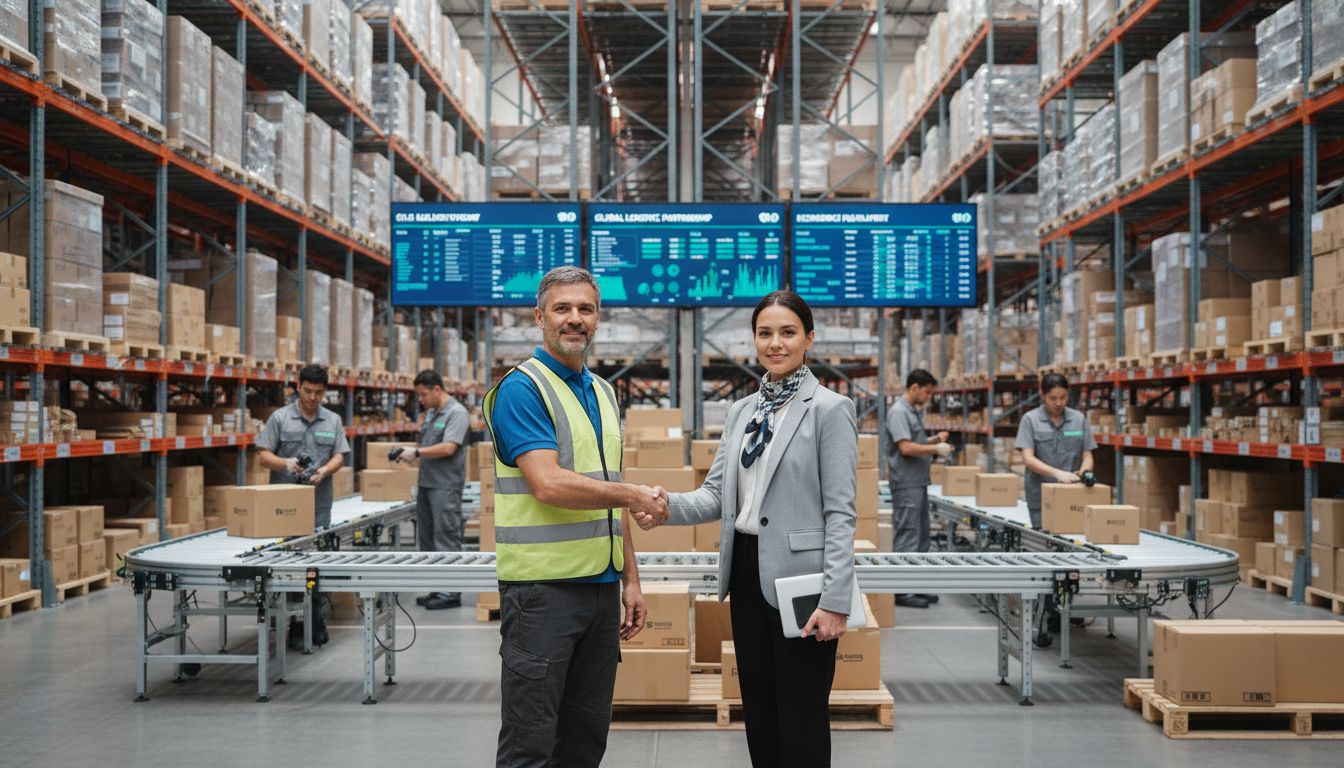
More than 80 percent of leading companies trust third-party logistics providers to streamline their operations. As supply chains grow more complex, managing inventory, warehousing, and shipping in-house can quickly drain resources and slow growth. Outsourcing these functions to expert partners lets businesses tap into advanced logistics technology and focus on what matters most. This guide breaks down the key elements of 3PL, explains different provider types, and shows how the right partnership can drive efficiency and success.
Table of Contents
- Defining 3PL In Modern Logistics
- Key Types Of 3PL Providers Explained
- How 3PL Services Work For Ecommerce
- Core Benefits And Limitations Of 3PL
- Selecting And Managing 3PL Partnerships
Key Takeaways
| Point | Details |
|---|---|
| Strategic Outsourcing | 3PL allows businesses to focus on core competencies while outsourcing logistics functions to specialized providers. |
| Types of 3PL Providers | Four core types of 3PL providers—Standard, Service Developers, Customer Adapters, and Customer Developers—offer varying levels of service and integration. |
| Benefits and Limitations | 3PL can optimize costs and improve efficiency, but may lead to a loss of control and dependency on external partners. |
| Partner Selection | Choosing the right 3PL partner requires a thorough evaluation of their technological capabilities, industry experience, and performance metrics. |
Defining 3PL in Modern Logistics
Third-party logistics, commonly known as 3PL, represents a strategic approach where businesses outsource complex logistics operations to specialized external service providers. According to research from ijrdo.org, 3PL involves outsourcing critical logistics services such as transportation, warehousing, and distribution to expert providers. This approach enables companies to concentrate on their core business competencies while leveraging specialized logistics expertise.
At its core, 3PL encompasses a comprehensive range of services that extend far beyond simple transportation. As detailed by iosrjournals.org, these services typically include:
- Inventory Management: Tracking and controlling stock levels
- Warehousing: Storing and managing product inventories
- Transportation: Moving goods across various distribution channels
- Order Fulfillment: Processing and shipping customer orders
- Distribution: Strategically moving products to end consumers
For online retailers and ecommerce businesses, 3PL represents more than just an operational choice—it’s a strategic partnership that can significantly enhance supply chain efficiency. By outsourcing complex logistics functions, companies can reduce overhead costs, improve scalability, and access advanced technological infrastructure without massive capital investments. The right 3PL partner transforms logistics from a potential business challenge into a streamlined, professional operation that supports growth and customer satisfaction.
Additionally, learn more about freight forwarding strategies that can complement your 3PL approach and further optimize your supply chain management.
Key Types of 3PL Providers Explained
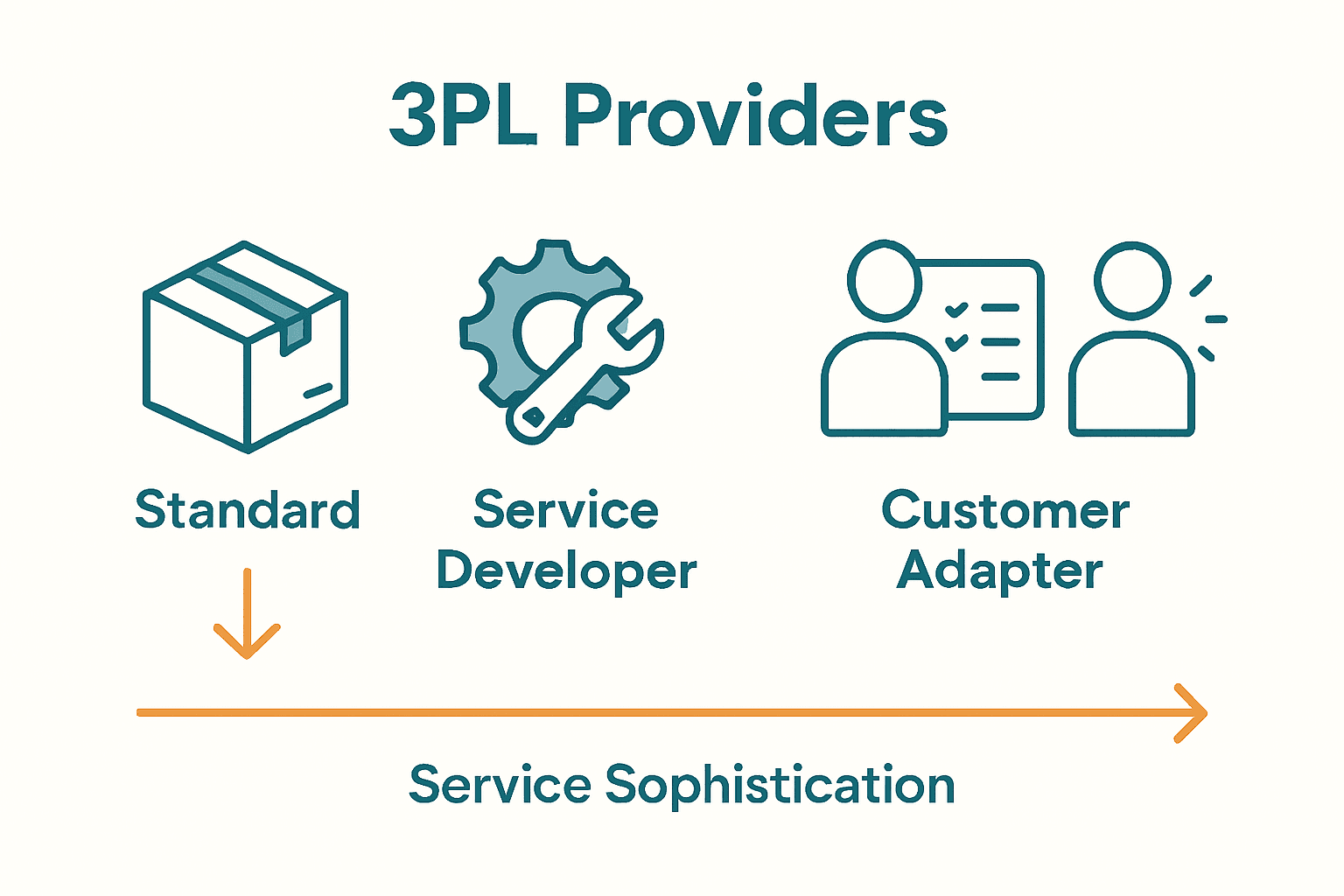
Understanding the landscape of third-party logistics requires recognizing the diverse types of providers available to businesses. According to research from jetir.org, 3PL providers can be comprehensively categorized into four distinct types, each offering unique capabilities and strategic approaches to logistics management.
1. Standard 3PL Providers
These are entry-level logistics providers offering basic services like:
- Transportation management
- Basic warehousing
- Simple order processing
- Fundamental inventory tracking
2. Service Developers
Advanced providers that go beyond standard services by offering:
- Value-added logistics solutions
- Advanced technological integrations
- Complex inventory management systems
- Customized reporting and analytics
3. Customer Adapters
Highly specialized providers that take comprehensive control of a company’s logistics operations, characterized by:
- Complete logistics function takeover
- Deep operational integration
- Customized end-to-end solutions
- Strategic logistics management
4. Customer Developers
The most sophisticated tier of 3PL providers, who:
- Integrate deeply into client’s operational ecosystem
- Develop continuous improvement strategies
- Provide near-complete supply chain transformation
- Offer strategic consulting alongside logistics services
As lexingtoninstitute.org highlights, these providers vary significantly in their service offerings, with some specializing in specific industries or services while others provide comprehensive supply chain solutions. Online retailers must carefully assess their unique requirements to select the most appropriate 3PL provider type.
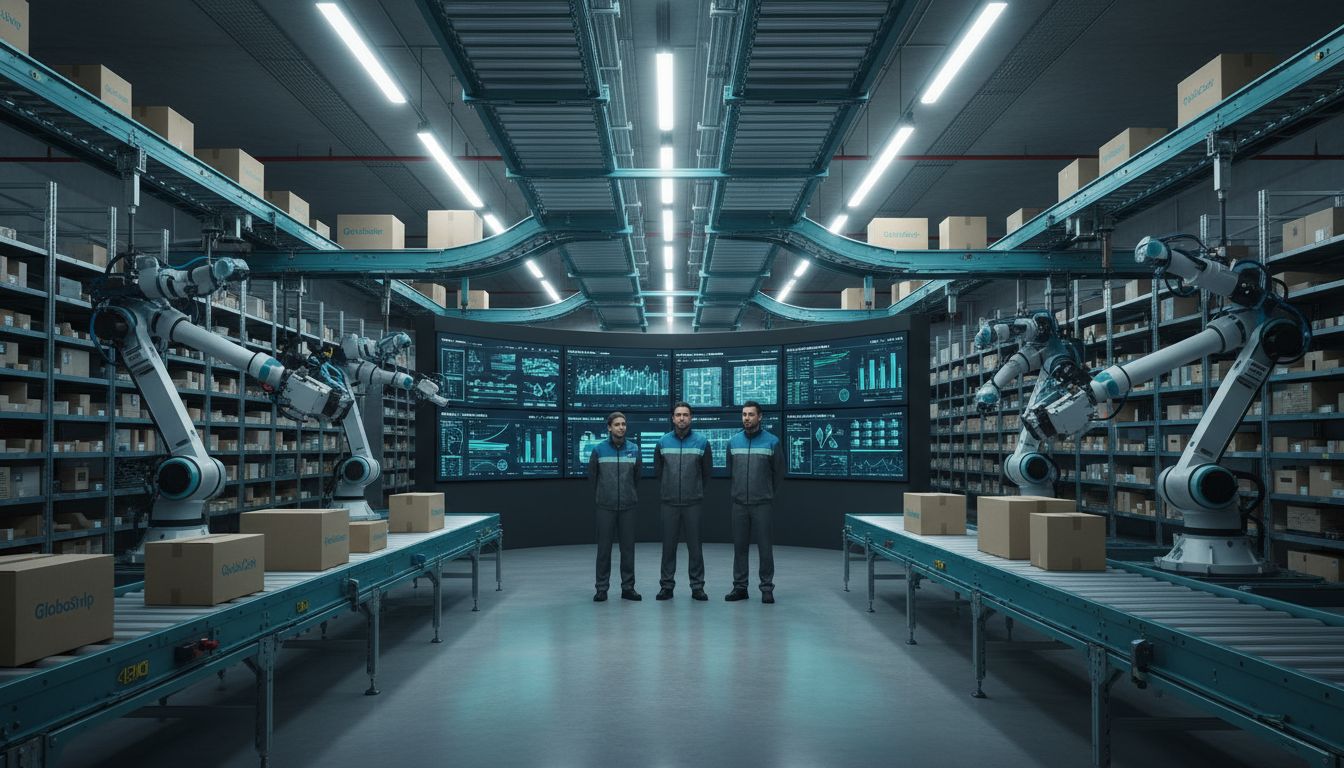
Here’s a structured comparison of the four main types of 3PL providers:
| Type of 3PL Provider | Core Services Offered | Typical Client Needs |
|---|---|---|
| Standard 3PL | Transportation Basic warehousing Simple order processing |
Cost-effective Basic logistics support |
| Service Developer | Value-added solutions Tech integration Customized analytics |
Advanced systems Scalability |
| Customer Adapter | Full logistics control Deep operational integration |
End-to-end management Strategic partnership |
| Customer Developer | Supply chain transformation Continuous improvement Strategic consulting |
Complete integration Business growth focus |
To gain deeper insights into optimizing your logistics strategy, explore our guide on third-party logistics advantages and discover how the right provider can transform your business operations.
How 3PL Services Work for Ecommerce
Ecommerce businesses rely on third-party logistics to streamline their complex supply chain operations and deliver exceptional customer experiences. According to clda.org, 3PL providers offer crucial outsourced logistics services that manage critical procurement and fulfillment activities essential for efficient product delivery.
The typical 3PL workflow for ecommerce businesses involves several interconnected stages:
- Inventory Reception
- Receiving products from manufacturers
- Conducting quality control checks
- Organizing and storing inventory
- Tracking stock levels digitally
- Order Processing
- Integrating with ecommerce platforms
- Capturing real-time order details
- Picking and packing products accurately
- Preparing shipments for distribution
- Shipping and Distribution
- Selecting optimal shipping carriers
- Managing multi-channel distribution
- Tracking shipment progress
- Handling returns and exchanges
Technological integration plays a pivotal role in modern 3PL services. Advanced providers offer comprehensive digital platforms that seamlessly connect with ecommerce systems, providing real-time inventory tracking, automated order processing, and detailed analytics. This technological synergy allows online retailers to maintain visibility across their entire supply chain, reducing operational complexities and minimizing potential disruptions.
For ecommerce businesses looking to optimize their logistics strategy, understanding order fulfillment processes can provide additional insights into maximizing operational efficiency and customer satisfaction.
Core Benefits and Limitations of 3PL
Understanding the strategic landscape of third-party logistics requires a balanced perspective on its potential advantages and challenges. According to research from iimm.org, 3PL offers significant benefits including cost reduction, improved operational efficiency, and the critical ability for businesses to refocus on their core activities.
Key Benefits of 3PL
-
Cost Optimization
- Reduced infrastructure investments
- Lower transportation expenses
- Scalable pricing models
- Elimination of fixed logistics overhead
-
Operational Efficiency
- Access to specialized logistics expertise
- Advanced technological infrastructure
- Streamlined supply chain processes
- Faster market responsiveness
-
Strategic Flexibility
- Rapid scaling of logistics capabilities
- Global market expansion support
- Adaptable service configurations
- Risk mitigation through professional management
However, as armejournal.org highlights, 3PL services are not without potential limitations. Businesses may encounter challenges such as complex system integrations, potential loss of direct operational control, and dependency on external logistics partners. These considerations require careful vendor selection and ongoing collaborative management.
To navigate these nuanced logistics strategies effectively, explore our guide on freight forwarding benefits and discover how strategic partnerships can transform your supply chain operations.
Selecting and Managing 3PL Partnerships
Choosing the right third-party logistics partner is a critical strategic decision that can significantly impact your business’s operational efficiency. According to research from scm.ncsu.edu, selecting a 3PL partner requires a comprehensive evaluation of their capabilities, industry experience, and technological integration to ensure alignment with your specific business objectives.
Key Selection Criteria
Technological Capabilities
- Advanced inventory management systems
- Real-time tracking and reporting
- Seamless integration with existing platforms
- Robust data security protocols
Industry Experience
- Proven track record in your specific sector
- References from similar-sized businesses
- Understanding of industry-specific challenges
- Demonstrated adaptability
Performance Assessment
- Detailed service level agreements (SLAs)
- Transparent pricing structures
- Scalability of services
- Flexibility in contract terms
As highlighted by journal.oscm-forum.org, effective management of 3PL partnerships demands ongoing commitment. This involves establishing clear communication channels, defining precise performance metrics, and conducting regular assessments to maintain service quality and ensure continued alignment with evolving business goals.
To support your logistics strategy development, explore our just-in-time delivery guide and gain insights into optimizing your supply chain operations.
Elevate Your Ecommerce Logistics with Trusted 3PL Solutions
Navigating the complexities of third-party logistics demands more than just outsourcing your transportation and warehousing. The challenges of inventory management, order fulfillment, and integrated technology platforms can feel overwhelming. If your goal is to streamline operations, reduce costs, and maintain control over your supply chain, then embracing a comprehensive logistics partner is essential.
At or-ner.com, we understand the critical need for reliable courier services combined with scalable, end-to-end 3PL solutions tailored specifically for online retailers. Our platform delivers real-time inventory tracking, automated freight booking, cross-border logistics expertise, and seamless integration with major ecommerce operators. This means fewer disruptions, greater visibility, and the confidence to grow your business worldwide.
Take the next step in transforming your ecommerce logistics today. Discover how our advanced tools and global network can empower your operations by visiting or-ner.com. Explore our order fulfillment insights and learn more about the benefits of freight forwarding to complement your logistics strategy. Do not wait to unlock efficiency and reliability—partner with us now for seamless 3PL service that supports your long-term success.
Frequently Asked Questions
What is 3PL in logistics?
3PL, or third-party logistics, refers to the outsourcing of logistics operations such as transportation, warehousing, and distribution to specialized external service providers. This allows companies to focus on their core business activities while leveraging the expertise of logistics professionals.
What are the main types of 3PL providers?
There are four main types of 3PL providers: Standard 3PL Providers, Service Developers, Customer Adapters, and Customer Developers. Each type offers different capabilities ranging from basic logistics support to comprehensive supply chain solutions and strategic consulting.
How do 3PL services benefit ecommerce businesses?
3PL services enhance ecommerce business operations by reducing overhead costs, improving operational efficiency, and enabling scalability. Outsourcing logistics functions allows businesses to focus on customer satisfaction and growth, utilizing advanced technology and logistics expertise available from 3PL providers.
What should I consider when choosing a 3PL partner?
When selecting a 3PL partner, consider their technological capabilities, industry experience, and performance assessment criteria. Look for advanced inventory management systems, a proven track record in your sector, and clear service level agreements to ensure they align with your business objectives.
Recommended
- What Is Same Day Delivery? 2025 Guide for Online Retailers – ORNER
- What Is Freight Forwarding? Guide for Modern Supply Chains 2025 – ORNER
- Understanding Third Party Logistics Advantages for Your Business – ORNER
- Top Benefits of Freight Forwarding for Growing Businesses 2025 – ORNER
- Amazon Category Selection: Complete Guide & Best Practices