Every day inside a busy American fulfillment center, logistics managers face a mix of physical and ergonomic hazards that can turn routine work into a risky situation. Slips, heavy lifting, and the constant hum of machinery put worker safety and efficiency to the test. Addressing these challenges with a structured approach means adopting a system that includes thorough risk assessment, visible safety signage, and ongoing staff training, setting the stage for fewer accidents and smoother warehouse operations.
Table of Contents
- Step 1: Assess Current Safety Risks And Hazards
- Step 2: Establish Clear Safety Protocols And Signage
- Step 3: Train All Staff On Warehouse Safety Best Practices
- Step 4: Implement Safe Equipment Handling Procedures
- Step 5: Monitor, Audit, And Update Safety Measures
Quick Summary
| Key Point | Explanation |
|---|---|
| 1. Conduct a comprehensive risk assessment | Systematically examine all hazards, including physical, ergonomic, and environmental risks, for ongoing safety improvement. |
| 2. Establish safety protocols and signage | Use clear visual signs and effective communication to prevent accidents and ensure worker understanding. |
| 3. Implement thorough safety training | Develop engaging training programs that empower employees to recognize hazards and perform safely in the warehouse. |
| 4. Prioritize safe equipment handling | Train staff on detailed equipment handling procedures and inspection protocols to minimize accidents. |
| 5. Monitor and update safety measures continuously | Regularly audit safety practices and gather employee feedback to adapt to changes and improve safety culture. |
Step 1: Assess current safety risks and hazards
When it comes to warehouse safety, knowing exactly what risks you’re dealing with isn’t just smart it’s absolutely essential. Warehouse professionals face multiple hazards ranging from slips and falls to machinery accidents and chemical exposures. Your first priority is creating a comprehensive risk assessment that leaves no potential danger unexamined.
To conduct a thorough risk assessment, start by walking through your entire warehouse with a critical eye. Document every potential hazard systematically tracking physical risks like uneven floor surfaces, blocked emergency exits, improperly stored materials, and equipment positioning. Pay special attention to areas with heavy machinery like forklifts, overhead storage, and zones where workers frequently lift or move items. Workers are exposed to diverse workplace hazards that include repetitive motions, prolonged standing, and physical strain, so map out ergonomic risks as carefully as you would mechanical ones.
Break down your assessment into clear categories: physical hazards, ergonomic risks, environmental conditions, and potential equipment failures. Create a detailed checklist that warehouse staff can use for ongoing monitoring. This systematic approach transforms risk assessment from a one time task into a continuous safety improvement process.
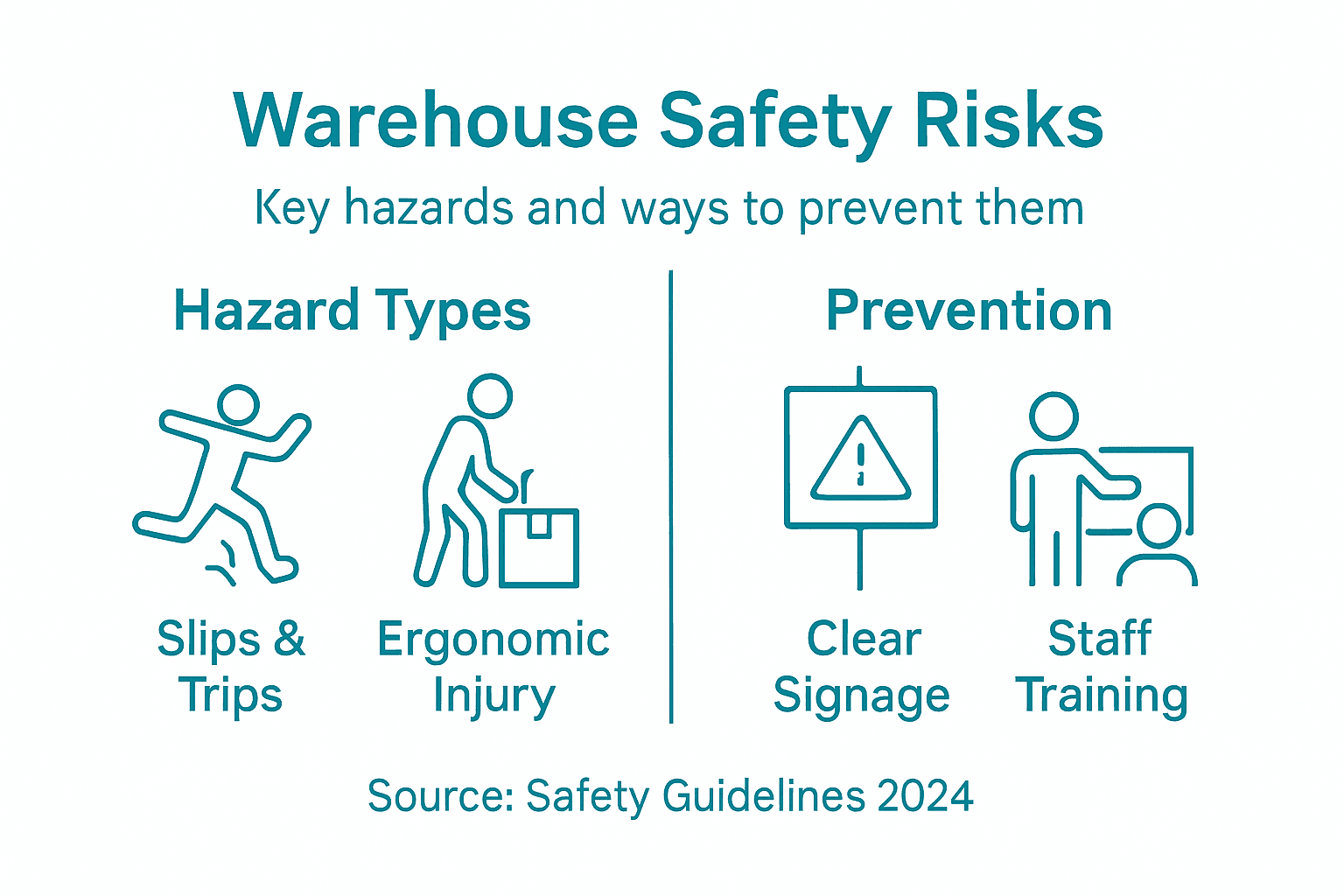
Here is a summary of common warehouse hazards and recommended mitigation strategies:
| Hazard Type | Example Risk | Mitigation Strategy |
|---|---|---|
| Physical | Uneven flooring | Regular floor inspections |
| Ergonomic | Repetitive heavy lifting | Rotate tasks, provide lifting aids |
| Environmental | Poor lighting, noise | Improve lighting and acoustic controls |
| Equipment Failure | Malfunctioning forklift | Daily equipment checks, prompt repairs |
Pro tip: Consider involving workers from different shifts and roles in your risk assessment to gain multiple perspectives and uncover hidden dangers that management might overlook.
Step 2: Establish clear safety protocols and signage
Creating a safe warehouse environment requires more than good intentions it demands precise communication and visual guidance. Effective safety signage communicates critical hazards by providing clear visual instructions that workers can understand quickly and intuitively. Your goal is to develop a comprehensive safety communication system that prevents accidents before they happen.
Start by mapping out every area of your warehouse and identifying potential risk zones. Establishing safety protocols involves integrating hazard identification with well defined procedures and strategically placed signage. Use color coded signs that meet international standards like ISO 3864 to mark different types of hazards emergency exits equipment restricted zones and required personal protective equipment areas. Ensure signs are large enough to be visible from a distance use clear graphics and include concise text that can be quickly understood by workers speaking different languages.
Implement a regular review process for your safety protocols and signage. Workplace conditions change rapidly and your safety communication must evolve alongside them. Train supervisors to consistently enforce protocol adherence and encourage workers to report any signage that becomes damaged faded or unclear.
Pro tip: Keep a digital inventory of all safety signs with their locations and replacement dates to ensure timely updates and maintain a comprehensive safety documentation system.
Step 3: Train all staff on warehouse safety best practices
Transforming your warehouse into a safety focused environment starts with comprehensive staff training that goes beyond basic instructions. OSHA mandates specific workplace safety training to ensure workers recognize and avoid potential hazards in their daily operations. Your training program should be a dynamic system that educates employees about risks unique to warehouse environments and empowers them to take proactive safety measures.
Develop a multilayered training approach that combines theoretical knowledge with practical hands on experiences. Workplace safety training emphasizes practical skills that cover critical areas like equipment handling ergonomics emergency response and proper use of personal protective equipment. Create interactive training modules that include demonstration videos scenario based learning practical workshops and regular skill assessment tests. Ensure training sessions are conducted in multiple languages if your workforce is diverse and include both new hire orientations and ongoing refresher courses to maintain safety awareness.
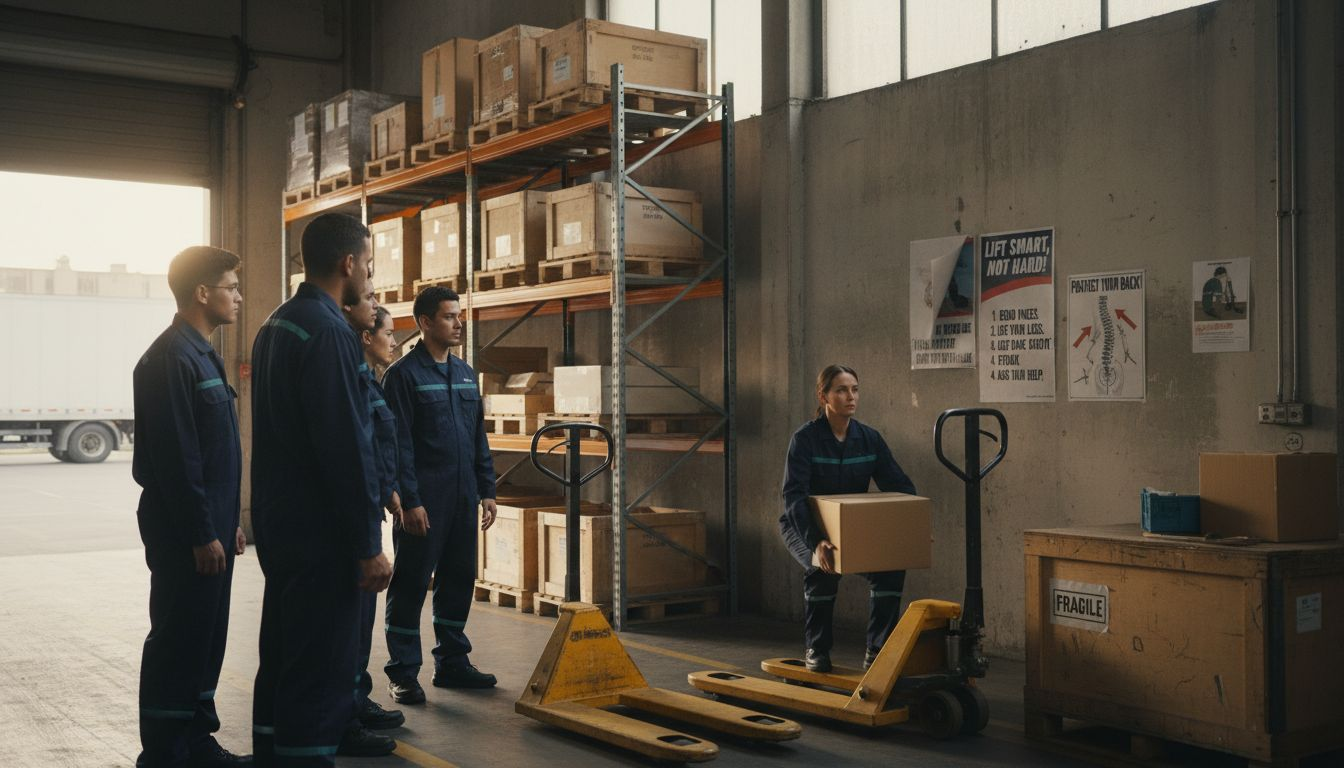
Implement a tracking system that documents each employees training progress certifications and skill levels. Schedule periodic safety drills that simulate potential warehouse emergencies such as equipment malfunctions fire scenarios or medical incidents. This approach transforms safety training from a routine requirement into an engaging continuous learning experience that actively reduces workplace risks.
Pro tip: Rotate training responsibilities among experienced staff members to maintain engagement and leverage internal expertise while creating a culture of shared safety responsibility.
Step 4: Implement safe equipment handling procedures
Safe equipment handling transforms your warehouse from a potential accident zone into a secure operational environment. OSHA standards specify precise equipment handling practices that protect workers and prevent costly workplace incidents. Your goal is to develop a comprehensive approach that combines technical knowledge practical skills and proactive risk management.
Safe material handling requires multiple protective strategies that go beyond basic operational instructions. Create a systematic training program that covers equipment inspection techniques load securing protocols and proper use of mechanical aids like forklifts and transport carts. Implement rigorous certification processes that require employees to demonstrate proficiency before operating any warehouse equipment. Develop detailed checklists for daily equipment inspections that cover mechanical condition operational safety and potential wear indicators. Ensure all staff understand the importance of reporting even minor equipment irregularities immediately.
Establish a culture of continuous learning and equipment awareness by integrating regular skill assessments equipment maintenance workshops and real world scenario training. Rotate equipment handling responsibilities to prevent operator fatigue and maintain high safety standards across different shifts and teams. Document all training sessions equipment usage and maintenance records to create a comprehensive safety tracking system.
Pro tip: Develop color coded inspection tags for equipment that quickly communicate maintenance status and inspection dates to all warehouse staff.
Step 5: Monitor, audit, and update safety measures
Transforming warehouse safety requires more than initial implementation it demands consistent and strategic monitoring. Effective occupational safety management incorporates continuous monitoring that adapts to changing workplace conditions and emerging risks. Your goal is to develop a dynamic safety system that evolves proactively rather than reactively addressing potential hazards.
Data driven management supports workplace safety improvements through systematic tracking and analysis of safety performance indicators. Establish a comprehensive incident reporting system that captures near misses accidents and potential risks with detailed documentation. Create quarterly safety audits that thoroughly examine equipment maintenance training effectiveness workplace ergonomics and compliance with current safety regulations. Implement digital tracking tools that allow real time reporting and immediate visibility into safety metrics. Develop a cross functional safety committee that includes workers from different shifts and departments to provide diverse perspectives on potential improvements.
The table below compares the benefits of ongoing safety audits versus one-time assessments:
| Aspect | Ongoing Audits | One-Time Assessment |
|---|---|---|
| Hazard Detection | Identify new risks | Identify current risks |
| Process Impact | Improves continuously | One-off improvement only |
| Staff Engagement | Sustains awareness | Short-term awareness |
| Compliance | Adapts to new standards | Meets current standards |
Encourage a culture of open communication where employees feel empowered to report safety concerns without fear of reprisal. Use anonymous feedback mechanisms digital reporting platforms and regular safety suggestion sessions to gather insights from your workforce. Regularly benchmark your safety performance against industry standards and update your protocols based on emerging best practices and technological advancements.
Pro tip: Create a visual safety dashboard that displays key performance indicators and tracks progress transparently to maintain team engagement and motivation.
Strengthen Your Warehouse Safety with Reliable Logistics Solutions
Warehouse safety demands constant vigilance against risks like equipment failure and ergonomic hazards. This article highlights key practices such as thorough risk assessments, clear safety protocols, and ongoing staff training to prevent accidents and protect your team. However, managing these safety measures alongside smooth operations can be challenging without the right logistics partner.

Take the next step in safeguarding your warehouse and streamlining your supply chain by partnering with or-ner.com. Our platform offers reliable courier services coupled with global warehousing, real-time shipment tracking, and inventory management to help you maintain a safe and efficient operation. Empower your workforce with end-to-end visibility and automation tools designed to reduce errors and improve safety compliance. Explore how our logistics solutions support your safety goals and operational excellence today.
Frequently Asked Questions
How can I assess safety risks in our warehouse?
Begin by conducting a thorough walkthrough of the warehouse to identify potential hazards such as uneven flooring, blocked exits, and equipment positioning. Document your findings systematically to ensure a comprehensive risk assessment that can be updated regularly.
What safety protocols should we implement for our warehouse staff?
Establish clear safety protocols that include visual signage, emergency procedures, and proper handling instructions. Regularly review and update these protocols to adapt to changing conditions and ensure all employees are trained on them.
How often should we train our warehouse staff on safety practices?
Training should be an ongoing process, with new hire orientations and regular refresher courses scheduled throughout the year. Aim for at least two training sessions per year to keep all staff informed and engaged with current safety practices.
What are effective equipment handling procedures in a warehouse?
Develop specific procedures that include regular inspections, proper securing of loads, and only allowing trained staff to operate equipment. Implement daily checklists for equipment to enhance safety and minimize risks of accidents.
How do we create a culture of safety in our warehouse?
Encourage open communication regarding safety concerns and establish a system for reporting issues without fear of reprisal. Engage employees in safety committees and regular safety drills to foster a shared sense of responsibility and awareness.
What should we do if a safety incident occurs in our warehouse?
Immediately report and document the incident, including any near misses. Conduct a thorough investigation to identify the root cause and adjust safety measures accordingly to prevent future occurrences.
Recommended
- 7 Essential Warehouse Safety Tips for Ecommerce Logistics – ORNER
- Shipping Hazardous Materials: Step-by-Step Compliance Guide – ORNER
- Just in Time Delivery: Essential Guide for 2025 Success – ORNER
- Cargo Theft Prevention: Safeguarding US Ecommerce Shipments – ORNER
- Office Furniture Dismantling Guide 2025: Trusted UK Solutions | Schott Removals