Reverse logistics sounds like a problem nobody wants. Think of returns, replacements, and recycling all clogging up the flow of ecommerce. Now, here is something wild. Reverse logistics can represent 3 to 4 percent of a company’s total logistics costs, and done right, it can actually save millions and win customers back for good. Most supply chains focus hard on getting products to buyers, but the real edge now comes from how smartly companies bring goods back.
Table of Contents
- What Are Reverse Logistics Strategies?
- Why Reverse Logistics Matter In Modern Supply Chains
- How Reverse Logistics Works: Key Processes Explained
- Key Concepts Of Effective Reverse Logistics Strategies
- Real-World Applications And Case Studies Of Reverse Logistics
Quick Summary
| Takeaway | Explanation |
|---|---|
| Reverse logistics optimize returns for value recovery. | Implementing reverse logistics allows businesses to minimize losses by recapturing value from returned products through effective management processes. |
| Sustainability boosts brand reputation and customer loyalty. | A strong reverse logistics strategy enhances environmental responsibility, attracting consumers who prioritize sustainable practices and improving overall brand trust. |
| Data analytics drive efficient reverse logistics operations. | Analyzing return data helps companies identify patterns and issues, allowing for proactive management of returns to improve efficiency and reduce costs. |
| Effective return policies enhance customer satisfaction. | Clear and user-friendly return processes not only improve the customer experience but also encourage repeat business and contribute to customer loyalty. |
| Circular economy models benefit from reverse logistics. | Transitioning from linear to circular supply chains through effective reverse logistics creates new revenue streams and reduces waste, benefiting both the business and the environment. |
What Are Reverse Logistics Strategies?
Reverse logistics strategies represent a comprehensive approach to managing product returns, replacements, and recycling within the ecommerce supply chain. Unlike traditional forward logistics that move products from manufacturers to consumers, reverse logistics focuses on the opposite flow of goods, addressing how products return through the supply chain after initial delivery.
Core Components of Reverse Logistics
Reverse logistics strategies encompass multiple critical operational processes designed to recapture value and minimize waste. According to research from MIT OpenCourseWare, these strategies typically involve several key operations:
- Product collection and initial assessment
- Inspection and sorting of returned items
- Determining appropriate disposition pathways
- Potential repair, refurbishment, or repackaging
- Recycling or responsible disposal of non-recoverable products
Economic and Sustainability Implications
Effective reverse logistics strategies are not just operational necessities but also significant economic opportunities. Research indicates that reverse logistics can represent 3-4% of a company’s total logistics costs, with potential for substantial savings through strategic management.
The goal extends beyond cost reduction. Modern reverse logistics strategies are increasingly aligned with sustainability objectives, transforming returns from a potential loss center into a value-generating process. By implementing smart reverse logistics processes, ecommerce businesses can:
- Minimize environmental waste
- Recover maximum product value
- Enhance customer satisfaction through transparent return policies
- Create circular economy opportunities
Understanding and implementing sophisticated reverse logistics strategies requires a holistic approach that balances operational efficiency, customer experience, and environmental responsibility.
The table below summarizes the core components of reverse logistics strategies in eCommerce and explains the focus of each component for easy reference.
| Component | Description |
|---|---|
| Product Collection | Retrieval of returned products from customers or distribution channels |
| Initial Assessment | Evaluating the returned item for condition, eligibility, and next steps |
| Inspection and Sorting | Detailed examination and categorization based on product quality and disposition requirements |
| Disposition Determination | Deciding whether products should be refurbished, recycled, resold, or disposed of responsibly |
| Repair and Refurbishment | Restoring products to a saleable or usable condition, when possible |
| Recycling or Disposal | Breaking down irreparable products for material recovery or environmentally safe waste management |
Why Reverse Logistics Matter in Modern Supply Chains
In the rapidly evolving landscape of global ecommerce, reverse logistics has transformed from a peripheral operational function into a critical strategic component of supply chain management. Modern businesses recognize that effective reverse logistics strategies are no longer optional but essential for maintaining competitive advantage and meeting evolving consumer expectations.
Economic Value and Cost Management
Reverse logistics represents a significant economic opportunity for businesses. According to research from the OECD, effective reverse logistics enable organizations to close material loops in their supply chains, creating substantial financial and environmental benefits. By implementing sophisticated logistics management strategies, companies can:
- Reduce overall supply chain expenses
- Recover value from returned products
- Minimize waste and disposal costs
- Optimize inventory management
Sustainability and Circular Economy Transformation
Reverse logistics plays a pivotal role in transitioning towards a circular economy model. Traditional linear supply chains focused on one-way product movement are being replaced by more dynamic, interconnected systems that prioritize product reuse, repair, and recycling. This shift not only reduces environmental impact but also creates new revenue streams and enhances brand reputation.
Customer Experience and Brand Loyalty
Consumers increasingly evaluate brands based on their return policies and sustainability practices. A well-designed reverse logistics strategy can significantly enhance customer satisfaction by providing transparent, efficient, and environmentally responsible return processes. Businesses that invest in seamless return experiences demonstrate commitment to customer service and environmental stewardship, ultimately driving long-term brand loyalty and competitive differentiation.
How Reverse Logistics Works: Key Processes Explained
Reverse logistics involves a complex series of interconnected processes that transform product returns from potential losses into strategic opportunities. Understanding these processes enables businesses to optimize their supply chain performance and create value from returned merchandise.
Return Initiation and Customer Engagement
The reverse logistics journey begins with customer return requests. Modern logistics processes involve multiple return channels, including online platforms, physical store returns, and customer service interactions. Companies must design intuitive, user-friendly return mechanisms that capture critical information about product condition, return reason, and customer preferences.
Key return initiation elements include:
- Comprehensive online return authorization systems
- Clear return policy communication
- Multiple return submission methods
- Detailed product condition documentation
Product Assessment and Disposition
Once a product enters the reverse logistics system, rigorous assessment determines its potential future value. According to research from MIT, this stage involves multiple classification and processing steps. Products typically follow distinct pathways:
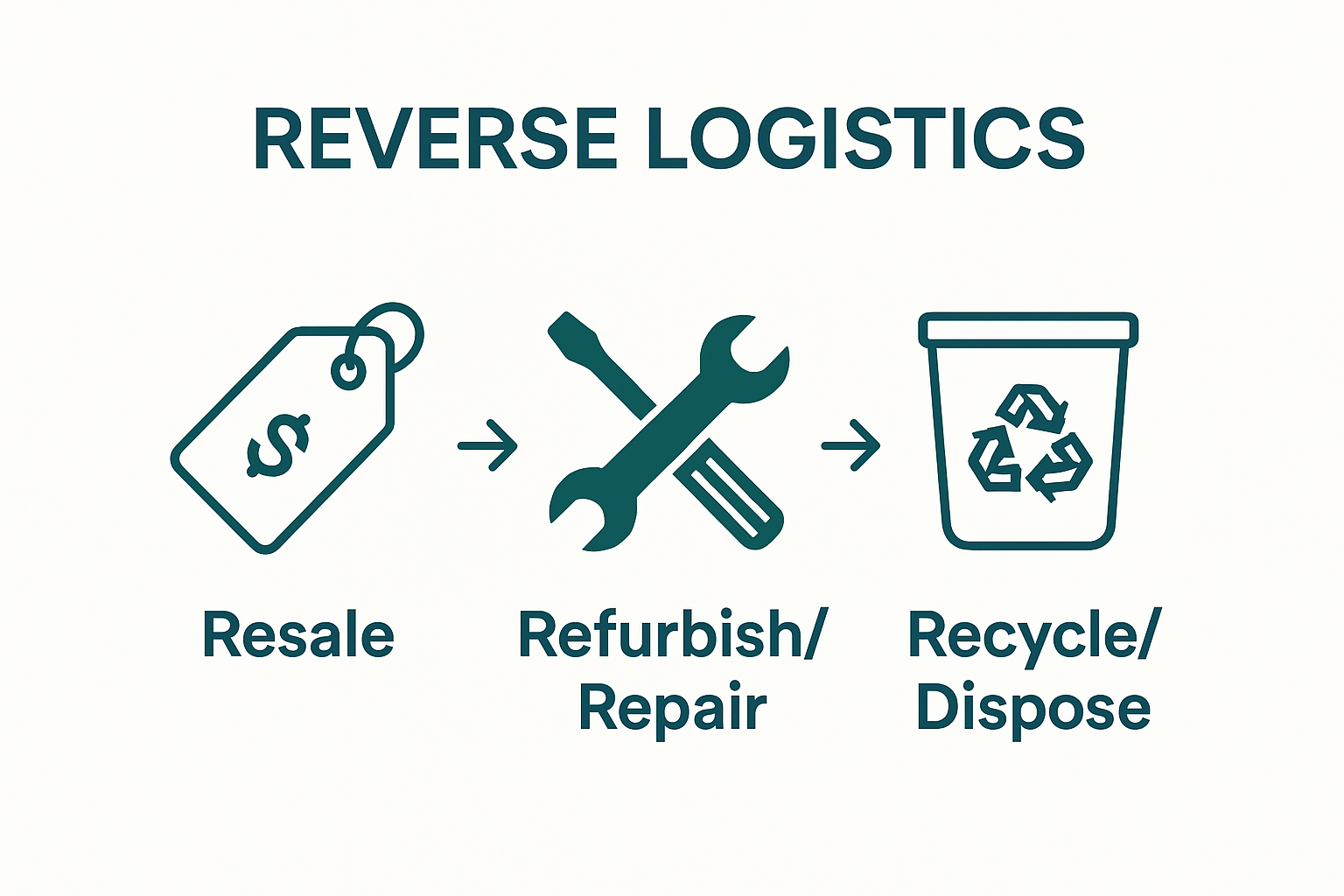
- Resale as new or refurbished items
- Component part recovery
- Material recycling
- Responsible disposal
Reintegration and Value Recovery
Successful reverse logistics transforms returns from potential waste into revenue streams. Advanced businesses employ sophisticated sorting technologies and data analytics to maximize product value. This process involves identifying repair opportunities, determining resale potential, and implementing efficient remarketing strategies.
The ultimate goal is creating a closed-loop system where returned products are seamlessly reintegrated into the supply chain, minimizing waste and maximizing economic and environmental benefits.
Key Concepts of Effective Reverse Logistics Strategies
Developing robust reverse logistics strategies requires a comprehensive understanding of interconnected operational principles that transform product returns from potential challenges into strategic opportunities. Successful implementation demands a holistic approach that integrates technological, operational, and customer-centric perspectives.
Strategic Planning and Data Analytics
Effective reverse logistics begins with sophisticated data collection and analysis. According to research from American Military University, strategic planning involves multiple critical elements that enable businesses to optimize their return management processes. Sustainable logistics practices require businesses to leverage advanced analytics to:
- Track return patterns and root causes
- Identify product quality issues
- Predict potential return rates
- Develop proactive improvement strategies
Technological Infrastructure and Automation
Modern reverse logistics strategies rely heavily on advanced technological solutions that streamline return processes. Automation technologies enable businesses to reduce manual intervention, minimize processing times, and enhance overall operational efficiency. Key technological components include:
- Integrated return management software
- Automated sorting and classification systems
- Real-time tracking and reporting mechanisms
- Machine learning algorithms for predictive analysis
Customer Experience and Policy Design
A customer-centric approach is fundamental to successful reverse logistics strategies. Organizations must design return policies that balance operational efficiency with customer satisfaction. This involves creating transparent, accessible, and flexible return mechanisms that build trust and encourage repeat business.
Ultimately, effective reverse logistics strategies are not just about managing returns but transforming them into opportunities for continuous improvement, customer loyalty, and sustainable business practices.
Real-World Applications and Case Studies of Reverse Logistics
Reverse logistics strategies have evolved from theoretical concepts to practical implementation across multiple industries, demonstrating significant potential for economic and environmental optimization. By examining real-world applications, businesses can gain valuable insights into effective return management and value recovery approaches.
Electronics and Technology Sector
Sustainable logistics solutions have transformed electronics returns into opportunities for resource recovery and circular economy practices. According to research from MIT, innovative approaches are enabling companies to reimagine product lifecycles. Key strategies in the electronics sector include:
- Comprehensive device refurbishment programs
- Component-level material recovery
- Secure data erasure and device sanitization
- Responsible electronic waste management
Apparel and Fashion Industry Innovations
Fashion brands are pioneering reverse logistics strategies that address both economic and sustainability challenges. Advanced textile recycling technologies and circular design principles enable companies to transform returned clothing into new product streams. Innovative approaches include:
- Fabric material downcycling
- Garment repair and restoration services
- Textile fiber regeneration technologies
- Resale platforms for pre-owned clothing
Automotive and Manufacturing Reverse Supply Chains
Manufacturing sectors have long recognized the strategic value of reverse logistics. By implementing sophisticated return and remanufacturing processes, companies can significantly reduce raw material costs and environmental impact. These systems focus on:
- Core component remanufacturing
- Modular parts recovery and restoration
- Precision engineering for part rehabilitation
- Advanced diagnostic and assessment technologies
These real-world applications demonstrate that reverse logistics is not merely a cost management strategy but a comprehensive approach to sustainable business practices.
This table provides a side-by-side comparison of reverse logistics strategies across three major industries, highlighting their unique focus areas and approaches.
| Industry Sector | Key Reverse Logistics Strategies | Notable Approaches |
|---|---|---|
| Electronics & Tech | Device refurbishment, component recovery, e-waste management | Secure data erasure, material recycling |
| Apparel & Fashion | Textile recycling, garment repair, resale of pre-owned clothing | Fiber regeneration, restoration services |
| Automotive & Mfg. | Core part remanufacturing, modular parts recovery, part rehabilitation | Precision engineering, diagnostic technologies |
Take Control of Reverse Logistics with Reliable Courier Solutions
Are slow returns, rising costs, or complicated product assessments hurting your ecommerce growth? The article highlights how the right reverse logistics strategies can transform returns into value—if you have the right system in place. These challenges are tough for any online business, especially with growing customer expectations and pressure to control waste.
With reliable courier services, you get more than just fast shipping. Our platform offers integrated returns management, real-time tracking, and automated workflows to turn reverse logistics into a competitive advantage. Your brand can effortlessly manage product returns, restocking, or refurbishment without the headaches of manual intervention or lost packages.
Ready to streamline your entire reverse supply chain and unlock new efficiencies? Visit or-ner.com to discover how our all-in-one logistics solutions support seamless product returns, advanced inventory control, and cross-border fulfillment. Take action today and gain the transparent data, support, and reliability your ecommerce operation needs to keep customers loyal and costs under control.
Frequently Asked Questions
What are reverse logistics strategies in eCommerce?
Reverse logistics strategies in eCommerce refer to the processes that manage product returns, recycling, and disposal. They focus on how goods flow back through the supply chain after reaching consumers, aiming to recapture value and minimize waste.
Why are reverse logistics important for businesses?
Reverse logistics are crucial as they help businesses reduce overall logistics costs, recover value from returned products, and enhance customer satisfaction. Effective strategies can also align with sustainability goals, turning returns into opportunities for economic growth and environmental responsibility.
How does reverse logistics contribute to sustainability?
Reverse logistics contributes to sustainability by minimizing waste and promoting practices such as recycling and refurbishing products. This shift allows businesses to implement circular economy principles, reducing their environmental impact while creating new revenue streams.
What are the main processes involved in reverse logistics?
The main processes in reverse logistics include return initiation, product assessment, disposition determination, and reintegration of returned products into the supply chain. These processes work together to transform returns into valuable opportunities.