Figuring out shipping for your business can feel overwhelming, especially when you need to choose between Less Than Truckload (LTL) and Full Truckload (FTL) options. Most people think shipping is all about price, but that only scratches the surface. The real surprise is that picking the right method could mean better delivery speed, fewer damaged goods, and a real edge against your competitors. In fact, LTL is often the top choice for shipments between 100 and 10,000 pounds, while FTL is favored for larger loads and urgent deliveries. The differences between these systems can completely upend your logistics strategy.
Table of Contents
- Defining Ltl And Ftl Shipping: Key Concepts
- Why Ltl Vs Ftl Matters In Logistics And Supply Chain
- How Ltl And Ftl Shipping Work: Process And Operations
- Comparing Costs And Efficiency: Ltl Vs Ftl
- Real-World Applications: Choosing Between Ltl And Ftl
Quick Summary
| Takeaway | Explanation |
|---|---|
| Choose LTL for smaller shipments | Use Less Than Truckload shipping for freight volumes between 100 and 10,000 pounds to reduce costs. |
| Opt for FTL with larger loads | Select Full Truckload shipping when your shipment exceeds 10,000 pounds for faster delivery and lower risk. |
| Evaluate operational costs beyond pricing | Consider factors like handling, transit time, and inventory costs when comparing LTL and FTL shipping. |
| Assess industry-specific shipping needs | Assess logistical requirements based on your industry, as different sectors may benefit from different shipping methods. |
| Make shipping strategic for performance | Align your shipping method with overall business strategy to enhance efficiency, customer satisfaction, and competitive advantage. |
Defining LTL and FTL Shipping: Key Concepts
Understanding the differences between Less Than Truckload (LTL) and Full Truckload (FTL) shipping is crucial for businesses managing logistics and transportation strategies. These two primary freight shipping methods serve distinct purposes and offer unique advantages depending on shipment requirements.
What is LTL Shipping?
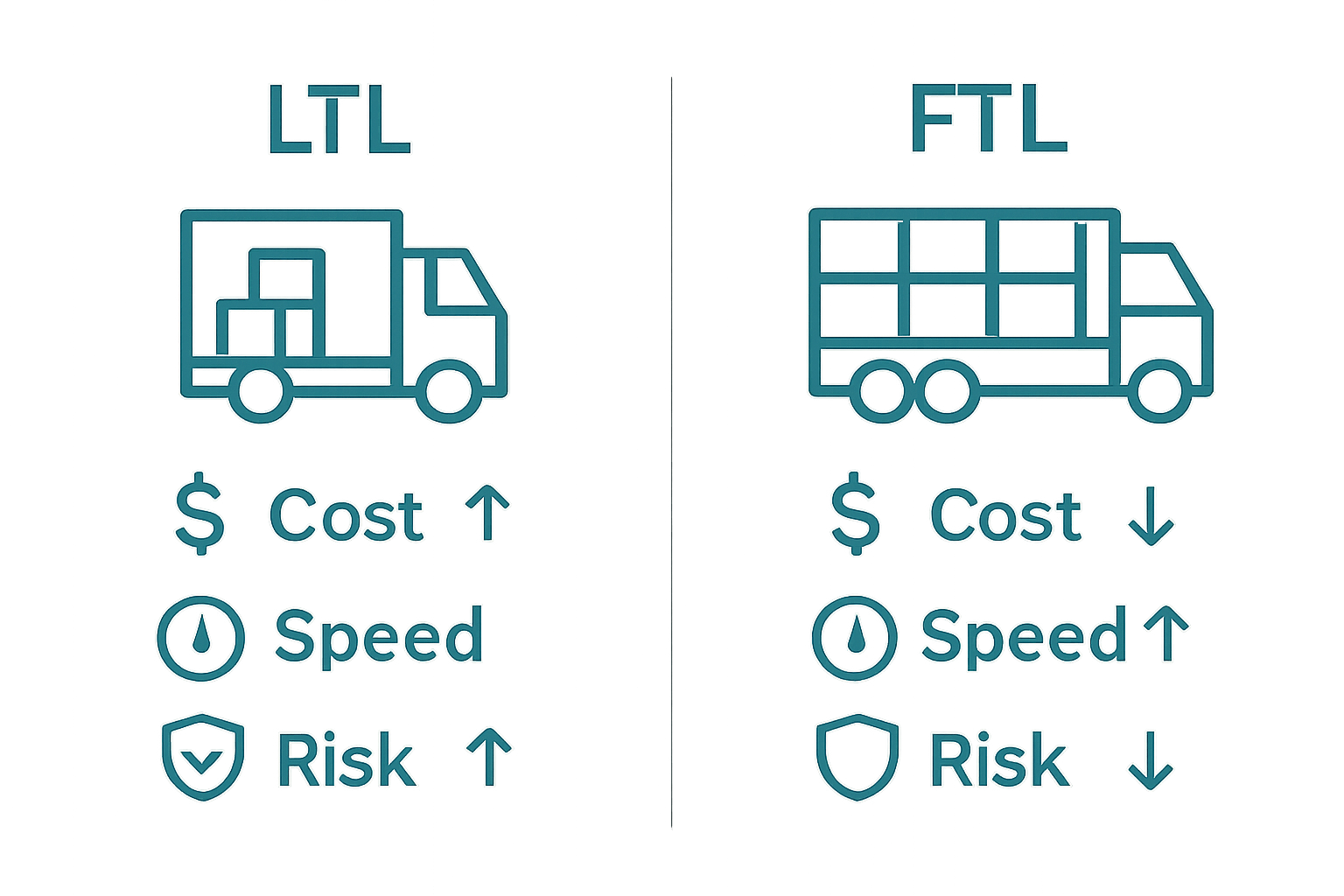
Less Than Truckload (LTL) shipping is a transportation method designed for smaller freight volumes that do not require an entire truck. In LTL shipping, multiple shippers share truck space, which allows businesses to optimize shipping costs by paying only for the space their goods occupy.
Key characteristics of LTL shipping include:
- Shipments typically weighing between 100 and 10,000 pounds
- More cost effective for smaller cargo volumes
- Longer transit times due to multiple stops and cargo consolidation
- Ideal for businesses with smaller inventory quantities
What is FTL Shipping?
Full Truckload (FTL) shipping involves dedicating an entire truck to a single shipper’s goods. This method is preferred when businesses have large shipment volumes or require expedited, direct transportation.
Primary features of FTL shipping include:
- Shipments generally exceeding 10,000 pounds or occupying more than 10 pallets
- Faster transit times with direct, uninterrupted routes
- Lower risk of cargo handling and potential damage
- More predictable delivery schedules
Businesses can read more about freight forwarding strategies to better understand how these shipping methods integrate into comprehensive logistics planning. Understanding the nuances between LTL and FTL shipping helps companies make informed decisions that balance cost efficiency, delivery speed, and cargo protection.
To clarify the differences between Less Than Truckload (LTL) and Full Truckload (FTL) shipping, the following table compares key characteristics, cost factors, and operational advantages side by side.
| Aspect | LTL Shipping | FTL Shipping |
|---|---|---|
| Shipment Size | 100 to 10,000 pounds | Over 10,000 pounds/More than 10 pallets |
| Cost Structure | Pay for space used (freight class, weight, distance) | Flat rate for full truck, regardless of cargo volume |
| Transit Time | Longer (multiple stops, cargo consolidation) | Faster (direct, point-to-point) |
| Handling | More frequent handling and cargo transfers | Minimal handling, reduced damage risk |
| Ideal For | Smaller cargo, multiple shippers | Large, urgent, or high-value shipments |
| Delivery Predictability | Less predictable | More predictable |
| Risk of Damage | Higher (more handling) | Lower (direct shipment, minimal transfers) |
Why LTL vs FTL Matters in Logistics and Supply Chain
The selection between Less Than Truckload (LTL) and Full Truckload (FTL) shipping is a strategic decision that significantly impacts a company’s logistics efficiency, cost management, and overall supply chain performance. Understanding the nuanced implications of these shipping methods helps businesses optimize their transportation strategies.
Cost and Efficiency Considerations
Choosing between LTL and FTL shipping directly influences a company’s operational expenses and logistical effectiveness. Cost efficiency varies dramatically based on shipment volume, frequency, and destination. Small to medium businesses often find LTL more economical, while larger enterprises with consistent high-volume shipments benefit from FTL’s streamlined approach.
Key financial factors include:
- Direct transportation expenses
- Cargo handling and potential damage risks
- Time spent in transit
- Inventory carrying costs
Strategic Supply Chain Implications
The LTL versus FTL decision extends beyond immediate shipping costs. It represents a critical strategic choice that affects inventory management, delivery speed, and customer satisfaction. Understanding ecommerce logistics reveals how shipping method selection can dramatically influence overall business performance.
According to the U.S. Department of Transportation, the choice between LTL and FTL significantly impacts supply chain reliability and cost structures. Companies must evaluate their specific needs, considering factors like shipment frequency, product characteristics, and delivery timelines.
Businesses must conduct thorough analysis to determine the most appropriate shipping method. This involves assessing current shipping volumes, projected growth, product fragility, and budget constraints. The right shipping strategy can transform logistics from a cost center into a competitive advantage.
How LTL and FTL Shipping Work: Process and Operations
The operational mechanics of Less Than Truckload (LTL) and Full Truckload (FTL) shipping involve complex logistics processes that require strategic planning, coordination, and specialized infrastructure. Understanding the intricate workflows helps businesses make informed transportation decisions.
LTL Shipping Operational Framework
LTL shipping operates through a sophisticated network of consolidation and distribution centers. When a shipment is too small to fill an entire truck, it is carefully grouped with other compatible cargo from different shippers. Freight carriers strategically plan routes to maximize truck capacity and minimize transportation costs.
Key operational characteristics include:
- Multiple loading and unloading points during transit
- Detailed freight classification and weight calculations
- Complex routing algorithms for cargo consolidation
- Precise tracking and documentation processes
FTL Shipping Operational Dynamics
Full Truckload shipping follows a more direct operational approach. A single shipper’s goods occupy the entire truck, enabling faster and more predictable transportation. Learn more about freight forwarding strategies to understand how these logistics networks function efficiently.
According to transportation industry research, the operational complexity of shipping methods directly impacts overall supply chain performance. FTL shipments typically involve:
- Direct point-to-point transportation
- Minimal cargo handling and transfer points
- Dedicated truck space for a single shipper
- Faster transit times and reduced potential for cargo damage
The operational nuances between LTL and FTL shipping demonstrate the importance of selecting the right transportation method based on specific business requirements, shipment characteristics, and logistical constraints.
This table summarizes the main operational steps for both LTL and FTL shipping, highlighting the logistical differences that businesses should consider in their transportation strategy.
| Operational Step | LTL Shipping | FTL Shipping |
|---|---|---|
| Cargo Consolidation | Yes, shipments combined from multiple shippers | No, single shipper per truck |
| Loading/Unloading Points | Multiple (at each consolidation or distribution) | At origin and final destination |
| Routing Complexity | High (complex route planning, multiple stops) | Low (direct route, minimal stops) |
| Tracking & Documentation | Detailed, frequent updates due to transfers | Simpler, direct tracking |
| Handling Frequency | Higher (frequent cargo movements) | Minimal handling |
Comparing Costs and Efficiency: LTL vs FTL
The financial and operational trade-offs between Less Than Truckload (LTL) and Full Truckload (FTL) shipping are complex, requiring businesses to carefully analyze their specific logistics requirements. Cost efficiency is not simply about comparing direct transportation expenses but involves a comprehensive evaluation of multiple interconnected factors.
Cost Structure Analysis
Pricing models for LTL and FTL shipping differ significantly. LTL shipping charges are calculated based on freight class, weight, density, and distance traveled. In contrast, FTL pricing typically involves a flat rate for the entire truck, regardless of cargo volume. Small to medium enterprises often find LTL more economical, while larger businesses with consistent high-volume shipments benefit from FTL’s predictable pricing.
Key cost considerations include:
- Freight classification and weight calculations
- Distance and route complexity
- Fuel surcharges and accessorial fees
- Potential inventory carrying costs
Efficiency and Performance Metrics
According to the Federal Highway Administration, shipping efficiency extends beyond direct transportation expenses. LTL rates can be lower for smaller shipments, but they involve more complex logistics with multiple loading and unloading points. Learn more about logistics network strategies to understand these nuanced trade-offs.
Efficiency metrics to evaluate include:
- Total transit time
- Cargo handling frequency
- Risk of product damage
- Flexibility in shipping schedules
Businesses must conduct a holistic analysis, considering not just immediate costs but long-term operational impacts. The right shipping strategy can transform logistics from a cost center into a competitive advantage, balancing economic efficiency with strategic performance requirements.
Real-World Applications: Choosing Between LTL and FTL
The decision between Less Than Truckload (LTL) and Full Truckload (FTL) shipping extends far beyond theoretical considerations, directly impacting operational efficiency and financial performance across diverse industries. Businesses must carefully evaluate their unique logistical requirements to select the most appropriate shipping strategy.
Industry-Specific Shipping Strategies
Manufacturing and wholesale sectors frequently encounter scenarios requiring nuanced shipping approaches. Small to medium manufacturers might leverage LTL shipping for component deliveries, while large production facilities often rely on FTL for bulk material transportation. The shipping method becomes a critical strategic decision that influences inventory management, production schedules, and overall supply chain resilience.
Industry considerations for shipping method selection include:
- Product volume and weight characteristics
- Frequency of shipments
- Inventory management requirements
- Budget constraints and cost optimization
Practical Decision-Making Frameworks
According to the National Academies Press, operational complexity varies significantly between LTL and FTL shipping networks. Companies must conduct comprehensive evaluations that transcend simple cost comparisons. Explore ecommerce logistics strategies to understand how shipping decisions impact broader business performance.
Critical evaluation metrics for shipping method selection include:
- Shipment predictability
- Risk of product damage
- Transportation network flexibility
- Total landed cost considerations
Successful businesses recognize that shipping is not a one-size-fits-all solution. The most effective logistics strategies dynamically adapt shipping methods to evolving business needs, market conditions, and operational constraints.
Take Control of Your Shipping Strategy With Reliable Courier Services
Struggling to find the right balance between LTL and FTL shipping can slow down your business and cause unnecessary costs. As outlined in this article, choosing the best approach impacts your delivery speed, inventory management, and customer satisfaction. If managing complex shipping decisions feels overwhelming, you are not alone. Delays, high expenses, and a lack of visibility can weigh heavily on fast-growing ecommerce operations.
Unlock the full potential of your logistics with reliable courier services. The or-ner.com platform gives you end-to-end control, letting you compare freight options, automate workflows, and gain real-time shipment tracking across LTL and FTL solutions. Join a global network of trusted warehouses and fulfillment experts built for businesses handling everything from home goods to toys. Take the next step to smarter, more efficient shipping at or-ner.com. Your supply chain deserves a partner designed for growth. Act today and transform your shipping into a competitive advantage.
Frequently Asked Questions
What is the difference between LTL and FTL shipping?
LTL (Less Than Truckload) shipping is used for smaller freight volumes that do not require an entire truck, allowing multiple shipments to share the space. FTL (Full Truckload) shipping dedicates an entire truck to a single shipment, suitable for larger volumes or expedited delivery.
When should I choose LTL shipping over FTL?
Choose LTL shipping when your shipment weighs between 100 and 10,000 pounds and does not occupy an entire truck. It’s cost-effective for smaller cargo volumes and ideal for businesses with lower inventory.
What are the cost factors involved in LTL and FTL shipping?
LTL costs are based on freight class, weight, density, and distance. FTL rates typically involve a flat rate for the whole truck. Additional costs such as fuel surcharges and handling fees may also apply.
How do transit times compare between LTL and FTL shipping?
LTL shipping generally has longer transit times due to multiple stops for loading and unloading cargo, while FTL shipping provides faster transit with direct routes, reducing potential cargo handling and damage.