
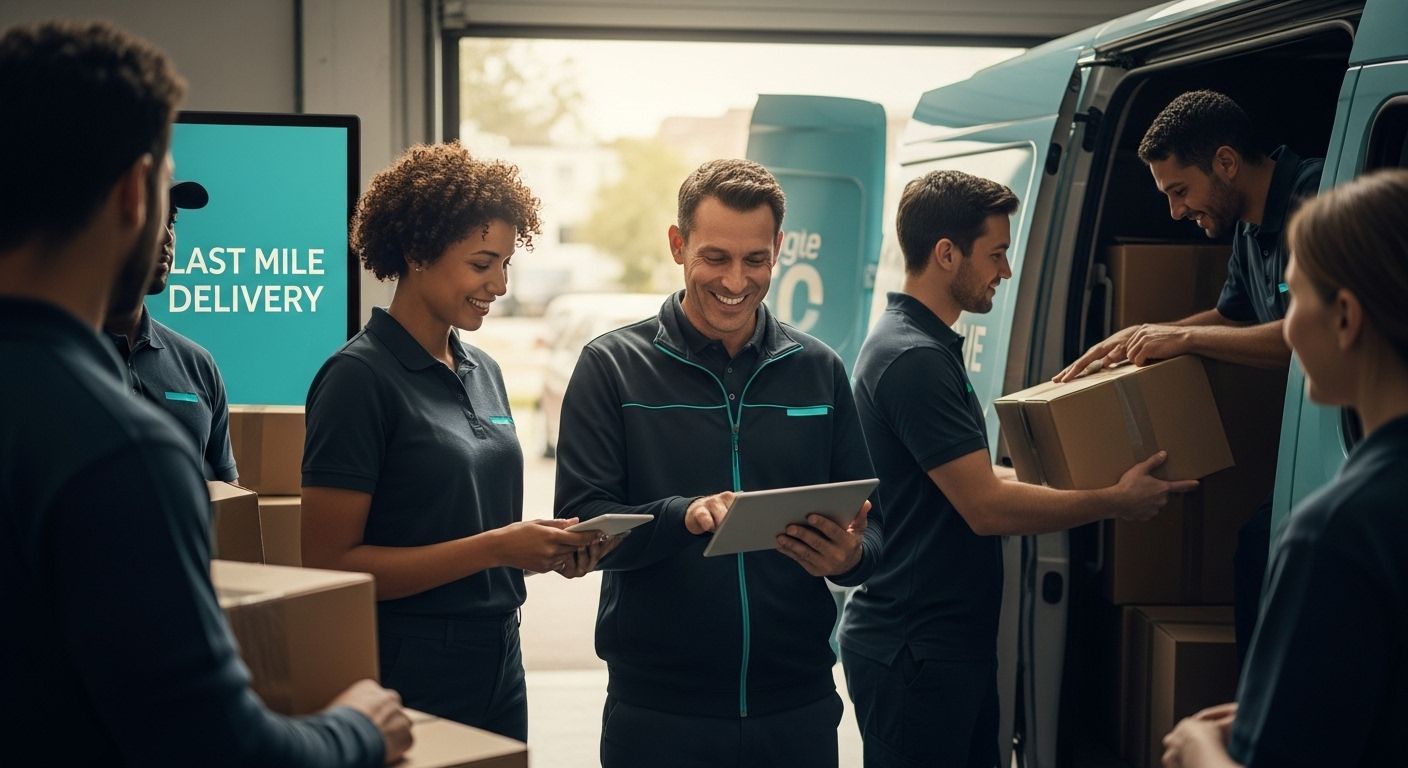
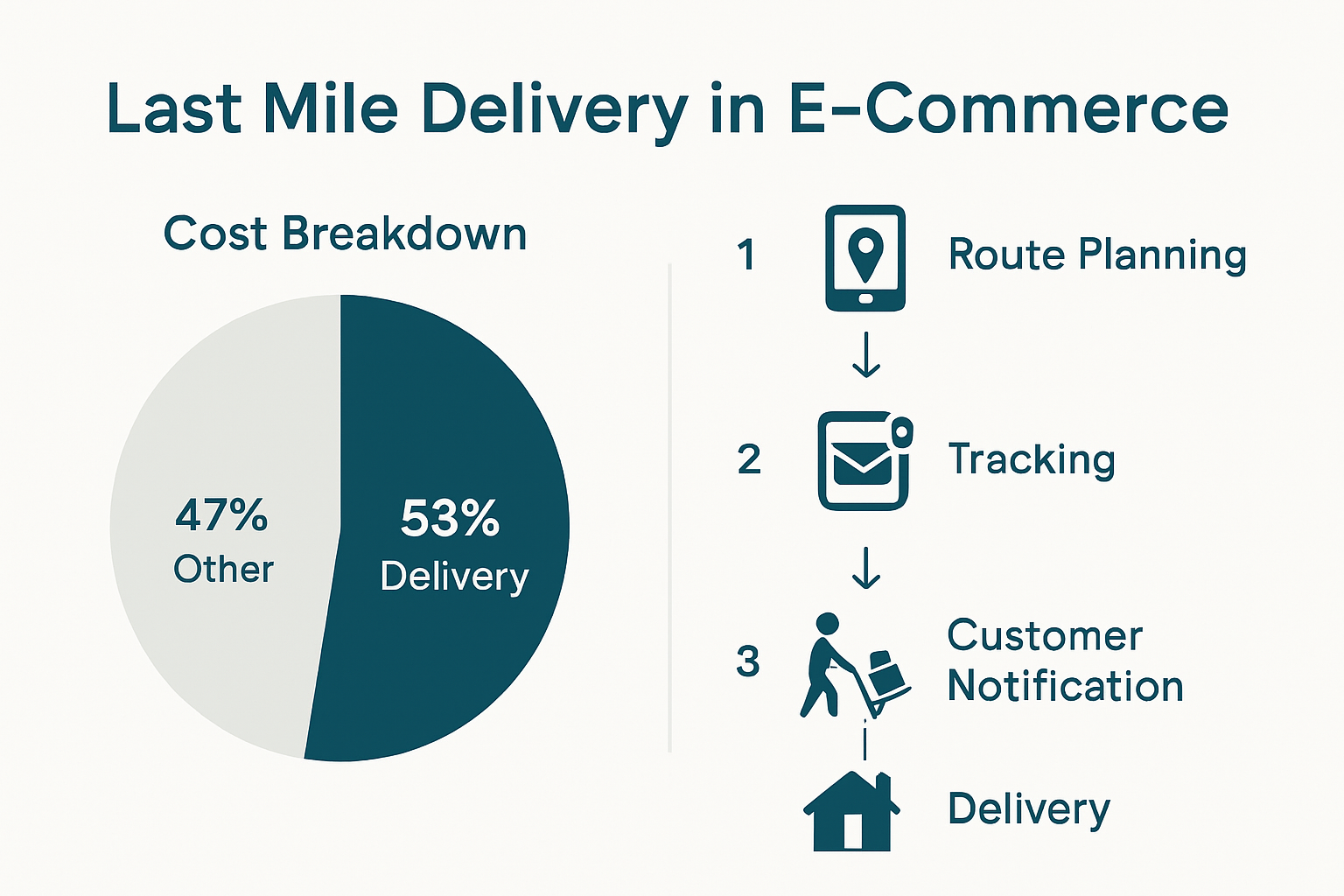
Businesses are spending more on last mile delivery than any other part of shipping and it is creating big challenges and even bigger opportunities. Last mile delivery can eat up to 53 percent of a company’s total shipping budget. Most people think this step is just about getting packages quickly to a customer’s door. The real surprise is that success here depends more on advanced technology and clever strategy than on having more and faster trucks.
Table of Contents
- What Are Last Mile Delivery Solutions?
- The Importance Of Last Mile Delivery In Ecommerce
- How Last Mile Delivery Solutions Work
- Key Concepts In Last Mile Delivery Logistics
Quick Summary
| Takeaway | Explanation |
|---|---|
| Optimize last mile delivery costs | Focus on innovative strategies to reduce the high costs associated with the last mile phase of shipping, which can reach 53% of total delivery costs. |
| Leverage advanced technologies | Utilize tools like real-time tracking and AI-based route optimization to enhance delivery efficiency and customer satisfaction. |
| Flexibility in delivery options is key | Offer customers multiple delivery choices, including precise time windows and location options to meet modern consumer expectations. |
| Integrate logistics and technology | Ensure seamless connectivity between logistics management systems and technology to streamline delivery processes and improve responsiveness. |
| Prioritize customer experience in ecommerce | Develop delivery services that prioritize speed, transparency, and flexibility to achieve a competitive edge in the ecommerce landscape. |
What are Last Mile Delivery Solutions?
Last mile delivery solutions represent the final critical stage in the logistics journey, focusing on transporting goods from distribution centers directly to the end customer’s doorstep. These solutions are complex transportation strategies designed to optimize the most expensive and challenging segment of the shipping process.
Below is a table summarizing the main features and technological innovations of modern last mile delivery solutions, as described in the section. This table helps clarify how advanced tools and strategies work together to improve efficiency and customer experience.
| Feature/Innovation | Description |
|---|---|
| Rapid & Precise Transportation | Ensures quick movement of products from hub to customer |
| Real-time Tracking | Allows customers and businesses to monitor delivery status instantly |
| Flexible Delivery Options | Provides choices for delivery time windows and locations |
| Cost-effective Routing | Utilizes smart routing strategies to reduce delivery expenses |
| Algorithmic Route Optimization | Uses software algorithms to plan the most efficient driver routes |
| Autonomous & Drone Delivery | Incorporates self-driving vehicles and drones for faster, innovative transportation |
| Smart Logistics Platforms | Integrates systems for dynamic routing and centralized management |
Understanding the Core Concept
At its essence, last mile delivery solutions address the intricate challenge of efficiently moving products from a transportation hub to the final delivery destination. The “last mile” typically represents the shortest but most expensive portion of the shipping process, often accounting for up to 53% of the total delivery cost. According to research from the U.S. Postal Service Office of Inspector General, technology is rapidly transforming this critical logistics segment through innovative approaches.
Key characteristics of last mile delivery solutions include:
- Rapid and precise product transportation
- Real-time tracking capabilities
- Flexible delivery options for customers
- Cost-effective routing strategies
Strategic Technological Innovations
Modern last mile delivery solutions leverage advanced technologies to enhance efficiency and customer satisfaction. These innovations include algorithmic route optimization, autonomous vehicles, drone delivery systems, and smart logistics platforms that enable real-time tracking and dynamic routing.
Businesses implementing sophisticated last mile delivery solutions can achieve significant operational improvements, including reduced transportation costs, enhanced delivery speed, and improved customer experience. Learn more about our urban logistics strategies that are reshaping how companies approach final-mile transportation challenges.
The Importance of Last Mile Delivery in Ecommerce
Last mile delivery has emerged as a critical differentiator in the competitive ecommerce landscape, fundamentally transforming how businesses connect with customers and deliver exceptional shopping experiences. This final stage of product transportation represents far more than a simple logistical function.
Customer Expectations and Competitive Advantage
In the digital shopping era, consumers have developed increasingly sophisticated delivery expectations. Speed, transparency, and flexibility are no longer optional but essential service components. According to the U.S. Department of Transportation, the growth of ecommerce has dramatically reshaped urban freight systems, with last mile delivery becoming a key performance indicator for customer satisfaction.
Customer delivery preferences now include:
To provide a clear overview, the following table organizes key customer delivery preferences in ecommerce, as described in the article. This makes it easier to see which features matter most for competitive advantage.
| Customer Delivery Preference | Description |
|---|---|
| Free Shipping Options | Shoppers favor deliveries with no extra cost |
| Real-Time Package Tracking | Ability to follow delivery progress live via tracking systems |
| Precise Delivery Time Windows | Customers can choose specific times for receiving packages |
| Multiple Delivery Location Choices | Orders can be delivered to home, office, or pickup points |
| Seamless Return Processes | Easy and convenient methods for returning unwanted or incorrect items |
- Free shipping options
- Real-time package tracking
- Precise delivery time windows
- Multiple delivery location choices
- Seamless return processes
Economic and Operational Implications
Last mile delivery represents a significant economic challenge and opportunity for ecommerce businesses. While it typically accounts for the most expensive segment of the shipping process, strategic optimization can transform this potential cost center into a competitive advantage. Explore our comprehensive guide to ecommerce logistics to understand how innovative companies are reimagining their delivery strategies.
Businesses that successfully master last mile delivery can achieve substantial benefits, including enhanced customer loyalty, reduced operational costs, and improved market positioning. The ability to deliver products quickly, accurately, and cost-effectively has become a critical determinant of ecommerce success in an increasingly demanding global marketplace.
How Last Mile Delivery Solutions Work
Last mile delivery solutions operate through a sophisticated, interconnected system of technologies, logistics strategies, and advanced transportation networks designed to efficiently transport products from distribution centers to end customers with maximum speed and precision.
Core Operational Mechanisms
The operational framework of last mile delivery solutions involves multiple integrated components working synchronously. These systems leverage advanced technologies like GPS tracking, route optimization algorithms, and real-time communication platforms to orchestrate complex delivery processes.
Key operational components include:
This table summarizes the core operational components that enable last mile delivery solutions to function efficiently, supporting both business needs and customer expectations.
| Operational Component | Purpose/Function |
|---|---|
| Centralized Logistics Management | Coordinates all delivery activities from a single platform |
| Advanced Routing & Mapping Technologies | Determines the most efficient paths and adapts to traffic or geographic changes |
| Dynamic Scheduling Systems | Allows real-time adjustments to delivery times and routes |
| Warehouse Management Integration | Links product storage systems to delivery scheduling for faster order fulfillment |
| Mobile Tracking & Communication | Keeps couriers and customers informed throughout the delivery process |
- Centralized logistics management platforms
- Advanced routing and mapping technologies
- Dynamic scheduling systems
- Warehouse management integration
- Mobile tracking and communication interfaces
Technology-Driven Delivery Ecosystem
Modern last mile delivery solutions transform traditional transportation methods through technological innovation. Artificial intelligence and machine learning algorithms analyze historical delivery data, traffic patterns, and geographic information to generate the most efficient delivery routes. Explore our urban logistics solutions to understand how cutting-edge technologies are revolutionizing product transportation.
Delivery networks now utilize diverse transportation methods, including traditional delivery vehicles, electric bikes, autonomous vehicles, and even drone delivery systems. These multi-modal approaches enable businesses to select the most appropriate and cost-effective transportation method based on specific delivery requirements, geographical constraints, and customer preferences.
Key Concepts in Last Mile Delivery Logistics
Last mile delivery logistics encompasses a complex network of strategic approaches, technological innovations, and operational frameworks designed to optimize the final stage of product transportation. Understanding these key concepts is crucial for businesses seeking to enhance their delivery performance and customer satisfaction.
Fundamental Logistical Principles
According to the United States Department of Transportation, last mile delivery logistics involves intricate considerations that go beyond simple transportation. These principles require a holistic approach to understanding the interconnected elements that drive efficient product delivery.
Critical conceptual foundations include:
- Delivery density optimization
- Geographic routing efficiency
- Real-time tracking capabilities
- Adaptive logistics infrastructure
- Customer-centric delivery strategies
Technology and Infrastructure Integration
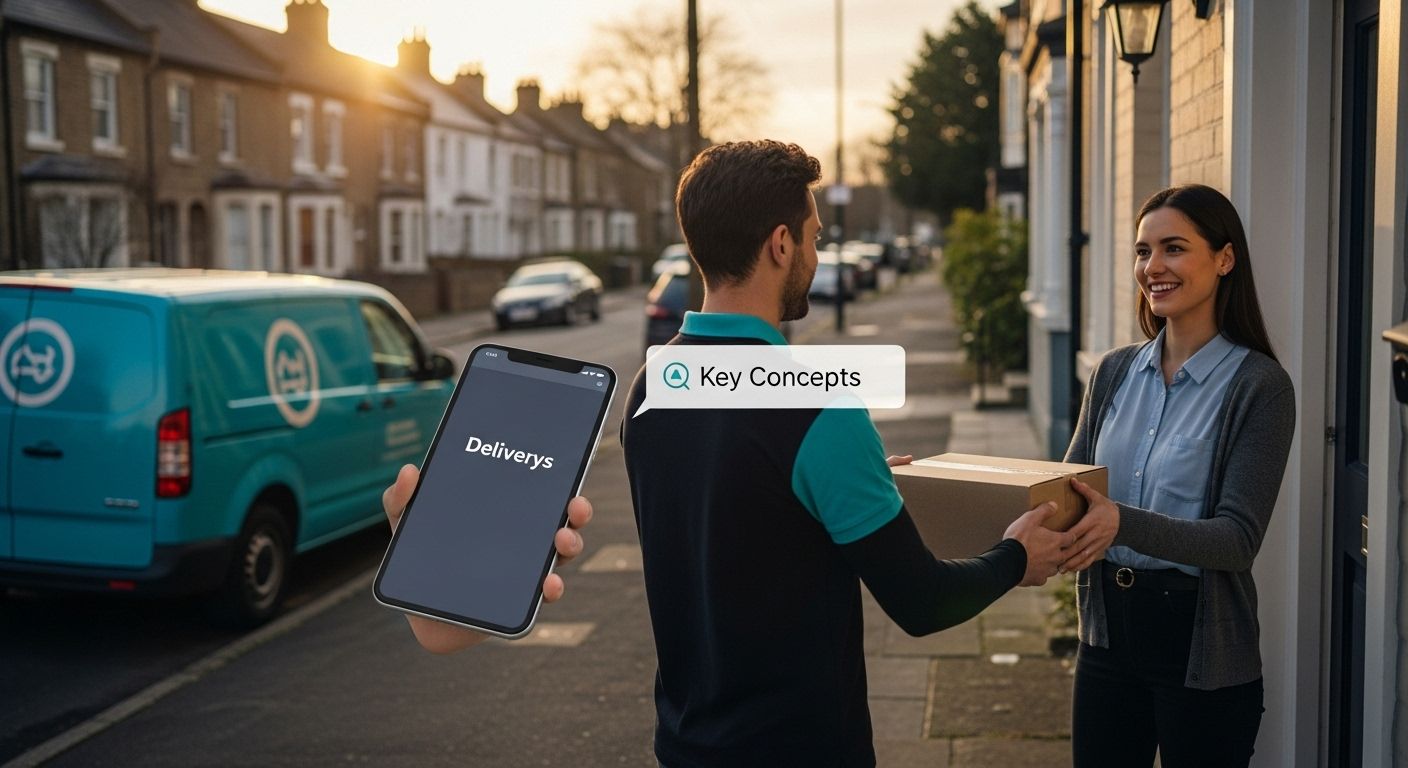
Successful last mile delivery logistics depend on seamless technology and infrastructure integration. Modern solutions leverage advanced technologies to transform traditional transportation models. Explore our comprehensive ecommerce logistics guide to understand how cutting-edge technologies are reshaping delivery networks.
The convergence of digital platforms, predictive analytics, and flexible transportation networks enables businesses to create more responsive, efficient, and cost-effective delivery ecosystems. This approach allows companies to address complex logistical challenges while meeting increasingly sophisticated consumer expectations for speed, transparency, and reliability.
Transform Last Mile Delivery into Your Ecommerce Advantage
Are you struggling with the high costs and complex challenges detailed in our guide on last mile delivery solutions? If slow deliveries, lack of real-time tracking, and an overload of manual logistics tasks are holding back your business, you’re not alone. Many ecommerce sellers recognize that efficient last mile operations are the key to winning customer loyalty and cutting costs, but few know where to start. At or-ner.com, we build on these concepts by offering reliable courier services, intelligent shipment tracking, and integrated technology that turns last mile headaches into a smooth, automated process. Our solutions empower you to provide surprise-free deliveries, real-time visibility, and flexible options for your shoppers—no matter what you sell or where your customers are located.
Are you ready to turn last mile complexity into a competitive advantage? Discover why modern businesses choose reliable courier services that support faster, smarter delivery. Visit or-ner.com now and see how our end-to-end logistics platform can help your business stay ahead and exceed customer expectations each and every time.
Frequently Asked Questions
What is last mile delivery?
Last mile delivery refers to the final step in the logistics process, where goods are transported from a distribution center directly to the end customer’s doorstep. It is often the most costly and challenging segment of the shipping process.
Why is last mile delivery important for ecommerce?
Last mile delivery is critical for ecommerce because it significantly impacts customer satisfaction. Consumers today expect fast, transparent, and flexible delivery options, making it a key differentiator in a competitive market.
What technologies are used in last mile delivery solutions?
Modern last mile delivery solutions utilize various technologies, including GPS tracking, algorithmic route optimization, real-time communication platforms, autonomous vehicles, and drone delivery systems to enhance efficiency and customer satisfaction.
How do businesses optimize last mile delivery logistics?
Businesses optimize last mile delivery logistics by implementing advanced routing and mapping technologies, centralized logistics management platforms, and adaptive logistics infrastructures that allow for effective response to delivery demands and customer expectations.