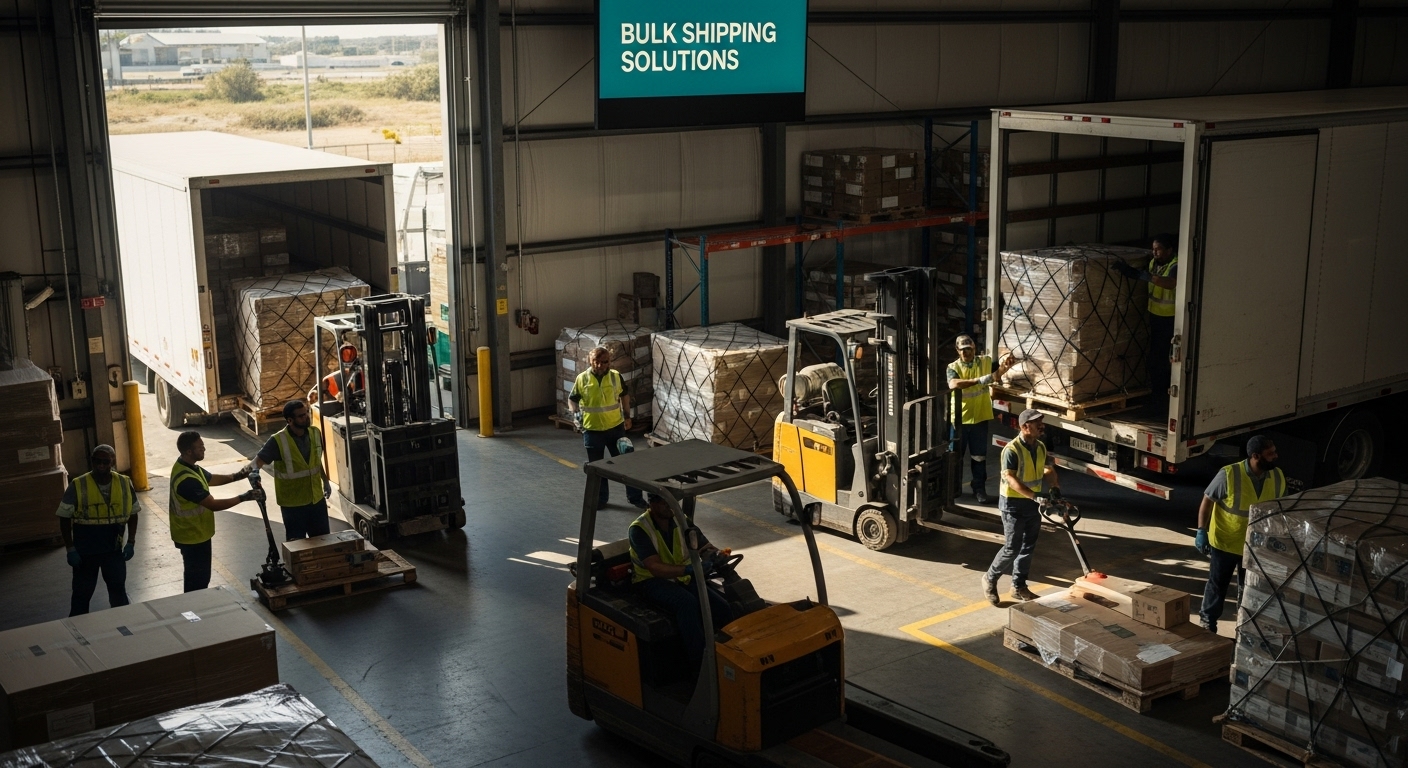
Bulk shipping is no longer a hidden strategy used by only a few giant corporations. Every year, smart companies adopting bulk shipping solutions can cut transportation costs by up to 40 percent compared to old-school single-shipment methods. That sounds like a logistics dream, right? Yet the real shock is just how much these systems now shape everything from e-commerce speed to environmental sustainability. The road to lower costs is only the beginning.
Table of Contents
- What Are Bulk Shipping Solutions And Their Importance?
- How Bulk Shipping Solutions Benefit E-commerce And Retail
- Key Concepts And Terminology In Bulk Shipping Solutions
- Challenges And Considerations In Implementing Bulk Shipping
- The Future Of Bulk Shipping Solutions In Global Trade
Quick Summary
| Takeaway | Explanation |
|---|---|
| Bulk shipping reduces costs by up to 40% | Companies can significantly lower per-unit shipping expenses compared to traditional shipping methods by utilizing bulk solutions. |
| Efficiency improves supply chain management | Bulk shipping methods streamline logistics operations, enhancing inventory control and operational flexibility. |
| Digital technologies are transforming bulk shipping | Advanced tools like predictive analytics and blockchain are elevating efficiency, transparency, and real-time tracking in shipping operations. |
| Sustainability is a growing priority | Future bulk shipping solutions focus on minimizing environmental impact through low-emission vessels and alternative fuel technologies. |
| Strategic planning is essential for success | Successful implementation of bulk shipping requires careful analysis of logistical challenges, regulatory compliance, and infrastructure needs. |
What Are Bulk Shipping Solutions and Their Importance?
Bulk shipping solutions represent strategic logistics approaches designed to optimize transportation and distribution of large product quantities for businesses across various industries. These comprehensive methods enable companies to move significant volumes of goods efficiently, reducing overall shipping costs and enhancing supply chain performance.
Understanding the Core Concept
At its fundamental level, bulk shipping solutions involve consolidating multiple product units into single, larger shipments. This approach differs dramatically from individual parcel shipping by focusing on maximizing transportation efficiency.
Businesses leveraging these solutions can dramatically reduce per-unit shipping expenses, streamline logistics operations, and improve inventory management.
According to Logistics Management Research Institute, companies utilizing advanced bulk shipping techniques can reduce transportation costs by up to 40% compared to traditional shipping methods.
Strategic Benefits for Businesses
Bulk shipping solutions offer multiple strategic advantages for organizations seeking to optimize their logistics operations. These benefits extend beyond mere cost reduction and include:
- Enhanced supply chain predictability and planning capabilities
- Significant reduction in per-unit transportation expenses
- Improved environmental sustainability through consolidated shipping
- Greater flexibility in managing large-scale product distributions
For businesses looking to expand their logistics capabilities, read more about our comprehensive freight forwarding services that can complement bulk shipping strategies.
The complexity of bulk shipping solutions requires careful analysis of product characteristics, shipping routes, and organizational logistics requirements. Successful implementation demands a nuanced understanding of transportation networks, packaging technologies, and inventory management systems that can effectively support large-scale product movements across regional or global markets.
How Bulk Shipping Solutions Benefit E-commerce and Retail
Bulk shipping solutions have become a transformative strategy for e-commerce and retail businesses seeking to optimize their logistics and distribution processes. By enabling more efficient product movement and reducing transportation expenses, these solutions provide critical competitive advantages in an increasingly complex global marketplace.
Scaling Online Retail Operations
For e-commerce businesses, bulk shipping solutions represent a powerful mechanism for managing rapidly expanding product inventories. Online retailers can consolidate multiple product units, reduce shipping complexities, and create more predictable supply chain workflows. This approach allows businesses to handle larger order volumes without proportionally increasing logistics costs.
According to Global E-commerce Logistics Report, online retailers implementing advanced bulk shipping strategies can reduce logistics expenditures by up to 35% while maintaining rapid delivery timelines.
Cost Efficiency and Inventory Management
Bulk shipping solutions deliver substantial financial benefits for retail operations by introducing strategic efficiencies:
- Dramatically reduced per-unit transportation expenses
- Enhanced inventory control and warehouse space optimization
- Simplified customs clearance for international shipments
- Improved carbon footprint through consolidated shipping methods
For businesses looking to further streamline their logistics approach, explore our comprehensive freight forwarding guide that provides deeper insights into modern shipping strategies.
Understanding and implementing bulk shipping solutions requires sophisticated logistics planning.
 Retailers must carefully analyze product characteristics, shipping routes, and market demand to create effective transportation strategies that balance cost efficiency with customer satisfaction and operational flexibility.
Key Concepts and Terminology in Bulk Shipping Solutions
Navigating the complex world of bulk shipping requires understanding specialized terminology and core concepts that define logistics and transportation strategies. These technical definitions provide critical insights into how businesses manage large-scale product movements across global supply chains.
Essential Shipping Classification Terms
Bulk shipping solutions encompass multiple classification systems that determine how products are transported, stored, and managed.
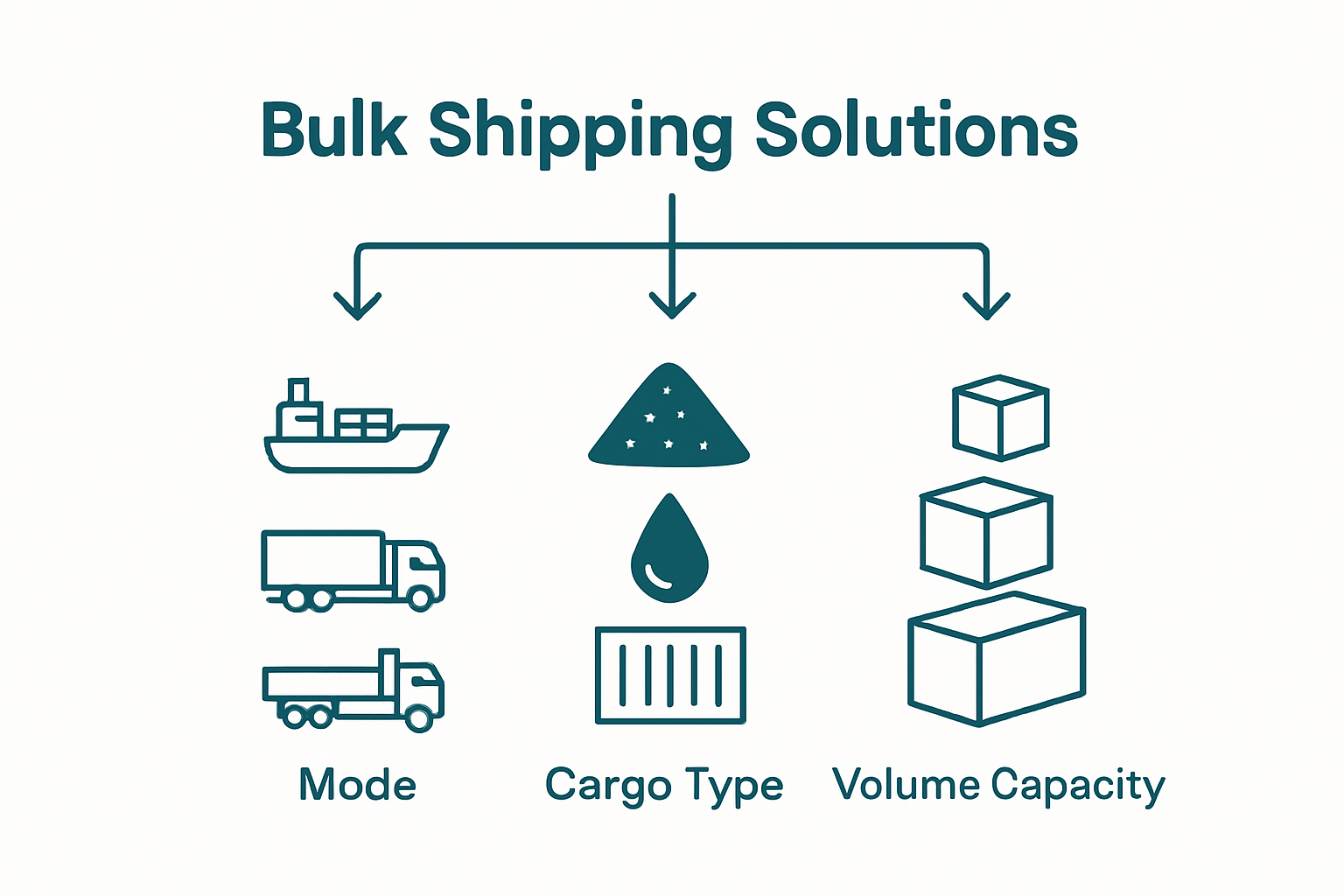 These classifications help businesses optimize their logistics strategies by defining specific transportation parameters. Shipping mode, cargo type, and volume capacity represent fundamental categorizations that directly impact shipping efficiency and cost structures.
According to Transportation Research Board, precise terminology enables more accurate logistics planning and reduces potential miscommunication between shipping partners.
Critical Operational Definitions
Professionals in logistics and supply chain management rely on several key operational terms to describe bulk shipping processes:
- Deadweight Tonnage (DWT): Total weight a vessel can safely carry, including cargo, fuel, crew, and provisions
- Demurrage: Charges incurred when cargo loading or unloading exceeds agreed contractual timeframes
- Consolidation: Combining multiple smaller shipments into a single, larger transportation unit
- Freight Classification: Standardized method for categorizing different types of transportable goods
Learn more about our essential courier services that support comprehensive shipping strategies for businesses of all sizes.
Mastering these technical definitions enables businesses to communicate more effectively, negotiate better shipping rates, and design more efficient logistics workflows. Understanding the nuanced language of bulk shipping transforms complex transportation challenges into strategic opportunities for operational excellence.
Below is a table summarizing essential terms in bulk shipping along with their definitions for easier reference and understanding.
| Term | Definition |
|---|---|
| Deadweight Tonnage (DWT) | Total weight a vessel can safely carry, including cargo, fuel, crew, and provisions |
| Demurrage | Charges incurred when cargo loading or unloading exceeds agreed contractual timeframes |
| Consolidation | Combining multiple smaller shipments into a single, larger transportation unit |
| Freight Classification | Standardized method for categorizing different types of transportable goods |
| Shipping Mode | The method of transportation used (ocean, air, land) for moving goods in bulk shipping |
| Cargo Type | The specific category of goods being shipped, based on physical and handling requirements |
| Volume Capacity | The maximum quantity or volume of goods that can be transported in a single bulk shipment |
Challenges and Considerations in Implementing Bulk Shipping
Implementing bulk shipping solutions requires sophisticated strategic planning and a comprehensive understanding of complex logistical challenges. Businesses must navigate multiple technical, financial, and operational barriers to create successful large-scale shipping frameworks that balance efficiency, cost-effectiveness, and regulatory compliance.
Technological and Infrastructure Limitations
Advanced bulk shipping strategies demand robust technological infrastructure and sophisticated logistics management systems. Companies must invest in specialized software platforms capable of tracking multiple shipment parameters, managing inventory complexity, and providing real-time visibility across extensive transportation networks. Integration challenges between existing enterprise systems and new shipping technologies can create significant operational friction.
Supply Chain Transportation Research Institute highlights that technological compatibility represents one of the most significant barriers to effective bulk shipping implementation.
Regulatory and Compliance Considerations
Bulk shipping operations involve navigating intricate regulatory landscapes that vary dramatically across different geographic regions and product categories. Businesses must carefully address multiple compliance requirements:
- International trade regulations and customs documentation
- Hazardous materials transportation protocols
- Environmental sustainability standards
- Product-specific handling and packaging regulations
Learn more about our comprehensive freight forwarding services that help businesses manage complex regulatory environments.
Successful bulk shipping implementation requires a holistic approach that balances technological capabilities, regulatory knowledge, financial resources, and strategic flexibility.
This table compares the key benefits and common challenges associated with implementing bulk shipping solutions for businesses.
| Aspect | Benefits | Challenges |
|---|---|---|
| Cost | Significantly reduces per-unit shipping expenses | Requires financial investment in advanced technologies |
| Efficiency | Streamlines logistics and inventory management | Integration with legacy systems can be complex |
| Sustainability | Reduces carbon footprint with consolidated shipments | Navigating evolving environmental regulations |
| Scalability | Supports handling larger volumes and market expansion | Adapting to fluctuating demand and market conditions |
| Compliance | Simplifies some customs procedures with fewer shipments | Must meet various international and product-specific rules |
The Future of Bulk Shipping Solutions in Global Trade
The landscape of global trade is undergoing profound transformations, with bulk shipping solutions positioned at the forefront of technological innovation and strategic logistics management. Emerging technologies, sustainability imperatives, and evolving global economic dynamics are reshaping how businesses conceptualize and execute large-scale product transportation strategies.
Technological Evolution and Digital Integration
Digital technologies are revolutionizing bulk shipping by introducing unprecedented levels of transparency, efficiency, and real-time tracking capabilities. Advanced predictive analytics and artificial intelligence are enabling businesses to optimize shipping routes, anticipate potential disruptions, and make data-driven logistics decisions. Blockchain technologies are also emerging as critical tools for enhancing supply chain visibility and reducing transactional complexities.
According to United Nations Conference on Trade and Development, digitalization is fundamentally restructuring global shipping infrastructure and operational methodologies.
Sustainability and Environmental Considerations
Future bulk shipping solutions will increasingly prioritize environmental sustainability and carbon footprint reduction. Businesses are progressively adopting strategies that balance economic efficiency with ecological responsibility:
- Development of low-emission shipping vessels
- Implementation of alternative fuel technologies
- Enhanced route optimization to reduce energy consumption
- Investment in carbon offset and neutralization programs
Explore our comprehensive freight forwarding services designed to support modern, sustainable shipping practices.
The convergence of technological innovation, environmental consciousness, and global economic interconnectedness will continue to drive transformative changes in bulk shipping solutions. Successful organizations will be those capable of rapidly adapting to these dynamic global trade landscapes while maintaining operational flexibility and strategic responsiveness.
Ready to Transform Your Bulk Shipping Challenges into Business Growth?
Are you tired of unpredictable costs and complex logistics when moving large volumes of goods? If the article on bulk shipping struck a nerve about the headaches of inventory management, rising transportation expenses, and regulatory confusion, you are not alone. These are real obstacles that slow down business growth and keep you from delivering a seamless experience to your customers. At ORNER, we understand the critical importance of reliable courier services, end-to-end shipment tracking, and cross-border logistics planning for businesses like yours. See how our expertise in bulk shipping solutions empowers ecommerce sellers, wholesalers, and brands to move products efficiently and manage challenges head-on. Check our QA Archives – ORNER to see how others have solved similar logistics problems and get industry-specific answers from our experts.
Do not let logistics inefficiencies limit your success any longer. Choose a partner committed to scalable and flexible solutions, including streamlined ocean, air, and land freight, warehousing, and real-time shipment visibility. Visit ORNER’s homepage now to discover how our reliable courier services and all-in-one platform can help you simplify bulk shipping, speed up fulfillment, and unlock your business’s true growth potential.
Frequently Asked Questions
What are bulk shipping solutions?
Bulk shipping solutions refer to strategic logistics approaches designed to optimize the transportation of large quantities of goods, allowing businesses to reduce shipping costs and enhance supply chain performance.
How do bulk shipping solutions benefit e-commerce businesses?
Bulk shipping solutions enable e-commerce businesses to manage large inventories efficiently, consolidate shipments, reduce shipping complexities, and lower transportation costs, which helps in scaling operations and improving supply chain predictability.
What challenges are faced when implementing bulk shipping solutions?
Implementing bulk shipping solutions can present challenges such as technological and infrastructure limitations, regulatory compliance issues, and the need for strategic logistics planning to ensure efficiency and cost-effectiveness.
How can businesses ensure they are using effective bulk shipping strategies?
Businesses can ensure effective bulk shipping strategies by analyzing product characteristics, optimizing shipping routes, investing in advanced logistics technologies, and continuously adapting to market conditions and regulatory requirements.