TL;DR:
- Building supply chain flexibility through diversification and scenario planning enhances resilience.
- Real-time visibility technology enables proactive management of disruptions and improves fulfillment reliability.
- Prioritizing adaptability over pure cost efficiency leads to sustained performance during market shocks.
A single missed delivery window can cost you a customer for life. In ecommerce, where next-day shipping expectations are now the baseline and competition is just one click away, unreliable fulfillment is not a minor inconvenience — it is a direct hit to revenue and brand trust. The businesses pulling ahead in 2026 are not simply shipping faster. They are building smarter supply chains grounded in flexibility, strong partnerships, and real-time visibility. This article walks you through the supply chain best practices that separate struggling operations from consistently efficient ones, so you can stop putting out fires and start scaling with confidence.
Table of Contents
- How to evaluate supply chain practices
- Top supply chain best practices for ecommerce success
- Comparison of different supply chain strategies
- Making the right supply chain decisions for your business
- Our perspective: Flexibility always beats just-in-time perfection
- Optimize your ecommerce fulfillment with ORNER
- Frequently asked questions
Key Takeaways
| Point | Details |
|---|---|
| Flexibility comes first | Building flexible supplier and logistics partnerships increases your resilience and recovery speed. |
| Scenario planning is vital | Proactively preparing for disruptions keeps fulfillment and shipping running smoothly. |
| Efficiency vs. adaptability | Adapting quickly is usually more valuable than just optimizing for lowest cost. |
| Choose the right partners | Strategic collaborations with 3PLs and couriers power lasting ecommerce success. |
How to evaluate supply chain practices
Before you can improve your supply chain, you need a clear-eyed view of where it stands today. Many ecommerce operators jump straight to tactical fixes — switching carriers, renegotiating rates, or adding warehouse locations — without stepping back to assess the system as a whole. That approach tends to create short-term wins and long-term fragility.
A solid evaluation framework looks at five core dimensions:
- Flexibility: Can your supply chain absorb sudden demand spikes or supplier disruptions without collapsing?
- Cost efficiency: Are you paying competitive rates without compromising service quality at critical touchpoints?
- Reliability: Do your carriers and fulfillment partners consistently meet promised timelines?
- Adaptability: How quickly can your operation pivot when market conditions, regulations, or customer expectations shift?
- Partner collaboration: Are your 3PL providers and supplier relationships genuinely aligned with your growth goals?
Evaluating these five areas gives you a prioritized list of where to focus improvement efforts. If reliability is your weakest point, for example, you will get more value from investing in resilient supply chain strategies than from squeezing another half-percent out of freight rates.
“For resilience, build flexibility with 3PL partnerships, supplier relationships, and scenario planning for disruptions.”
That principle holds across business sizes and sectors. Whether you sell home goods, apparel, or musical instruments, the supply chains that survive stress are built on relationships and options — not just operational efficiency alone.
Pro Tip: Start your evaluation with a disruption scenario exercise. Ask your team: “If our primary carrier goes down for 72 hours, what happens?” The gaps that surface will tell you exactly where to build more redundancy and what to manage in supply chain disruptions before they become emergencies.
Taking the time to map out your supply chain strengths and weaknesses creates a foundation for every improvement that follows. Skip this step, and you are essentially optimizing in the dark.
Top supply chain best practices for ecommerce success
Now, let’s break down the most effective best practices that top ecommerce operations apply. These are not abstract concepts. Each one has direct, measurable impact on fulfillment speed, cost control, and customer satisfaction.
-
Diversify your supplier base. Relying on a single supplier for any critical product or component is one of the most common — and most avoidable — risks in ecommerce. When that supplier faces a factory shutdown, a port delay, or a raw material shortage, your entire inventory pipeline stalls. Building relationships with at least two qualified suppliers per product category gives you negotiating leverage and continuity when things go wrong.
-
Practice active scenario planning. Scenario planning for disruptions is not a one-time exercise. It is an ongoing practice that involves mapping out what could go wrong — demand surges, geopolitical delays, customs holds, carrier failures — and having documented contingency plans ready. Businesses that had these plans in place handled the supply chain chaos of 2020 through 2025 far better than those that improvised.
-
Invest in real-time visibility technology. You cannot manage what you cannot see. Modern logistics platforms give you live tracking across carriers, warehouse inventory levels, and inbound shipment status all in one place. When an exception occurs — a delayed container, a held customs clearance, a stockout warning — you know about it immediately and can act before the customer notices.
-
Optimize your inventory management. Overstocking ties up capital and drives up warehousing costs. Understocking leads to stockouts and lost sales. The sweet spot is dynamic inventory management that accounts for seasonal trends, lead times, and demand forecasting. Pair this with safety stock thresholds and automated reorder triggers to keep fulfillment running smoothly.
-
Partner with reliable third-party logistics providers. Working with third-party logistics (3PL) partners who specialize in your product category and target markets accelerates fulfillment without requiring you to build your own warehouse infrastructure. A well-chosen 3PL acts as an extension of your team, not just a vendor.
-
Invest in strong supplier relationships. Long-term supplier relationships are worth more than the lowest quoted price. Suppliers who know your business, understand your seasonality, and trust you to pay on time will prioritize your orders during crunch periods. That kind of goodwill has real operational value that does not show up on any invoice.
-
Implement proactive logistics risk management. Identifying risks before they materialize is the hallmark of a mature supply chain. That means monitoring geopolitical developments, weather events, and carrier capacity trends as part of your regular operations review. Solid logistics risk management does not eliminate disruptions. It reduces how badly they hurt you.
Pro Tip: When vetting 3PL partners, ask specifically about their contingency protocols for peak season capacity and carrier failures. A partner who can answer that question in detail is one you can trust when things get complicated.
These best practices are most powerful when applied together as a system rather than as isolated improvements. A business with diversified suppliers, solid 3PL relationships, and real-time visibility will consistently outperform a competitor that optimizes only one of those areas.
Comparison of different supply chain strategies
With best practices laid out, it is crucial to understand how leading companies structure their supply chains and what you can learn from them. Two of the most studied models in logistics right now are Amazon and FedEx, and they represent very different philosophies.
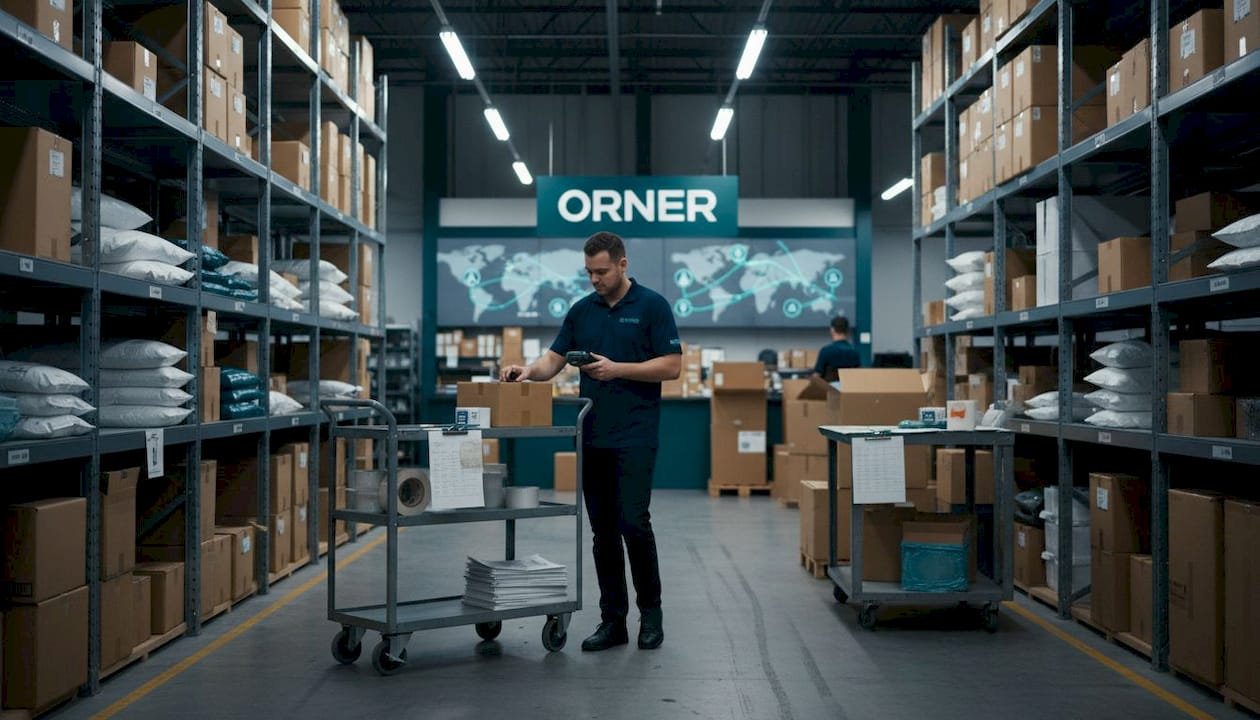
Amazon optimizes for adaptability and low decision latency rather than pure cost minimization. FedEx, by contrast, is pivoting to high-value specialized deliveries over volume. Both approaches are coherent — but they serve very different customer needs.
Here is how the two strategic orientations compare for ecommerce businesses:
| Strategy dimension | Efficiency-first approach | Adaptability-first approach |
|---|---|---|
| Primary focus | Cost minimization, process standardization | Speed of response, option preservation |
| Best suited for | High-volume, low-margin commodity products | Varied SKUs, seasonal demand, cross-border |
| Risk profile | Fragile under disruption, efficient in calm markets | More expensive to maintain, resilient under stress |
| Technology investment | Automation, route optimization | Predictive analytics, scenario modeling |
| Partner model | Fewer, tightly integrated carriers | Diverse carrier and 3PL network |
| Example operators | Low-cost, single-channel retailers | Multi-channel, global ecommerce brands |
For most growing ecommerce businesses, a pure efficiency-first approach is a trap. It works beautifully until the first major disruption, and then it fails spectacularly. Consider some concrete scenarios:
- A home goods retailer running a lean, single-carrier model discovered during a major carrier strike that they had no fallback. Orders backed up for two weeks during peak season, generating a wave of chargebacks and negative reviews.
- A footwear brand using an adaptability-first model with three active carrier relationships rerouted 80 percent of their volume to alternative carriers within 48 hours of the same strike, with minimal customer impact.
The lesson is not that efficiency does not matter. It matters a great deal. The lesson is that shipping cost optimization should always be pursued within a framework that preserves your ability to respond. Efficiency without optionality is vulnerability.
“Amazon optimizes for adaptability and low decision latency rather than pure cost minimization. FedEx pivots to high-value specialized deliveries over volume.” — Logistics Viewpoints
If you are a small ecommerce seller with a single product line and stable demand, a streamlined, cost-focused approach makes sense. If you operate across multiple categories, geographies, or customer segments, the adaptability-first model will serve you better in the long run. Explore the range of logistics solutions for ecommerce available and map them against your actual business complexity.
Making the right supply chain decisions for your business
Given these choices and comparisons, here is how to make the right supply chain moves for your specific situation. Not every business needs to implement every best practice at once. The key is matching your improvement priorities to your current stage of growth and your biggest risk exposures.
Start by working through this self-assessment framework:
-
Audit your current fulfillment performance. Pull your on-time delivery rate, order accuracy rate, and average fulfillment cycle time for the past 90 days. Compare those numbers against your customer satisfaction data. Where do the numbers diverge?
-
Map your dependencies. List every single-point-of-failure in your current supply chain. Single supplier, single carrier, single warehouse location, single customs broker. Each one of those is a vulnerability that needs either redundancy or a documented contingency plan.
-
Prioritize by impact and urgency. Not all vulnerabilities are equally dangerous. Use a simple two-axis assessment: how likely is this risk to materialize, and how severe would the impact be if it did? Address overcoming logistics challenges in order of combined score.
-
Choose your strategic orientation. Based on your product type, volume, and growth trajectory, decide whether your primary need right now is greater efficiency or greater flexibility. Then align your investments accordingly.
Use this table to guide your prioritization:
| Business profile | Primary challenge | Recommended first practice |
|---|---|---|
| Early-stage, single market | Cash flow, cost control | Inventory optimization, single reliable 3PL |
| Growth-stage, multi-channel | Fulfillment speed and consistency | Carrier diversification, real-time visibility |
| Established, cross-border | Customs, compliance, lead times | Scenario planning, regional 3PL network |
| Seasonal-heavy, high SKU count | Stockouts and overstock cycles | Demand forecasting, safety stock protocols |
One of the most high-leverage investments at any stage is learning to prevent stockouts before they happen rather than reacting after they hit. A single stockout event on a best-selling product during peak season can wipe out weeks of margin in lost sales and recovery costs.
Building toward resilience does not have to mean a complete overhaul. Flexibility and 3PL partnerships can be developed incrementally, one supplier relationship or one new carrier lane at a time, as long as you are moving in a deliberate direction rather than reacting to each new crisis as it arrives.
Our perspective: Flexibility always beats just-in-time perfection
Here is what many advice columns and guides miss when it comes to supply chain excellence. The loudest voices in logistics have spent decades championing lean manufacturing, just-in-time inventory, and hyper-optimized cost structures. That framework made sense in a stable, predictable world. We no longer live in that world.
From 2020 through 2025, we watched ecommerce businesses with lean, single-source supply chains collapse under pressures that more flexible competitors absorbed with relative ease. The difference was not budget. It was not technology stack. It was optionality — the ability to make a different decision quickly when the expected path closed off.
Our experience working with ecommerce sellers across categories, from apparel to musical instruments to industrial components, consistently shows the same pattern. The businesses that grew through disruption were not the most efficient. They were the most connected. They had more 3PL relationships than they used on an average day. They had secondary suppliers they paid slightly more to maintain. They ran quarterly scenario planning sessions that most of their competitors considered unnecessary overhead.
That redundancy looked wasteful on a spreadsheet until it did not. The businesses that had built long-term resilience into their supply chains before the disruptions hit recovered in weeks. Those that prioritized pure cost minimization spent months trying to rebuild relationships and capacity under the worst possible conditions.
The uncomfortable truth is this: a supply chain that is 98 percent efficient but brittle will underperform a supply chain that is 93 percent efficient but adaptable — every single time there is a major disruption. And in the current environment, major disruptions arrive roughly every 12 to 18 months. Building flexibility is not a cost center. It is an investment in consistent, reliable delivery that compounds over time into a genuine competitive advantage.
Optimize your ecommerce fulfillment with ORNER
Putting these supply chain best practices into action requires the right platform, the right partners, and the right visibility across your entire operation.
ORNER brings all of that together in one place. Whether you need reliable courier services that scale with your volume, end-to-end ecommerce logistics solutions that cover everything from warehouse to last-mile delivery, or streamlined freight booking for ecommerce across ocean, air, and land, ORNER’s platform gives you the tools and network to execute with confidence. Our global fulfillment infrastructure, real-time shipment tracking, and expert support are built specifically for ecommerce sellers who are serious about growth. Explore our solutions and see how ORNER can become the logistics backbone your business needs to scale reliably.
Frequently asked questions
What are the most important supply chain best practices for ecommerce?
The most critical practices are building flexibility through diversified supplier and 3PL partnerships, running regular scenario planning, and investing in technology that delivers real-time visibility across your entire fulfillment chain.
How does scenario planning help in supply chain management?
Scenario planning prepares your operation for likely disruptions before they happen, so your team already has a playbook when a carrier fails, a port closes, or demand spikes. That preparation directly reduces recovery time and customer impact.
Is efficiency or flexibility more valuable in supply chains?
Flexibility consistently delivers more long-term value because it enables faster adaptation when disruptions hit. Amazon’s model prioritizes adaptability and low decision latency over pure cost minimization, and that approach has proven more durable through repeated market shocks.
How do 3PL partnerships improve supply chain resilience?
Reliable 3PL partnerships expand your fulfillment capacity and geographic reach without the capital cost of owned infrastructure. They also provide ready-made alternatives when your primary logistics routes are disrupted, reducing your exposure to supply chain risk.
What is the biggest mistake ecommerce supply chains make?
The most common and costly mistake is over-optimizing for cost at the expense of flexibility and reliability. A supply chain built solely around the lowest possible spend will consistently underperform a more flexible one during the disruptions that now occur routinely across global logistics.