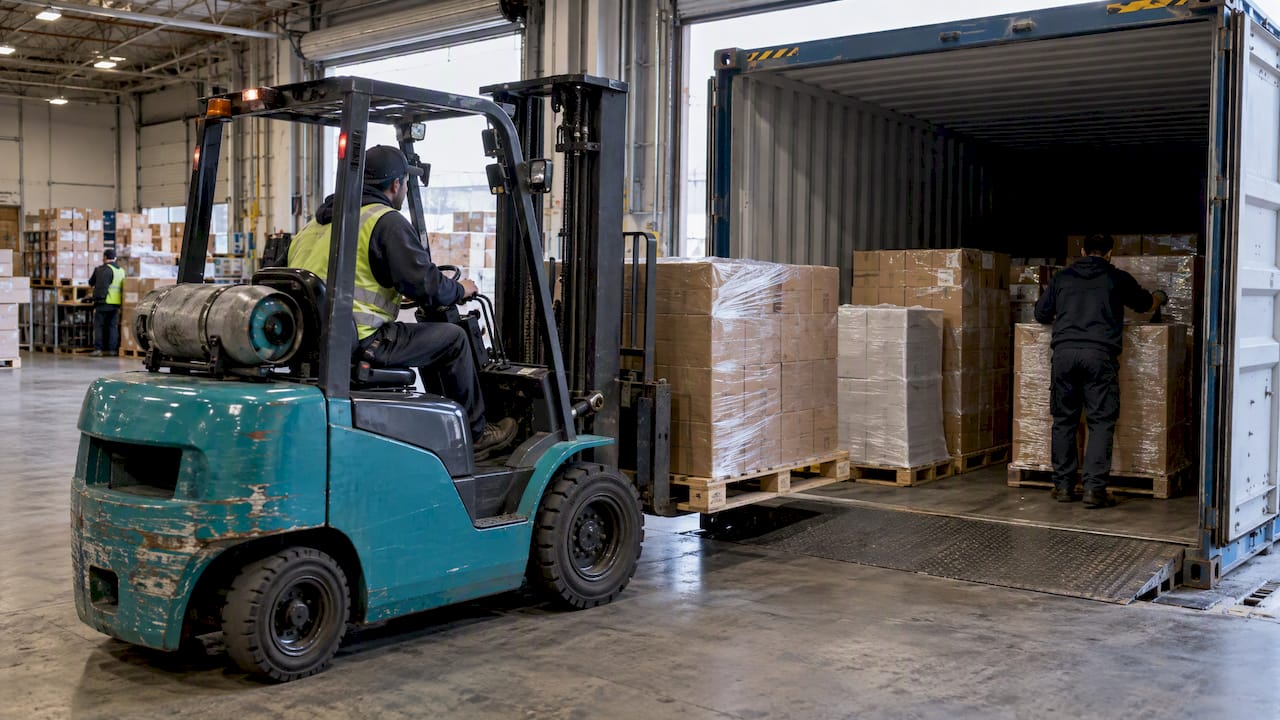
Over 85 percent of American companies are investing in supply chain automation to stay ahead in a rapidly evolving marketplace. Rising consumer expectations and global competition have put pressure on businesses to deliver faster, smarter, and more efficient operations. This article reveals how automation transforms the way inventory, logistics, and distribution are managed, highlighting surprising advantages and critical factors that every business leader should consider.
Table of Contents
- Defining Supply Chain Automation Today
- Emerging Technologies Driving Automation
- Real-World Applications In Ecommerce Logistics
- Benefits And Challenges For Retailers And Brands
- Risks, Costs, And Key Pitfalls To Avoid
Key Takeaways
| Point | Details |
|---|---|
| Supply Chain Automation Importance | Automating supply chains enhances operational efficiency by minimizing manual intervention and errors, thereby improving productivity. |
| Technological Integration | Advanced technologies like AI, IoT, and robotics elevate supply chain capabilities, allowing for real-time tracking and predictive analytics. |
| Customized Automation Strategies | Businesses should tailor their automation strategies to align with specific operational needs, ensuring optimal integration with existing processes. |
| Risk Management in Implementation | Organizations must conduct comprehensive risk assessments and develop phased strategies to mitigate potential technology integration challenges. |
Defining Supply Chain Automation Today
Supply chain automation represents a strategic technological transformation that enables businesses to streamline complex operational workflows through intelligent digital systems. At its core, automation aims to reduce manual intervention, minimize human error, and accelerate process efficiency across inventory management, logistics, and distribution channels. Supply chain automation leverages advanced technologies to create more responsive, adaptive, and intelligent operational ecosystems.
The technological landscape of supply chain automation has dramatically evolved, moving far beyond basic digitization. Modern supply chains now integrate sophisticated technologies like artificial intelligence, Internet of Things (IoT), robotics, and cloud computing to create dynamic, interconnected systems. These technologies enable real-time tracking, predictive analytics, and autonomous decision-making capabilities that transform traditional linear supply chain models into agile, data-driven networks.
Critical automation strategies focus on key operational domains such as inventory management, order processing, warehouse optimization, and transportation logistics. Mature inventory management systems now utilize process-reference models that enable targeted automation of specific process variants, allowing businesses to customize their automation approach based on unique operational requirements. This nuanced approach ensures that automation technologies are not just implemented universally, but strategically aligned with specific business needs and existing infrastructure.
Pro Automation Strategy Tip: Conduct a comprehensive process mapping exercise before implementing supply chain automation technologies to identify precise bottlenecks and opportunities for digital transformation, ensuring your automation investments deliver maximum operational efficiency.
Emerging Technologies Driving Automation
Artificial Intelligence, blockchain, robotics, and Internet of Things (IoT) are fundamentally reshaping supply chain automation, introducing unprecedented levels of intelligence and efficiency into traditional operational frameworks. These technologies are not merely incremental improvements but represent a comprehensive transformation of how businesses conceptualize and execute complex logistical processes. By integrating advanced computational capabilities, organizations can now create adaptive, self-optimizing supply chain ecosystems that respond dynamically to changing market conditions.
Advanced e-commerce technologies are revolutionizing operational strategies through innovative applications like blockchain adoption and augmented reality systems, enabling businesses to gain competitive advantages. Artificial Intelligence, in particular, is driving significant improvements in predictive analytics, demand forecasting, and customer engagement strategies. Machine learning algorithms can now analyze massive datasets, identifying complex patterns and generating insights that were previously impossible to detect through traditional analytical methods.
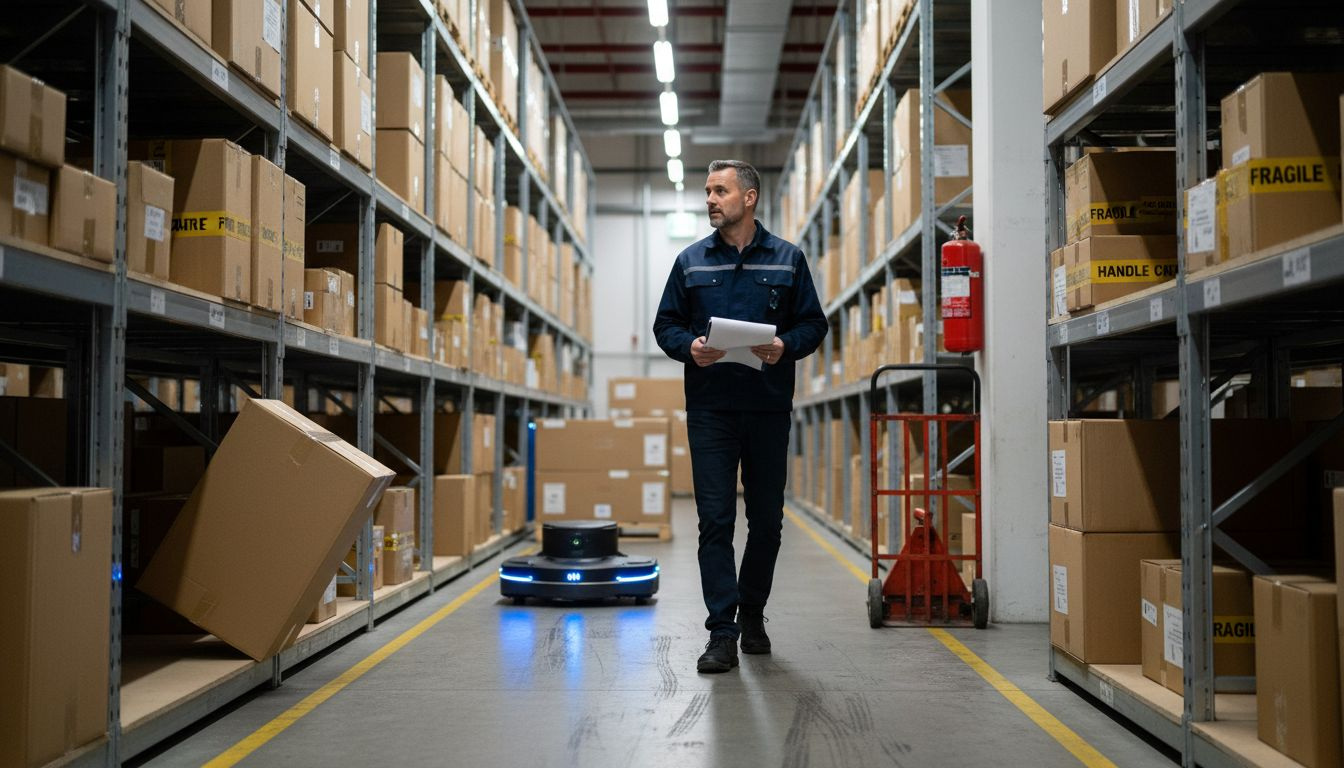
Emergent technologies are also transforming physical inventory management through groundbreaking approaches. Unmanned aerial vehicles (UAVs) integrated with radio-frequency identification (RFID) technologies are creating new paradigms for inventory tracking and management, offering unprecedented levels of traceability and operational transparency. These systems can autonomously navigate warehouse environments, conduct real-time inventory checks, and provide instantaneous data updates, significantly reducing human error and operational costs.
Pro Technology Integration Tip: Develop a phased technology adoption strategy that starts with pilot programs, allowing your organization to incrementally test and validate emerging automation technologies while managing implementation risks and building institutional technological capabilities.
Here’s a comparison of leading technologies in supply chain automation and their business impact:
| Technology | Main Function | Typical Benefit |
|---|---|---|
| Artificial Intelligence | Predictive analytics and automation | Improved forecasting accuracy |
| Robotics | Physical order processing | Faster, error-free fulfillment |
| IoT | Real-time asset tracking | Better inventory visibility |
| Blockchain | Secure transaction recording | Enhanced transparency |
| UAV + RFID | Automated inventory checks | Increased operational speed |
Real-World Applications in Ecommerce Logistics
Ecommerce logistics has undergone a radical transformation, with cutting-edge technologies enabling unprecedented levels of operational efficiency and customer satisfaction. Large language models are revolutionizing supply chain management by optimizing critical functions like demand forecasting, inventory management, and logistics planning, providing businesses with sophisticated predictive capabilities that were unimaginable just a few years ago. These advanced computational systems can analyze complex datasets, generating insights that help companies make more informed strategic decisions.

Robotic automation has emerged as a game-changing technology in warehouse and distribution operations. Advanced robotics are dramatically enhancing operational efficiency by reducing human error, minimizing labor costs, and creating more resilient supply chain infrastructures. Automated guided vehicles, robotic picking systems, and intelligent sorting mechanisms now enable ecommerce companies to process orders with remarkable speed and precision, dramatically reducing fulfillment times and increasing overall operational reliability.
The practical implementation of these technologies spans multiple operational domains. Intelligent systems now manage inventory tracking, automate order processing, optimize warehouse layout, and even predict potential supply chain disruptions before they occur. Just in time delivery systems have become increasingly sophisticated, allowing businesses to maintain minimal inventory while ensuring rapid product availability and reducing storage costs.
Pro Implementation Strategy Tip: Conduct a comprehensive technology readiness assessment before implementing advanced logistics automation, identifying your specific operational bottlenecks and selecting technologies that directly address your most critical efficiency challenges.
Benefits and Challenges for Retailers and Brands
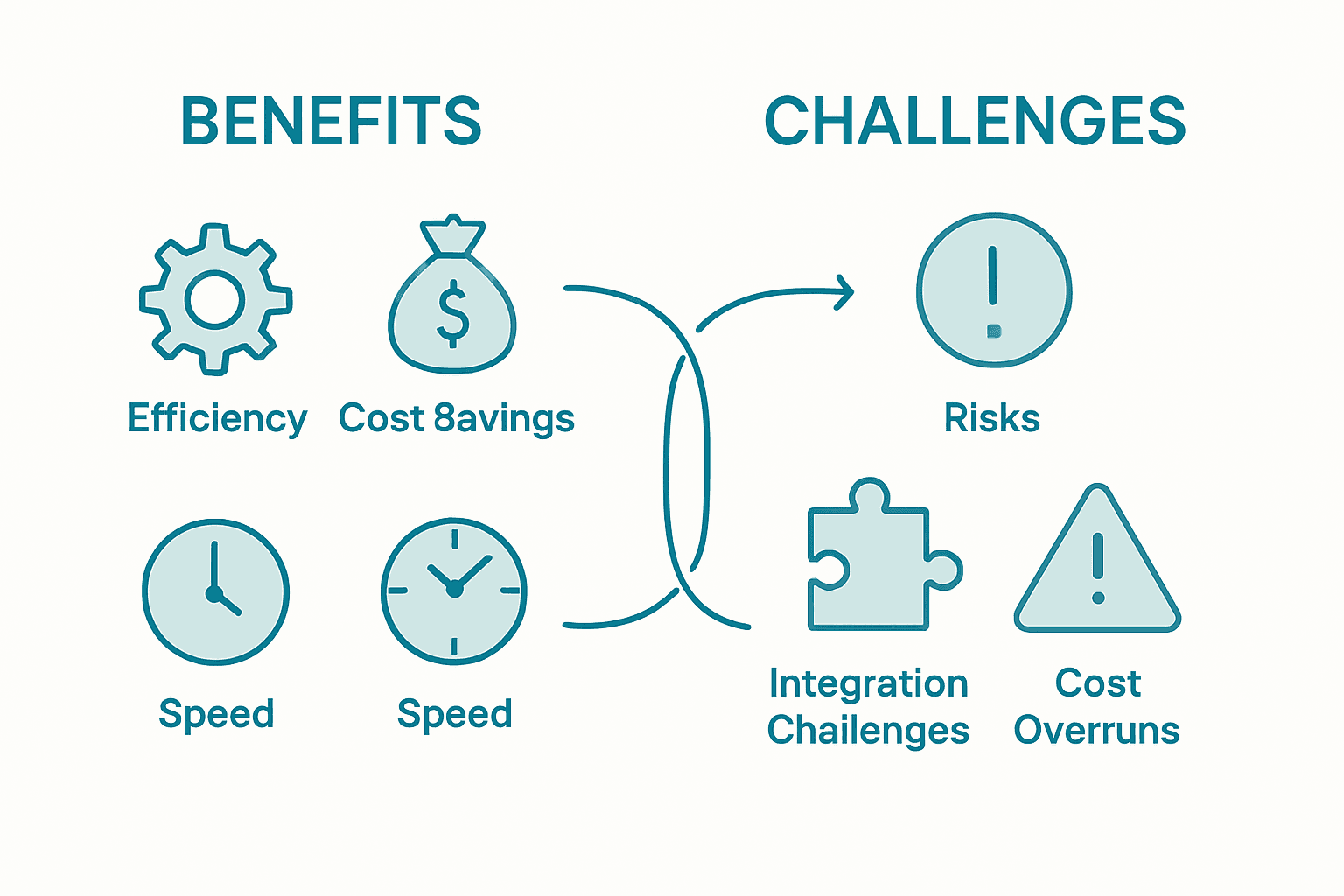
Supply chain automation presents a complex landscape of transformative opportunities and strategic challenges for modern retailers and brands. Artificial intelligence and machine learning are revolutionizing risk assessment capabilities, enabling businesses to develop more sophisticated predictive strategies, fundamentally changing how companies anticipate and mitigate potential supply chain disruptions. These advanced technologies provide unprecedented insights into potential vulnerabilities, allowing for more proactive and resilient operational planning.
Technological integration offers significant performance advantages, with quantifiable improvements across multiple operational metrics. Research demonstrates that automation technologies can dramatically enhance efficiency, producing substantial gains in inventory turnover rates, order fulfillment speeds, and overall cost reduction. However, these benefits are not without potential drawbacks, as implementation requires substantial upfront investment, technical expertise, and organizational adaptability.
The most successful retailers recognize that supply chain automation is not a one-size-fits-all solution. Different business models require tailored approaches that balance technological capability with existing infrastructure, workforce skills, and specific market demands. Same day delivery strategies have become particularly critical, with automation technologies enabling faster, more responsive fulfillment processes that meet increasingly demanding consumer expectations.
Pro Strategic Planning Tip: Conduct a comprehensive technology readiness assessment that evaluates your current technological capabilities, identifies specific operational bottlenecks, and develops a phased implementation strategy that aligns automation investments with your distinct business objectives.
Below is a summary of key benefits and challenges retailers face when implementing supply chain automation:
| Area | Main Benefit | Primary Challenge |
|---|---|---|
| Inventory Turnover | Faster product movement | Upfront technology investment |
| Order Fulfillment | Quicker delivery and accuracy | Need for skilled workforce |
| Cost Efficiency | Reduced ongoing operational costs | Integration with existing systems |
| Risk Mitigation | Proactive disruption responses | Ensuring data security |
Risks, Costs, and Key Pitfalls to Avoid
Supply chain automation represents a significant strategic investment with multifaceted financial and operational risks that demand careful consideration. Emerging technologies like blockchain, artificial intelligence, and Internet of Things present complex integration challenges that can potentially disrupt existing procurement processes and resource allocation strategies, requiring businesses to develop sophisticated implementation roadmaps that anticipate potential technological and operational barriers.
Sustainability considerations have become increasingly critical in automation strategies. Recent research highlights significant challenges in integrating sustainable practices within technological transformation efforts, revealing that many organizations struggle to balance technological efficiency with environmental responsibility. The financial implications extend beyond immediate implementation costs, encompassing long-term investments in workforce retraining, infrastructure modifications, and potential system compatibility issues.
The most significant risks emerge from inadequate planning and unrealistic expectations. Common pitfalls include underestimating implementation complexity, failing to assess existing technological infrastructure, neglecting workforce training requirements, and overlooking the need for continuous system optimization. Organizations must develop comprehensive risk mitigation strategies that account for potential technological disruptions, data security vulnerabilities, and the potential for unexpected operational challenges.
Pro Risk Management Tip: Develop a phased automation implementation strategy that includes comprehensive risk assessment, pilot testing, continuous performance monitoring, and built-in flexibility to adapt and modify technological approaches as organizational needs evolve.
Elevate Your Ecommerce Supply Chain with Reliable Courier Services and Automation
Navigating the complexities of supply chain automation can create significant challenges like unpredictable delays, inventory inaccuracies, and difficulty scaling order fulfillment. This article highlights critical pain points such as the need for precise inventory tracking, faster order processing, and seamless cross-border logistics — all essential for modern ecommerce sellers aiming to meet rising customer expectations for speed and accuracy. Integrating advanced automation tools with trusted, reliable courier services is key to unlocking efficiency, reducing costs, and gaining full operational visibility.
At or-ner.com, we understand these challenges and offer end-to-end logistics solutions designed specifically for ecommerce businesses. From real-time shipment tracking to comprehensive customs clearance and flexible warehousing, our platform empowers you to automate workflows and maintain control across ocean, air, and land transportation modes. Partner with us to transform your supply chain with technology-driven fulfillment strategies supported by a global network of warehouses and dedicated ecommerce growth support.
Take control of your ecommerce logistics today. Explore how our reliable courier services and integrated supply chain automation solutions can streamline your operations and accelerate growth. Visit or-ner.com now and experience a smarter, faster, and more flexible logistics partner tailored to your business needs.
Frequently Asked Questions
What are the key benefits of supply chain automation for ecommerce businesses?
Supply chain automation enhances operational efficiency, improves inventory turnover, accelerates order fulfillment, and reduces overall operational costs, enabling ecommerce businesses to respond to customer demands more effectively.
Which technologies are driving supply chain automation in ecommerce?
Artificial Intelligence, blockchain, robotics, and the Internet of Things (IoT) are critical technologies reshaping supply chain automation. These technologies enable predictive analytics, real-time tracking, and autonomous decision-making capabilities.
How can businesses ensure successful implementation of supply chain automation?
Successful implementation requires conducting a thorough technology readiness assessment, identifying specific operational bottlenecks, and developing a phased implementation strategy that aligns automation investments with business objectives.
What challenges should retailers consider when adopting supply chain automation?
Retailers should be aware of substantial upfront investment costs, the need for skilled workforce training, integration with existing systems, and ensuring data security, all of which require careful planning and management.