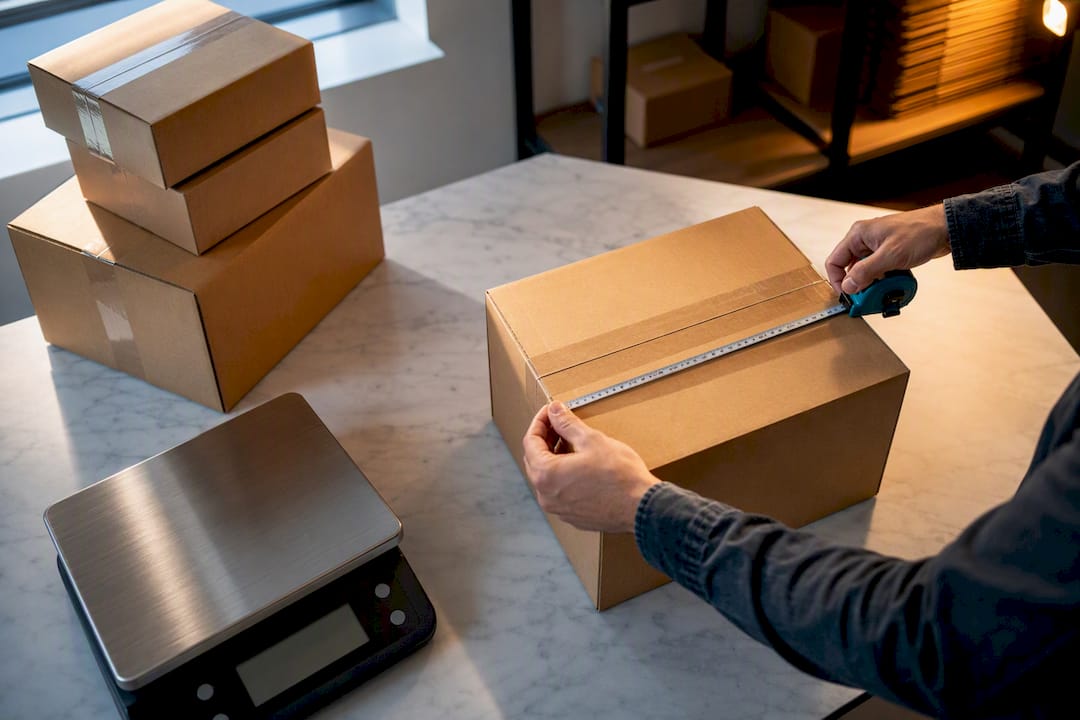
Over 80 percent of American ecommerce small businesses report that poor time management in logistics leads to missed orders and unsatisfied customers. With competition growing every day, understanding where every minute goes in your fulfillment process matters more than ever. Whether you are struggling to speed up order packing or coordinate shipments, this guide breaks down clear steps that help you reclaim time, identify bottlenecks, and strengthen your logistics workflow for long-term success.
Table of Contents
- Step 1: Assess Current Time Use In Logistics Tasks
- Step 2: Identify Bottlenecks Slowing Order Fulfillment
- Step 3: Implement Automation And Workflow Tools
- Step 4: Allocate Team Roles For Maximum Efficiency
- Step 5: Monitor Results And Fine-Tune Processes
Quick Summary
| Main Insight | Explanation |
|---|---|
| 1. Track Time on Logistics Tasks | Start by recording time spent on each logistics activity to identify inefficiencies and bottlenecks. |
| 2. Identify Fulfillment Bottlenecks | Analyze your workflow to pinpoint delays and obstacles that slow down order processing and affect customer satisfaction. |
| 3. Implement Automation Solutions | Use intelligent automation tools to streamline repetitive tasks, such as order processing and inventory tracking, enhancing efficiency. |
| 4. Allocate Team Roles Strategically | Assess team skills and assign roles that maximize individual strengths to avoid operational conflicts and slowdowns. |
| 5. Monitor Performance Continuously | Create a dashboard to track key performance metrics and review them regularly to identify areas for improvement and ensure operational success. |
Step 1: Assess Current Time Use in Logistics Tasks
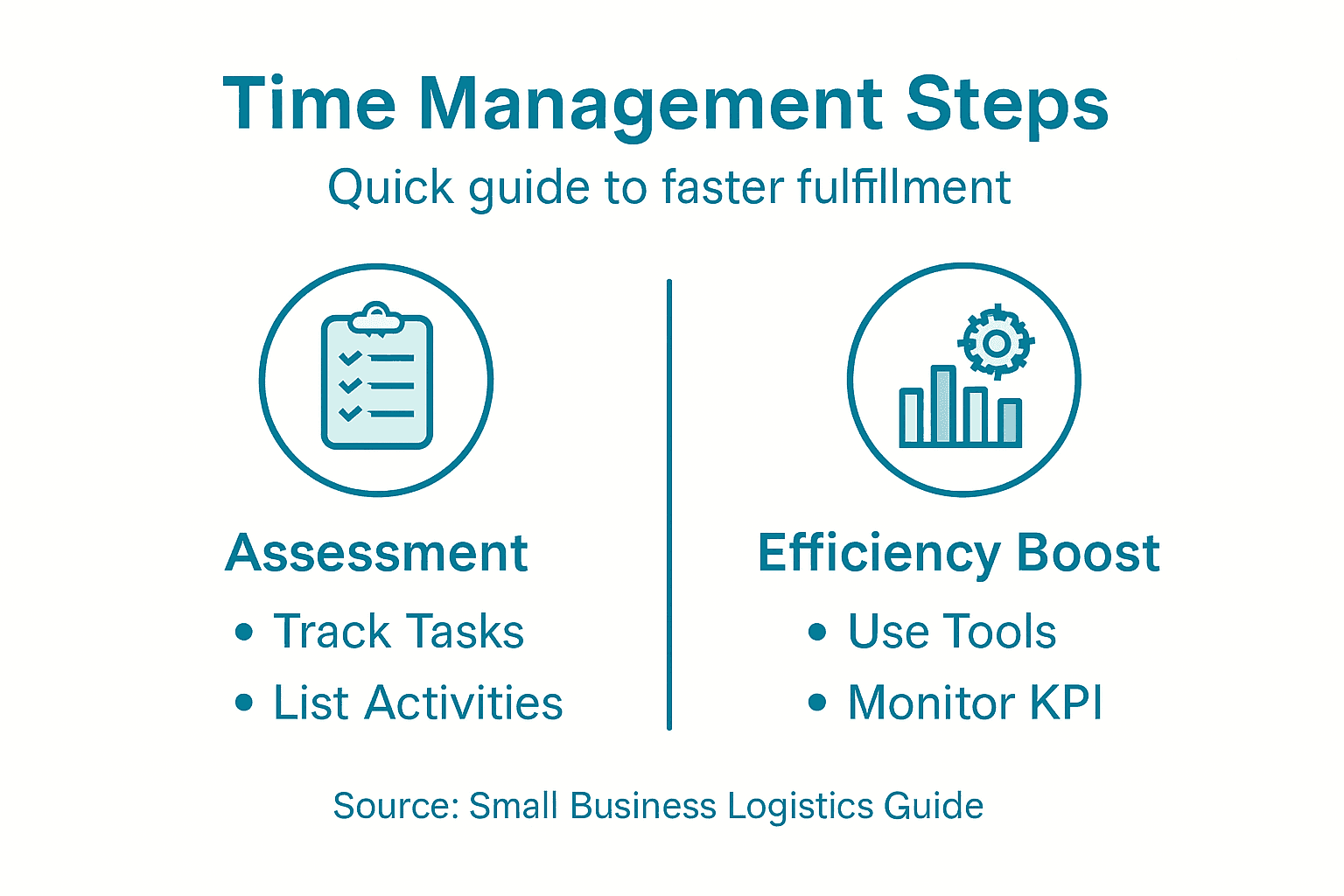
Tracking and analyzing how your small business currently spends time on logistics tasks is the critical first step toward dramatically improving fulfillment efficiency. Time use statistics provide a systematic approach to understanding where your operational hours are truly being invested.
To begin your assessment, create a comprehensive time tracking log that breaks down every logistics activity into discrete tasks. This means documenting precise time spent on inventory management, order processing, packaging, shipping preparation, and transportation coordination. Utilize digital tools or simple spreadsheets to record start and end times for each task, allowing you to generate an accurate picture of your current workflow. Logistics assessment tools can help you identify specific areas where time is being unnecessarily consumed or where potential bottlenecks exist.
Focus on capturing granular details about each logistics process. How long does it take to receive inventory? Process an order? Prepare items for shipment? By collecting this data meticulously, you will create a baseline measurement that enables targeted improvements in your fulfillment workflow. Analyze patterns such as repetitive tasks, waiting periods, and potential redundancies that could be streamlined or automated.
Pro tip: Consider using time tracking software specifically designed for small business logistics to automate data collection and provide instant insights into your operational efficiency.
Step 2: Identify Bottlenecks Slowing Order Fulfillment
Understanding and pinpointing the specific obstacles that impede your order fulfillment process is crucial for streamlining your small business logistics. Logistical bottlenecks impact supply chains by causing delays, increasing costs, and ultimately reducing customer satisfaction.
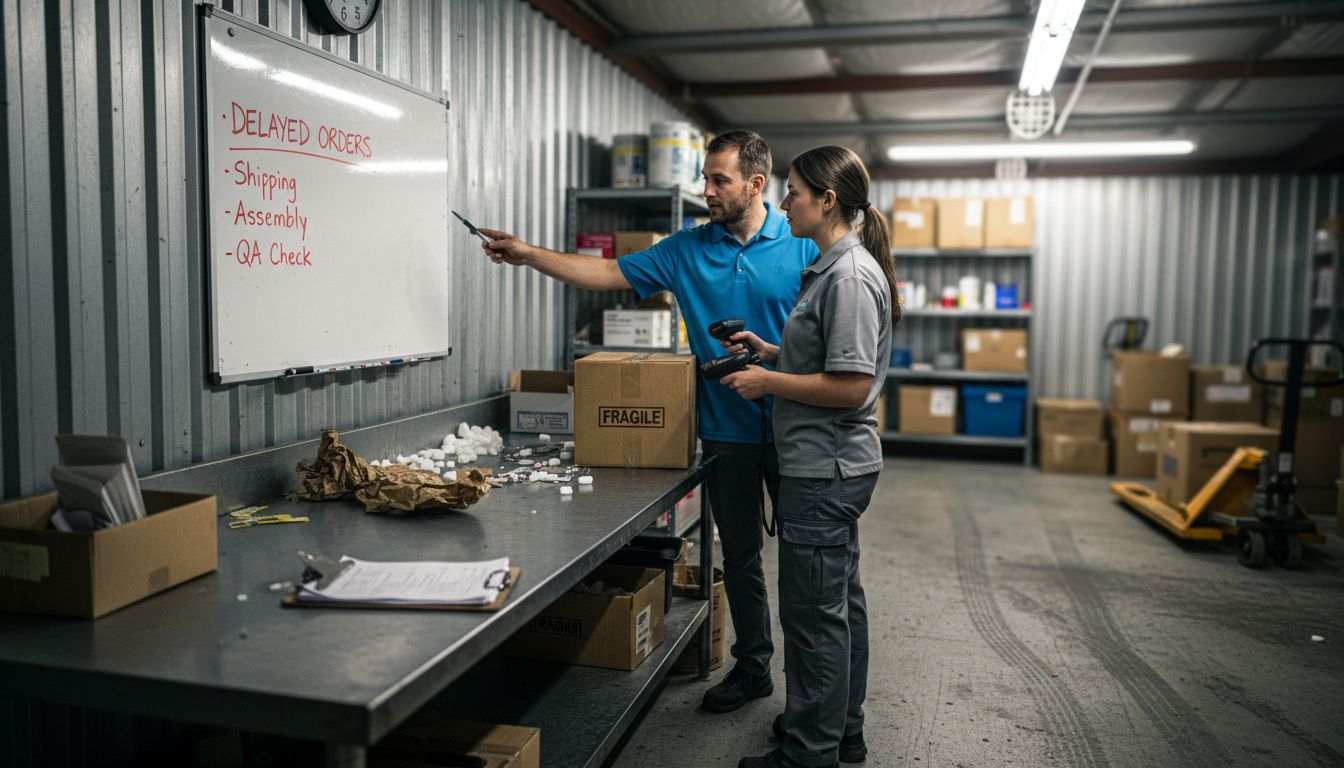
To effectively identify these bottlenecks, conduct a comprehensive workflow analysis that examines each stage of your order processing. Start by mapping out your entire fulfillment journey from initial order receipt to final shipment. Look for critical indicators such as excessive wait times, repeated manual interventions, inconsistent processing speeds, and points where tasks seem to stall. Workflow management strategies suggest focusing on task dependencies and resource limitations that could be creating unnecessary friction in your operations.
Pay special attention to specific areas like inventory management, order processing, packaging, and shipping. Measure the time spent at each stage and identify where tasks take longer than expected or where resources are underutilized. Common bottlenecks might include insufficient staffing, outdated technology, complex approval processes, or inefficient inventory tracking systems. By systematically analyzing these potential blockages, you can develop targeted strategies to eliminate delays and improve overall fulfillment speed.
Here’s a summary of common logistics bottlenecks and their impacts:
| Bottleneck Type | Example Issue | Impact on Fulfillment |
|---|---|---|
| Staffing | Too few warehouse employees | Slower order processing |
| Technology | Manual data entry systems | Increased risk of errors |
| Process | Complex approval steps | Longer decision times |
| Inventory | Poor tracking methods | Higher out-of-stock rates |
Pro tip: Create a visual workflow diagram that color codes each process stage to quickly identify where time is being lost most significantly.
Step 3: Implement Automation and Workflow Tools
Transforming your small business logistics requires strategic implementation of intelligent automation tools that streamline your order fulfillment processes. AI integration into enterprise workflows enables businesses to dramatically reduce manual interventions and accelerate operational efficiency.
Begin by identifying repetitive tasks in your current workflow that are prime candidates for automation. These typically include order processing, inventory tracking, shipping label generation, and customer communication. Look for software solutions that can integrate seamlessly with your existing systems. Workflow scheduling platforms allow you to define complex task dependencies and automate entire sequences of logistics operations, ensuring consistent and accurate execution without constant manual oversight.
Select automation tools that provide real time tracking, predictive analytics, and seamless data integration across your entire fulfillment ecosystem. Prioritize solutions that offer scalability, allowing your automation strategy to grow alongside your business. Focus on tools that reduce human error, minimize processing time, and provide actionable insights into your operational performance. Consider cloud based platforms that enable remote management and provide flexible configurations tailored to your specific business needs.
Below is a comparison of essential automation features for small business logistics:
| Feature | Business Benefit | Typical Tool Example |
|---|---|---|
| Real Time Tracking | Immediate inventory insights | Barcode scanning apps |
| Predictive Analytics | Anticipates stock needs | AI-based forecasting software |
| Data Integration | Faster information flow | Cloud logistics platforms |
| Error Reduction | Fewer shipping mistakes | Automated label generators |
Pro tip: Start with automating one specific workflow process and measure its impact before expanding to broader automation strategies.
Step 4: Allocate Team Roles for Maximum Efficiency
Optimizing your small business logistics requires a strategic approach to team role allocation that matches individual strengths with critical fulfillment tasks. Team role allocation strategies emphasize matching team members’ qualifications and experiences to specific operational responsibilities.
Begin by conducting a comprehensive skills assessment of your current team members. Identify each individual’s core competencies, technical skills, and potential areas for growth within your logistics workflow. Clarifying team roles and responsibilities helps reduce potential conflicts and ensures that every critical function in your order fulfillment process is covered efficiently. Consider creating role descriptions that outline specific tasks, performance expectations, and key performance indicators for each position within your logistics operations.
Develop a flexible role allocation system that allows for skill rotation and cross training. This approach not only prevents operational bottlenecks but also builds team resilience and adaptability. Assign primary and secondary responsibilities to ensure critical tasks have backup support. Focus on creating a collaborative environment where team members understand their individual contributions to the overall fulfillment process and can seamlessly support each other during peak operational periods.
Pro tip: Create a visual team skills matrix that maps each member’s capabilities to help quickly identify coverage gaps and training opportunities.
Step 5: Monitor Results and Fine-Tune Processes
Establishing a robust system for tracking and analyzing your logistics performance is crucial for continuous improvement in small business order fulfillment. Systematic performance monitoring enables you to collect timely data that reveals critical insights about your operational efficiency.
Develop a comprehensive dashboard that tracks key performance indicators specific to your fulfillment workflow. Focus on metrics such as order processing time, shipping accuracy, inventory turnover, and customer satisfaction rates. Progress monitoring techniques help you evaluate the effectiveness of your implemented strategies in real time. Select metrics that provide actionable insights, allowing you to quickly identify areas requiring immediate attention or potential optimization.
Create a regular review process where you analyze these performance metrics consistently. Schedule weekly or monthly deep dive sessions to examine trends, investigate any performance dips, and brainstorm targeted improvements. Be prepared to make incremental adjustments to your workflow, team roles, or automation strategies based on the data. Remember that continuous refinement is key to maintaining a competitive and efficient logistics operation.
Pro tip: Implement a color coded performance tracking system that provides instant visual feedback on your most critical operational metrics.
Boost Your Small Business Fulfillment with Reliable Courier Services
Managing time efficiently and eliminating bottlenecks are essential for faster order fulfillment, as this article highlights. If you are struggling with complex workflows, manual tracking, or limited visibility into your logistics operations, you are not alone. Key pain points like lengthy order processing times, staffing challenges, and manual data entry directly impact your customer satisfaction and growth potential. This is where streamlining through automation and real-time insights becomes critical.
At Or-Ner, we understand these challenges and offer end-to-end logistics solutions tailored for ecommerce sellers and small businesses. Our platform provides reliable courier services combined with automated inventory management, real-time shipment tracking, and integrated workflow tools that help you save time and reduce errors. Whether you need seamless freight booking, customs clearance, or a global network of warehouses, we enable you to optimize every step of your fulfillment process.
Ready to transform your logistics workflow and accelerate fulfillment speed? Visit Or-Ner today to explore how our automated tools and trusted courier partnerships can give your business the competitive edge it needs. Begin by checking out our reliable courier services and take the first step toward smarter, faster shipping solutions.
Frequently Asked Questions
How can I assess my small business’s time use in logistics tasks?
To assess your small business’s time use in logistics tasks, create a detailed time tracking log that outlines every logistics activity. Document the start and end times for tasks like inventory management, order processing, and shipping preparation to understand where your time is being spent.
What are common bottlenecks in order fulfillment for small businesses?
Common bottlenecks in order fulfillment include insufficient staffing, outdated technology, and complex approval processes. Identify these obstacles by analyzing each step of your workflow and noting where delays occur, which will help you streamline your operations.
How do I implement automation in my small business logistics?
To implement automation, start by identifying repetitive tasks within your logistics workflow that can be automated, such as order processing and inventory tracking. Select suitable software solutions that integrate seamlessly with your current systems to improve efficiency and reduce manual errors.
What steps should I take to allocate team roles effectively in logistics?
Begin by conducting a skills assessment of your team to match individual strengths with specific logistics tasks. Create clear role descriptions that define responsibilities and performance expectations, ensuring that each critical task in your fulfillment process is covered efficiently.
How can I monitor results and fine-tune my logistics processes effectively?
Monitor your logistics performance by developing a dashboard that tracks key performance indicators like order processing time and shipping accuracy. Regularly review these metrics, ideally on a weekly or monthly basis, to identify areas for improvement and make necessary adjustments to your logistics workflow.
Recommended
- Essential courier services for small businesses – ORNER
- Just in Time Delivery: Essential Guide for 2025 Success – ORNER
- What Is Same Day Delivery? 2025 Guide for Online Retailers – ORNER
- Top Benefits of Freight Forwarding for Growing Businesses 2025 – ORNER
- 7 Belangrijke voordelen koeriersdiensten voor bedrijven