Choosing between sea freight and air freight feels like a battle between speed and savings. Most assume that faster always means better, but the numbers tell a different story. Sea freight can be up to five times cheaper than air freight for large shipments, turning the common belief about shipping on its head and opening up some surprising options for 2025.
Table of Contents
- Shipping Speed And Delivery Reliability
- Cost Comparison And Budget Planning
- Environmental Impact And Sustainability
- Best Fit For Different Business Types
Quick Summary
| Takeaway | Explanation |
|---|---|
| Air freight is fastest for urgent shipments | Air freight significantly reduces delivery times, making it ideal for time-sensitive products, typically delivering within 1 to 7 days. |
| Sea freight is more cost-effective for large volumes | For bulk shipments of less time-sensitive goods, sea freight offers substantial savings, with costs being 4 to 5 times lower than air freight. |
| Consider environmental impact when choosing freight | Air freight has higher carbon emissions compared to sea freight, making sustainability a crucial factor in shipping decisions. |
| Adapt shipping method to business needs | Evaluate product type, urgency, and budget to choose between air and sea freight, ensuring alignment with operational goals. |
| Continuous reassessment of shipping strategies is essential | Markets and technologies evolve; businesses should regularly update their logistics strategies for optimal efficiency and competitiveness. |
Shipping Speed and Delivery Reliability
In the complex world of international shipping, speed and reliability stand as critical factors that can make or break a business’s logistics strategy. When comparing sea freight vs air freight, understanding the nuanced differences in delivery performance becomes paramount for making informed shipping decisions.
Air Freight: The Speed Champion
Air freight emerges as the undisputed leader in shipping speed. According to FedEx’s logistics insights, air transportation typically delivers goods within 1 to 7 days, offering remarkable schedule accuracy and precise delivery windows. This rapid transit time makes air freight an attractive option for businesses requiring quick turnaround and time-sensitive shipments.
Uber Freight’s comparative analysis highlights that airlines operate on consistent schedules, which minimizes potential disruptions. The frequency of flights ensures that even if one route experiences challenges, alternative options are readily available. This reliability translates into predictable delivery timelines critical for inventory management and customer satisfaction.
Sea Freight: The Patient Performer
Conversely, sea freight presents a more deliberate shipping approach. While significantly slower than air transport, sea shipments typically range between 20 to 45 days. This extended timeline introduces more variables that can impact delivery reliability. Weather conditions, port congestion, and customs clearance processes can potentially extend shipping durations.
However, sea freight’s slower pace does not necessarily equate to unreliability. Shipping companies have developed sophisticated tracking and management systems to provide transparency throughout the journey. Modern vessels equipped with advanced navigation technologies and comprehensive logistics networks help mitigate potential delays.
Strategic Shipping Selection
Choosing between air and sea freight requires a nuanced evaluation of your specific business needs. Our guide on reliable courier services can help you navigate these complex decisions. According to Infosys BPM’s logistics insights, businesses must consider factors beyond just speed. Product type, shipment volume, budget constraints, and urgency play pivotal roles in determining the most appropriate shipping method.
For high-value, time-sensitive products like electronics or perishable goods, air freight’s speed becomes invaluable. Conversely, bulk shipments of less time-critical items like furniture or industrial equipment might benefit from sea freight’s cost-effectiveness. The key lies in aligning your shipping strategy with your specific operational requirements and customer expectations.
Here is a comparison table summarizing the key differences in speed, reliability, and ideal use cases between air freight and sea freight:
| Factor | Air Freight | Sea Freight |
|---|---|---|
| Typical Transit Time | 1–7 days | 20–45 days |
| Delivery Reliability | High (precise schedules, frequent departures) | Moderate (subject to weather and port congestion) |
| Best For | Time-sensitive, high-value, or perishable goods | Large-volume, less urgent, or bulky items |
| Risk of Delays | Lower (alternative flights available) | Higher (multiple variables impact timelines) |
Cost Comparison and Budget Planning
Budget planning remains a critical consideration when selecting between sea freight and air freight. The financial implications of shipping mode selection extend far beyond simple transportation costs, impacting overall operational expenses and profit margins for businesses engaged in international trade.
Air Freight: Premium Pricing for Speed
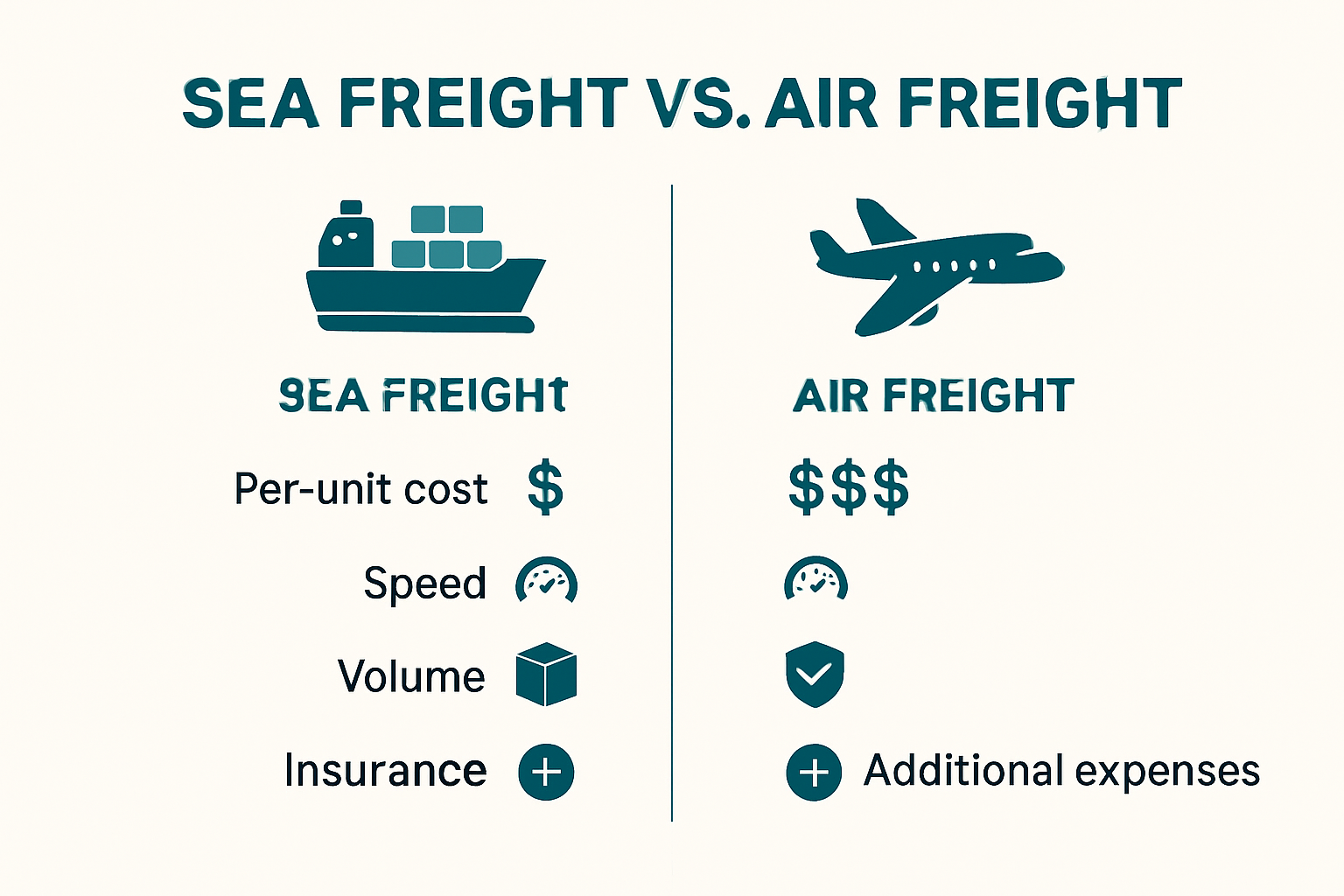
Air freight represents the premium option in international shipping, commanding significantly higher prices compared to sea transportation. According to Freightos, air freight rates can be 4 to 5 times more expensive than ocean freight for equivalent shipment volumes. This substantial price difference stems from the complex infrastructure and fuel-intensive nature of air transportation.
FreightAmigo’s analysis reveals that businesses typically pay a premium for air freight’s speed and reliability. The cost per kilogram is substantially higher, making it less economical for large or heavy shipments. However, for high-value, time-sensitive products, the additional expense can be justified by reduced inventory holding costs and faster market entry.
Sea Freight: Economic Efficiency for Large Volumes
Sea freight emerges as the most cost-effective solution for businesses shipping larger volumes or less time-sensitive goods. The economic advantages become particularly pronounced when dealing with bulk shipments. Wikipedia’s research on transport efficiency highlights that ocean freight consumes significantly less energy per ton-kilometer, translating to lower overall transportation costs.
Budget-conscious businesses can leverage sea freight’s economic model to optimize shipping expenses. The lower per-unit transportation cost allows companies to move larger quantities of goods while maintaining competitive pricing. This approach is especially beneficial for manufacturers and wholesalers dealing with standardized or non-perishable products.
Strategic Budget Considerations
Navigating the financial landscape of international shipping requires a comprehensive approach. Our guide on reliable courier services offers insights into making strategic shipping decisions. Beyond direct transportation costs, businesses must factor in additional expenses such as insurance, customs clearance, and potential inventory holding costs.
The most effective budgeting strategy involves a nuanced evaluation of multiple factors. Product value, shipment urgency, volume, and market dynamics all play crucial roles in determining the most financially prudent shipping method. While air freight offers speed, its higher costs demand careful justification. Sea freight provides economic relief but requires more extended planning and potentially larger upfront inventory investments.
Ultimately, the optimal choice depends on your specific business model, product characteristics, and strategic objectives. Businesses must conduct thorough cost-benefit analyses, considering not just immediate transportation expenses but the broader economic implications of their shipping strategy.
Below is a table comparing major cost and efficiency factors between sea freight and air freight to help with budget planning:
| Cost/Efficiency Factor | Air Freight | Sea Freight |
|---|---|---|
| Typical Cost per kg | 4–5 times higher than sea | Much lower (economical for bulk) |
| Inventory Holding Cost | Lower (faster delivery) | Higher (slower delivery) |
| Energy Consumption | Significantly higher | Lower (more efficient per ton-km) |
| Best Shipment Size/Type | Small, time-critical, high-value | Large, less urgent, non-perishable |
Environmental Impact and Sustainability
Environmental considerations have become increasingly critical in logistics decision making, with businesses and consumers alike demanding more sustainable shipping solutions. The choice between sea freight and air freight carries significant environmental implications that extend beyond immediate transportation needs.
Carbon Emissions and Energy Consumption
According to research from ResearchGate, sea freight demonstrates substantially lower emission intensity compared to air freight. Air transportation generates significantly higher carbon dioxide emissions per ton-kilometer, making it considerably less environmentally friendly. A single air shipment can produce up to 47 times more carbon emissions than an equivalent sea freight journey.
The transportation sector’s carbon footprint remains a global concern. Shipping companies are increasingly investing in green technologies and alternative fuel sources to mitigate environmental impact. For businesses committed to sustainability, understanding these ecological differences becomes paramount in strategic shipping decisions.
Technological Innovations in Green Shipping
Both maritime and aviation industries are experiencing transformative shifts toward more sustainable practices. Sea freight is witnessing remarkable innovations, including the development of electric-powered vessels, hydrogen fuel technologies, and advanced hull designs that reduce fuel consumption. These technological advancements promise to dramatically reduce the environmental footprint of maritime transportation.
Air freight providers are also exploring sustainable alternatives, such as sustainable aviation fuels and more fuel-efficient aircraft designs. However, the inherent energy requirements of air transportation make significant emission reductions more challenging compared to sea freight.
Sustainability Beyond Emissions
Our guide on reliable courier services emphasizes the importance of holistic sustainability considerations. Beyond carbon emissions, businesses must evaluate additional environmental factors such as waste generation, packaging materials, and overall supply chain ecological impact.
Companies increasingly recognize that sustainability is not just an environmental imperative but also a competitive advantage. Consumers are more likely to support brands demonstrating genuine commitment to ecological responsibility. By choosing shipping methods with lower environmental impact, businesses can simultaneously reduce their carbon footprint and enhance their brand reputation.
The future of international shipping will undoubtedly be shaped by continued technological innovation and increasing environmental regulations. Businesses that proactively adapt their logistics strategies to prioritize sustainability will be best positioned to thrive in an increasingly eco-conscious global marketplace. The choice between sea and air freight is no longer just about speed and cost, but also about environmental stewardship and long-term global responsibility.
Best Fit for Different Business Types
Selecting the optimal shipping method requires a nuanced understanding of how different business types and industries align with specific freight transportation strategies. The choice between sea freight and air freight is not one-size-fits-all but demands a strategic approach tailored to unique operational requirements.
High-Value and Time-Sensitive Industries
According to JusDA Global’s logistics analysis, certain industries are inherently better suited to air freight. Electronics manufacturers, pharmaceutical companies, and businesses dealing with perishable goods benefit dramatically from air transportation’s rapid transit times. For these sectors, the ability to move high-value products quickly outweighs the premium pricing.
Uber Freight’s comparative research indicates that air freight can be 12 to 16 times more expensive than sea freight. However, for businesses where product freshness or technological relevance is critical, this additional cost becomes a strategic investment rather than an expense. Technology startups, medical supply distributors, and fashion brands with rapidly changing seasonal inventories often find air freight’s speed essential to maintaining competitive market positioning.
Bulk and Industrial Shipping Needs
Conversely, industries involving large-scale, heavy, or non-time-sensitive goods find sea freight extraordinarily advantageous. Manufacturing, construction, and raw materials sectors benefit immensely from maritime shipping’s cost-effectiveness. FreightAmigo’s industry analysis highlights that industrial machinery, construction equipment, and bulk commodities are perfectly suited for sea transportation.
Sea freight allows businesses to move substantial volumes at significantly reduced per-unit transportation costs. Agricultural exporters, mining companies, and large-scale industrial manufacturers can transport massive quantities of goods economically. The lower environmental impact of sea freight also aligns with growing corporate sustainability mandates, making it an attractive option for environmentally conscious organizations.
Strategic Shipping for Small and Medium Enterprises
Our guide on courier services for small businesses provides insights into navigating complex shipping decisions. Small and medium enterprises must conduct thorough cost-benefit analyses, considering factors beyond immediate transportation expenses.
Startup ecommerce brands might alternate between shipping methods based on product type and market demand. A company selling both fragile electronics and bulk home decor could strategically utilize different freight methods for various product lines. The key lies in maintaining flexibility and understanding that shipping strategy is not static but a dynamic component of overall business operations.
Businesses must continuously reassess their shipping strategies as market conditions, technological innovations, and global economic landscapes evolve. The most successful organizations view freight transportation not as a mere logistical necessity but as a strategic lever for competitive advantage, customer satisfaction, and operational efficiency.
Below is a table summarizing the best-fit shipping method by business or product type, based on detailed examples discussed above:
| Business/Product Type | Preferred Shipping Method | Reasoning |
|---|---|---|
| Electronics, pharmaceuticals, perishables | Air Freight | Need for speed, high value, time-sensitivity |
| Machinery, industrial equipment, raw materials | Sea Freight | Suited for bulk, weight, cost-effectiveness |
| Fashion (seasonal/fast-moving) | Air Freight | Quick market response, high turnover |
| Bulk home decor, furniture | Sea Freight | Economical for large, non-urgent items |
| Startups/ecommerce (mixed goods) | Both | Flexibility based on item type and urgency |
Frequently Asked Questions
What is the main difference between sea freight and air freight?
Sea freight is much slower but more cost-effective for large shipments, while air freight is faster and reliable, making it ideal for urgent deliveries.
How much cheaper is sea freight compared to air freight?
Sea freight can be up to five times cheaper than air freight for large shipments, making it a more economical option for bulk transport.
Which shipping method is more environmentally friendly?
Sea freight is generally more environmentally friendly than air freight due to lower carbon emissions per ton-kilometer.
How do I choose between air freight and sea freight for my business?
Consider factors such as shipment size, urgency, product type, and budget when deciding between air and sea freight to meet your specific logistical needs.
Choose Reliable Shipping and Fulfillment for Every Business Need
Are you worried about risking profit margins with costly air freight or frustrated by slow sea freight that traps your cash in inventory? The right balance between speed, budget, and supply chain control is not easy. As explained in our Sea Freight vs Air Freight guide, choosing the wrong logistics partner can impact your business growth, delivery promises, and customer satisfaction. Let us help you move beyond the pain of unknown transit times, shipping missteps, or inflexible options. Our all-in-one platform at or-ner.com connects you to real reliable courier services, real-time shipment tracking, and streamlined freight booking for both air and sea—no guessing required.
Why wait and let inefficient logistics hold your business back? Join or-ner.com and discover end-to-end support, automated workflows, and full visibility across warehousing, customs, and last-mile delivery. Whether you handle home goods, toys, apparel, or even musical instruments, we tailor solutions for merchants, wholesalers, and global brands. Start now to gain an instant edge in speed, cost savings, and reliable service. Ready to future-proof your supply chain for 2025? Get started today.