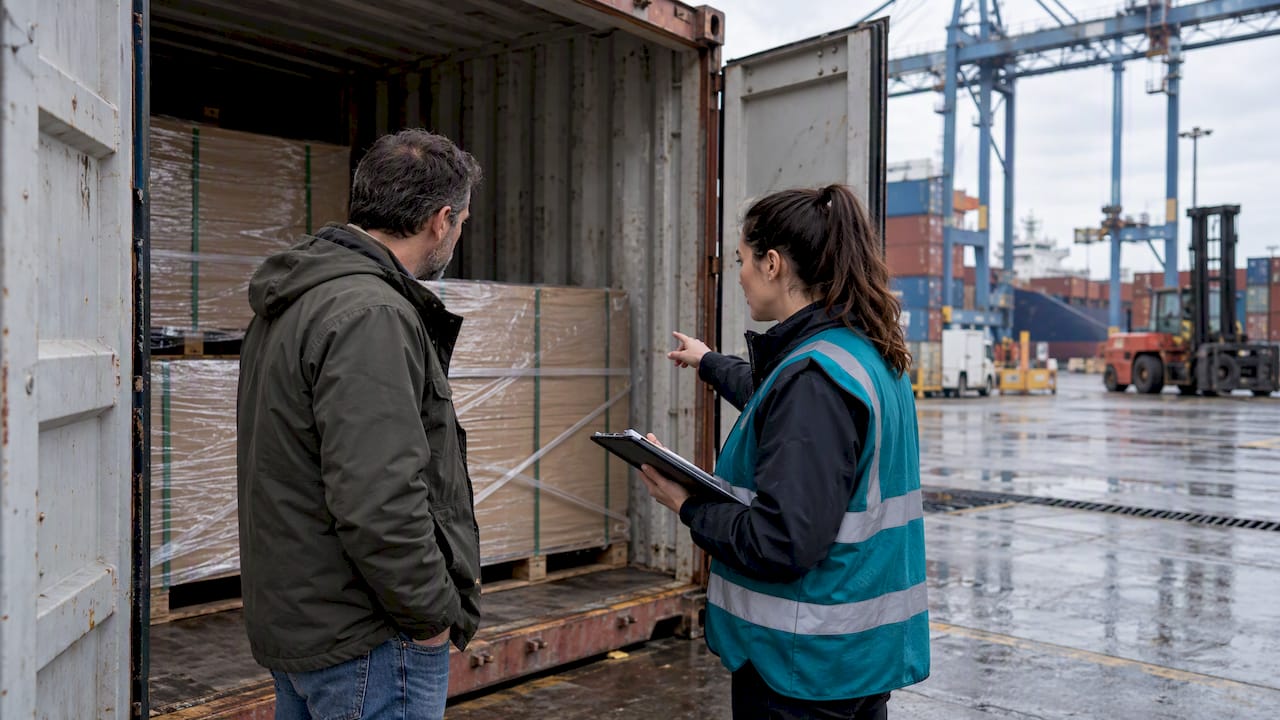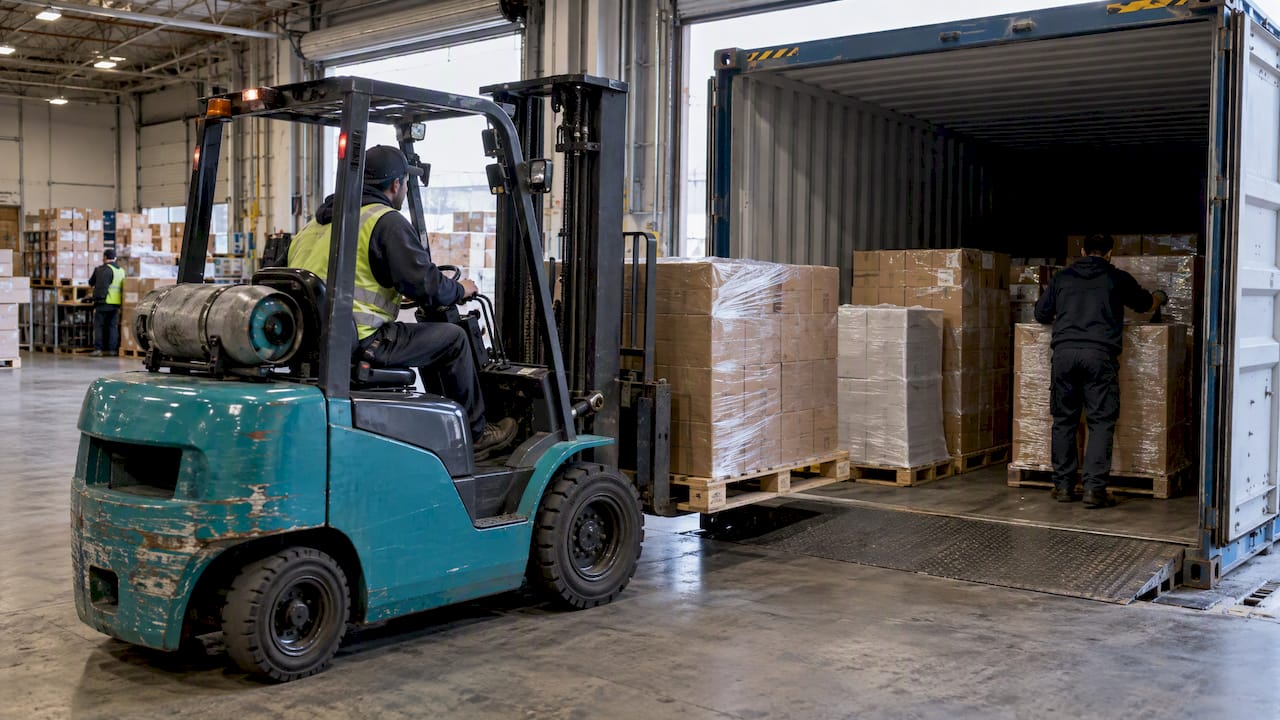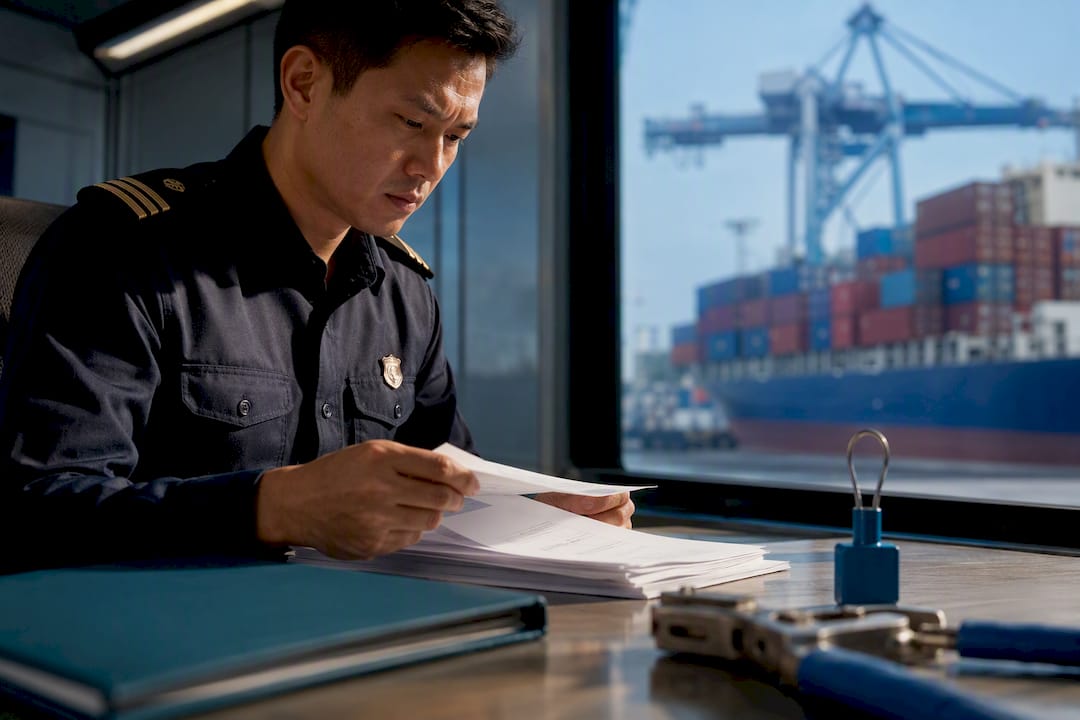
A standard sea freight shipment runs on five core documents: the commercial invoice, the bill of lading or sea waybill, the packing list, a certificate of origin when preferential duty rates apply, and an insurance certificate when the deal is CIF or CIP. Depending on the commodity and destination, you may also need an arrival notice, a shipper’s letter of instruction, an export declaration, or an ISF filing for U.S.-bound ocean cargo. The shipper typically drafts the commercial paperwork, the forwarder handles transport documents, and a licensed customs broker files entry paperwork with customs on the importer’s behalf.
TL;DR:
- Most shipments require only a commercial invoice and packing list, while other documents like certificates of origin or ISF filings depend on trade agreements and destination rules.
- Accurate filling of the commercial invoice with the correct HS codes, buyer and seller information, and values is crucial to avoid customs holds or duty miscalculations.
- The bill of lading must match the cargo manifest and accurately reflect shipment details, as discrepancies can delay release or trigger inspections.
- Early filing of documents like ISF and entry paperwork saves time, with CBP allowing pre-arrival submissions to reduce dock delays.
- Using standardized templates and audit steps can prevent common mistakes that cause delays, such as incorrect HS codes, mismatched figures, or late filings.
Table of Contents
- The Core Sea Freight Documents You Need, Ranked by Priority
- What Goes on Each Document (and Why Customs Cares)
- When Each Document Kicks In: Mode, Commodity, and Timing Rules
- Common Documentation Mistakes and How to Avoid Them
- Who Actually Prepares and Files Each Document
- How the Cargo Manifest and Stowage Plan Fit In
- Freight Invoice and Payment Documentation
- Import Licenses or Permits, When They Apply
- Hazardous Materials Handling Documentation
- What Practitioners Get Wrong About Documentation Risk
- How Or-ner Helps You Get Sea Freight Documentation Right
- Sources
- FAQ
The Core Sea Freight Documents You Need, Ranked by Priority
Two documents are non-negotiable on every cross-border shipment, no matter the mode or destination: the commercial invoice and the packing list. Everything else on this list gets added based on how you’re shipping, what you’re shipping, and where it’s going, as GoFreight’s forwarder checklist confirms.
Here’s the priority order that most freight forwarders work from:
- Commercial invoice: States the transaction value, buyer and seller details, and goods description. Customs uses it to calculate duties. Issued by the shipper or exporter.
- Bill of lading (or sea waybill): The transport contract and, for a negotiable bill of lading, the document of title to the goods. Issued by the ocean carrier or forwarder.
- Packing list: Breaks down carton counts, weights, and dimensions per container. Prepared by the shipper, often alongside the invoice.
- Certificate of origin: Confirms where goods were manufactured, required for free trade agreement duty claims. Issued by a chamber of commerce or, for FTA-specific origin, self-certified by the exporter.
- Insurance certificate: Proves cargo coverage, mandatory when the Incoterm is CIF or CIP. Issued by the insurer or freight forwarder acting as agent.
- Importer Security Filing (ISF): Required for any ocean shipment entering the United States, filed 24 hours before the vessel loads at the foreign port.
- CBP Form 7501 (entry summary): The U.S. customs entry summary, filed by the importer of record or their broker after cargo arrives.
Not every shipment needs all seven. A shipment moving under an open account between two countries with no FTA in place skips the certificate of origin entirely. A shipment on Free On Board terms skips the insurance certificate because the buyer arranges its own coverage.
What Goes on Each Document (and Why Customs Cares)
Getting the fields right on each document matters more than most exporters realize, because a single mismatched number can trigger a customs hold that costs more in demurrage than the shipment’s profit margin.
The commercial invoice needs the seller and buyer’s full legal names and addresses, an invoice number and date, a detailed goods description with Harmonized System codes, quantity, unit price, total value, currency, Incoterm, and country of origin. Customs authorities cross-reference this invoice against the declared HS code to calculate duty. Get the code wrong and you either overpay or invite an audit.
The bill of lading comes in two forms: a master bill issued by the ocean carrier to the forwarder, and a house bill issued by the forwarder to the actual shipper. A straight bill of lading names a specific consignee and can’t be transferred; a negotiable (to-order) bill of lading can be bought and sold as a document of title, which matters for letter-of-credit transactions. Carriers check the bill against the vessel’s cargo manifest before releasing goods, so any spelling or weight discrepancy between the two documents can stall release.
The packing list needs to match the invoice line for line, since customs inspectors often pull a container for physical verification and check contents against both documents simultaneously.
A certificate of origin claiming FTA benefits has to meet that specific agreement’s rules of origin, not just state a country name, and it typically expires or needs re-issuance per shipment.
Beyond these, keep an eye on the arrival notice from your carrier, a shipper’s letter of instruction (SLI) for your forwarder, export declarations filed through the Automated Export System when the Schedule B value exceeds $2,500 or a license is required, phytosanitary or fumigation certificates for wood packaging and plant products, and a dangerous goods declaration for any hazardous cargo. Trade confirms that fumigation, phytosanitary, and health certificates apply only when the commodity itself triggers them, not as a blanket requirement.
Pro Tip: Keep a running log of which certificates have expiration dates. A certificate of origin or fumigation certificate that lapses between booking and vessel departure is one of the most preventable causes of a dock hold.
When Each Document Kicks In: Mode, Commodity, and Timing Rules
Cross-border paperwork sorts into five functional groups: commercial documents, transport documents, customs documents, regulatory certificates, and Incoterm-driven documents, according to GoFreight’s checklist framework. Knowing which group a document belongs to tell you what triggers it.
- Mode determines the transport document. Ocean cargo needs a bill of lading; air cargo needs an air waybill instead. Ocean shipments bound for the United States also require an ISF filing 24 hours before the vessel loads at the export port.
- Destination determines customs entry paperwork. U.S. importers must file entry documents within 15 calendar days of arrival at the port, then deposit the entry summary on CBP Form 7501 along with estimated duties within 10 working days of release.
- Commodity triggers regulatory certificates. Wood packaging needs fumigation certification; plants and food need phytosanitary or health certificates; hazardous cargo needs a dangerous goods declaration.
- Incoterm determines who insures. Under CIF or CIP, the seller must provide an insurance certificate; under FOB or EXW, the buyer arranges its own cover.
- Trade program eligibility determines origin paperwork. No FTA claim means no certificate of origin required.
Filing early pays off. CBP allows pre-arrival filing up to five days before a vessel’s estimated arrival, which shortens the wait at the dock considerably.
Common Documentation Mistakes and How to Avoid Them
Incorrect bill of lading details, wrong HS codes, mismatched invoice and packing list figures, and late ISF filings rank among the most common causes of ocean freight delays and demurrage charges. None of these are exotic errors. They’re typically typos, copy-paste mistakes, or a missed deadline.
- Cross-check invoice, packing list, and bill of lading totals before booking, not after.
- Validate HS codes against the actual product, not last shipment’s code.
- Build a two-person review step for any document tied to duty calculation or an FTA claim.
- Track the ISF deadline separately from the booking confirmation date.
Pro Tip: If an error surfaces after submission, contact your customs broker immediately rather than waiting for a hold notice. Amended filings before cargo arrival almost always cost less than a post-arrival correction.
Who Actually Prepares and Files Each Document
The exporter drafts the commercial invoice, packing list, and product information because only the seller knows the transaction terms. The carrier or forwarder issues the bill of lading and arrival notice since they control the vessel booking. The importer of record carries legal responsibility for entry filing and duty payment, usually delegating the actual filing to a licensed customs broker.
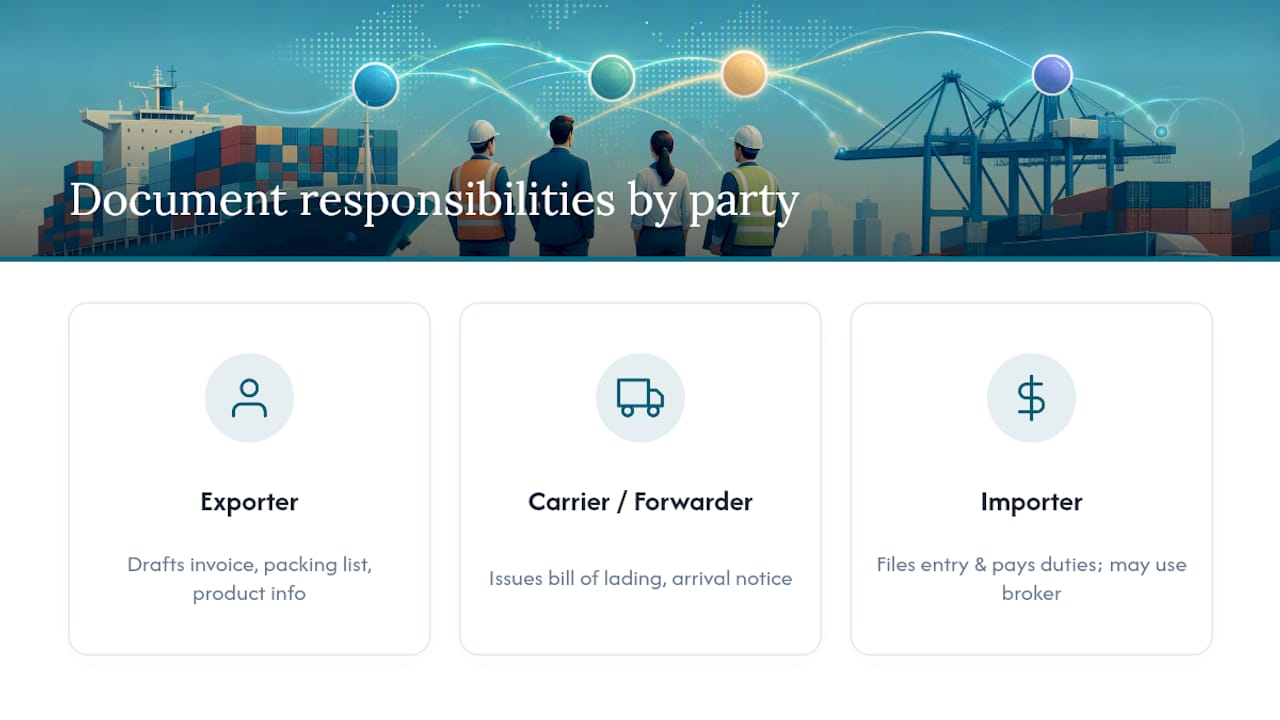
Most exporters hand their paperwork to a forwarder to prepare, and the U.S. Commercial Service recommends exactly that since forwarders specialize in routine export documentation. That said, the exporter stays legally accountable for accuracy even after handing off the files. At booking, have ready: your commercial invoice draft, packing list, product HS codes, Incoterm, and any FTA eligibility documentation.
How the Cargo Manifest and Stowage Plan Fit In
The cargo manifest is the carrier’s master list of everything loaded aboard a vessel, compiling every bill of lading into one consolidated record. Customs authorities at both origin and destination ports use it to reconcile what’s physically on the ship against what was declared, and it’s the document port authorities pull first if a discrepancy surfaces during inspection.
The stowage plan is a separate technical document showing exactly where each container sits on the vessel, by bay, row, and tier. Terminal operators and the vessel’s chief officer use it to plan loading and discharge sequences, balance weight distribution, and keep hazardous cargo properly separated from incompatible goods.
Neither document is something an individual shipper prepares. The carrier generates both from the aggregated booking and bill of lading data across all shippers on that voyage. Where this matters for you: if your bill of lading details don’t match what’s on the manifest, customs can flag the discrepancy and hold your container even if your own paperwork is flawless. That’s one more reason accuracy on the bill of lading isn’t optional. A wrong container number or weight figure ripples into a document you never see but that determines whether your cargo clears smoothly.
Freight Invoice and Payment Documentation
The freight invoice is a separate animal from the commercial invoice. It bills for the transportation service itself: ocean freight charges, fuel surcharges, terminal handling fees, and any accessorial charges like demurrage or detention. Your carrier or forwarder issues it, typically after the bill of lading is released, and it lists the shipment reference number, container numbers, origin and destination ports, and the agreed freight rate.
Payment terms usually follow one of two structures. Freight prepaid means the shipper pays before or at origin, common under CIF and CIP Incoterms where the seller controls the freight arrangement. Freight collect means the consignee pays at destination, typical under FOB and EXW terms where the buyer books the carrier.
Keep your freight invoice and your carrier’s payment receipt on file alongside the commercial documents. Customs brokers sometimes request proof of freight payment to verify the declared value used for duty calculation, particularly on CIF shipments where freight and insurance costs get added to the customs value. A missing or unreconciled freight invoice can delay that value verification even when every other document is in order.
Import Licenses or Permits, When They Apply
Most consumer goods, apparel, footwear, and general merchandise don’t need an import license at all. Licensing only enters the picture for specific regulated categories: firearms, certain chemicals, agricultural products, pharmaceuticals, alcohol, tobacco, and some electronics with radio-frequency components.
Whether a license applies depends on the commodity, not the shipping mode. A sea freight shipment of textiles needs the same licensing (none, typically) as the identical goods moved by air. What changes is the paperwork trail: if your product falls into a regulated category, the permit or license needs to be secured before the goods ship, not after arrival, because customs will hold cargo that lacks required licensing documentation at entry.
Check your product’s regulatory status early in the sourcing process, ideally before you place a purchase order, since permit approval can take weeks. Your customs broker or the importing country’s regulatory agency can confirm whether your HS code falls under a licensing requirement. This is one area where relying on your forwarder’s general documentation checklist isn’t enough. Licensing requirements are commodity-specific and change by jurisdiction, so verify directly with the relevant regulatory body rather than assuming your last shipment’s requirements still apply.
Hazardous Materials Handling Documentation
Any shipment classified as dangerous goods under the International Maritime Dangerous Goods (IMDG) Code needs a dangerous goods declaration, separate from the standard commercial paperwork. This declaration identifies the UN number, proper shipping name, hazard class, packing group, and quantity for each hazardous item aboard.
The shipper or a certified dangerous goods handler prepares this declaration, and it has to accompany the shipment through every handoff, from the trucker who delivers to the port through the carrier and into the destination country’s customs process. Packaging for hazardous cargo also needs UN-certified markings that match what’s declared on the paperwork, and stowage plans account for hazard class segregation requirements, keeping oxidizers away from flammables, for instance.

Skipping or understating a dangerous goods declaration isn’t just a paperwork gap. It’s a safety and legal liability that can result in cargo refusal at the port, fines, or in serious cases, vessel-wide safety incidents. If you’re shipping anything with battery components, aerosols, or chemical compounds, confirm the IMDG classification before booking rather than after your forwarder flags it.
What Practitioners Get Wrong About Documentation Risk
Most documentation failures aren’t compliance failures. They’re workflow failures. A shipper who manually retypes the same invoice data three times across three systems will eventually introduce a mismatch, and that mismatch is what triggers the hold, not ignorance of the rules.
The fix isn’t more training. It’s fewer manual re-entries. Standardized templates that pull HS codes and party details from a single source, expiry trackers on certificates of origin and fumigation paperwork, and a pre-departure audit step before the vessel books all catch errors before they become customs problems. Or-ner’s booking platform applies exactly this logic by generating the document checklist directly from booking metadata, mode, destination, commodity, and Incoterm, rather than leaving shippers to reconstruct it from memory each time.
— Maayan
How Or-ner Helps You Get Sea Freight Documentation Right
Or-ner is the alternative to piecing together your documentation from scattered templates and a forwarder’s memory. The platform’s freight booking tool generates your document checklist directly from your shipment’s mode, destination, commodity, and Incoterm, and pairs it with customs clearance support so you’re not guessing which certificates apply.
Before requesting an estimate, have your commercial invoice draft, packing list, product HS codes, and Incoterm on hand. If your goods qualify for preferential duty treatment, note your certificate of origin status too. Or-ner’s customs clearance and warehousing services then handle the entry-side paperwork once your cargo arrives, working alongside your booking rather than as a separate disconnected step.
Ready to see what your shipment needs? Get a freight estimate and Or-ner will map the exact document set to your route before you book.
Sources
- Cross Border Freight Documentation Checklist 2026: The Documents Forwarders Cannot Skip | GoFreight
- Importing into the United States: A Guide for Commercial Importers
- Shipping: Documentation | BETA – International Trade Administration
- Ocean freight documentation mistakes: How to avoid delays
FAQ
What Are Freight Documents?
Freight documents are the paperwork that proves what’s being shipped, its value, its origin, and its legal ownership. At minimum that means a commercial invoice, packing list, and a bill of lading or waybill matching the transport mode.
What Paperwork Do I Need to Ship Internationally?
You need a commercial invoice and packing list on every shipment, plus a bill of lading (ocean) or air waybill (air), and conditionally a certificate of origin, insurance certificate, or export declaration depending on trade terms and commodity. Or-ner’s booking platform generates the exact list based on your specific shipment details.
What Is the Document of Freight Shipping?
The bill of lading is the primary transport document for ocean freight. It functions as the carrier’s receipt for the goods, the transport contract, and, when issued as a negotiable document, the title to the cargo itself.
What Are the 5 Documents Used in Transportation?
Definitions vary, but a common working set includes the commercial invoice, bill of lading or waybill, packing list, certificate of origin, and insurance certificate. This forms the practical core most forwarders build a checklist around before layering in mode or commodity-specific paperwork.