Handling returns in the United States ecommerce industry can quickly become a headache when unclear policies and disjointed systems frustrate both staff and customers. A well-crafted strategy for returns management not only protects your bottom line but also builds long-term customer trust. By mastering key steps like clear return policies, integrated inventory, and automated tools, logistics managers can cut unnecessary costs while making the returns process as smooth as possible.
Table of Contents
- Step 1: Establish a Clear Return Policy
- Step 2: Integrate Returns With Inventory Systems
- Step 3: Automate Return Authorization and Label Creation
- Step 4: Streamline Product Inspection and Restocking
- Step 5: Analyze Return Data for Continuous Improvement
Quick Summary
| Key Insight | Explanation |
|---|---|
| 1. Establish a Clear Return Policy | Craft a straightforward policy that defines return conditions clearly to enhance customer trust and minimize disputes. |
| 2. Integrate Returns with Inventory Systems | Connect returns processes with inventory management to reduce errors and maintain accurate stock levels efficiently. |
| 3. Automate Return Authorization | Implement automated systems for return authorizations and label creation to streamline the return process, improving customer satisfaction. |
| 4. Streamline Product Inspection | Use standardized inspection protocols to quickly assess returned items, ensuring accurate classification and efficient restocking. |
| 5. Analyze Return Data Regularly | Systematically analyze return metrics to identify trends and implement targeted improvements, enhancing overall operations. |
Step 1: Establish a Clear Return Policy
Designing a clear return policy helps protect your ecommerce business while keeping customers satisfied. Your goal is to create a straightforward, transparent policy that sets reasonable expectations and minimizes potential disputes.
Start by crafting a policy that segments product returns effectively. This means defining specific categories and conditions for acceptable returns. Your policy should clearly outline:
- Timeframe for returns (typically 30-90 days)
- Condition requirements for returned items
- Specific documentation customers must provide
- Restocking fees or potential charges
- Exclusions for certain product types
When designing your policy, balance customer convenience with business protection. You want to make returns simple enough to build trust, but structured enough to prevent abuse. Consider creating different return protocols for various product categories, recognizing that electronics might require different handling compared to clothing or home goods.
Here’s a quick reference comparing return protocols for popular ecommerce product categories:
| Product Category | Typical Protocols | Business Risk Level | Customer Satisfaction Impact |
|---|---|---|---|
| Electronics | Serial number verification, strict condition checks | High | Moderate if process is transparent |
| Apparel | Flexible sizing returns, basic inspection | Low | High if simple and free exchanges offered |
| Home Goods | Open package allowed, minor defects accepted | Medium | Positive if handled quickly |
| Cosmetics | Sealed packages required, hygiene rules | High | Mixed, depends on strictness |
A well-designed return policy communicates professionalism and builds customer confidence in your brand.
Be sure to display your return policy prominently on your website, making it easy to find and understand. Place links in multiple locations like product pages, checkout screens, and your main customer service area.
Pro tip: Create a dedicated returns portal that allows customers to initiate returns quickly and track their return status in real time.
Step 2: Integrate Returns With Inventory Systems
Successfully integrating your returns process with inventory management is crucial for maintaining accurate stock levels and operational efficiency. By connecting these systems, you’ll create a seamless workflow that reduces errors and speeds up product availability.
Implementing perpetual inventory systems allows for real-time tracking of returned items. This approach automates critical inventory management tasks by:
- Automatically updating stock counts when returns are processed
- Tracking product condition for potential resale or disposal
- Generating instant restocking alerts
- Maintaining precise inventory records
- Reducing manual data entry errors
Modern technology makes this integration smoother than ever. Utilize barcode scanning and automated data capture systems to streamline the return and restocking process. These technologies help you quickly assess returned product conditions, update inventory records, and make fast decisions about product disposition.
Efficient returns integration transforms a potential logistical challenge into a strategic business advantage.
Consider investing in inventory management software that offers robust returns tracking capabilities. Look for systems that can differentiate between returnable, resellable, and non-salvageable items, helping you maximize the value of returned merchandise.
Pro tip: Develop standardized workflows for different product categories to ensure consistent and efficient returns processing.
Step 3: Automate Return Authorization and Label Creation
Streamlining your returns process begins with automating return authorization and label creation. This critical step reduces manual work, speeds up processing, and improves overall customer experience by providing instant, hassle-free return solutions.
Implementing standardized logistic labels transforms your returns workflow. Automated systems offer multiple benefits by:
- Generating instant return authorizations
- Creating pre-approved shipping labels
- Tracking return shipments automatically
- Reducing manual data entry errors
- Providing real-time customer communication
To implement this effectively, select an e-commerce platform or returns management software that integrates seamlessly with your existing systems. Look for solutions that can generate unique tracking numbers, customize return labels based on product type, and provide customers with instant digital return approvals.
Automation turns returns from a potential operational headache into a streamlined, customer-friendly process.
Ensure your automated system includes clear instructions for customers, making the return process intuitive and straightforward. The goal is to create a user-friendly experience that reduces friction and encourages future purchases.
Compare the benefits of automating returns versus manual returns management below:
| Process Feature | Automated System | Manual Approach |
|---|---|---|
| Processing Speed | Instant authorizations | May take several days |
| Error Rate | Significantly reduced | Higher risk of mistakes |
| Customer Communication | Real-time notifications | Delayed updates |
| Cost Efficiency | Lower labor costs | More staffing needed |
Pro tip: Configure your automated return system to offer multiple return shipping options, giving customers flexibility while maintaining cost-effectiveness.
Step 4: Streamline Product Inspection and Restocking
Effective product inspection and restocking are critical for maintaining inventory accuracy and customer satisfaction in your ecommerce returns management process. By implementing strategic inspection protocols, you can quickly determine the condition of returned items and reintegrate them into your available stock.
Implementing standardized inspection checklists transforms your returns workflow by establishing consistent evaluation criteria. Your inspection process should focus on several key areas:
- Categorizing product condition (like new, slightly used, damaged)
- Documenting specific item defects
- Determining resale potential
- Tracking return reasons
- Capturing detailed visual evidence
Applying Lean Six Sigma principles can help optimize your inspection workflow by identifying potential inefficiencies and reducing processing time. Train your team to follow a systematic approach that minimizes subjectivity and maximizes consistency in product assessment.
Precise product inspection transforms returns from a potential cost center into an opportunity for inventory optimization.
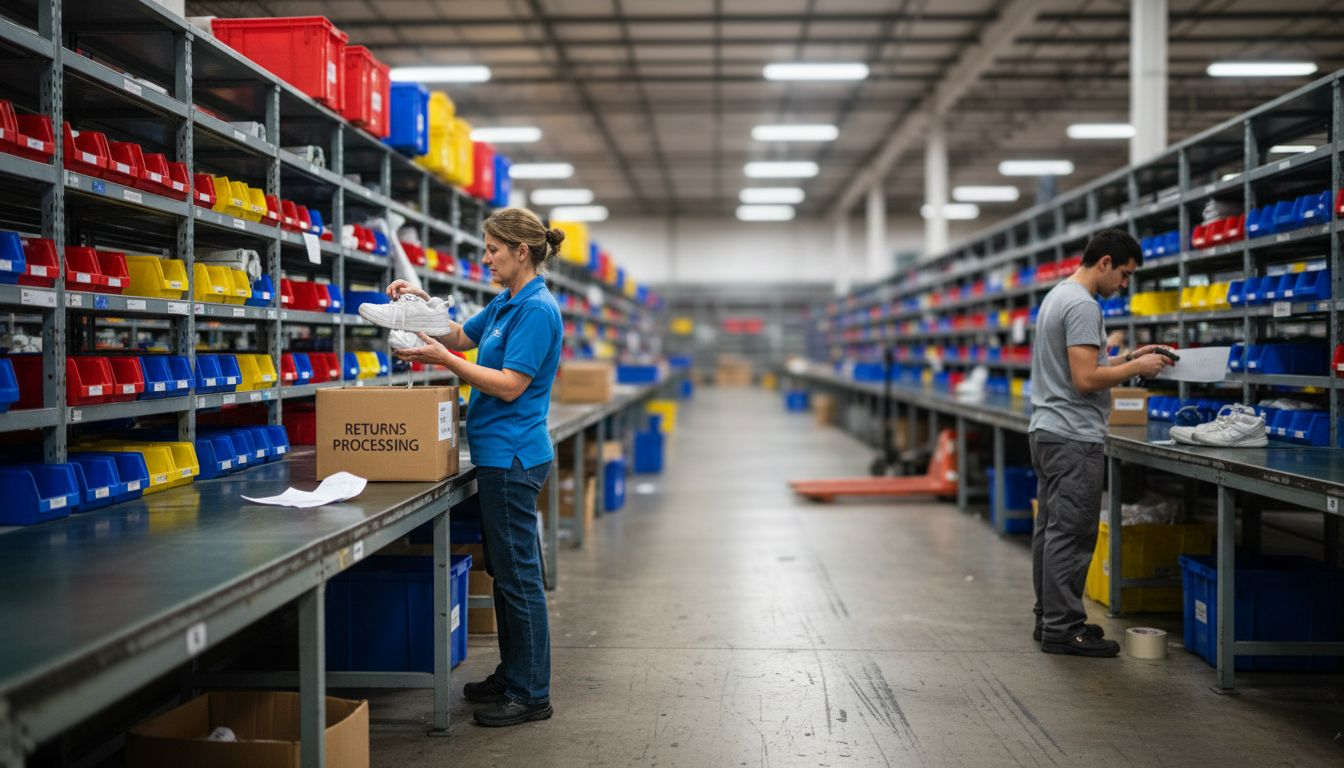
Design your inspection area with efficiency in mind. Use good lighting, have clear workstations, and create a structured process that allows quick and accurate product evaluation. Digital tools and quality management software can help standardize and speed up these assessments.
Pro tip: Create color-coded tags or digital markers to instantly communicate a returned product’s condition and recommended next steps.
Step 5: Analyze Return Data for Continuous Improvement
Transforming your returns management strategy requires systematic data analysis that goes beyond basic tracking. By diving deep into return metrics, you can uncover valuable insights that drive strategic improvements across your ecommerce operations.
Distinguishing between controllable and uncontrollable returns helps you target specific areas for enhancement. Your data analysis should focus on capturing and understanding key performance indicators such as:
- Return rate by product category
- Primary reasons for product returns
- Financial impact of returns
- Customer sentiment and feedback
- Seasonal return patterns
Implement a structured approach like the Plan-Do-Check-Act (PDCA) cycle to systematically evaluate and improve your returns process. This methodology allows you to develop hypotheses about return causes, implement targeted interventions, measure their effectiveness, and continuously refine your strategies.
Data-driven return analysis transforms a reactive process into a proactive opportunity for business optimization.
Utilize advanced analytics tools that can provide granular insights into return trends. These tools can help you identify potential issues with product descriptions, quality control, or customer expectations that might be driving higher return rates.
Pro tip: Create a quarterly return analysis dashboard that visualizes key metrics, making it easy to track progress and communicate insights across your organization.
Streamline Your Ecommerce Returns with Trusted Logistics Support
Managing returns efficiently is a challenge many ecommerce sellers face. This article highlights key pain points such as establishing clear return policies, integrating returns with inventory systems, automating return authorizations, and analyzing return data for improvement. These steps are vital to reduce errors, improve customer satisfaction, and maintain inventory accuracy. However, without reliable courier services and seamless logistics, even the best returns management strategies can falter.
At Or-Ner, we understand the importance of end-to-end solutions that keep your ecommerce operations running smoothly. Our comprehensive platform offers real-time shipment tracking, automated workflows, and inventory management designed to support your return processes. Whether you are handling cross-border logistics, warehousing, or expedited freight booking, our tailored services empower you to automate returns and restocking effortlessly.
Optimize your ecommerce returns today by partnering with a logistics provider that delivers reliability and scalability. Visit our landing page to explore how our services can support your returns management strategy. Discover the advantage of reliable courier services integrated with inventory and fulfillment solutions to keep your business agile. Start transforming returns into opportunities now with Or-Ner.
Frequently Asked Questions
What should be included in a clear return policy for my ecommerce business?
A clear return policy should include a timeframe for returns, condition requirements for items, necessary documentation, any restocking fees, and exclusions for specific product types. Start by customizing your policy to reflect the needs of different product categories to enhance customer satisfaction and protect your business.
How can I integrate returns with my inventory management system?
Integrating your returns with inventory management involves using real-time tracking to update stock counts and monitor product conditions. Implement a perpetual inventory system to automate these updates and generate alerts when stock needs restocking.
What are the benefits of automating return authorization and label creation?
Automating return authorization and label creation speeds up the returns process and reduces manual errors. To streamline operations, choose a returns management software that generates pre-approved shipping labels and provides real-time tracking for shipments.
How should I approach product inspection and restocking for returned items?
Implement a standardized inspection process to categorize product conditions and document any defects. Design your inspection area to maximize efficiency, enabling quicker evaluations that can help you reintegrate items into stock promptly.
What key metrics should I analyze to improve my returns management strategy?
Focus on return rates by product category, primary reasons for returns, and financial impacts of those returns. Set up a quarterly analysis dashboard to review these metrics to identify trends and areas for improvement.
How can I ensure customer satisfaction during the returns process?
To enhance customer satisfaction, make your return process simple and intuitive. Provide clear instructions and automate as many steps as possible, allowing customers to initiate returns and access tracking information quickly.