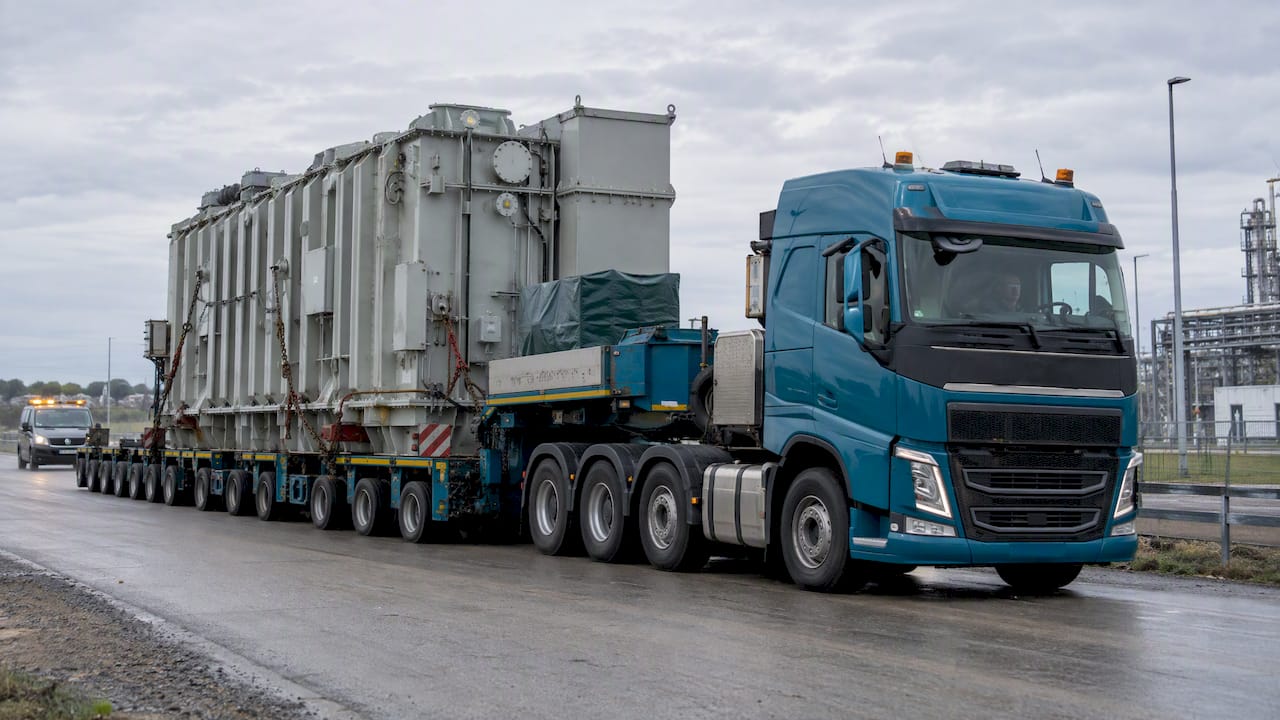
Stockouts are among the most expensive failures in ecommerce and logistics operations. When products are unavailable, you lose more than a single sale. Approximately 70% of consumers switch brands or retailers when they can’t find their desired product in stock, eroding the loyalty you worked hard to build. Only a small fraction wait for restocking. This guide delivers proven inventory management and forecasting strategies that prevent stockouts before they damage your bottom line.
Table of Contents
- Understanding Stockouts And Their Impact
- Preparing To Prevent Stockouts: Essential Prerequisites
- Executing Prevention Strategies: Forecasting And Inventory Optimization
- Advanced Tactics: Multi-Echelon Inventory Optimization And Supplier Collaboration
- Verifying Success: Monitoring, Continuous Improvement, And Avoiding Common Mistakes
- Optimize Your Logistics With ORNER’s Solutions
Key takeaways
| Point | Details |
|---|---|
| Safety stock and reorder point calculations | These formulas dramatically reduce stockout frequency by triggering timely replenishment and buffering against demand spikes. |
| Advanced demand forecasting | Accurate forecasts using recent sales trends and variability metrics prevent both overstock and understock scenarios. |
| Multi-echelon inventory optimization | MEIO coordinates inventory across supply chain nodes, reducing stockouts by approximately 12% while cutting emergency shipments. |
| Proactive supplier collaboration | Strong partnerships with performance reviews and risk sharing improve reliability and reduce disruptions. |
| Continuous monitoring and improvement | Tracking service levels, stockout frequency, and lead time adherence ensures sustained prevention success. |
Understanding stockouts and their impact
A stockout occurs when inventory for a product drops to zero, making it unavailable for customer orders. Common causes include inaccurate demand forecasting, unexpected supply chain disruptions, poor inventory tracking, and miscommunication between purchasing and warehousing teams. These failures happen frequently in ecommerce supply chains where demand volatility and long lead times create planning challenges.
The consequences hit hard and fast. Stockouts lead to lost sales, poor cash flow, and lower customer satisfaction. Revenue disappears immediately when customers cannot complete purchases. Even worse, approximately 70% of consumers switch brands when faced with stockouts, permanently damaging your market share. Cash flow suffers as you lose expected income while fixed costs continue.
Timely and reliable product availability builds customer trust and loyalty. When shoppers know they can count on your inventory, they return for repeat purchases and recommend your business. Conversely, frequent stockouts signal operational weakness and push customers toward competitors who maintain consistent availability.
Key reasons stockouts plague ecommerce operations include:
- Relying on outdated or fragmented inventory data systems
- Underestimating demand variability and seasonal patterns
- Ignoring supplier lead time inconsistencies
- Failing to coordinate replenishment across multiple warehouse locations
- Lacking safety stock buffers for high-demand products
Navigating these logistics challenges requires systematic approaches to data management and inventory planning.
“The most successful ecommerce operations treat stockout prevention as a strategic priority, not an afterthought. Proactive inventory management protects both revenue and reputation.”
Preparing to prevent stockouts: essential prerequisites
Before implementing prevention tactics, establish foundational elements that enable accurate inventory decisions. Success depends on having the right data infrastructure and organizational alignment in place.
Accurate, integrated real-time inventory data forms the cornerstone of stockout prevention. Retail teams often operate with fragmented data systems leading to mismatched inventory records and inaccurate replenishment triggers. Your system must consolidate inventory positions across all warehouses, in-transit shipments, and committed orders into a single source of truth. Without this visibility, even sophisticated forecasting models fail.
Essential prerequisites include:
- Clean historical sales data covering at least 12 months, preferably 24 months for seasonal pattern analysis
- Supplier performance records tracking actual versus promised lead times
- Lead time reliability metrics showing variability and consistency patterns
- Documented product lifecycle stages to adjust inventory strategies appropriately
- Integration between order management, warehouse management, and purchasing systems
Cross-functional collaboration among purchasing, warehousing, and sales teams prevents the communication breakdowns that cause stockouts. Purchasing needs visibility into upcoming promotions that sales plans. Warehousing must communicate capacity constraints that affect replenishment timing. Sales teams should understand supplier lead times when making promises to customers.
Establish clear stock level policies before taking action. Define minimum service level targets for different product categories. High-margin items might warrant 99% service levels, while slow-moving products accept 90%. Document reorder triggers and approval workflows to ensure consistent execution.
These inventory management tips provide additional guidance on building data foundations and organizational readiness for effective stockout prevention.
Executing prevention strategies: forecasting and inventory optimization
With prerequisites in place, implement proven techniques that minimize stockouts through calculated inventory buffers and timely replenishment.

Safety stock calculations protect against demand variability and supply uncertainty. The formula accounts for demand standard deviation, lead time variability, and desired service level. Higher service level targets require larger safety stock buffers. Calculate safety stock as: Z-score (for service level) × standard deviation of demand during lead time. For example, a 95% service level (Z=1.65) with demand standard deviation of 50 units yields safety stock of 82.5 units.
Implementing safety stock calculations significantly reduces stockouts. An electronics retailer reduced lost sales by 30% after increasing buffer inventory by just 15% for high-demand products. The modest inventory investment delivered substantial revenue protection.

Reorder point (ROP) calculations trigger replenishment at the optimal moment. ROP equals average demand during lead time plus safety stock. This ensures new inventory arrives before current stock depletes. Standardizing reorder point calculations improved service levels to 98% and cut emergency shipments by 40% for a home goods distributor.
Follow these steps to update forecasts using recent sales and trends:
- Review actual sales performance against forecasts weekly or biweekly
- Identify products where actuals deviate significantly from predictions
- Adjust demand parameters using weighted averages favoring recent data
- Incorporate known upcoming events like promotions or product launches
- Recalculate safety stock and reorder points with updated demand estimates
- Communicate changes to purchasing and warehousing teams immediately
| Industry | Stockout Rate Before | Stockout Rate After | Inventory Investment Increase | Service Level Improvement |
|---|---|---|---|---|
| Apparel | 8.5% | 2.1% | 12% | +6.4% |
| Electronics | 6.2% | 1.8% | 15% | +4.4% |
| Home Goods | 7.8% | 2.3% | 10% | +5.5% |
| Toys | 9.1% | 2.5% | 14% | +6.6% |
These inventory forecasting methods and demand forecasting guidance expand on techniques for improving prediction accuracy.
Pro Tip: Continuously revise safety stock levels as demand patterns change. Seasonal products need higher buffers during peak periods and lower buffers in off-seasons. Review and adjust quarterly to avoid tying up capital unnecessarily while maintaining protection.
Advanced tactics: multi-echelon inventory optimization and supplier collaboration
Beyond basic inventory controls, advanced integrated approaches further reduce stockouts while improving capital efficiency.
Multi-Echelon Inventory Optimization (MEIO) coordinates inventory placement across all supply chain nodes rather than optimizing each location independently. Traditional approaches manage warehouse inventory without considering how central distribution centers and supplier stock interact. MEIO views the entire network holistically, strategically positioning buffers where they deliver maximum service at minimum cost. Multi-echelon inventory optimization reduces stockouts by approximately 12%, emergency shipments by 22%, and lead time by around 17%.
| Approach | Average Stockout Rate | Emergency Shipment Frequency | Total Inventory Investment | Lead Time Variability |
|---|---|---|---|---|
| Traditional Single-Node | 6.8% | High (22 per month) | 100% baseline | ±5 days |
| Multi-Echelon Optimization | 4.1% | Low (8 per month) | 94% of baseline | ±2 days |
MEIO reduces total inventory while improving service by eliminating redundant safety stock across locations. Instead of each warehouse holding full buffers, the system calculates optimal allocation considering replenishment flexibility between nodes.
Supplier collaboration best practices strengthen reliability and reduce disruptions:
- Conduct quarterly supplier performance reviews tracking on-time delivery, quality, and communication responsiveness
- Establish clear communication protocols for order confirmations, shipment updates, and exception handling
- Share demand forecasts and promotional calendars to help suppliers plan capacity
- Implement risk-sharing agreements that incentivize suppliers to maintain buffer inventory
- Develop backup supplier relationships for critical products to mitigate single-source dependency
Strong supplier relationships reduce disruptions and improve reliability. When suppliers understand your business patterns and face consequences for poor performance, they prioritize your orders and communicate proactively about potential delays.
Pro Tip: Integrate MEIO models with supplier scorecarding systems. Use actual supplier performance data to adjust lead time assumptions in your optimization calculations. Suppliers with consistent delivery earn lower safety stock buffers, while unreliable partners trigger higher protection levels. This creates dynamic inventory balance responding to real-world performance.
These supply chain management tips offer additional strategies for optimizing supplier relationships and network-wide inventory performance.
Verifying success: monitoring, continuous improvement, and avoiding common mistakes
Implemented strategies require ongoing tracking and refinement to maintain low stockout rates and avoid recurring problems.
Monitor these key performance indicators to track inventory health:
- Service level percentage (orders fulfilled without stockouts)
- Stockout frequency by product category and SKU
- Lead time adherence comparing actual versus expected supplier delivery
- Safety stock adequacy measuring how often buffers deplete completely
- Forecast accuracy tracking mean absolute percentage error (MAPE)
Common causes of persistent stockouts include overconfidence in automated restock recommendations without manual review, ignoring lead time variability when calculating reorder points, and failing to adjust for known demand shifts like promotions or seasonality. Many operations treat their inventory system as “set and forget,” allowing parameter drift that gradually degrades performance.
Follow these continuous improvement steps:
- Audit inventory data quality monthly to identify and correct discrepancies
- Adjust forecast models quarterly based on recent accuracy performance
- Review supplier performance scorecards and address consistent underperformers
- Analyze root causes of any stockouts that occur to prevent recurrence
- Update safety stock and reorder point parameters as demand patterns shift
- Conduct cross-functional reviews bringing together purchasing, warehousing, and sales insights
Align cross-functional teams through regular meetings and shared metrics. When everyone understands how their decisions affect stockout risk, coordination improves naturally. Sales teams learn to communicate promotional plans earlier. Purchasing gains visibility into capacity constraints. Warehousing understands demand patterns driving replenishment urgency.
Continuous monitoring and process improvements help maintain stable inventory flow. The most successful operations review performance weekly, adjusting quickly when metrics trend unfavorably.
“Most stockouts are predictable and preventable by fixing upstream planning gaps. The difference between high-performing and struggling operations lies in disciplined execution of fundamental inventory practices.”
These approaches to managing supply chain disruptions complement your stockout prevention efforts by building resilience against unexpected challenges.
Optimize your logistics with ORNER’s solutions
Preventing stockouts requires more than smart calculations. You need logistics infrastructure that delivers reliable inventory flows across your entire supply chain network. ORNER’s integrated platform provides the real-time visibility, warehousing flexibility, and carrier reliability that stockout prevention strategies depend on.
Our global logistics platform and courier services connect your suppliers, warehouses, and customers through a single interface. Track shipments in real time, anticipate delays before they cause stockouts, and coordinate replenishment across multiple facilities. Our warehouse location strategy services help you position inventory optimally for fast fulfillment and efficient stock balancing. When you implement the inventory optimization techniques from this guide, ORNER’s infrastructure ensures execution matches planning. Explore our supply chain management solutions to strengthen your stockout prevention capabilities.
FAQ
What is safety stock and why is it important?
Safety stock is extra inventory held specifically to cover uncertainties in demand or supply delays. It protects against stockouts during unexpected demand spikes or when shipments arrive late. Proper safety stock levels balance service quality against inventory carrying costs.
How does reorder point (ROP) calculation reduce stockouts?
ROP indicates the inventory level that triggers replenishment orders. It equals average demand during lead time plus safety stock. Accurate ROP ensures new inventory arrives before current stock reaches critically low levels, preventing stockouts. Regular ROP updates account for changing demand patterns.
What is Multi-Echelon Inventory Optimization (MEIO)?
MEIO strategically places inventory buffers across multiple supply chain nodes to deliver optimal service at minimal total cost. Unlike single-location planning, MEIO considers how inventory at suppliers, distribution centers, and local warehouses interact. It reduces redundant stock, emergency shipments, and lead times by coordinating the entire network.
How can demand forecasting improve stockout prevention?
Demand forecasting predicts future customer demand to guide appropriate inventory levels. Better forecasts reduce both overstock waste and understock stockouts by aligning supply with expected demand. Incorporating recent trends and variability metrics improves forecast accuracy. Learn more through our demand forecasting logistics guide.
Recommended
- Time management best practices for ecommerce logistics 2026 – ORNER
- 7 Top Logistics Challenges 2025 and How to Overcome Them – ORNER
- Inventory Management Tips for Efficient Ecommerce Success – ORNER
- Inventory Forecasting Methods: Boosting Logistics Reliability – ORNER
- 7 Habits of Successful Entrepreneurs for Ecommerce Growth | Take Action Blog | Take Action
- 7 Essential Warehouse Food Storage Tips for Businesses – Probe IT