
Order fulfillment makes or breaks online businesses and just one misstep can lead to lost customers or wasted money. Most people focus on fast shipping and discounts but discrepancies between physical and digital inventory can cause massive disruptions before a package ever leaves the warehouse. The real edge comes from strategies that predict and prevent these hidden snags, not just patching them up after they cost you sales.
Table of Contents
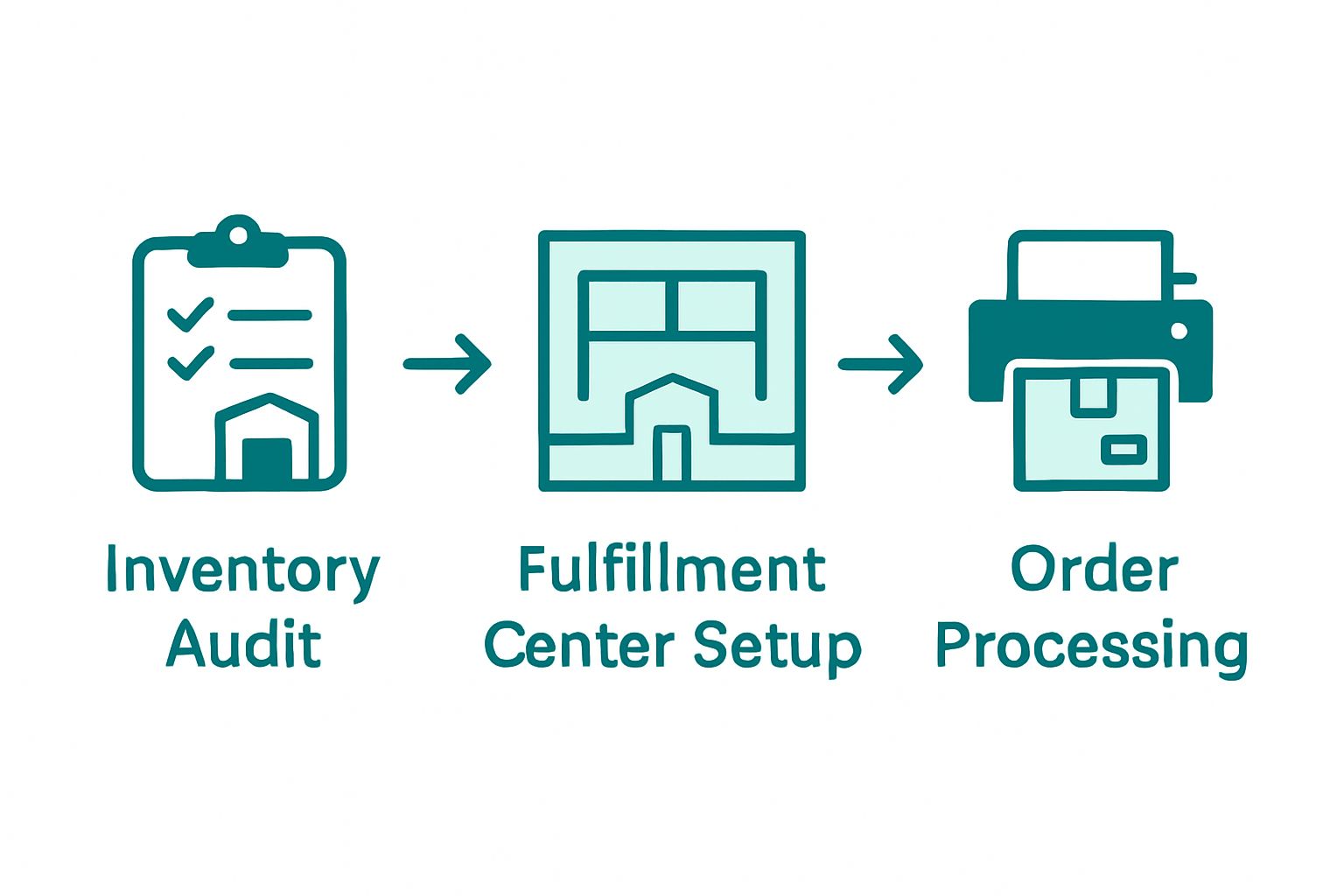
- Step 1: Analyze Your Current Inventory Levels
- Step 2: Define Fulfillment Center Setup And Operations
- Step 3: Implement Order Processing Workflows
- Step 4: Optimize Shipping And Packaging Strategies
- Step 5: Execute Quality Control And Verification Checks
Quick Summary
| Key Point | Explanation |
|---|---|
| 1. Accurate Inventory Audit is Crucial | Conduct thorough physical and digital inventory checks to prevent disruptions in order fulfillment. |
| 2. Optimize Warehouse Layout for Efficiency | Design your layout to minimize movement time and ensure high-demand items are easily accessible. |
| 3. Automate Order Processing Workflow | Implement automatic order routing to reduce processing times and minimize human errors significantly. |
| 4. Effective Shipping and Packaging Strategies | Choose appropriate packaging that protects products while being cost-effective; use tiered approaches based on item needs. |
| 5. Establish Robust Quality Control Systems | Create comprehensive verification protocols at every fulfillment stage to maintain high standards and reduce errors. |
Step 1: Analyze Your Current Inventory Levels
Effective order fulfillment begins with a precise understanding of your existing inventory. This critical first step determines how efficiently you can process and ship customer orders by providing a comprehensive snapshot of your current stock availability and potential challenges.
Start by conducting a thorough physical and digital inventory audit. This means reconciling your physical product count with your digital inventory management system. Walk through your warehouse or storage area, methodically counting each product variant and comparing those numbers against your digital records. Discrepancies between physical and digital inventory can significantly disrupt order fulfillment, so accuracy is paramount.
Utilize advanced inventory tracking software that offers real-time monitoring and automated reporting. Inventory management platforms can help you track stock levels, set reorder points, and identify potential stockouts before they become problematic. Look for solutions that integrate seamlessly with your existing ecommerce platforms and provide detailed analytics about product movement, sales velocity, and seasonal demand patterns.
Pay special attention to identifying slow-moving and fast-moving inventory items. Understanding which products sell quickly and which tend to sit in storage helps you optimize your warehouse space and investment. For slow-moving items, consider strategies like bulk discounts, bundling, or strategic marketing to accelerate sales and prevent inventory stagnation.
Verify your inventory accuracy by checking these key indicators:
- Total number of units per product
- Current stock value
- Average monthly sales volume
- Estimated weeks of supply remaining
By meticulously analyzing your current inventory levels, you create a solid foundation for streamlined order fulfillment. This initial step ensures you have precise knowledge of what products are available, in what quantities, and how quickly they move through your supply chain. The insights gained here will directly inform subsequent order processing and shipping strategies, setting the stage for efficient and reliable customer order management.
Step 2: Define Fulfillment Center Setup and Operations
Defining your fulfillment center setup and operations represents a crucial infrastructure decision that directly impacts your order processing efficiency and customer satisfaction. This step transforms your inventory analysis into a strategically organized operational framework designed to expedite product handling, storage, and shipping.
Carefully design your warehouse layout to maximize workflow and minimize product movement time. Organize your space using logical zoning principles that create clear pathways between receiving, storage, picking, packing, and shipping areas. Implement a systematic approach where product placement reflects frequency of use and sales volume. Place high-demand items closer to packing stations to reduce worker movement and accelerate order processing times.
Warehouse design experts recommend creating flexible storage solutions that can adapt to changing inventory requirements. Invest in adjustable shelving, modular storage systems, and scalable infrastructure that can grow alongside your business. Consider vertical storage options to maximize floor space and improve overall warehouse efficiency.
Establish clear operational protocols for every stage of order fulfillment. Develop comprehensive standard operating procedures (SOPs) that outline precise steps for receiving inventory, conducting quality checks, storing products, picking orders, packaging, and shipping. These documented processes ensure consistency, reduce errors, and provide a training blueprint for new team members.
Choose technology and equipment that support your operational goals. Select warehouse management systems (WMS) that offer real-time tracking, inventory management, and integration capabilities with your existing ecommerce platforms. Invest in reliable equipment such as:
- Barcode scanners for accurate inventory tracking
- Automated picking carts
- Weight measurement devices
- Packaging stations with efficient wrapping and labeling tools
Design your fulfillment center operations with scalability and flexibility as primary considerations. A well-structured setup allows you to handle current order volumes while providing room for future growth. By meticulously planning your warehouse layout, implementing robust operational protocols, and leveraging appropriate technology, you create a dynamic fulfillment environment capable of delivering exceptional customer experiences consistently.
Step 3: Implement Order Processing Workflows
Implementing robust order processing workflows transforms your fulfillment strategy from theoretical planning into practical execution. This critical stage ensures that every customer order moves through your system efficiently, accurately, and consistently from the moment of purchase to final delivery.
Automated order routing becomes the backbone of an effective workflow. Design a system that automatically receives incoming orders from various sales channels and immediately triggers a standardized processing sequence. Your workflow should include immediate verification of order details, inventory availability check, and priority assignment based on predefined business rules.
Operations research demonstrates that systematic order routing can reduce processing times by up to 40% and minimize human error.
Create a sequential workflow that breaks down order processing into clear, measurable stages. Begin with order validation, which includes confirming customer information, payment verification, and checking product availability. Next, transition to picking and packing procedures where warehouse staff efficiently locate, collect, and prepare products for shipment. Implement quality control checkpoints within this process to ensure product condition and order accuracy.
Utilize integrated technology platforms that enable real-time tracking and communication throughout the order fulfillment journey. Select software solutions that provide:
- Automatic order status updates
- Real-time inventory synchronization
- Integrated shipping label generation
- Customer communication tracking
Develop contingency protocols for handling exceptions and complex scenarios. Plan for situations like partial stock availability, customer modifications, or unexpected shipping challenges. Your workflow must be flexible enough to accommodate variations while maintaining operational efficiency. This means creating clear decision trees and escalation procedures that guide staff through non-standard order processing scenarios.
Establish performance metrics to continuously evaluate and refine your order processing workflow. Track key indicators such as order processing time, error rates, and customer satisfaction scores. Regular analysis of these metrics allows you to identify bottlenecks, optimize procedures, and adapt your workflow to changing business needs. By creating a dynamic, technology-enabled order processing system, you transform order fulfillment from a logistical challenge into a competitive advantage.
Step 4: Optimize Shipping and Packaging Strategies
Optimizing shipping and packaging strategies represents a critical phase in order fulfillment that directly impacts product safety, customer satisfaction, and overall operational costs. This step transforms packaging from a simple protective measure into a strategic component of your business performance.
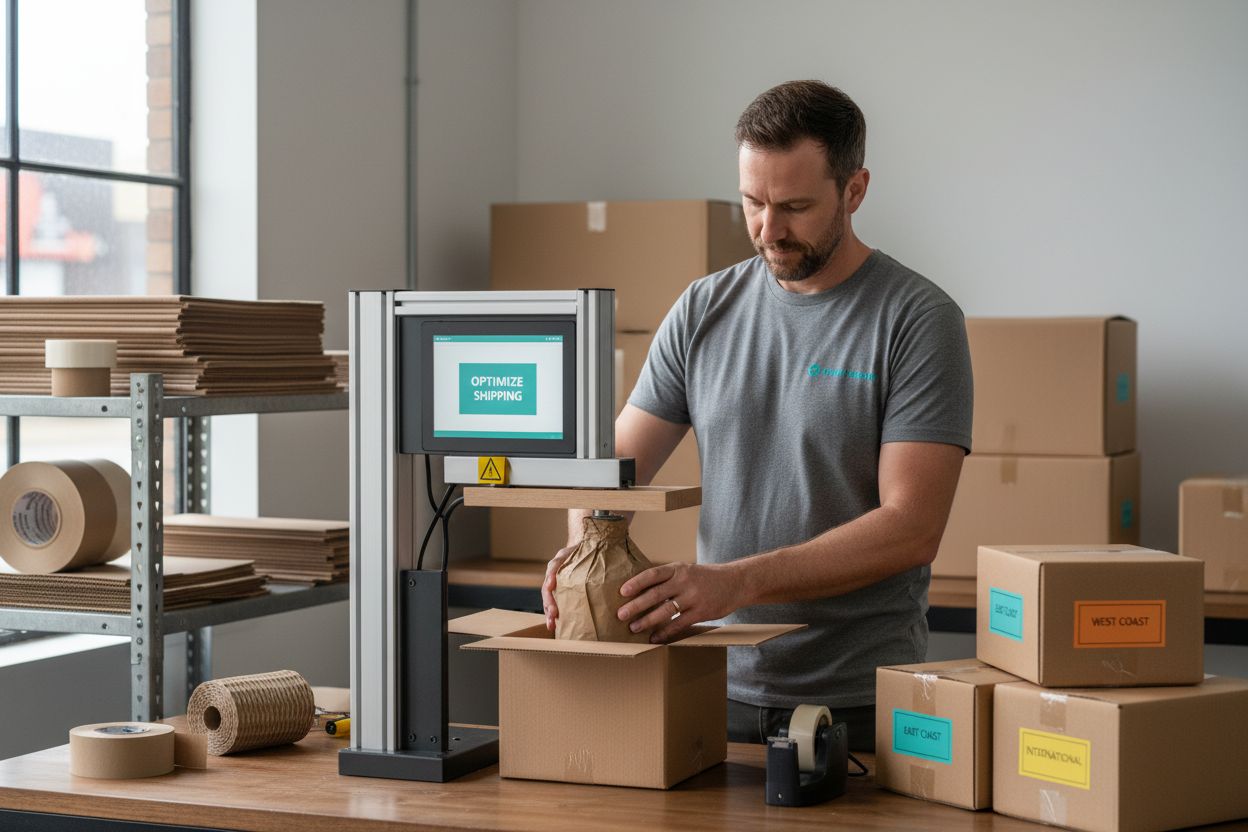
Select packaging materials that balance protection and cost-effectiveness. Invest time in understanding your product characteristics and shipping requirements. Different product types demand unique packaging approaches. Fragile items need robust cushioning, while lightweight products require minimal yet secure packaging solutions. Conduct thorough testing to ensure your packaging can withstand typical shipping conditions without adding unnecessary weight or expense. Learn more about essential courier services that can help you refine your shipping strategies.
Implement a tiered packaging strategy that considers product value, fragility, and shipping distance. Create custom packaging solutions for high-value or delicate items that provide extra protection, while using standardized packaging for more durable products. Consider eco-friendly packaging options that reduce environmental impact and appeal to environmentally conscious consumers. Sustainable packaging can become a competitive advantage, signaling your brand’s commitment to responsible business practices.
Develop precise packaging protocols that streamline your fulfillment process. Train your team to follow consistent packaging procedures that minimize errors and optimize efficiency. Invest in packaging equipment that enables quick, accurate product wrapping, such as:
- Automated box sizing machines
- Void fill systems
- Integrated weighing and labeling stations
- Sealed packaging equipment
Analyze shipping carrier options meticulously to find the most cost-effective and reliable solutions for your business. Compare rates, delivery times, and service quality across multiple carriers. Negotiate volume-based shipping discounts and explore regional carrier alternatives that might offer more competitive pricing for your specific shipping routes. Regularly review and adjust your shipping strategies to adapt to changing market conditions and shipping technologies.
Measure the success of your shipping and packaging strategies by tracking key performance indicators. Monitor metrics such as package damage rates, shipping costs per order, delivery times, and customer feedback related to packaging and shipping experiences. Continuous refinement of your approach ensures that your shipping and packaging become a seamless, efficient component of your order fulfillment process.
Step 5: Execute Quality Control and Verification Checks
Quality control and verification checks represent the critical safeguard that ensures every order meets stringent performance standards before reaching the customer. This pivotal step transforms potential errors into opportunities for maintaining exceptional product and service quality.
Develop a comprehensive quality control framework that covers every stage of order fulfillment. FDA guidelines emphasize the importance of systematic verification processes that proactively identify and address potential issues. Begin by establishing clear quality benchmarks for product condition, packaging integrity, order accuracy, and shipping preparation. Create detailed checklists that warehouse staff must complete for each order, leaving no room for ambiguity or inconsistent practices.
Implement multi-stage verification processes that examine products from multiple perspectives. Start with initial inventory quality checks when receiving new stock, then move through picking, packing, and final shipping inspections. Use a combination of manual visual inspections and technological verification tools to ensure comprehensive assessment. Invest in advanced scanning technologies and quality management systems that can quickly detect product defects, incorrect items, or packaging damages.
Design your verification workflow to include specific checkpoints that validate critical order details:
- Product count and variant accuracy
- Item condition and physical integrity
- Correct packaging and labeling
- Shipping documentation completeness
- Order-specific special instructions
Establish a robust exception handling protocol that provides clear guidance for managing identified issues. Create a structured approach where team members know exactly how to process and resolve quality control discoveries. This might involve immediate product replacement, supervisor review, or specific documentation of identified discrepancies. Train your team to view quality control not as a punitive process, but as a collaborative effort to maintain high operational standards.
Continuously analyze quality control data to identify patterns and opportunities for improvement. Track metrics such as error rates, return frequencies, and customer feedback related to product quality.
Below is a checklist table summarizing key quality control verification checks to ensure every order meets high standards before shipment.
| Verification Step | Purpose | When Performed |
|---|---|---|
| Confirm product count | Ensure order includes correct item quantity | Picking/Packing |
| Check item variant accuracy | Prevents wrong sizes, colors, or versions | Picking |
| Inspect physical condition | Identify damage or defects | Receiving/Packing |
| Verify packaging integrity | Safeguard against transit damage | Packing/Final Check |
| Confirm labeling accuracy | Facilitate correct delivery | Packing/Shipping Prep |
| Complete shipping documentation | Comply with carrier requirements | Shipping Prep |
| Apply order-specific instructions | Meet custom customer needs | Packing/Final Check |
Streamline Your Order Fulfillment With Reliable Courier Solutions
If managing inventory accuracy, speeding up shipping, or protecting orders from errors is weighing on your business, you are not alone. As highlighted in “Mastering Order Fulfillment Process Steps for Success,” even the best workflows can fall short without real-time tracking, integrated shipping options, and flexible warehouse networks. Many ecommerce brands find themselves slowed by manual processes, shipment delays, and missed quality checks. These gaps undermine both customer satisfaction and operational efficiency.
Why settle for outdated systems when you can achieve true end-to-end visibility and control? Elevate your entire order fulfillment approach with reliable courier services and global fulfillment support tailored for ecommerce and cross-border growth. Visit or-ner.com to unlock scalable solutions for inventory management, shipment tracking, and exception-free delivery. Take charge of your fulfillment success and let our platform handle the complexity while you focus on growing your business. Act now to move your logistics to the next level.
Frequently Asked Questions
What are the initial steps to analyze current inventory levels for order fulfillment?
Effective order fulfillment starts with a detailed inventory audit, comparing physical counts with digital records. Utilizing advanced inventory tracking software can enhance accuracy and help identify slow and fast-moving items.
How can I optimize my fulfillment center setup and operations?
Design your warehouse layout to maximize efficiency by organizing products based on sales frequency. Implement standard operating procedures (SOPs) for consistency and invest in technology that supports your operational goals, such as warehouse management systems and effective packaging equipment.
What technologies can assist in implementing order processing workflows?
Automated order routing technology is crucial for streamlining workflows. Look for software solutions that enable real-time tracking, inventory synchronization, and seamless integration with ecommerce platforms to enhance efficiency and reduce human error.
What are some effective strategies for optimizing shipping and packaging?
Select packaging materials that ensure product safety while balancing costs. Implement tiered packaging strategies based on product characteristics, and analyze shipping carrier options to find cost-effective solutions that meet delivery requirements.