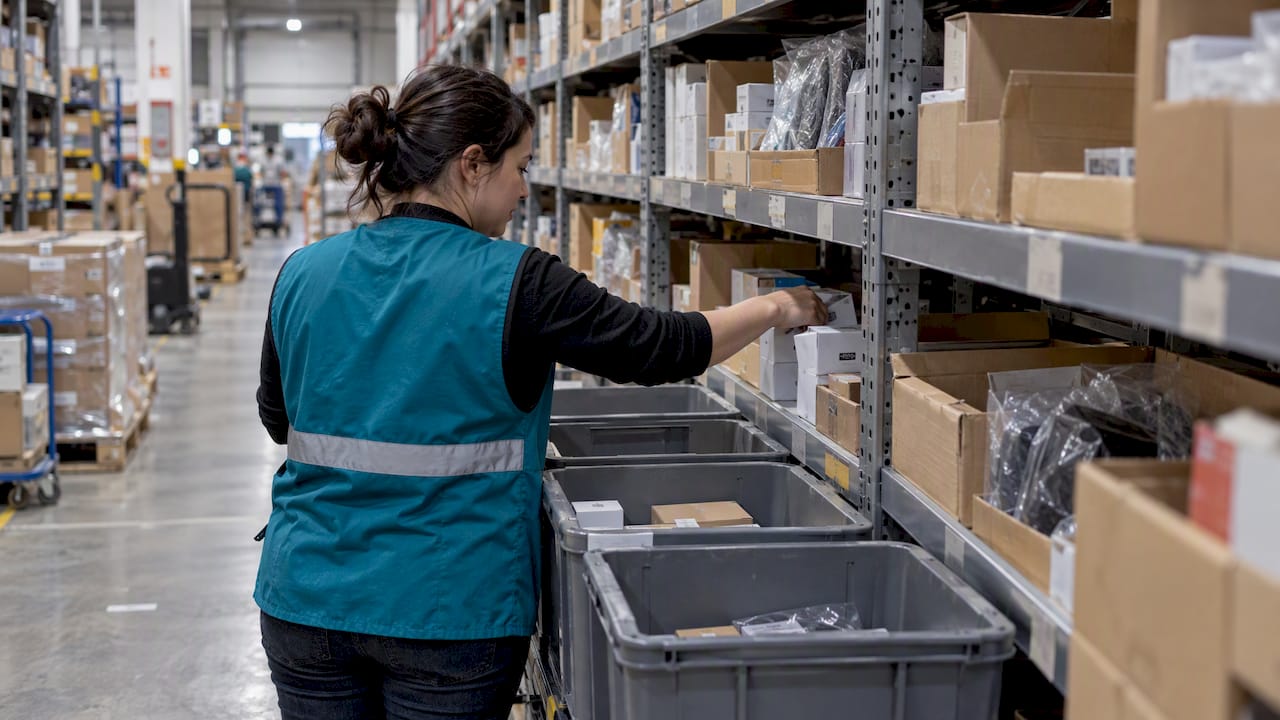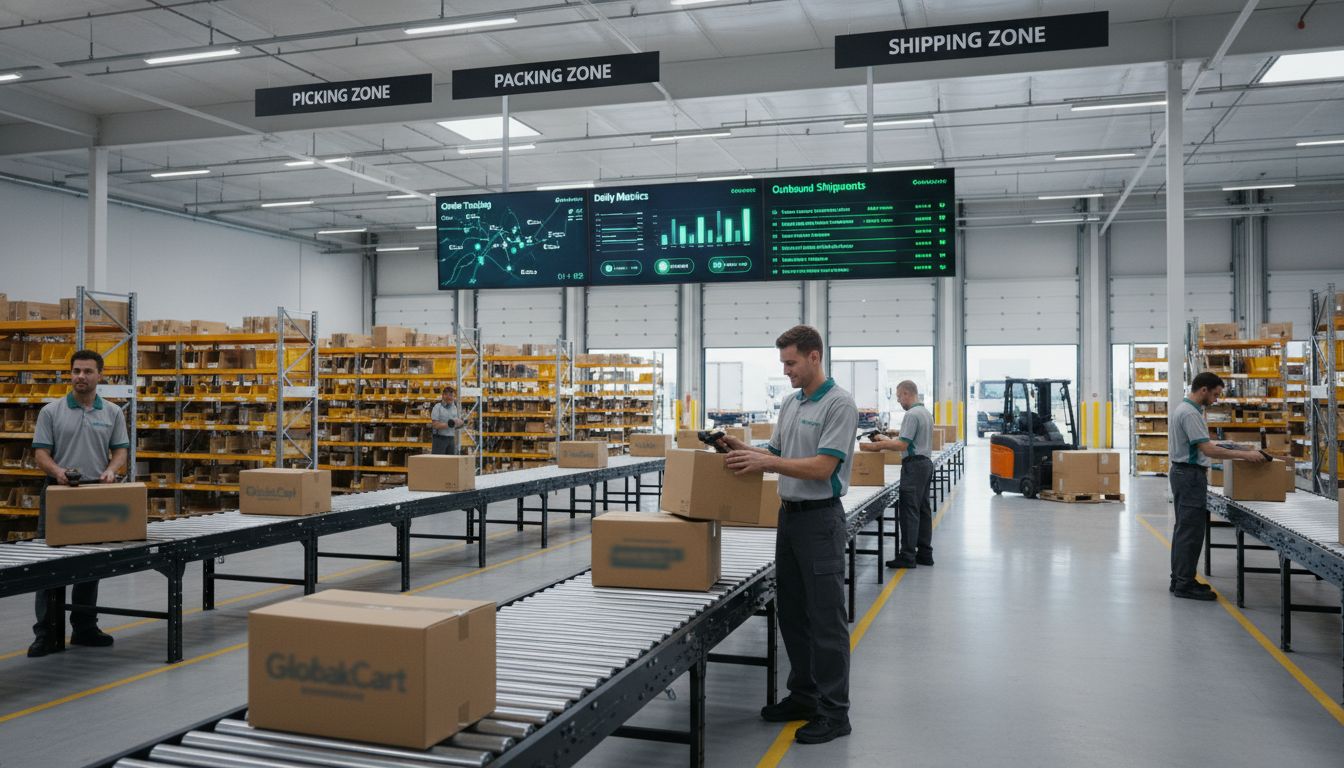
Every online order sparks a chain reaction behind the scenes, with more than half of ecommerce businesses ranking order fulfillment as their top operational challenge. Fast, accurate delivery is now an expectation, making the way companies handle orders critical for both customer satisfaction and growth. Understanding how order fulfillment works can help you optimize your process, avoid costly mistakes, and build trust that keeps customers coming back.
Table of Contents
- Defining Order Fulfillment In Ecommerce
- Stages Of The Order Fulfillment Process
- Types Of Fulfillment Models Explained
- Key Challenges And Common Solutions
- Best Practices For Reliable Courier Services
Key Takeaways
| Takeaway | Details |
|---|---|
| Order Fulfillment Process | Order fulfillment is a critical ecommerce workflow involving order management, inventory processing, picking, packaging, and shipping to ensure timely delivery. |
| Fulfillment Models | E-commerce businesses must choose the right fulfillment model, whether in-house, third-party logistics, drop shipping, or hybrid, based on their size and goals. |
| Challenges & Solutions | Key fulfillment challenges include inventory management and order accuracy, which can be mitigated with real-time tracking and efficient software systems. |
| Best Practices | Implementing technology, streamlining operations, and maintaining clear communication are essential for reliable courier services and enhanced customer satisfaction. |
Defining Order Fulfillment in Ecommerce
Order fulfillment is the comprehensive process of receiving, processing, handling, and delivering customer orders from the moment a sale occurs until the product reaches its final destination. According to jmc, order fulfillment encompasses the steps involved in receiving, processing, and delivering orders to end customers, ensuring that products are efficiently managed from the point of sale to delivery.
In the world of ecommerce, order fulfillment represents a critical operational workflow that transforms a digital transaction into a physical product delivery. As explained by scmedu, fulfillment in logistics refers to the act of completing a customer order, which includes multiple interconnected activities such as:
- Order Management: Recording and tracking customer purchases
- Inventory Processing: Checking product availability
- Picking: Retrieving specific items from warehouse storage
- Packaging: Preparing products for shipment
- Shipping: Dispatching orders to customer destinations
For ecommerce businesses, efficient order fulfillment isn’t just about moving products from point A to point B. It’s a strategic process that directly impacts customer satisfaction, brand reputation, and overall business success. Precise execution means faster delivery times, reduced shipping errors, and ultimately, happier customers who are more likely to become repeat buyers. By understanding and optimizing each stage of the order fulfillment process, online retailers can create seamless shopping experiences that set them apart in an increasingly competitive digital marketplace.
Stages of the Order Fulfillment Process
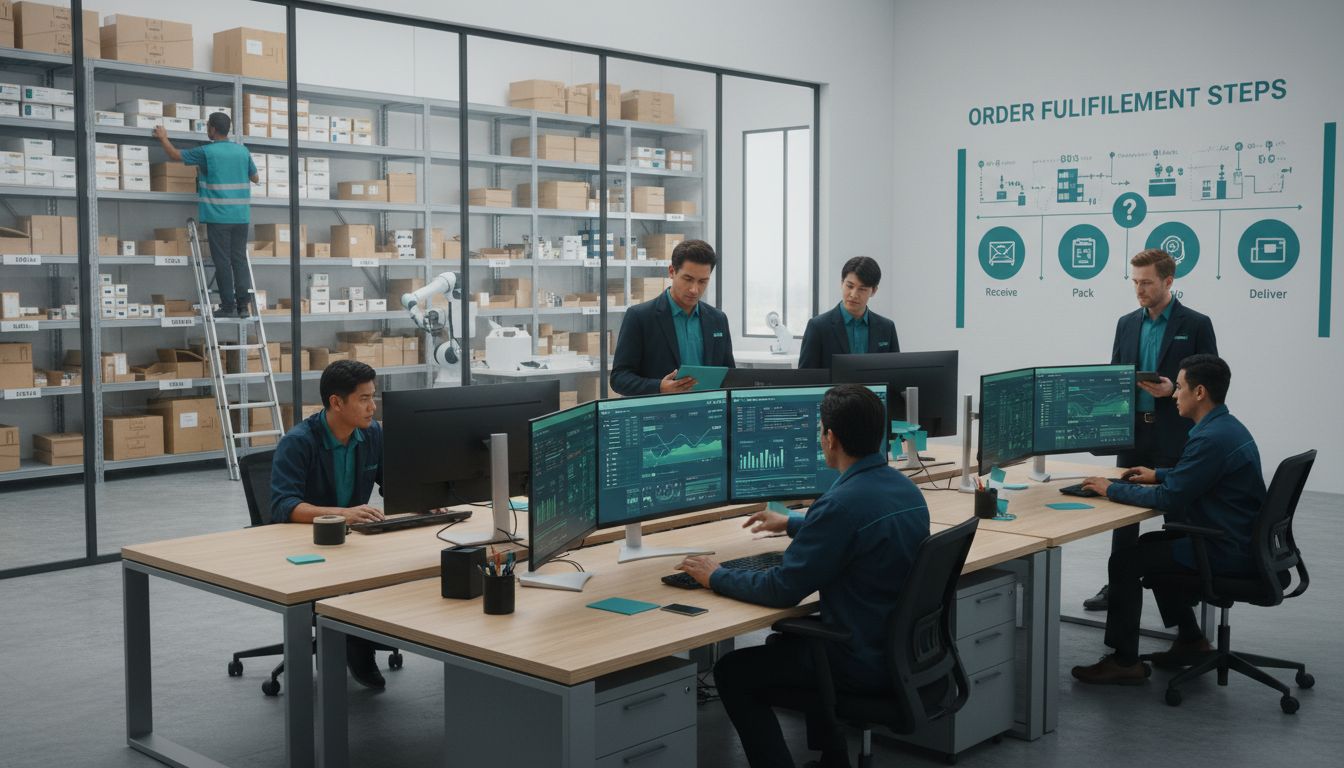
According to jmc, the order fulfillment process involves several critical stages that transform a customer’s digital order into a physical product delivery. These interconnected stages ensure that products move efficiently from warehouse to customer, creating a seamless operational workflow that is fundamental to ecommerce success.
Key Stages of Order Processing
- Inventory Receiving: Products arrive at the warehouse and are carefully logged into the inventory management system. This stage involves:
- Inspecting incoming goods for quality and quantity
- Scanning and recording product details
- Storing items in appropriate warehouse locations
- Order Processing: When a customer completes a purchase online, the order enters the fulfillment pipeline. The system immediately:
- Verifies product availability
- Generates picking instructions
- Allocates specific inventory items
- Prepares documentation for shipping
- Product Picking: Warehouse staff or automated systems locate and retrieve specific items for each order. Modern fulfillment centers often use technologies like:
- Barcode scanning
- Robotic picking systems
- Optimized warehouse layouts
- Packaging: Products are carefully wrapped and prepared for shipment, which includes:
- Selecting appropriate packaging materials
- Protecting items from potential damage
- Adding shipping labels and documentation
- Shipping and Delivery: The final stage where packages are dispatched to customers through various shipping carriers. As scmedu notes, this process concludes with tracking and reporting on delivery performance.
Understanding these stages helps ecommerce businesses optimize their operations, reduce errors, and ultimately provide a superior customer experience. Each stage represents an opportunity to enhance efficiency, reduce costs, and build customer loyalty through precise, reliable order fulfillment.
Types of Fulfillment Models Explained
According to so05, e-commerce businesses can adopt various fulfillment strategies, each presenting unique advantages and challenges. Understanding these models is crucial for online retailers looking to optimize their operational efficiency and customer satisfaction.
Primary Fulfillment Models
- In-House Fulfillment This model involves managing the entire order fulfillment process internally. Businesses handle:
- Inventory storage
- Order processing
- Packaging
- Shipping
Ideal for smaller companies with low order volumes or specialized product requirements. Provides maximum control but demands significant operational investment.
- Third-Party Logistics (3PL) External providers manage the entire fulfillment process. Benefits include:
- Scalable infrastructure
- Advanced technological capabilities
- Reduced operational overhead
- Expertise in logistics management
- Drop Shipping A streamlined model where manufacturers directly ship products to customers. Characteristics include:
- Minimal inventory investment
- Lower upfront costs
- Reduced warehouse management responsibilities
- Higher supplier dependency
- Hybrid Fulfillment Combines multiple approaches to create a flexible, efficient system. As digitalcommons highlights, companies can optimize order fulfillment by strategically balancing multiple fulfillment centers and methods.
Choosing the right fulfillment model depends on multiple factors: business size, product complexity, customer expectations, and growth strategies. Successful e-commerce operations continuously evaluate and adapt their fulfillment approach to maintain competitive advantage.
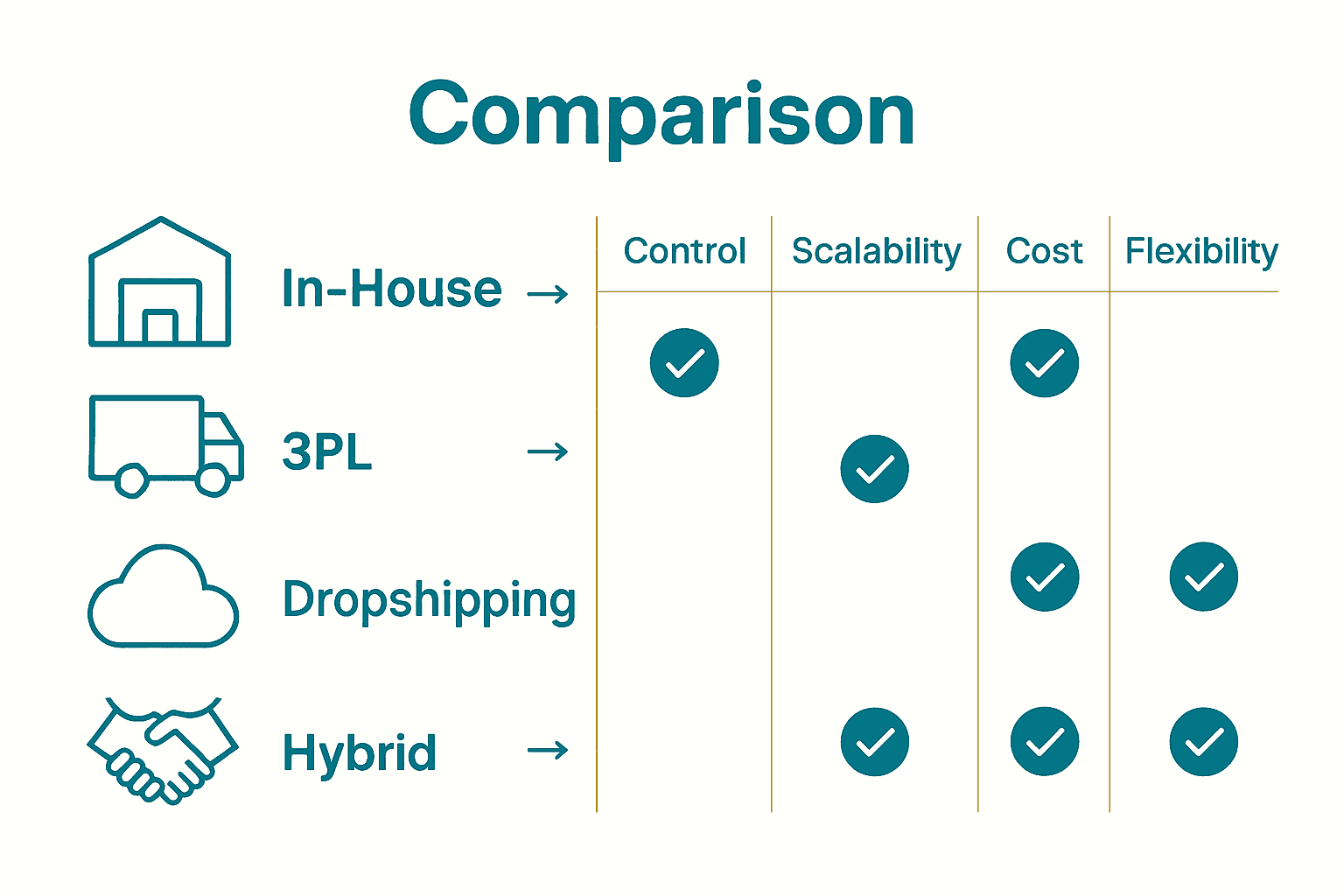
Here’s a comparison of the primary ecommerce fulfillment models:
| Fulfillment Model | Key Features | Best For |
|---|---|---|
| In-House | Full control High setup cost Direct oversight |
Small businesses Specialized products |
| Third-Party Logistics | Scalable Expertise Lower overhead |
Growing companies High order volume |
| Drop Shipping | No inventory Low startup cost Supplier reliant |
New sellers Rapid expansion |
| Hybrid | Flexible Combination of methods Customized |
Scaling firms Diverse needs |
For growing businesses, What Is Same Day Delivery? 2025 Guide for Online Retailers can provide additional insights into advanced delivery strategies that complement these fulfillment models.
Key Challenges and Common Solutions
According to ajpojournals, manufacturing firms face significant challenges in order fulfillment, including complex inventory management, timely delivery, and maintaining customer satisfaction. These challenges require strategic approaches and technological interventions to overcome effectively.
Primary Order Fulfillment Challenges
- Inventory Management Key issues include:
- Tracking product quantities accurately
- Preventing stockouts and overstocking
- Managing multiple warehouse locations
- Predicting demand fluctuations
Solutions:
- Implement real-time inventory tracking systems
- Use predictive analytics for demand forecasting
- Adopt cloud-based inventory management platforms
- Create automated reorder point alerts
- Order Accuracy and Speed As trid highlights, e-commerce businesses struggle with distribution center efficiency. Challenges involve:
- Minimizing picking and packing errors
- Reducing order processing time
- Ensuring consistent delivery performance
- Managing complex product variations
Solutions:
- Utilize barcode and RFID tracking technologies
- Implement warehouse management software
- Train staff in precision picking techniques
- Develop standardized quality control processes
- Customer Expectation Management Modern consumers demand:
- Rapid shipping
- Transparent tracking
- Seamless return processes
- Personalized delivery options
Solutions:
- Offer multiple shipping speed options
- Provide real-time order tracking
- Create user-friendly return portals
- Develop flexible delivery scheduling
Navigating these challenges requires continuous adaptation and technological investment. By understanding and proactively addressing potential bottlenecks, businesses can transform order fulfillment from a potential weakness into a competitive advantage.
For deeper insights into optimizing delivery strategies, explore our Just in Time Delivery guide for 2025 success, which offers comprehensive strategies for modern logistics management.
Best Practices for Reliable Courier Services
According to education, reliable courier services are achieved through strategic best practices that encompass efficient order processing, accurate inventory management, and exceptional customer service. These fundamental elements work together to ensure timely and accurate deliveries that meet and exceed customer expectations.
Core Strategies for Courier Service Excellence
- Technology Integration Modern courier services rely on advanced technological solutions:
- Real-time tracking systems
- Automated routing algorithms
- Digital documentation platforms
- Predictive delivery analytics
- Operational Efficiency Streamlining internal processes is crucial for reliability:
- Standardized packaging protocols
- Optimized warehouse workflows
- Continuous staff training
- Performance monitoring systems
- Communication Protocols Transparent and proactive communication distinguishes top-tier courier services:
- Instant shipment notifications
- Clear delivery time estimations
- Responsive customer support channels
- Comprehensive tracking information
- Quality Control Mechanisms As enterpriseengagement emphasizes, effective fulfillment involves rigorous quality management:
- Regular performance audits
- Error tracking and resolution systems
- Continuous improvement frameworks
- Feedback integration processes
Successful courier services understand that reliability is not a destination but a continuous journey of refinement and adaptation. By implementing these best practices, businesses can transform their delivery operations from mere transactional processes to strategic competitive advantages.
For small businesses looking to enhance their shipping capabilities, essential courier services guide offers targeted insights and practical strategies for logistics optimization.
Streamline Your Ecommerce Success with Reliable Courier Services
Managing order fulfillment challenges like inventory accuracy, timely delivery, and customer satisfaction can feel overwhelming. This article highlights common pain points such as complex order processing and meeting modern consumer demands for fast, transparent shipping. If you are seeking reliable courier services tailored for ecommerce, ensuring every stage from order picking to shipping is seamless and efficient, our platform is designed to meet those exact needs.
Experience the power of an all-in-one logistics partner by choosing OR-NER. With end-to-end solutions including freight booking, real-time shipment tracking, and scalable warehousing, we help ecommerce sellers reduce errors and delight customers with fast deliveries. Don’t let fulfillment complexity hold you back – explore how our reliable courier services and global network can transform your logistics process today. Visit our site now and take the first step toward exceptional ecommerce fulfillment.
Frequently Asked Questions
What is order fulfillment in ecommerce?
Order fulfillment in ecommerce is the complete process of receiving, processing, handling, and delivering customer orders from the moment a sale occurs until the product reaches the customer. It transforms digital purchases into physical deliveries through various stages such as order management, picking, packaging, and shipping.
What are the key stages of the order fulfillment process?
The key stages of the order fulfillment process include inventory receiving, order processing, product picking, packaging, and shipping/delivery. Each stage is crucial for ensuring efficient movement of products from the warehouse to the customer.
What are the different types of fulfillment models in ecommerce?
The different types of fulfillment models include In-House Fulfillment, Third-Party Logistics (3PL), Drop Shipping, and Hybrid Fulfillment. Each model has its own advantages and challenges, tailored to the needs of different ecommerce businesses.
What are some common challenges in order fulfillment?
Common challenges in order fulfillment include inventory management, order accuracy and speed, and managing customer expectations. Effective solutions involve technology integration, operational efficiency, and proactive communication with customers.
Recommended
- What Is Same Day Delivery? 2025 Guide for Online Retailers – ORNER
- What Is Freight Forwarding? Guide for Modern Supply Chains 2025 – ORNER
- Just in Time Delivery: Essential Guide for 2025 Success – ORNER
- Understanding Ecommerce Fulfillment Solutions for Success – ORNER
- De rol van pakketzending voor webshops begrijpen – Send with Parcel International
- What Is E-Commerce Business? Complete Guide – Prosperual