TL;DR:
- Mobile logistics apps connect field teams to backend systems, improving efficiency and customer satisfaction. Proper integration, offline functionality, and driver-friendly interfaces are essential for successful deployment. Most operations see measurable benefits within 30 to 60 days, including cost reductions and increased route efficiency.
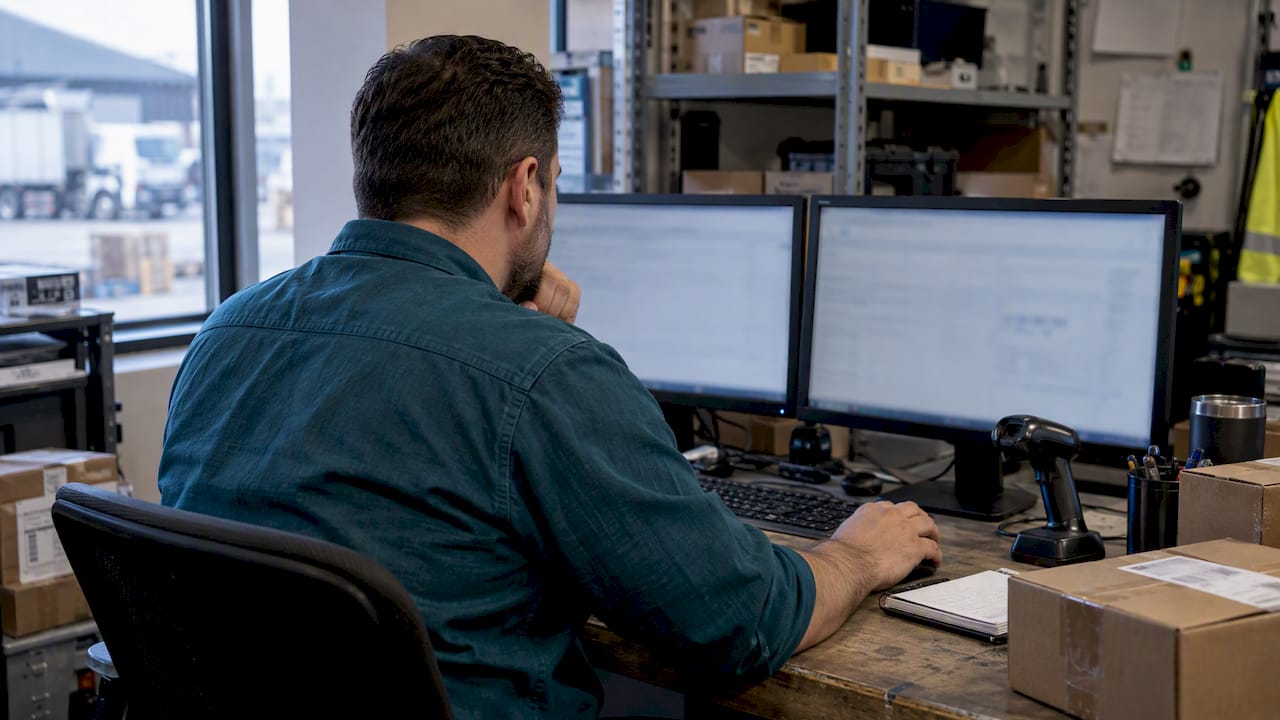
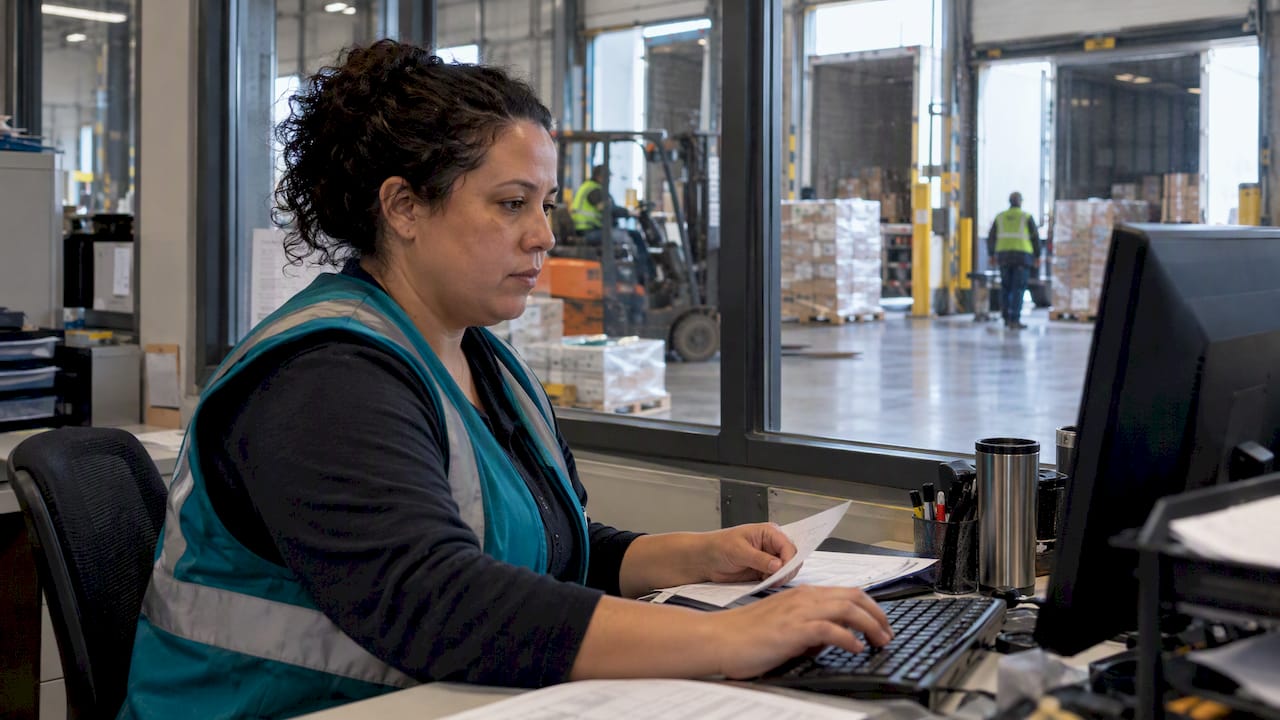
Mobile apps for logistics are digital tools designed to manage fleet operations, warehouse workflows, route planning, and real-time communication across supply chain networks. These applications connect drivers, warehouse staff, dispatchers, and customers through a single data layer, replacing phone calls, paper logs, and disconnected spreadsheets. The industry standard term for this category is “logistics management software,” and mobile delivery is now its dominant interface. GPS tracking, IoT integration, and ERP connectivity form the technical backbone of every serious deployment. This guide covers what these tools do, how to integrate them, and how to choose the right one for your operation.
What are the essential features of mobile apps for logistics?
Logistics management apps fall into four functional categories, and each solves a distinct operational problem.
Fleet management apps handle real-time GPS positioning, driver job queues, and route optimization. They push updated delivery sequences to drivers when traffic or cancellations change the plan. The best fleet apps also log hours-of-service data automatically, which keeps compliance records accurate without driver input.
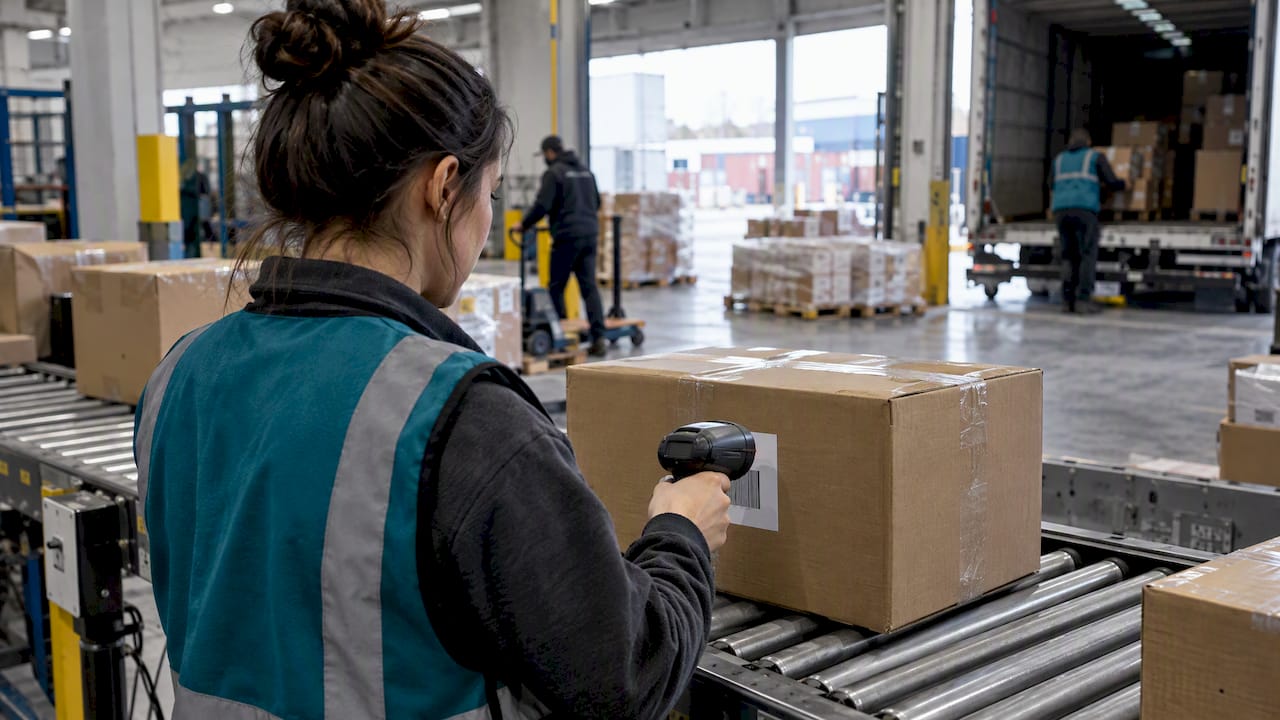
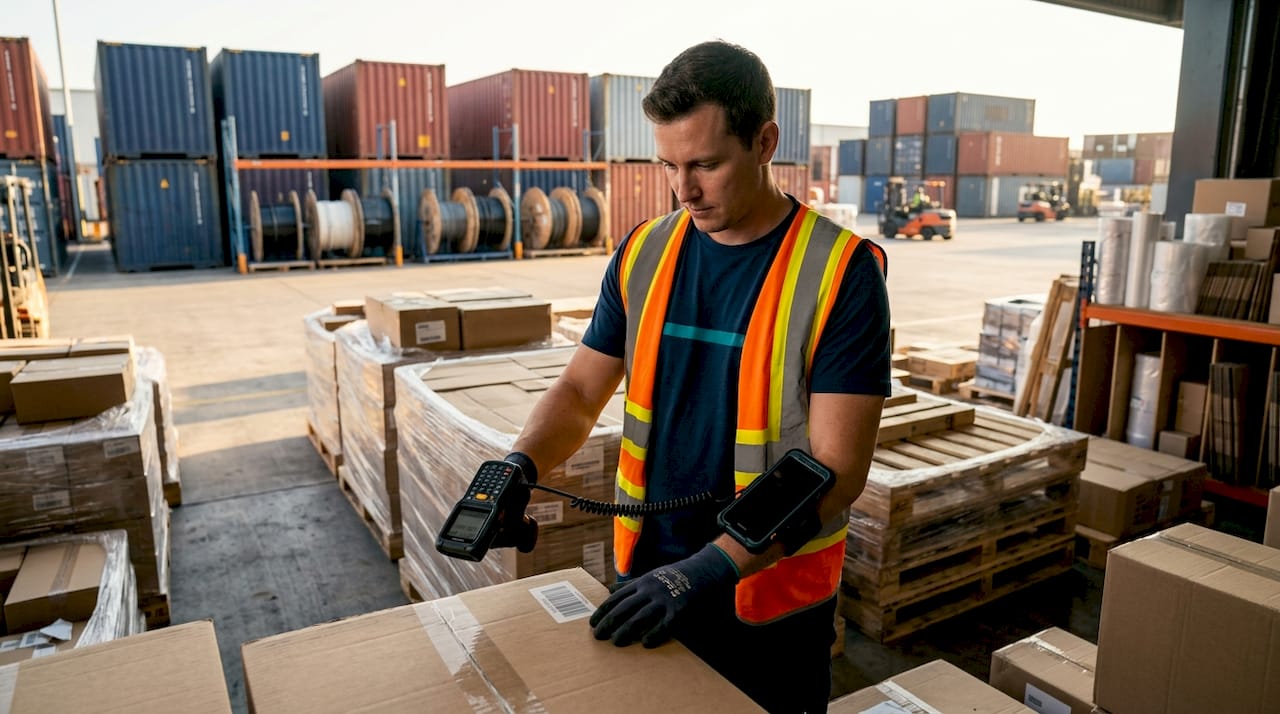
Warehouse operations apps focus on inventory scanning, task assignment, and pick-and-pack workflows. They use barcode or RFID scanning to confirm item locations and quantities, reducing mis-picks and manual count errors. A critical feature here is offline functionality. Warehouse environments often have dead zones near metal shelving or loading docks, and an app that fails without Wi-Fi is a liability.
Last-mile delivery apps capture proof of delivery (POD) through camera-based photo confirmation and digital signature. They send automated status updates to customers at each scan point, which cuts inbound “where is my order?” calls significantly.
Customer-facing tracking portals give end customers self-service visibility into shipment status. These portals pull live data from the same backend that dispatchers use, so the information is always current. Shipment tracking tools that expose this data through a branded portal reduce dispatcher workload and raise customer satisfaction scores.
- Real-time GPS with geofencing alerts
- AI-based route optimization with dynamic re-routing
- Offline data queuing with ordered sync on reconnect
- POD capture via camera and digital signature
- Push notifications for drivers and customers
- Barcode and RFID scanning for warehouse tasks
- ERP and TMS bidirectional data sync
Pro Tip: Test your chosen app’s offline mode before full deployment. Load it on a device, disable all connectivity, and complete a full delivery cycle. If the app crashes or loses data, it will fail your drivers in rural routes and loading dock dead zones.
How do mobile apps integrate with existing logistics systems?
Integration is where most logistics app projects succeed or fail. Bidirectional synchronization between mobile apps and backend systems like ERP, TMS, and WMS platforms is the non-negotiable standard. One-way data pushes create stale information. A driver marks a delivery complete on the app, but the warehouse system still shows it as in transit. That gap causes duplicate dispatches, incorrect invoicing, and customer complaints.
Effective freight logistics apps require multi-system API integration including IoT device data, ERP inputs, and carrier workflows to provide a unified operational view. That means the app is not a standalone tool. It is a mobile interface for your entire data architecture.
Data silos are the most common integration failure. Fragmented systems create visibility gaps that slow decision-making and reduce efficiency across the operation. When your fleet app, warehouse app, and customer portal each maintain separate data stores, discrepancies multiply with every transaction.
Offline design is equally critical. Apps must queue actions locally and sync data in the correct order once connectivity returns. This prevents data corruption and duplicate events during rural or dead-zone operations. The queue must include accurate timestamps so the backend can reconstruct the correct sequence of events.
Pro Tip: Simulate dead zones, high-latency connections, and data conflicts during your QA phase. Use a network throttling tool to drop bandwidth to 2G speeds and confirm that the app queues correctly and resolves conflicts without duplicating records.
Key integration requirements to verify before selecting any platform:
- Confirmed bidirectional API with your existing ERP or TMS
- Offline event queuing with timestamp preservation
- Conflict resolution logic for simultaneous updates
- IoT device data ingestion (temperature sensors, door alerts, GPS hardware)
- Role-based data access for drivers, warehouse staff, and managers
What operational benefits do logistics apps deliver?
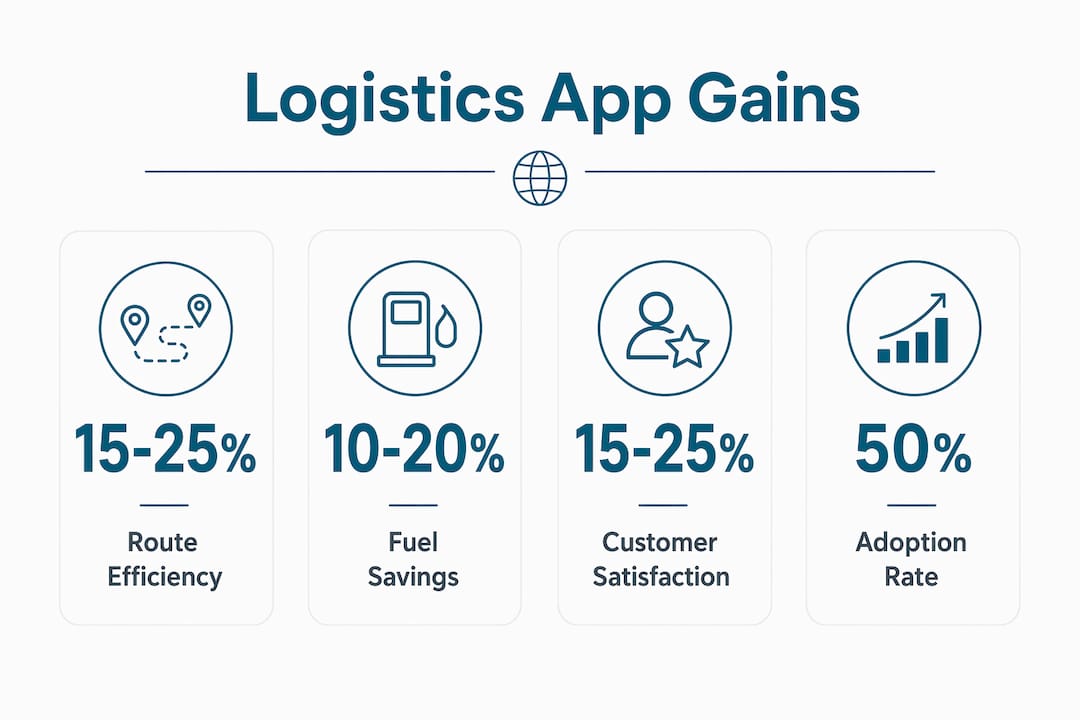
The performance gains from well-deployed transportation mobile applications are measurable and fast. Real-time mobile tracking improves route efficiency by 15–25% and reduces costs by 10–20% within the first 90 days of implementation. Most operations see value within 30 days from fuel savings alone.
AI-enabled route optimization compounds those gains. AI route planning reduces delivery times by 15% and fuel costs by 10% by automating decisions that dispatchers previously made manually. That automation also frees dispatchers to handle exceptions rather than routine planning.
Customer satisfaction improves in parallel. Mobile visibility portals increase satisfaction scores by 15–25% by giving customers self-serve access to live shipment data. Automated alerts at key scan points reduce the volume of inbound status calls, which lowers dispatcher workload and speeds response times for genuine exceptions.
| Metric | Typical improvement |
|---|---|
| Route efficiency | 15–25% within 90 days |
| Delivery cost reduction | 10–20% within 90 days |
| Fuel cost reduction | Up to 10% with AI routing |
| Customer satisfaction score | 15–25% increase |
| Dispatcher call volume | Significant reduction via self-serve portals |
Fleet tracking data also supports sustainability reporting. Managers can extract fuel consumption per route, idle time, and emissions estimates directly from fleet tracking data exports, which feeds into ESG reporting requirements that are increasingly standard for enterprise shippers.
How to select and implement the right logistics app
Start with a workflow audit before evaluating any platform. Map every manual touchpoint in your current operation: where do drivers call in, where do warehouse staff use paper, and where do dispatchers re-enter data from one system into another. Those friction points define your minimum feature requirements.
Follow this sequence when moving from audit to deployment:
- Define your operational scope. List your vehicle types, delivery zones, warehouse locations, and the backend systems the app must connect to. A regional carrier with 20 trucks has different needs than a 3PL managing 15 warehouses across multiple countries.
- Evaluate integration depth. Confirm that any candidate platform offers a documented API for your ERP or TMS. Ask vendors for a sandbox environment and test the sync yourself before signing a contract.
- Assess the driver and warehouse UI. User interface design must balance simplicity for warehouse workers with information density for management. Put the app in front of actual drivers and warehouse staff during evaluation. Their feedback predicts adoption rates more accurately than any demo.
- Plan a phased rollout. Start with one depot or one delivery zone. Measure route efficiency, error rates, and user complaints for 30 days before expanding. Phased deployment limits risk and generates real performance data to justify the broader rollout.
- Build a feedback loop. Schedule monthly reviews with drivers, warehouse staff, and dispatchers for the first six months. Iterative testing with end users across partial deliveries, wrong item scans, and multi-warehouse scenarios is the standard for keeping apps reliable after launch.
Custom-configured solutions outperform generic platforms for operations with diverse delivery zones or specialized vehicle types. A 7% improvement in route efficiency directly correlates to increased profitability, and that gain depends on configuration that matches your actual routes, not a generic algorithm trained on someone else’s network.
Pro Tip: Never evaluate a logistics app without testing it on the actual devices your drivers and warehouse staff use. An app that performs well on a flagship smartphone may lag or crash on a budget Android device running in a cold warehouse.
For operations managing warehouse management systems alongside mobile fleet tools, confirm that both platforms share a common data model. Mismatched inventory records between your WMS and fleet app are a leading cause of fulfillment errors.
Key Takeaways
Mobile logistics apps deliver measurable gains only when they integrate bidirectionally with existing ERP, TMS, and WMS systems and are tested against real-world connectivity failures before full deployment.
| Point | Details |
|---|---|
| Integration is non-negotiable | Bidirectional API sync with ERP and TMS prevents data silos and stale dispatch records. |
| Offline mode prevents data loss | Apps must queue actions locally with timestamps and sync in order when connectivity returns. |
| ROI arrives fast | Route efficiency improves 15–25% and costs drop 10–20% within 90 days of deployment. |
| Driver UI drives adoption | Under-investment in driver-facing interfaces lowers usage rates and erases efficiency gains. |
| Phased rollout reduces risk | Starting with one depot generates real performance data before committing to full deployment. |
What I’ve learned about logistics apps that most guides won’t tell you
The conversation around supply chain mobile solutions almost always focuses on features. Route optimization, POD capture, real-time tracking. Those features matter, but they are not where implementations fail. They fail on the driver interface and the offline architecture, every single time.
I have watched operations spend significant budget on enterprise-grade platforms and then see adoption rates below 50% because the driver app required six taps to confirm a delivery. Drivers are not sitting at desks. They are in the cab, in the rain, with gloves on. If the app is not faster than a phone call, they will use the phone call. Driver app functionality is the most overlooked variable in logistics technology decisions, and it is the one that determines whether the investment pays off.
The other thing I see consistently underestimated is the value of tight integration with legacy systems. The instinct is to replace old systems with a new platform. The smarter move, especially for mid-size operations, is to build a mobile layer that talks to what you already have. Your ERP holds years of supplier data, pricing history, and compliance records. Throwing that away to get a cleaner mobile UI is a bad trade.
On the question of white-label SaaS versus custom builds: white-label works well for standard last-mile delivery in dense urban zones. The moment you add specialized vehicles, cross-border compliance requirements, or multi-warehouse routing, generic platforms hit their ceiling fast. The real-time data capabilities that separate good operations from great ones come from configuration, not out-of-the-box features.
AI route optimization and sustainability tracking are the two capabilities worth prioritizing in 2026. Both are now available in mid-market platforms, not just enterprise tools. The operations that build these into their workflows now will have a measurable cost and compliance advantage within 18 months.
— Maayan
Or-ner’s freight booking tools work alongside your logistics apps
Mobile logistics apps handle the operational layer. Or-ner handles the freight layer that feeds it.
Or-ner’s platform connects ecommerce sellers and supply chain teams to reliable courier services across ocean, air, and land transport modes, with real-time shipment tracking built in. When your mobile apps are managing warehouse tasks and last-mile delivery, Or-ner manages the upstream freight that fills your warehouses. The freight booking step-by-step guide walks through the full process from booking to customs clearance, giving your team a practical reference for every shipment. Or-ner also supports cross-border logistics, inventory management, and Amazon fulfillment integration, making it a natural complement to any mobile logistics stack.
FAQ
What are mobile apps for logistics?
Mobile apps for logistics are software tools that manage fleet tracking, warehouse operations, route planning, and delivery confirmation from a smartphone or tablet. They connect field teams to backend systems like ERP and TMS platforms in real time.
How do logistics apps improve route efficiency?
Real-time mobile tracking and AI-based route optimization improve route efficiency by 15–25% within 90 days of deployment. AI route planning specifically reduces fuel costs by up to 10% by automating dispatch decisions.
Why is offline functionality important in logistics apps?
Drivers and warehouse staff regularly operate in areas with no connectivity. Apps that queue actions locally and sync in order when connectivity returns prevent data corruption and duplicate records that would otherwise disrupt dispatch operations.
What systems must logistics apps integrate with?
Logistics apps require bidirectional API connections to ERP, TMS, and WMS platforms, plus IoT device data streams. One-way integrations create stale data that leads to dispatch errors and inventory discrepancies.
How long does it take to see ROI from a logistics app?
Most operations realize measurable value within 30 days and full ROI within 60 days, primarily from fuel savings and reduced manual communication overhead.