
Shipping something across the world sounds simple, but the reality can be full of surprises. Did you know that using the wrong packaging can triple the risk of customs delays or product damage? Most people believe international shipping is all about picking a carrier and hoping for the best, but real success starts before your box even leaves the building.
Table of Contents
- Step 1: Assess Your Shipping Needs
- Step 2: Choose A Shipping Carrier
- Step 3: Prepare Your Package For Shipping
- Step 4: Complete Required Documentation
- Step 5: Track Your Shipment
- Step 6: Confirm Delivery And Gather Feedback
Quick Summary
| Key Point | Explanation |
|---|---|
| 1. Assess Your Shipping Needs Thoroughly | Understand product specifics, target markets, and shipping volume to avoid costly mistakes. |
| 2. Choose the Right Shipping Carrier | Evaluate carriers based on cost, reliability, and tracking capabilities relevant to your shipment. |
| 3. Ensure Proper Package Preparation | Use appropriate materials and accurate documentation to protect your product and facilitate smooth transit. |
| 4. Complete Required Documentation Accurately | Prepare essential paperwork like commercial invoices and customs forms to prevent delays and penalties. |
| 5. Track Shipments for Transparency | Utilize tracking systems to monitor progress and manage any issues proactively during the shipping process. |
Step 1: Assess Your Shipping Needs
Successful international shipping starts with a thorough assessment of your specific shipping requirements. Before diving into logistics, you need a clear understanding of what you want to ship, where it needs to go, and the unique challenges your cargo might encounter. This initial step is crucial for preventing costly mistakes and ensuring smooth global transportation.
Begin by carefully evaluating your product characteristics. Weight, dimensions, and fragility are critical factors that directly impact shipping strategies. A small electronic device will require vastly different handling compared to a large furniture piece or delicate artwork. Measure and document each product’s precise specifications, which will help determine appropriate packaging, shipping methods, and potential customs classifications.
Next, consider your target international markets. Different countries have unique import regulations, customs requirements, and shipping restrictions that can significantly complicate your logistics. Some products might face strict import controls or require special documentation. Research the specific import guidelines for each destination country, paying close attention to potential prohibited items or additional certification needs. Check out our guide on international parcel shipping for more comprehensive market insights.
Understanding your shipping volume and frequency is equally important. Are you planning occasional international shipments or establishing a consistent global distribution network? Your shipping volume will influence everything from carrier selection to potential bulk shipping discounts. Small businesses might prefer consolidated shipping options, while larger enterprises could benefit from dedicated freight solutions.
Verify your shipping readiness by creating a comprehensive checklist:
- Detailed product measurements and weights
- List of target international markets
- Potential packaging requirements
- Estimated monthly/annual shipping volume
- Budget allocation for international logistics
By methodically assessing these elements, you establish a solid foundation for successful international shipping, minimizing unexpected challenges and positioning your business for global market expansion.
Step 2: Choose a Shipping Carrier
Selecting the right shipping carrier represents a critical decision that can dramatically impact your international shipping success. The carrier you choose will influence delivery speed, cost, reliability, and overall customer satisfaction. Your previous assessment of shipping needs now becomes the foundation for identifying the most suitable transportation partner.
Start by comparing major international carriers based on their global network coverage and specialized services. Comprehensive global reach matters significantly when shipping across multiple countries. Some carriers excel in specific regions, while others provide more uniform worldwide service. Consider carriers like FedEx, UPS, and DHL, which offer extensive international shipping infrastructure. Explore our guide to essential courier services to understand carrier capabilities more deeply.
Pricing structures demand careful evaluation. International shipping rates vary dramatically based on weight, dimensions, destination, and delivery speed. Request detailed quotes from multiple carriers, paying close attention to base rates, fuel surcharges, and potential additional fees like customs clearance or remote area delivery charges. Some carriers offer more competitive rates for specific countries or shipping volumes, so negotiating volume discounts can provide substantial long-term savings.
Reliability and tracking capabilities are equally crucial. Modern businesses require real-time shipment visibility and transparent communication. Investigate each carrier’s digital tracking systems, delivery time guarantees, and customer support infrastructure. Look for carriers offering comprehensive online platforms that allow you to monitor shipments, manage documentation, and quickly resolve potential issues.
Verify your carrier selection by creating a comprehensive comparison matrix:
- Total shipping costs for representative packages
- Average delivery times to target countries
- Tracking and digital management capabilities
- Customer support responsiveness
- Specialized services for your product type
By methodically evaluating these factors, you transform carrier selection from a simple transaction into a strategic business decision that supports your international growth objectives.
Step 3: Prepare Your Package for Shipping
Preparing your package for international shipping requires meticulous attention to detail. This critical step goes far beyond simply placing an item in a box. Proper packaging protects your product, reduces shipping costs, and minimizes the risk of damage or customs delays. Your preparation will directly impact the package’s safety and your shipping expenses.
Begin with selecting appropriate packaging materials that match your product’s specific characteristics. Fragile items demand multi layer protection using bubble wrap, foam inserts, or custom molded packaging. Heavyweight or irregularly shaped items might require reinforced corrugated boxes with additional structural support. Consider the entire shipping journey your package will experience international transit involves multiple handling points and potentially challenging environmental conditions.
Learn more about international parcel shipping strategies to understand nuanced packaging requirements. When selecting packaging, consider factors like temperature fluctuations, potential compression during transport, and vibration risks. Use high quality sealing tape designed for international shipping, ensuring all box seams and edges are securely fastened. Avoid reusing old boxes, as they may have compromised structural integrity that could fail during transit.
Documentation represents another crucial packaging element.
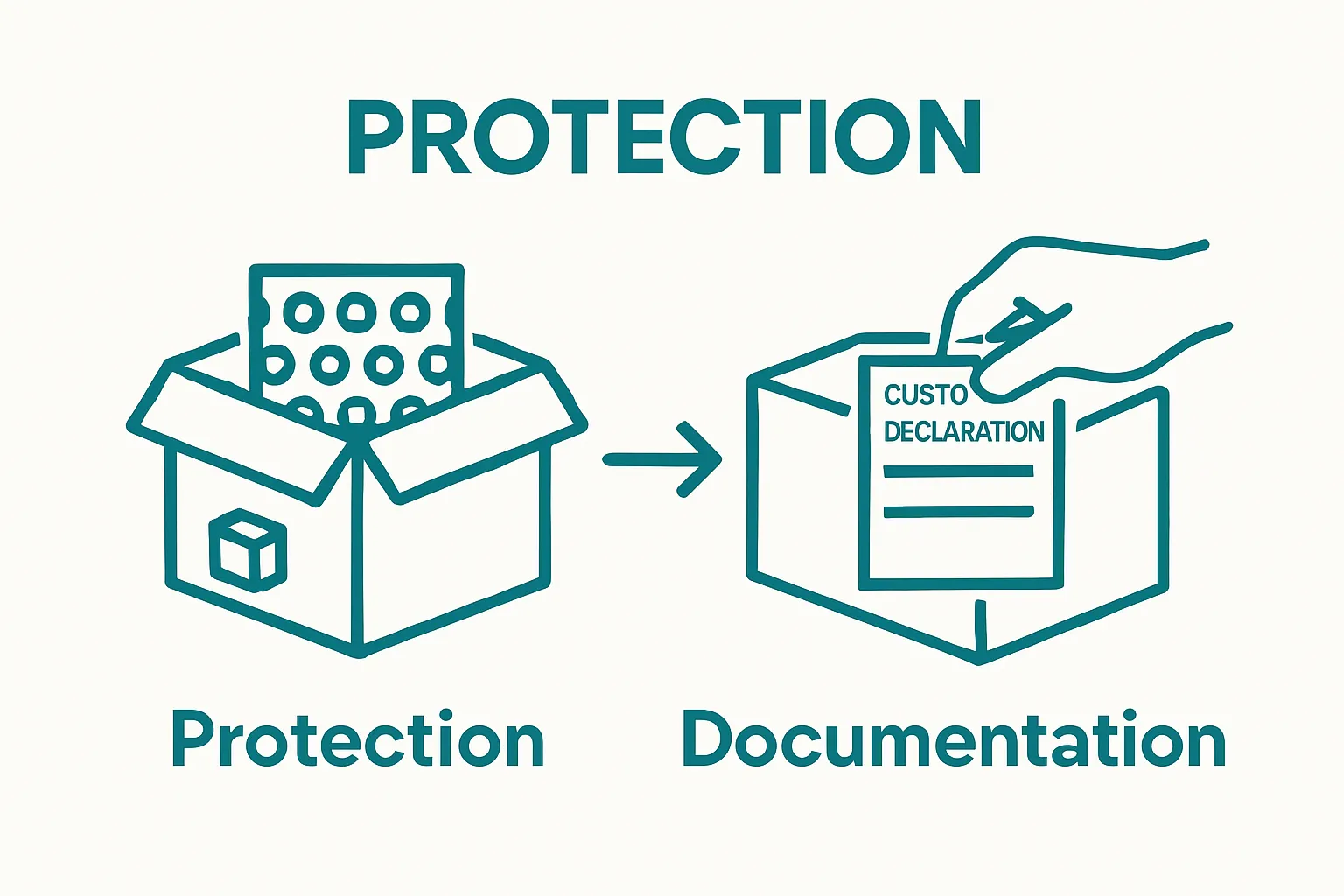 Accurate labeling can prevent significant shipping complications. Include complete sender and recipient addresses using clear, permanent marking methods. International shipments require additional documentation including commercial invoices, customs declaration forms, and specific country import permits. Ensure all paperwork is completed accurately and attached securely to the package exterior, using waterproof document pouches when necessary.
Verify your package preparation with this comprehensive checklist:
- Appropriate packaging material selected
- Product fully protected against movement
- Fragile items individually wrapped
- All seams securely taped
- Complete shipping documentation attached
- Correct customs declaration completed
- Shipping labels clearly printed
Careful package preparation transforms shipping from a potential risk into a smooth, predictable process, protecting your product and your business reputation during international transit.

Step 4: Complete Required Documentation
Documentation serves as the critical backbone of international shipping, transforming your package from a simple parcel into a legally compliant international transaction. Accurate and comprehensive paperwork prevents costly delays, potential customs seizures, and unnecessary financial penalties. Each form represents a crucial step in ensuring your shipment moves smoothly across international borders.
Start by understanding the fundamental documentation requirements for international shipping. A commercial invoice represents the most essential document, detailing the precise contents, value, and intended use of your shipment. This document must include comprehensive information including sender and recipient details, itemized product descriptions, individual and total package value, and harmonized system (HS) codes that classify your products for customs purposes. Explore our guide to reliable courier services to gain deeper insights into documentation nuances.
Customs declaration forms demand particular attention. These documents provide customs authorities with a complete overview of your shipment, including product origin, intended use, and potential duty requirements. Different countries have varying declaration requirements, so research the specific guidelines for your destination country. Some nations require additional certifications for specific product categories like electronics, food products, or regulated materials. Incorrect or incomplete declarations can result in shipment delays, return to origin, or significant financial penalties.
Digital documentation tools can streamline this complex process. Many contemporary shipping platforms offer automated form generation and compliance checking, reducing human error and saving substantial time. These systems often integrate directly with carrier platforms, allowing real-time verification and immediate submission of required paperwork. Consider investing in shipping management software that can automatically populate repetitive documentation fields and flag potential compliance issues.
Verify your documentation readiness with this comprehensive checklist:
- Commercial invoice completed with precise details
- Correct HS codes assigned for each product
- Customs declaration form fully and accurately completed
- Sender and recipient information verified
- Package value and contents clearly stated
- Additional country specific certifications obtained
- Digital copies of all documents secured
Careful documentation preparation transforms international shipping from a potential administrative nightmare into a smooth, predictable process, protecting your business and ensuring your products reach their global destinations efficiently.
Below is a checklist table to help verify your documentation readiness when shipping internationally. This table organizes key documentation requirements and ensures completeness for smooth customs clearance.
| Documentation Step | Description | Check Status |
|---|---|---|
| Commercial invoice completed | Detailed list of contents, value, and sender/recipient | |
| Correct HS codes assigned | International product classification for customs | |
| Customs declaration form completed | Fully and accurately filled for destination country | |
| Sender and recipient verified | Checked for accuracy and completeness | |
| Package value and contents stated | Clearly listed for customs evaluation | |
| Country certifications obtained | Extra permits/certifications for specific destinations | |
| Digital copies secured | Saved backup files of all documents |
Step 5: Track Your Shipment
Tracking your international shipment transforms the often mysterious global shipping process into a transparent, manageable experience. Real-time tracking provides peace of mind and enables proactive management of your logistics, allowing you to anticipate potential issues and communicate effectively with customers about delivery timelines.
Modern shipping tracking goes far beyond simple location updates.
VIDEO:video_content] Contemporary tracking systems offer comprehensive insights into your package’s journey, including detailed movement history, estimated delivery times, and potential customs processing stages. [Learn more about international parcel shipping technologies to understand the sophisticated tracking mechanisms available today. Obtain your unique tracking number immediately after shipping and store it securely, as this will be your primary tool for monitoring the package’s progress across international borders.
Understand the tracking capabilities of your chosen carrier. Different shipping providers offer varying levels of tracking detail and frequency of updates. Some carriers provide minute-by-minute geolocation tracking, while others offer more intermittent status reports. Download the carrier’s mobile application or bookmark their tracking webpage for quick and easy access. Many advanced tracking platforms now offer email or SMS notifications, allowing you to receive automatic updates without constantly checking the tracking system manually.
Prepare for potential tracking complications. International shipments can experience complex routing with multiple transfer points, which might temporarily interrupt tracking signals. Some remote destinations or countries with limited infrastructure might have less precise tracking capabilities. Develop a contingency communication plan with your shipping carrier and recipient, establishing clear protocols for addressing any tracking uncertainties or shipment delays.
Verify your shipment tracking readiness with this comprehensive checklist:
- Tracking number securely recorded
- Carrier tracking platform accessed
- Notifications configured for updates
- Recipient contact information verified
- Backup communication methods established
- Estimated delivery timeline understood
- Potential customs processing time anticipated
Effective shipment tracking transforms international shipping from an uncertain process into a transparent, manageable journey, providing you and your recipient with confidence and clarity throughout the entire delivery experience.
Step 6: Confirm Delivery and Gather Feedback
Delivery confirmation represents the final critical stage in your international shipping process, transforming a logistical transaction into a complete customer experience. Systematically documenting and analyzing each shipment provides invaluable insights for continuous improvement of your global shipping strategy. This step is not merely about verifying package arrival but understanding the entire shipping journey from sender to recipient.
Initiate delivery confirmation by requesting explicit acknowledgment from the recipient. Professional shipping practices involve more than an automated system notification. Contact the recipient directly through email or phone to verify package condition, confirm all items arrived intact, and address any potential concerns immediately. Explore our comprehensive guide to reliable courier services to understand best practices in customer communication and delivery verification.
Implement a structured feedback collection mechanism that goes beyond simple delivery confirmation. Design a concise survey that captures critical information about the shipping experience, including package condition, delivery timeliness, and overall satisfaction. Digital survey tools can automate this process, making it easy for recipients to provide detailed insights. Pay special attention to international shipping specific feedback, such as customs processing experience, packaging quality, and any unexpected challenges encountered during delivery.
Analyze the collected data systematically to identify potential improvements in your shipping process. Look for patterns in feedback that might indicate recurring issues with specific carriers, packaging methods, or destination countries. This data becomes a strategic asset, helping you refine your international shipping approach, reduce future shipping complications, and enhance overall customer satisfaction. Consider creating a standardized reporting system that tracks key performance indicators like delivery time, damage rates, and customer satisfaction scores.
Verify your delivery confirmation and feedback process with this comprehensive checklist:
- Recipient delivery confirmation obtained
- Package condition verified
- Feedback survey distributed
- Shipping performance metrics recorded
- Customer communication documented
- Potential improvement areas identified
- Follow up actions planned
A meticulous approach to delivery confirmation transforms international shipping from a transactional process into a continuous learning opportunity, positioning your business for increasingly sophisticated and customer centric global logistics management.
The table below organizes key actions to confirm delivery and gather feedback after your international shipment arrives. It helps ensure a complete customer experience and supports continuous improvement for future shipments.
| Post-Delivery Action | Purpose | Completion Status |
|---|---|---|
| Obtain recipient confirmation | Ensure the package was received and accepted | |
| Verify package condition | Identify any damage or missing contents | |
| Distribute feedback survey | Collect detailed satisfaction and issue data | |
| Record shipping metrics | Track delivery time, damage rate, and satisfaction | |
| Document customer communication | Retain records of conversations and concerns | |
| Identify improvement areas | Find patterns and adjust future shipping | |
| Plan follow-up actions | Resolve issues and improve future performance |
Ready to Master International Shipping with Reliable Courier Services?
Your journey toward stress-free global shipping does not have to stop with reading guides. Many businesses struggle with unpredictable costs, customs complications, and lack of visibility once a package leaves the warehouse. Finding reliable courier services that handle everything from packaging and documentation to real-time tracking is now more important than ever.
Why risk delays, lost parcels, or unhappy customers? or-ner.com offers a seamless, all-in-one logistics platform that eliminates the guesswork highlighted in the How to Ship Internationally: A Step-by-Step Guide. Get access to advanced tracking, easy customs clearance, and a worldwide network built to support your business. Let our team manage the complexities of international parcel shipping so you can grow with confidence. Visit or-ner.com today and see how our solutions take your shipping to the next level.
Frequently Asked Questions
What should I consider when assessing my international shipping needs?
When assessing your shipping needs, evaluate product characteristics such as weight, dimensions, and fragility, identify target international markets with specific regulations, and determine shipping volume and frequency to make informed logistics decisions.
How do I choose the right shipping carrier for international shipments?
To select a shipping carrier, compare major international carriers based on their global network, evaluate pricing structures, check their reliability and tracking capabilities, and ensure they offer specialized services relevant to your products.
What steps should I take to prepare my package for international shipping?
Prepare your package by selecting appropriate packaging materials that protect the product, ensure all seams are securely taped, wrap fragile items individually, and include all necessary shipping documentation and labels to avoid customs delays.
What essential documents are needed for international shipping?
Key documents for international shipping include a commercial invoice detailing product contents and values, customs declaration forms specific to the destination, and any additional certifications required for specific products. Accurate completion of these forms is crucial to prevent delays or penalties.