TL;DR:
- Setting up international shipping requires obtaining essential credentials like EIN and ACE accounts before configuring carriers and zones, ensuring compliance from the start. Proper customs paperwork, accurate landed cost calculations, and rigorous testing prevent costly delays, rejected shipments, and margin erosion. Preparing in advance for 2026 regulatory changes and automating address validation are crucial for profitable, scalable global ecommerce operations.
Setting up international shipping is the process of configuring your ecommerce business to send products across borders while meeting carrier requirements, customs regulations, and compliance standards. Done right, it opens your store to billions of potential buyers outside your home market. Done wrong, it produces delayed shipments, rejected filings, and unexpected costs that erode your margins. This guide covers every stage of the process: from account registration and carrier selection to customs documentation, landed cost pricing, and the 2026 regulatory changes you cannot afford to ignore.
What you need before you can setup international shipping
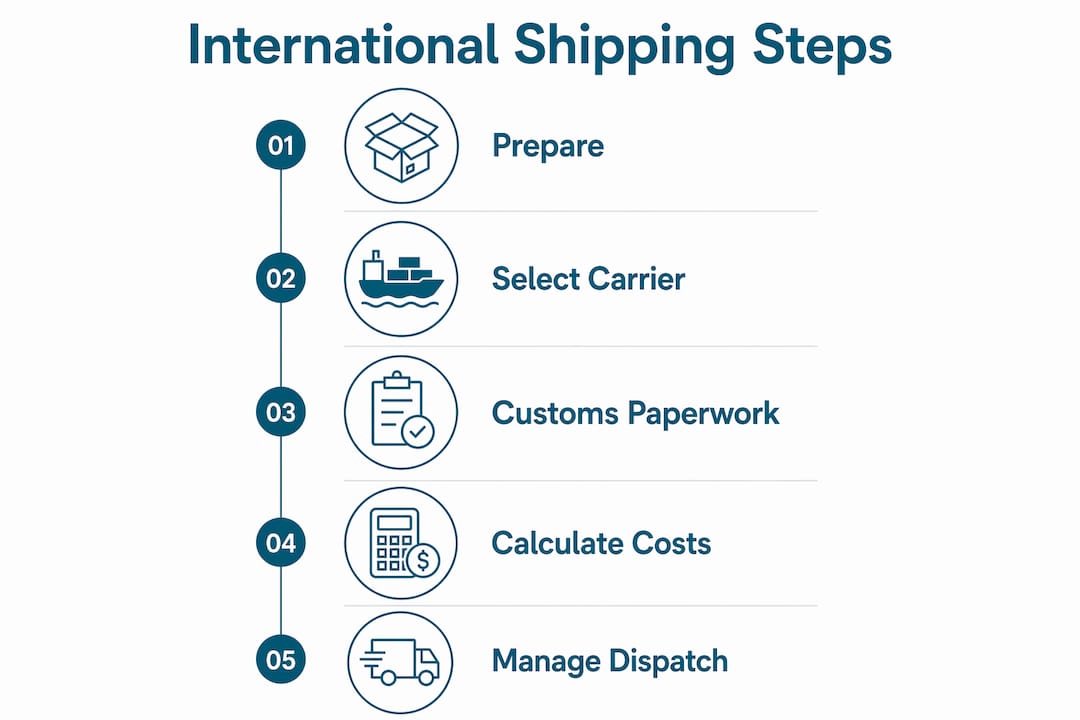
The biggest practical barrier for first-time exporters is not choosing a carrier. It is getting the correct accounts and registrations in place before a single package leaves your warehouse. Skip this step and your shipments will stall at the border.
You need two foundational credentials to ship internationally from the United States:
- Employer Identification Number (EIN): Issued by the IRS, this number identifies your business in all federal export filings. Without it, you cannot complete Electronic Export Information (EEI) submissions.
- ACE Exporter Account: The Automated Commercial Environment (ACE) portal is the U.S. government’s system for filing export data. First-time filers need an EIN and an ACE Exporter Account to file export information electronically, including USPS shipments. Registration is free but takes several business days to process.
- Internal Transaction Number (ITN): Once you file your EEI through ACE, the Automated Export System (AES) returns an ITN confirmation. This number must appear on your shipping forms. No ITN means no legal export clearance.
- HS Codes and declared values: Every product you ship internationally needs a Harmonized System (HS) code, which customs authorities use to classify goods and calculate duties. Prepare these codes and accurate declared values for your entire product catalog before you configure anything in your store.
- Ecommerce platform integration: Shopify and WooCommerce both support international shipping through native settings and third-party plugins. The EasyPost for WooCommerce plugin enables real-time rate quotes, customs documentation automation, and address validation. This means you can automate most of the paperwork that would otherwise require manual entry per order.
Pro Tip: Register for your ACE Exporter Account at least two weeks before your planned launch date. Government processing times vary, and a delayed account will block your entire international operation.
How to select carriers and configure shipping zones
Carrier selection is not a one-size-fits-all decision. The best way to ship packages internationally depends on weight, destination, speed requirements, and product type. Understanding the difference between courier and freight services is the first decision you need to make.

Courier vs. freight: which service fits your shipment
Courier services (DHL Express, FedEx International, UPS Worldwide) handle individual parcels, typically under 150 lbs, with door-to-door delivery and built-in customs brokerage. Freight services handle larger or heavier shipments, often on pallets, through ocean or air freight with separate customs clearance. For most ecommerce sellers shipping individual orders, courier services are the correct starting point. Freight becomes relevant when you ship bulk inventory to overseas warehouses or wholesale buyers.
| Shipment type | Recommended service | Typical use case |
|---|---|---|
| Single parcel under 70 lbs | Courier (DHL, FedEx, UPS) | Direct-to-consumer orders |
| Multiple parcels, same destination | Consolidated courier or LCL freight | B2B wholesale orders |
| Large items over 150 lbs | Air or ocean freight | Furniture, machinery, bulk goods |
| Time-sensitive documents | Express courier | Contracts, legal documents |
For how to ship large items internationally, ocean freight through a freight forwarder is almost always the most cost-effective route. Air freight is faster but can cost three to five times more per kilogram.
Once you have chosen your carriers, configure shipping zones in your store:
- In Shopify, go to Settings > Shipping and Delivery, create a new zone, and add the countries or regions you want to serve. You can set flat rates, free shipping thresholds, or carrier-calculated rates pulled live from DHL or UPS.
- In WooCommerce, shipping zones work similarly under WooCommerce > Settings > Shipping. Setting up shipping zones and activating international markets on Shopify is required before any international rate appears at checkout. Without this step, your store defaults to domestic-only delivery.
Pro Tip: Never apply a domestic shipping zone to international orders. Create a dedicated “Rest of World” zone as a catch-all for countries not covered by your primary zones. This prevents checkout errors and ensures every customer sees a valid shipping option.
For automated rate shopping across multiple carriers, the EasyPost API handles carrier selection, label creation, and address validation in a single integration. This removes the need to log into separate carrier portals for every shipment.
How to prepare shipments, complete customs paperwork, and file EEI
Customs compliance is where most first-time international shippers make costly mistakes. The workflow below covers the full process from packaging to filing.
-
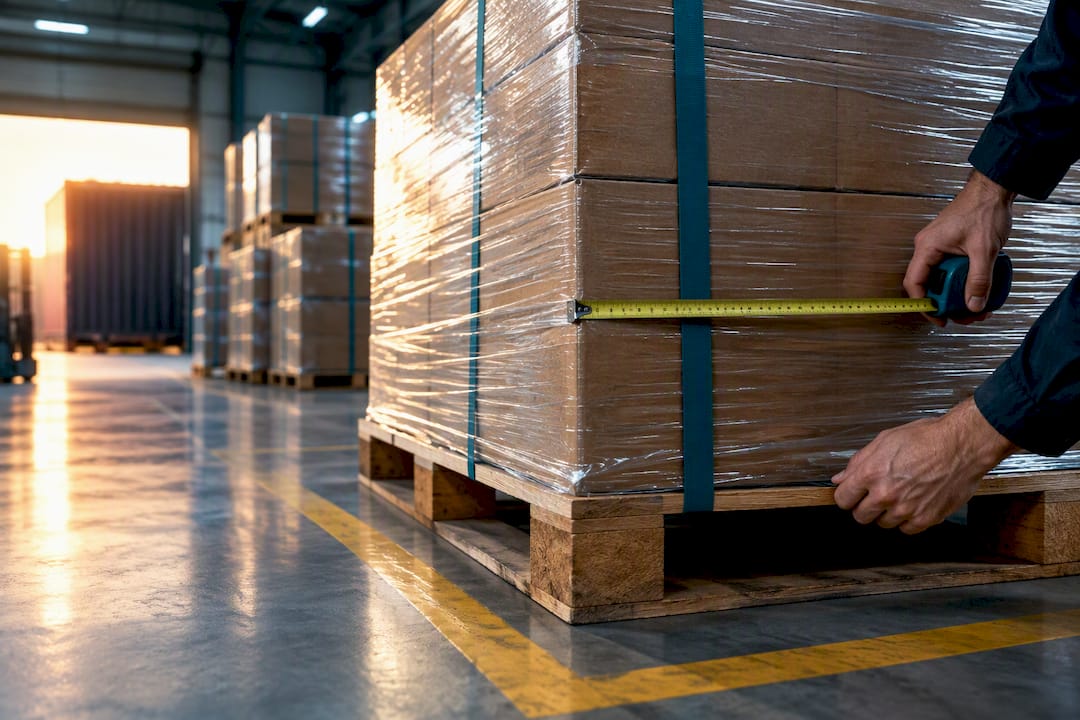
Package your shipment correctly. Use double-walled boxes for fragile items. Seal all seams with pressure-sensitive tape rated for international transit. Include a packing list inside the box that matches your commercial invoice exactly. For how to ship large items overseas, use custom crating or palletization and mark packages with gross weight and dimensions on the exterior.
-
Prepare your commercial invoice. This document is the foundation of customs clearance. It must include seller and buyer details, a full product description, HS code, quantity, declared value in USD, country of origin, and Incoterms (typically DAP or DDP for ecommerce).
-
File your Electronic Export Information (EEI). For shipments valued over $2,500 per Schedule B number, or for any shipment requiring an export license, you must file EEI through AES before the shipment departs. International shipments require precise customs documentation, including the ITN received from AES filing on all forms. A missing or incorrect ITN will stop your shipment at the port of export.
-
Generate your shipping label and attach all documents. Most carrier platforms and plugins like EasyPost generate the label and customs forms simultaneously. Attach the commercial invoice and any required certificates (Certificate of Origin, phytosanitary certificates for agricultural goods) to the outside of the package in a clear document pouch.
-
Hand off to your carrier and confirm tracking. Get a receipt from the carrier and verify that the tracking number is active in their system before the shipment leaves your facility.
| Document | Required for | Where to generate |
|---|---|---|
| Commercial invoice | All international shipments | Manually or via EasyPost/Shopify |
| EEI / ITN | Shipments over $2,500 per Schedule B | ACE portal (AES) |
| Certificate of Origin | Country-specific trade agreements | Chamber of Commerce |
| Packing list | All shipments | Your order management system |
Pro Tip: Keep a copy of every ITN confirmation and commercial invoice for at least five years. U.S. Customs and Border Protection can audit export records retroactively, and missing documentation carries significant penalties.
How to manage costs, duties, and pricing for profitable global sales
Most brands underestimate what it actually costs to deliver a product internationally. Landed cost audits show most brands underestimate total international shipped cost by 18 to 25%, including freight, duties, VAT, and last-mile delivery. That gap comes directly out of your margin.
Landed cost is the total cost to get a product into a customer’s hands in their country. It includes:
- Freight cost: The carrier charge from your origin to the destination country.
- Import duties: Calculated as a percentage of the declared value, based on the HS code and destination country’s tariff schedule.
- Value Added Tax (VAT) or Goods and Services Tax (GST): Applied in most countries, often 10 to 25% of the landed value.
- Last-mile delivery: The domestic delivery charge within the destination country.
- Customs brokerage fees: Charged when a customs broker clears the shipment on the buyer’s behalf.
Tools like Zonos and Easyship calculate these components automatically at checkout, so customers see the full cost before they buy. This eliminates the “surprise duty” problem that causes a significant share of international returns and chargebacks. You can also explore ways to reduce international shipping costs by consolidating shipments and using regional fulfillment centers.
Your pricing strategy has two options. Delivered Duty Paid (DDP) means you collect duties and taxes at checkout and remit them on the customer’s behalf. This creates a frictionless experience but requires accurate duty calculation upfront. Delivered at Place (DAP) means the customer pays duties on arrival. DAP is simpler to administer but produces more abandoned deliveries and negative reviews when customers receive unexpected bills.
Troubleshooting common international shipping problems
Even a well-configured setup produces errors. Knowing what to look for saves hours of back-and-forth with carriers and customs authorities.
- EEI filing rejections: Common EEI filing errors include incorrect port of export code, inaccurate mode of transport, and missing EIN or export account setup. Rejected filings prevent shipments from proceeding entirely. Check each field against the AES filing guide before resubmitting.
- Address validation failures: International address formats differ significantly from U.S. standards. Postal codes, prefecture names, and building numbers follow different conventions in Japan, Brazil, and Germany. Using shipping plugins that automatically validate addresses reduces errors before labels are printed, not after packages are returned.
- Customs delays: The most common cause is a mismatch between the commercial invoice and the actual package contents. Verify that product descriptions, quantities, and declared values match exactly.
- Returns management: Cross-border returns are expensive. Set a clear international returns policy before you launch, and consider using a local returns address in high-volume markets to reduce return freight costs.
2026 regulatory alert: The U.S. government eliminated the $800 de minimis threshold for goods from China and Hong Kong in 2026. Drop-shippers and small brands sourcing from these regions now face full customs entry requirements on every shipment, regardless of value. Review your global shipping compliance obligations now if this affects your supply chain.
Key takeaways
Successful international shipping requires compliance infrastructure, carrier configuration, and accurate landed cost pricing to be in place before your first order ships.
| Point | Details |
|---|---|
| Register accounts first | Obtain your EIN and ACE Exporter Account before configuring any carrier or platform settings. |
| Configure shipping zones precisely | Create dedicated international zones in Shopify or WooCommerce to display correct rates at checkout. |
| File EEI and secure your ITN | Every export over $2,500 per Schedule B requires AES filing; the ITN must appear on all shipping forms. |
| Calculate landed costs accurately | Use tools like Zonos or Easyship to avoid the 18 to 25% cost underestimation that destroys margins. |
| Monitor 2026 regulatory changes | The elimination of the China/Hong Kong de minimis threshold requires updated customs entry strategies. |
What I’ve learned from watching sellers launch international shipping
The sellers who struggle most with international shipping are not the ones who pick the wrong carrier. They are the ones who treat compliance as an afterthought. I have seen stores spend weeks configuring Shopify zones and EasyPost integrations, only to discover on launch day that they never registered for an ACE Exporter Account. Every shipment stalled. Every customer waited. The fix took 10 business days.
My strongest recommendation is to set up your compliance infrastructure first, your technology second. Get your EIN confirmed, your ACE account active, and your HS codes assigned before you touch a single plugin setting. This sequence feels slower at the start, but it eliminates the most painful failure mode in international shipping.
On the technology side, do not underestimate the value of automated address validation. International address errors are invisible until a package bounces back three weeks later. A plugin like EasyPost catches these at the point of label creation, which is the only moment you can fix them at zero cost.
Finally, test your shipping zones with real checkout sessions before you go live. Place test orders to three or four target countries, verify that the correct rates appear, and confirm that your customs forms generate correctly. This 30-minute test has saved more than a few sellers from a very public launch failure.
Scaling internationally is genuinely exciting. But the sellers who scale profitably are the ones who built the foundation correctly the first time, rather than patching problems after orders are already in transit.
— Maayan
How Or-ner supports your international shipping setup
Or-ner is built for ecommerce sellers who need more than a carrier account. The platform covers freight booking, customs clearance, real-time tracking, and cross-border fulfillment across ocean, air, and land transport modes. Whether you are shipping individual parcels or bulk inventory to overseas warehouses, Or-ner connects you to the right service for each shipment type.
One of the most common questions Or-ner helps sellers answer is when to use a courier versus freight for international orders. The courier vs. freight guide breaks down the cost, speed, and use-case differences in practical terms. For sellers ready to choose a carrier partner, the courier partner selection guide covers what to evaluate before signing any contract. Or-ner’s global warehouse network and fulfillment infrastructure mean you can start shipping internationally without building your own logistics operation from scratch.
FAQ
What accounts do I need to setup international shipping?
You need an Employer Identification Number (EIN) from the IRS and an ACE Exporter Account to file Electronic Export Information through the Automated Export System. Both are required before you can legally export goods from the United States.
What is an ITN and why does it matter?
An Internal Transaction Number (ITN) is the confirmation number returned by the Automated Export System after a successful EEI filing. It must appear on your shipping forms for any export over $2,500 per Schedule B number, and missing it will stop your shipment at the border.
What is the best way to ship packages internationally for ecommerce?
For individual consumer orders under 70 lbs, express courier services like DHL Express, FedEx International, or UPS Worldwide are the most reliable option. They include door-to-door delivery, built-in customs brokerage, and real-time tracking.
How do I calculate duties and taxes for international orders?
Use a landed cost tool like Zonos or Easyship, which calculate import duties, VAT, and last-mile delivery fees based on the product’s HS code and destination country. Displaying these costs at checkout prevents surprise charges that lead to abandoned deliveries.
How does the 2026 de minimis change affect my shipping setup?
The U.S. eliminated the $800 duty-free threshold for goods originating from China and Hong Kong in 2026. Sellers sourcing from these regions must now file full customs entries for every shipment, regardless of value, which increases documentation requirements and potential duty costs.