Managing product returns can quickly become a source of frustration for Ecommerce logistics managers, especially when item traceability and documentation create bottlenecks. For American home goods companies, the stakes are high—balancing smooth operations with customer expectations while minimizing disruption is no small feat. By focusing on transparent and consistent guidelines and leveraging technology-driven workflows, you can transform returns into an asset that reinforces customer trust and drives operational gains.
Table of Contents
- Step 1: Establish Return Policies And Required Documentation
- Step 2: Integrate Return Workflows With Courier Systems
- Step 3: Automate Return Authorization And Tracking
- Step 4: Inspect Returned Items And Update Inventory
- Step 5: Analyze Return Data To Enhance Future Processes
Quick Summary
| Key Insight | Explanation |
|---|---|
| 1. Clear Return Policies Essential | Establish transparent guidelines for returns to enhance customer trust and operational efficiency. |
| 2. Integrate Workflows with Technology | Utilize technology to streamline communication between your business and courier partners. |
| 3. Automate Return Tracking Processes | Implement automation to minimize errors and speed up return authorizations and updates. |
| 4. Systematic Inspection Improves Quality | Develop a detailed inspection process for returns to ensure inventory accuracy and product quality. |
| 5. Analyze Return Data for Insights | Use return data analysis to identify patterns and optimize future return management strategies. |
Step 1: Establish return policies and required documentation
Creating a comprehensive return policy is your first critical step in managing courier service returns effectively. Your goal is to design clear guidelines that protect both your business and your customers while ensuring smooth transaction processing.
To craft an effective return policy, you’ll want to address several key elements. Start by determining the specific documentation requirements for shipment traceability. This means establishing precise rules about what paperwork customers need to submit when initiating a return, such as:
- Original purchase invoice
- Completed return merchandise authorization (RMA) form
- Proof of product condition
- Tracking information from original shipment
Your documentation should meticulously outline the process, including timeframes for returns, acceptable product conditions, and any potential restocking fees. The key is creating transparent and consistent guidelines that customers can easily understand.
A well-documented return policy reduces confusion and builds customer trust in your courier services.
Consider the legal and procedural standards when developing your documentation process. Drawing inspiration from government policy guidelines on document submission, ensure your return documentation system captures all necessary details for accurate processing.
Remember that your return policy is more than just a set of rules – it’s a critical customer service tool that can differentiate your business from competitors. By making the return process clear, fair, and straightforward, you demonstrate professionalism and commitment to customer satisfaction.
Pro tip: Create a digital return portal where customers can easily initiate and track their return shipments to streamline the entire process.
Step 2: Integrate return workflows with courier systems
Successfully integrating return workflows with courier systems requires a strategic approach that ensures seamless communication and data exchange between your business and shipping partners. Your primary goal is to create an efficient, transparent process that minimizes friction and maximizes operational effectiveness.
Start by implementing comprehensive information systems for supply chain tracking. This means developing a robust digital infrastructure that enables real-time monitoring and synchronization of return shipments. Key components of this integration include:
- Automated scanning and tracking systems
- Real-time data sharing platforms
- Centralized return management software
- Standardized digital documentation protocols
Understanding the operational challenges is crucial. Postal service operational reviews highlight the importance of consistent scanning, reporting, and schedule management in return processing. By adopting advanced tracking technologies, you can address common bottlenecks and improve overall return workflow efficiency.
Successful return workflow integration transforms logistical complexity into a competitive advantage.
Ensure your system allows for immediate status updates, providing customers and internal teams with transparent visibility into each return’s journey. This means configuring your software to capture critical data points like initial return request, package pickup, transit status, and final warehouse processing.
The integration process requires collaboration between your internal teams, courier services, and technology providers. Develop clear communication protocols and invest in training to help staff understand and effectively utilize the new integrated return management system.
Pro tip: Select courier management software that offers API integrations and supports multiple shipping carriers to maximize your operational flexibility.
Step 3: Automate return authorization and tracking
Automating return authorization and tracking is essential for creating a streamlined, efficient returns process that reduces manual intervention and minimizes potential errors. Your objective is to implement a system that provides instant visibility, rapid processing, and seamless communication throughout the return journey.
Begin by integrating advanced tracking technologies for transportation. This involves implementing digital systems that can automatically capture and record critical return-related data points. Key components of an automated return authorization system include:
- Unique return merchandise authorization (RMA) codes
- Automated email notifications
- Real-time status tracking interfaces
- Digital signature capture mechanisms
- Integrated quality assessment workflows
Drawing from secure courier authorization protocols, develop robust documentation and verification processes. Your automated system should include comprehensive checks that validate return eligibility, product condition, and compliance with your established return policy.
Automation transforms returns from a logistical challenge into a strategic customer experience opportunity.
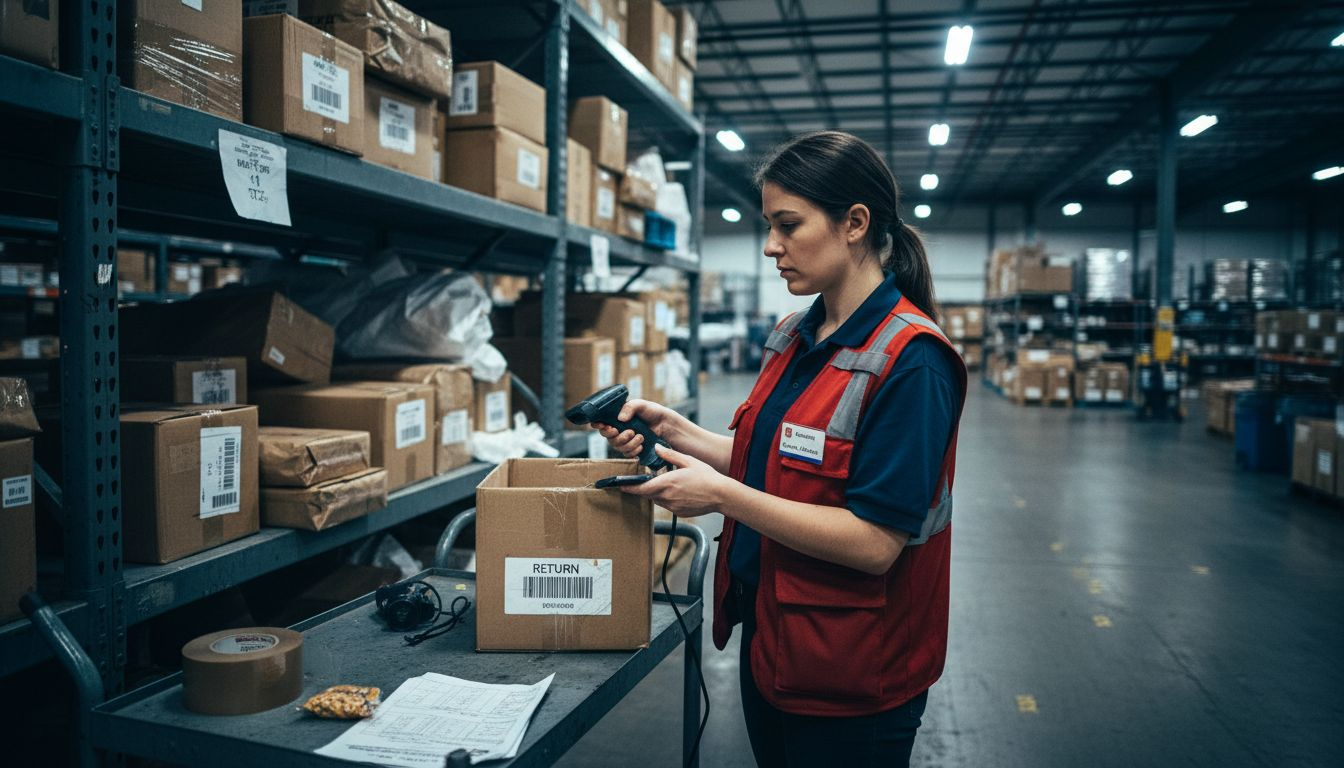
Implement barcode or QR code scanning technologies that enable instant tracking and verification at each stage of the return process. This approach allows for immediate updates to customers, internal teams, and courier services, creating a transparent and efficient workflow.
Ensure your automation system integrates seamlessly with your existing inventory management, customer relationship management, and courier tracking platforms. This holistic approach enables smooth data flow and reduces the potential for manual errors or communication gaps.
Pro tip: Select return management software with machine learning capabilities that can progressively improve return processing accuracy and efficiency.
The table below contrasts manual versus automated return processing at a glance:
| Aspect | Manual Process | Automated Process |
|---|---|---|
| Approval Speed | Hours to days | Minutes or instant |
| Error Risk | High (human mistakes) | Low (system validation) |
| Customer Transparency | Limited updates | Real-time tracking |
| Scalability | Labor intensive | Easily scalable |
Step 4: Inspect returned items and update inventory
Processing returned items requires a meticulous approach that ensures product quality, inventory accuracy, and customer satisfaction. Your goal is to develop a systematic inspection workflow that quickly evaluates returned merchandise and updates your inventory management system with precision.
Begin by implementing comprehensive return order processing protocols. This involves creating a structured inspection process that categorizes returned items based on their condition and potential disposition. Key elements of an effective inspection workflow include:
- Detailed visual condition assessment
- Functional performance testing
- Damage documentation and classification
- Quality verification against original product standards
- Condition-based disposition decision
Drawing from rigorous inventory management principles, establish clear guidelines for handling different return scenarios. Your inspection process should include precise criteria for determining whether an item can be resold, requires refurbishment, or needs to be removed from inventory entirely.
Thorough inspection transforms returns from potential losses into opportunities for inventory optimization.
Develop a standardized digital checklist that guides your team through a consistent, objective evaluation process. This approach ensures that every returned item undergoes the same comprehensive review, minimizing subjective decision-making and maintaining high-quality control standards.
Integrate your inspection findings directly into your inventory management system, updating stock levels, product conditions, and potential resale values in real-time. This seamless approach provides immediate visibility into your inventory status and supports more accurate financial reporting.
Pro tip: Create quality tiers for returned items to streamline resale and refurbishment decisions, maximizing potential recovery value.
Step 5: Analyze return data to enhance future processes
Transforming raw return data into actionable insights requires a strategic approach that goes beyond simple number-crunching. Your objective is to develop a comprehensive analysis framework that uncovers patterns, identifies root causes, and drives continuous improvement in your returns management process.
Start by implementing comprehensive data life cycle techniques that transform your return information into meaningful strategic intelligence. Effective return data analysis should focus on capturing and examining multiple dimensions of your returns ecosystem. Key analytical focus areas include:
- Frequency of returns by product category
- Primary reasons for product returns
- Customer demographic patterns
- Financial impact of return processing
- Seasonal return trend identification
Drawing from data-driven decision-making principles, develop a systematic approach to interpreting return data. Look beyond surface-level metrics to understand the underlying factors driving customer returns, such as product design issues, shipping damage, or customer expectations.
Return data analysis transforms operational challenges into strategic opportunities for improvement.
Create visual dashboards and regular reporting mechanisms that make complex return data easily digestible for your leadership team. These analytics should provide clear, actionable insights that can inform product development, quality control, and customer experience strategies.
Consider implementing machine learning algorithms that can predict potential return risks and help you proactively address emerging patterns. By continuously refining your analysis approach, you can turn return data from a reactive metric into a predictive business intelligence tool.
Pro tip: Develop a cross-functional team that includes representatives from sales, product development, and customer service to holistically interpret return data insights.
Here’s a summary of digital tools that can enhance each step of the courier returns process:
| Step | Recommended Technology | Main Benefit |
|---|---|---|
| Establish return policies | Digital return portal | Easy initiation and tracking |
| Integrate workflows | API-enabled courier software | Streamlined carrier coordination |
| Automate authorization | RMA code generation tool | Faster approvals, fewer errors |
| Inspect and update inventory | Digital checklist app | Consistent, accurate inspections |
| Analyze data | BI dashboard/analytics suite | Actionable insights, trends |
Simplify Your Return Management with Reliable Courier Services from Or-Ner
Managing returns can turn into a complex challenge involving strict return policies, seamless workflow integration, and efficient inventory updates. This article highlights critical pain points such as the need for clear documentation, automated authorization, real-time tracking, and insightful data analysis to transform returns from a burden into a business advantage. If your ecommerce operation struggles with customer dissatisfaction, delayed refund approvals, or inventory inaccuracies, the time to act is now.
Take control of your returns process by partnering with Or-Ner, your comprehensive logistics platform offering reliable courier services tailored for ecommerce sellers and global brands alike. Our end-to-end solutions bring automation, real-time shipment tracking, and inventory management together so you can ensure transparent return workflows and fast resolution. Don’t let returns slow you down. Visit Or-Ner to explore how our trusted service network and cutting-edge tools can help you manage returns efficiently and keep your customers satisfied today.
Frequently Asked Questions
How can I establish effective return policies for my courier service?
To establish effective return policies, outline specific documentation requirements such as original purchase invoices and tracking information. Create a clear, transparent policy that specifies conditions, timeframes, and any fees, ensuring customers easily understand the return process.
What technology should I integrate to streamline return workflows in my courier service?
Integrate automated scanning and tracking systems along with centralized return management software. These technologies facilitate real-time data sharing, helping to improve efficiency and visibility throughout the return process.
How can I automate return authorization and tracking for my courier service?
Automate return authorization by implementing unique return merchandise authorization (RMA) codes and real-time status tracking interfaces. This reduces processing time significantly, allowing for swift approval and reduced errors in return management.
What steps should I take to inspect returned items effectively?
To inspect returned items effectively, create a structured workflow that includes detailed visual assessments and functional testing. Categorize items based on their condition to streamline decisions on whether they can be resold or need refurbishment.
How can data analysis improve my returns management process?
Analyze return data to identify trends and common reasons for returns such as product defects or shipping issues. Use these insights to inform future product development and enhance customer satisfaction, allowing for continuous improvement in your returns strategy.
What are the benefits of using a digital return portal for customers?
A digital return portal allows customers to easily initiate and track their returns, enhancing their experience. By providing real-time updates and a straightforward process, you can improve customer trust and satisfaction with your courier services.