Shipping delays and lost packages can quickly derail the reputation of an online store, costing you sales and customer trust. For American ecommerce entrepreneurs expanding their businesses, building reliable courier services and integrated logistics is more vital than ever. This guide helps you transform your delivery process into a strong selling point by outlining practical steps for improving shipping speed, catalog accuracy, and workflow automation, all tailored for sustained growth and happier customers.
Table of Contents
- Step 1: Set Up Integrated Logistics And Reliable Courier Options
- Step 2: Optimize Product Catalog And Shipping Selections
- Step 3: Automate Fulfillment And Streamline Order Workflows
- Step 4: Test Delivery Speed And Track Customer Satisfaction
- Step 5: Analyze Sales Impact And Refine Logistics Strategies
Quick Summary
| Key Insight | Explanation |
|---|---|
| 1. Establish integrated logistics | Integrated logistics improve shipping reliability, helping to build customer trust and offer competitive delivery options. |
| 2. Optimize product presentation | Enhanced product information, including accurate descriptions and high-quality images, reduces cart abandonment and boosts sales. |
| 3. Automate order workflows | Automation minimizes manual processes, significantly reducing order processing times and improving overall efficiency. |
| 4. Track delivery performance | Measuring customer satisfaction ensures reliable delivery windows and helps identify areas for logistical improvement. |
| 5. Analyze logistics impact on sales | Regular analysis links shipping metrics to sales performance, guiding strategic decisions for enhanced profitability. |
Step 1: Set up integrated logistics and reliable courier options
Establishing integrated logistics and reliable courier services is crucial for scaling your online sales and ensuring smooth product delivery. By implementing a strategic approach, you can transform your shipping operations from a potential bottleneck into a competitive advantage.
To set up reliable courier options, start by thoroughly researching transportation providers that specialize in specialized courier management. Look for services offering comprehensive tracking, multiple delivery modes, and proven reliability across different shipping scenarios. Prioritize couriers with technology-driven logistics that provide real-time updates and error reduction capabilities.
Key elements for integrated logistics include:
- Selecting multiple courier partners for flexible shipping
- Implementing robust tracking systems
- Negotiating competitive shipping rates
- Establishing clear delivery performance metrics
- Creating backup shipping routes
Your goal is building a shipping infrastructure that supports consistent, dependable product delivery. Consider providers like integrated logistics solutions that offer end-to-end freight management and adaptable transportation modes.
Reliable courier services can reduce shipping errors by up to 40% and significantly improve customer satisfaction.
Pro tip: Invest in courier management software that integrates directly with your ecommerce platform to streamline shipping workflows and minimize manual processing time.
Step 2: Optimize product catalog and shipping selections
Optimizing your product catalog and shipping selections is a critical strategy for increasing online sales and improving customer experience. By fine-tuning how you present and deliver products, you can significantly enhance your ecommerce performance.

Start by improving product data management with comprehensive and accurate product details. Ensure each listing includes high-quality images, precise descriptions, real-time inventory updates, and clear shipping information. Integrate your product information management (PIM) systems to maintain data consistency across all sales channels.
Key optimization strategies include:
- Standardizing product descriptions
- Using SEO-friendly product titles
- Providing multiple product images from different angles
- Implementing clear size and specification details
- Creating transparent shipping and return policies
Carefully select shipping options that match your product categories and customer expectations. Diverse shipping selections can make your online store more attractive, offering customers flexibility in delivery methods and speeds.
Effective catalog management can improve user engagement and reduce cart abandonment rates by up to 25%.
Pro tip: Regularly audit your product catalog to remove outdated items and update pricing, ensuring your online inventory remains current and competitive.
Step 3: Automate fulfillment and streamline order workflows
Streamlining order workflows through automation is essential for scaling your online business and delivering exceptional customer experiences. By implementing intelligent systems, you can dramatically reduce manual processing time and minimize costly errors.
Order processing automation transforms your operational efficiency by capturing sales orders, validating inventory, and routing shipments with unprecedented speed and accuracy. Utilize advanced platforms that integrate seamlessly with your existing ecommerce infrastructure to capture real-time order details and trigger immediate fulfillment actions.
Key automation strategies include:
- Implementing AI-powered order routing systems
- Connecting inventory management platforms
- Establishing automatic shipping label generation
- Creating rules-based order processing workflows
- Integrating customer communication triggers
Select fulfillment automation tools that offer comprehensive features like inventory synchronization, multi-channel order tracking, and instant customer notifications. These systems help you maintain precise operational control while reducing manual intervention.
Effective order workflow automation can reduce processing times by up to 60% and significantly improve customer satisfaction.
Pro tip: Test your automated workflows thoroughly before full implementation, running parallel manual and automated processes to ensure smooth transitions and identify potential optimization opportunities.
Compare leading automation tools to find the best fit for your operations:
| Platform Type | Main Advantage | Potential Drawback |
|---|---|---|
| Ecommerce Suite | Seamless integration | Higher initial costs |
| Standalone Automation | Flexible with different systems | More setup time required |
| Custom API Solution | Tailored functionality | Needs tech resources |
Step 4: Test delivery speed and track customer satisfaction
Measuring and improving your delivery performance is critical for maintaining a competitive edge in online sales. Understanding how customers perceive your shipping experience can help you make targeted improvements that directly impact your business’s success.
Utilize national customer satisfaction metrics to benchmark your delivery performance against industry standards. According to consumer research, customers prioritize reliability and consistent delivery windows over absolute speed. Most are willing to wait two to three days if shipping is predictable and transparent.
Key tracking strategies include:
- Implementing post-delivery satisfaction surveys
- Monitoring on-time delivery percentages
- Tracking package handling and damage rates
- Analyzing customer feedback and complaint trends
- Creating detailed delivery performance dashboards
Comprehensive performance tracking allows you to identify bottlenecks and continuously refine your shipping processes. Focus on consistent delivery windows that meet or exceed customer expectations, rather than pursuing unrealistic speed goals.
Delivery reliability can increase customer loyalty by up to 35% and directly impact repeat purchase rates.
Pro tip: Develop a standardized feedback mechanism that captures specific delivery experience details, allowing you to pinpoint exact areas for improvement in your shipping workflow.
Step 5: Analyze sales impact and refine logistics strategies
Understanding the direct relationship between your logistics performance and sales outcomes is crucial for continuous business improvement. By systematically analyzing your shipping and delivery metrics, you can identify opportunities to enhance operational efficiency and drive revenue growth.
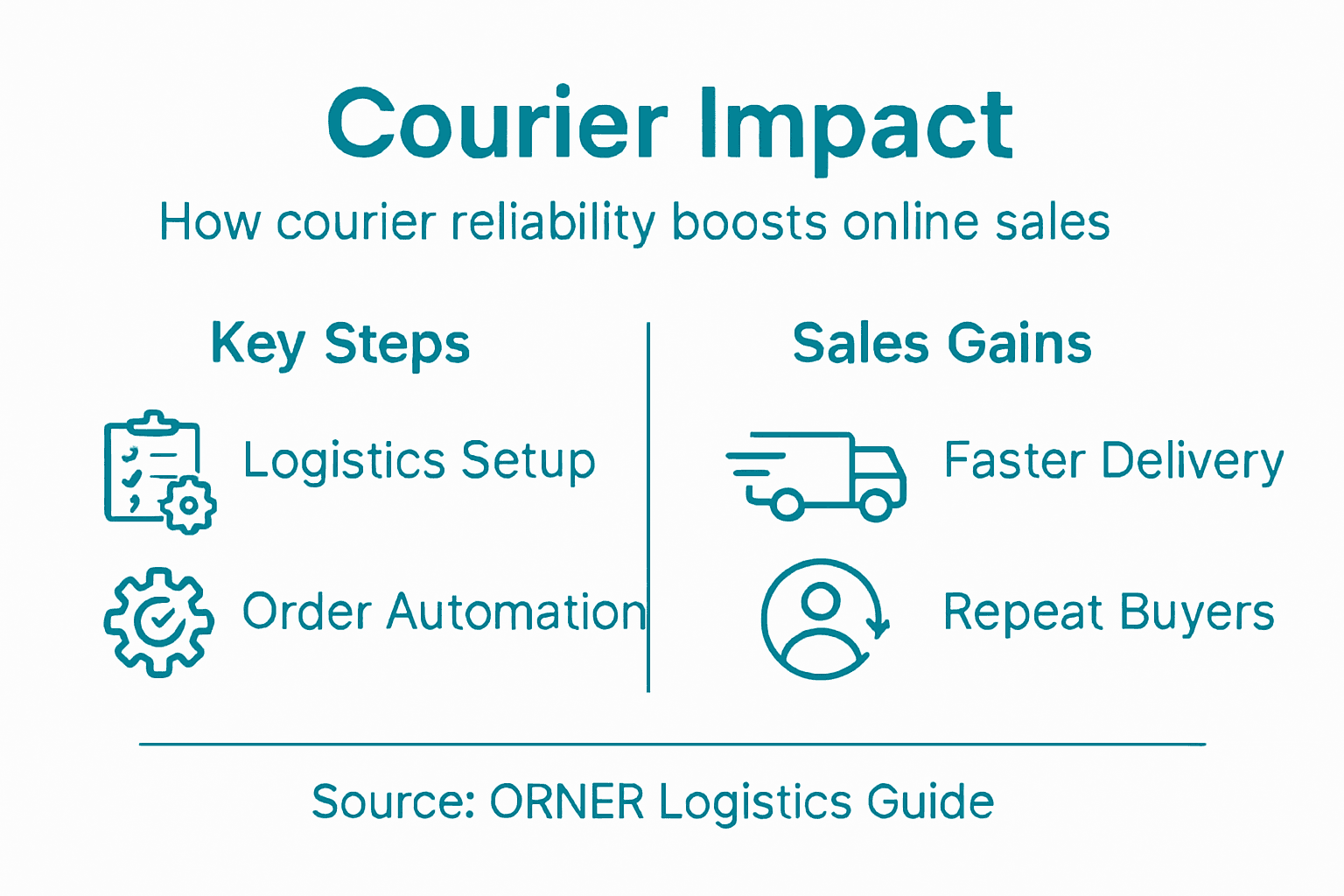
Comprehensive logistics performance analysis enables you to reduce inventory costs, optimize transportation expenses, and ensure timely deliveries that directly impact your bottom line. Develop a data-driven approach that connects your logistics performance with sales metrics to make informed strategic decisions.
Key analysis strategies include:
- Tracking shipping cost per order
- Correlating delivery speed with customer retention rates
- Measuring inventory turnover efficiency
- Analyzing return rates and associated expenses
- Identifying geographical shipping performance variations
Utilize advanced analytics tools to transform raw logistics data into actionable insights. Performance measurement techniques will help you understand how each aspect of your shipping process contributes to overall sales success.
Strategic logistics refinement can improve operational profitability by up to 25% and create significant competitive advantages.
Pro tip: Implement a quarterly logistics performance review that brings together data from shipping, sales, and customer feedback to create a holistic view of your operational effectiveness.
Here’s a summary of how each logistics improvement can impact your online sales performance:
| Step | Main Focus | Key Benefit | Typical Result |
|---|---|---|---|
| Integrated Logistics | Reliable delivery | Fewer shipping errors | Higher customer trust |
| Catalog Optimization | Clear product info | Easier buying choices | Lower cart abandonment |
| Fulfillment Automation | Faster order handling | Increased efficiency | Shorter delivery times |
| Delivery Tracking | Customer feedback | Targeted service updates | Better repeat rates |
| Sales Analysis | Data-driven improvement | Smarter logistics decisions | Higher profitability |
Elevate Your Online Sales with Reliable Courier Services and ORNER’s Tailored Logistics Solutions
Many ecommerce sellers face the challenge of unreliable courier services that cause delivery delays, shipping errors, and frustrated customers. As the article highlights, reliable courier services, integrated logistics, and streamlined fulfillment workflows are essential to reducing errors and improving customer satisfaction. If you want to transform your shipping process into a powerful sales driver, you need an all-in-one platform that delivers transparency, flexibility, and real-time control across all shipping modes.
At ORNER, we understand these pain points. Our comprehensive supply chain solutions are designed specifically for online sellers aiming to scale with confidence. Whether you need end-to-end freight booking, precise shipment tracking, or automation tools to optimize your fulfillment, ORNER is your partner for success. Discover how our global network of warehouses, data-driven analytics, and cross-border expertise can help you meet and exceed customer expectations.
Explore how we answer your logistics questions in our QA Archives to learn more about our specialized services.
Ready to stop losing sales due to shipping issues Let ORNER empower your ecommerce business with reliable courier services and smart logistics solutions today Visit ORNER’s main site to unlock faster delivery, increased customer trust, and scalable fulfillment that grows with your brand.
Frequently Asked Questions
How can reliable courier services increase my online sales?
Reliable courier services enhance customer satisfaction by ensuring timely and accurate deliveries. Improve your logistics by carefully selecting courier options that offer comprehensive tracking and proven reliability to build customer trust and encourage repeat purchases.
What steps should I take to set up integrated logistics for my online store?
Begin by selecting multiple courier partners to provide flexible shipping options and implementing robust tracking systems. Assess your shipping routes and negotiate competitive rates to ensure efficient delivery processes that scale with your business.
How do I optimize my product catalog for better shipping options?
Focus on improving your product data management by including high-quality images, clear descriptions, and real-time inventory updates. Standardize your product descriptions and shipping policies to create a seamless shopping experience that can reduce cart abandonment rates.
What automation strategies can I use to streamline order fulfillment?
Implement automated order processing tools that capture sales orders, validate inventory, and generate shipping labels quickly. By doing so, you can reduce manual processing times by up to 60%, enabling faster order fulfillment and improved customer experiences.
How can I measure customer satisfaction regarding delivery speed?
Utilize post-delivery satisfaction surveys and monitor on-time delivery percentages to gauge customer perceptions. This feedback can help you make targeted improvements in your shipping processes to ensure consistent delivery that meets customer expectations.
What metrics should I analyze to refine my logistics strategies?
Track shipping costs per order, correlate delivery speed with customer retention rates, and analyze return rates to understand your logistics performance. Conducting regular performance reviews can identify areas for improvement and lead to increased operational profitability.