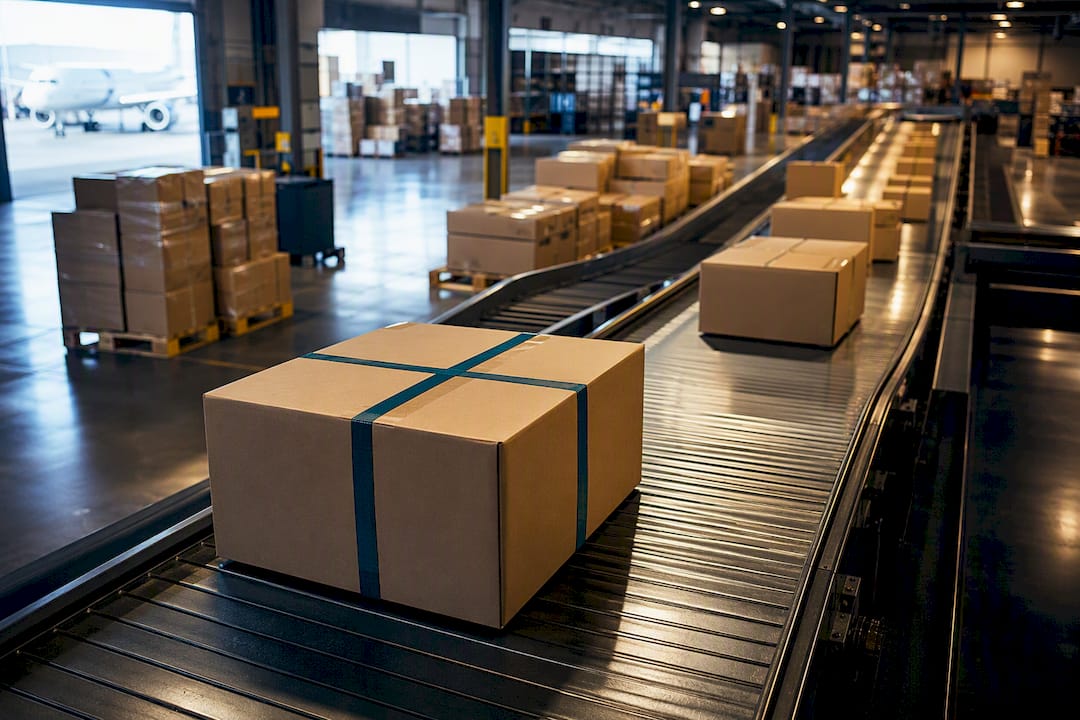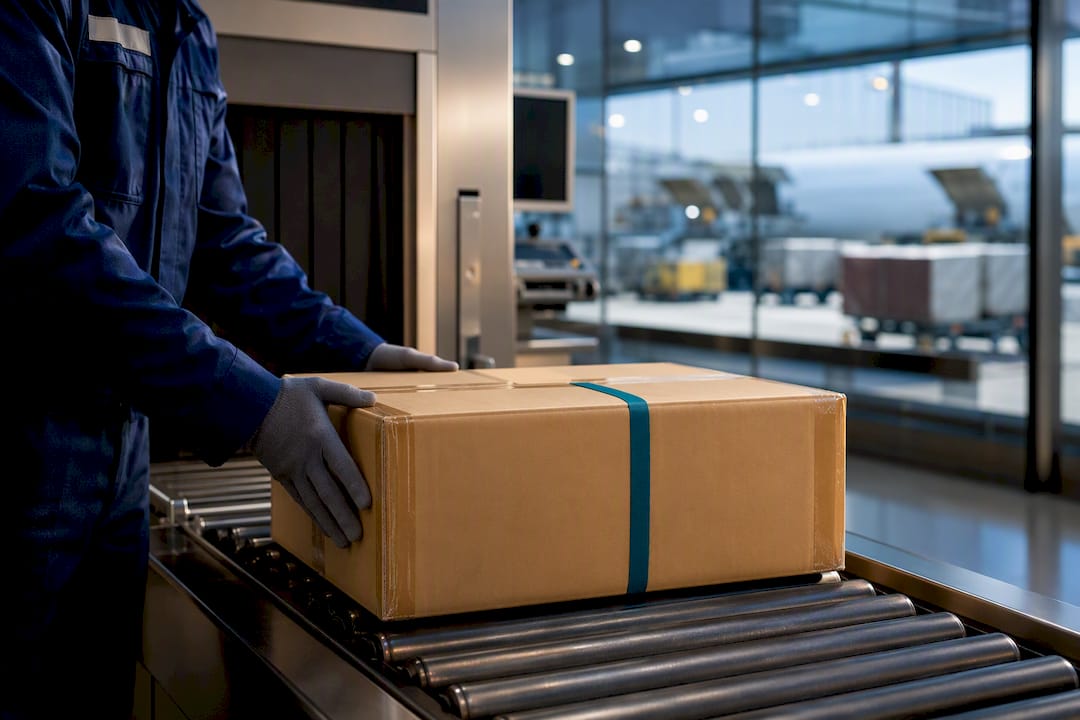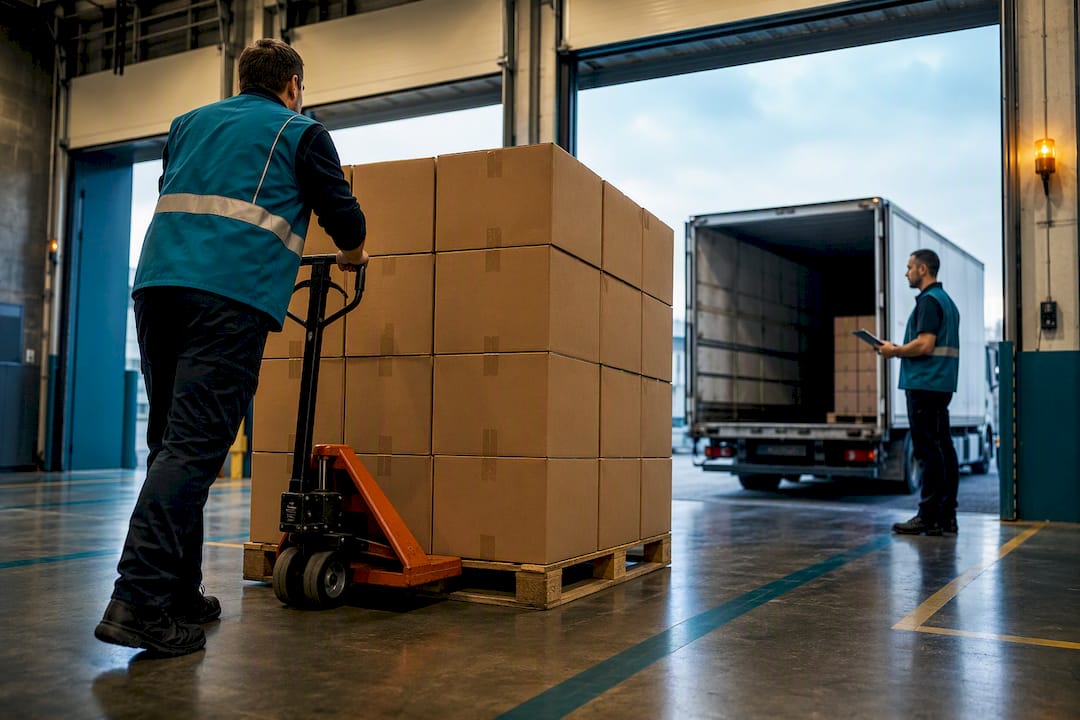

Finding the right logistics platform often feels like navigating a maze of hidden costs, unreliable delivery timelines, and confusing integration requirements. As cross-border shipping and inventory management become more demanding, mid-sized online retailers in the United States need solutions that deliver real visibility and control. This article sheds light on what sets global logistics platforms apart from basic shipping tools, clarifying their true role in managing goods, information, and finances across borders for your ecommerce operation.
Table of Contents
- Global Logistics Platforms Defined and Debunked
- Types of Logistics Solutions for Ecommerce
- Key Platform Features for Reliable Shipping
- Risks, Costs, and Common Pitfalls Explained
Key Takeaways
| Point | Details |
|---|---|
| Understanding Logistics Platforms | They are complex systems integrating various functions like inventory management, transportation, and documentation, not just basic shipping tools. |
| Choosing the Right Model | Evaluate your order volume and business needs to select between in-house, third-party logistics, or hybrid solutions for maximum efficiency. |
| Importance of Data | Reliable data flow is crucial; a logistics platform’s effectiveness hinges on real-time visibility and integration with existing systems. |
| Planning for Risks | Identify operational risks and cost escalations upfront; prepare contingency plans to address potential disruptions in logistics. |
Global Logistics Platforms Defined and Debunked
Global logistics platforms sound simple in name, but they’re far more complex than most ecommerce managers realize. These aren’t just software tools or shipping websites. They’re coordinated systems that orchestrate the movement of goods, information, and finances across borders and continents.
Coordinated systems enabling effective provision, storage, and transport of goods worldwide define what modern logistics platforms actually do. Your product doesn’t just move from point A to point B. Instead, it travels through interconnected networks of warehouses, carriers, customs brokers, and fulfillment centers, all communicating in real time.
Here’s where most people get it wrong:
- Myth 1: Logistics platforms are just shipping calculators. Reality: They manage transportation options, inventory visibility, customs documentation, and financial flows simultaneously.
- Myth 2: They only handle international shipments. Reality: They integrate domestic and cross-border logistics into one seamless operation.
- Myth 3: Bigger platforms are always better. Reality: The right platform matches your specific operational needs and scale.
- Myth 4: Setup is quick and painless. Reality: Implementation requires mapping your workflows, integrating with your systems, and training your team.
For mid-sized online retailers, the real value emerges when you stop thinking about logistics platforms as shipping solutions. Think of them as operational command centers. They give you visibility into where every SKU lives, how quickly it moves, what it costs, and where bottlenecks occur.
A logistics platform is only as useful as the data flowing through it—garbage in, garbage out.
The platform should connect directly to your ecommerce storefront, your warehouse management system, and your accounting software. When these systems talk to each other, you eliminate manual data entry, reduce errors, and make decisions based on real-time information rather than yesterday’s spreadsheets.
One critical distinction: reliability in logistics platforms means different things depending on context. For your business, reliable means consistent delivery windows, transparent tracking, accurate customs handling, and responsive support when something goes wrong. It’s not about fancy features you’ll never use.
When evaluating platforms, ask yourself what problems you’re actually trying to solve. Are you struggling with international shipping complexity? Is inventory visibility across multiple warehouses your pain point? Do you need faster cross-border order fulfillment? Your answer determines which platform capabilities matter most.
Pro tip: Start by mapping your current order flow from payment to delivery, noting every manual handoff and data entry point—this reveals exactly what a logistics platform should automate for your operation.
Types of Logistics Solutions for Ecommerce
You have three fundamental choices when it comes to handling logistics: do it yourself, outsource it completely, or split the work. Each approach has different costs, headaches, and payoffs depending on your business stage and ambitions.
In-House Fulfillment
Running your own warehouse and shipping operation gives you total control. You manage inventory, pick and pack orders, and coordinate shipments directly from your facility.
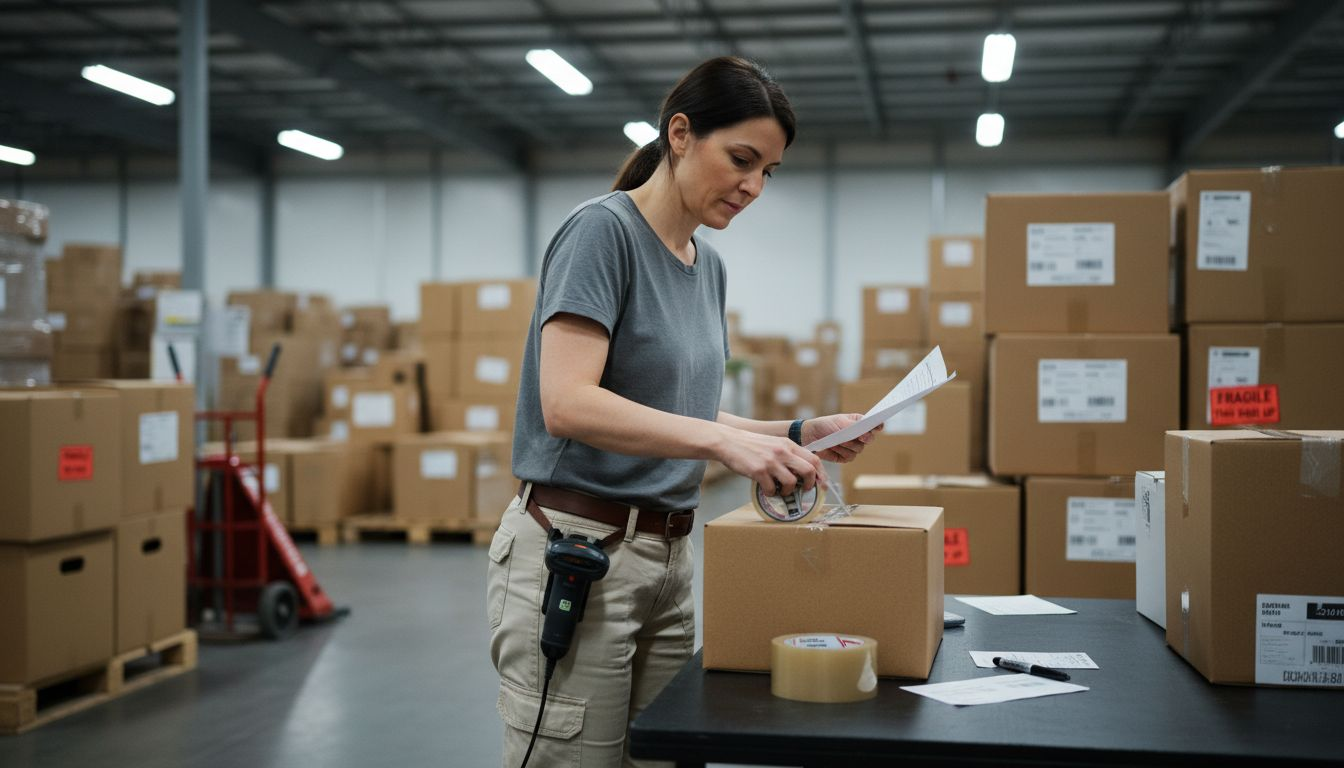
This works best when you have predictable order volume and enough cash flow to invest in space, staff, and equipment. Small retailers sometimes start here because the barrier to entry feels low—you just need a corner of your office or a small warehouse.
The reality kicks in fast. Labor costs climb, warehouse space becomes expensive, and you’re responsible for every operational failure. Holiday surges overwhelm small teams. International orders demand knowledge of customs documentation and carrier relationships.
Third-Party Logistics (3PL) Providers
Third-party logistics providers handle transportation and warehouse management by taking complete responsibility for your fulfillment. You send them inventory, and they ship orders to your customers.
This eliminates your facility overhead and staffing burden. Providers negotiate carrier rates at scale, so your per-unit shipping costs drop. They manage international logistics complexity, including customs clearance and last-mile delivery.
The tradeoff: less control over timing and less direct customer communication. 3PL relationships work best when you clearly define service level agreements and maintain regular communication.
Hybrid Models
Many mid-sized retailers use a mix. You might handle domestic orders in-house for speed and control, while outsourcing international shipments to specialists. Or you manage fast-moving SKUs yourself while 3PL handles slower inventory.
Hybrid models require more coordination but offer flexibility as your business grows.
Here’s a comparison of ecommerce logistics solution strategies and their business implications:
| Solution Type | Best For | Cost Dynamics | Scalability | Challenges |
|---|---|---|---|---|
| In-House Fulfillment | Small, stable operations | High fixed costs | Limited by space and staff | Seasonal overload, compliance complexity |
| Third-Party Logistics (3PL) | Growing, multi-region retailers | Lower upfront, variable costs | Easily adjustable for volume spikes | Less direct control, contract pitfalls |
| Hybrid Model | Mid-sized, flexible businesses | Balanced, customizable costs | Adaptable as business expands | Coordination demands, system integration |
Key Differences Across Solutions
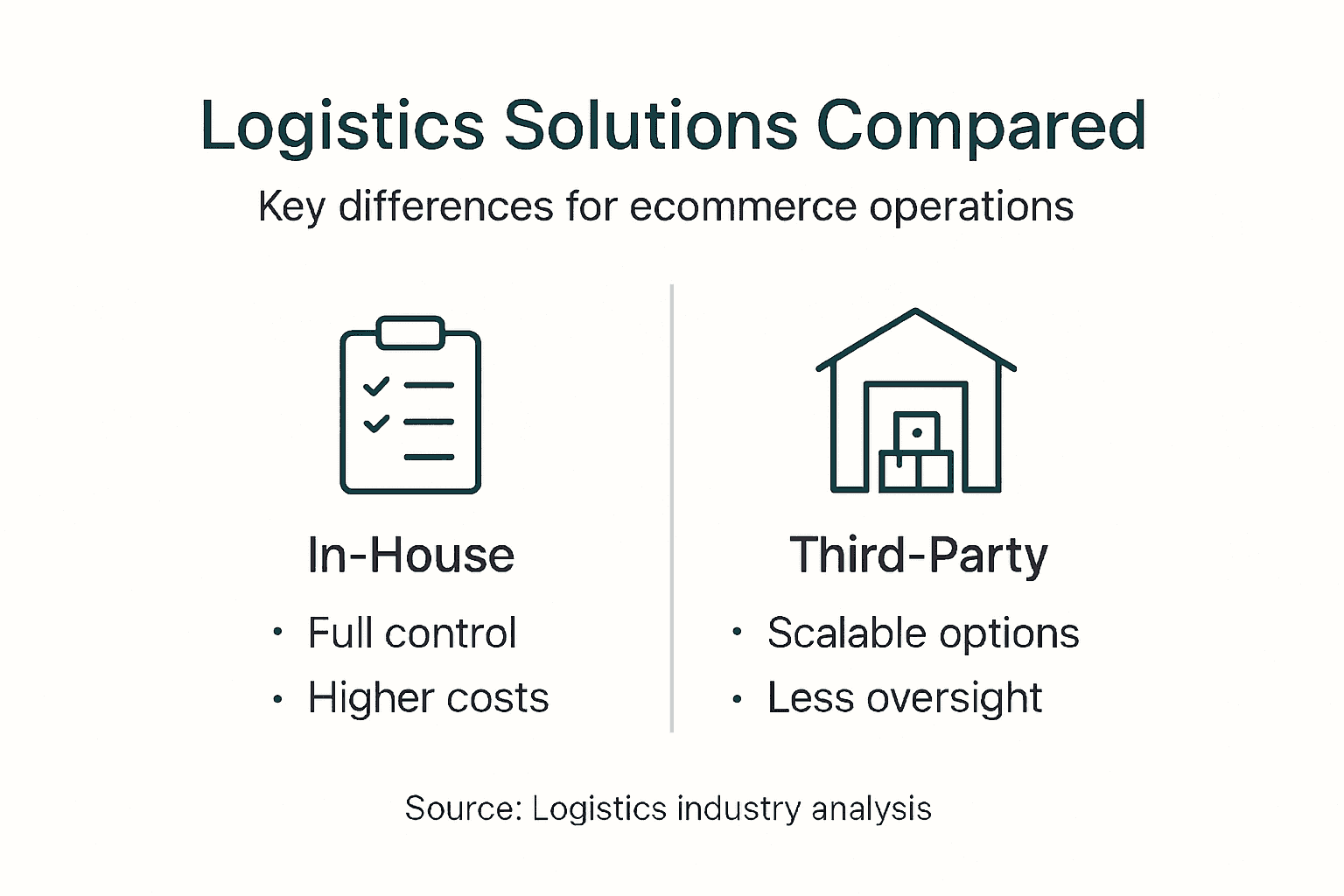
- In-House: Full control, high operational cost, requires staff and space
- 3PL: Low operational cost, less control, better scale economics
- Hybrid: Balanced control and cost, requires stronger coordination
Your logistics solution should flex as your business grows—what works at $50K monthly revenue won’t work at $500K.
Integrated supply chain management ensures whichever solution you choose actually connects to your inventory system, accounting software, and customer platform. Siloed operations hide problems until they become disasters.
The right choice depends on your current order volume, growth projections, and cash position. Don’t overcomplicate this decision—start with what you can afford now and upgrade when pain points force the issue.
Pro tip: Calculate your total fulfillment cost per order for each model before deciding—include labor, space, shipping discounts, and software—then choose the option with the lowest cost that still meets your delivery speed expectations.
Key Platform Features for Reliable Shipping
Not all logistics platforms deliver the same level of reliability. The difference comes down to specific features that either give you visibility and control or leave you guessing what’s happening with your shipments.
Real-Time Shipment Tracking
You need to know where every package is at every moment. Real-time shipment tracking across all carriers lets you see status updates instantly, not hours later when a customer calls complaining.
This isn’t just about customer satisfaction. Real-time data reveals bottlenecks fast. If packages consistently slow down at a specific port or carrier facility, you spot the pattern and fix it before it becomes a crisis.
Good tracking platforms integrate with multiple carriers simultaneously. One dashboard shows USPS, UPS, FedEx, and international carriers in the same view. You don’t switch between vendor portals or check separate websites.
End-to-End Visibility
Tracking a package from warehouse to delivery is the baseline. Real visibility goes deeper. You see inventory levels across all your warehouses in real time, flag slow-moving stock before it ties up capital, and watch how long items sit waiting for fulfillment.
End-to-end shipment visibility connects your inventory system, order management, fulfillment operations, and carrier data into one unified picture.
This prevents the nightmare scenario where you sell something, discover it’s out of stock at your warehouse, scramble to find inventory elsewhere, and miss your delivery promise window.
Multimodal Integration
Your shipments don’t travel one way. A single order might move by ground truck, then air cargo, then last-mile delivery. Platforms that track across transportation modes show the complete journey, not just snapshots.
Multimodal tracking matters for international orders especially, where packages hand off between ocean freight, air cargo, customs brokers, and ground carriers.
Key Features to Prioritize
- Real-time tracking across all carriers and modes
- Inventory synchronization with fulfillment centers
- Customizable alerts for delays, exceptions, and bottlenecks
- Analytics dashboards showing performance by carrier, route, and destination
- API integrations with your ecommerce platform and accounting software
- Mobile accessibility so you manage logistics from anywhere
A platform without actionable data is just a beautiful interface.
You need more than just seeing where packages are. The platform should flag problems automatically, suggest better routes or carriers, and help you predict delays before they happen.
When evaluating platforms, ask what data gets exported and how easily. Can you pull custom reports? Does the system integrate with your existing tools, or does it create more isolated silos?
Pro tip: Test the platform’s alert system first by creating scenarios where shipments get delayed or stuck—if you can’t get clear, actionable notifications, the visibility won’t help when problems actually occur.
Risks, Costs, and Common Pitfalls Explained
Relying on a global logistics platform sounds smart until something breaks. Then you discover hidden costs, discover dependencies you didn’t know existed, and watch your delivery promises crumble in real time.
Operational Risks
Geopolitical disruptions, operational failures, and natural disasters create immediate threats to logistics reliability. A port strike in Los Angeles halts your ocean freight. A hurricane grounds air cargo. A customs system malfunction delays clearance for days.
Most retailers don’t plan for these scenarios until they happen. By then, you’re reactive instead of prepared. Customers don’t care about port strikes—they care about their packages arriving on time.
Operational risk also includes system failures. If your platform crashes or your 3PL’s warehouse management system goes down, you lose visibility immediately. Orders pile up. Customers get no updates. You scramble to figure out what’s actually in stock.
The following table summarizes the risks and mitigation approaches for global logistics platform use:
| Risk Source | Impact | Example Scenario | Mitigation Approach |
|---|---|---|---|
| Geopolitical Disruption | Delivery delays, lost goods | Port strike halts shipments | Diversify carriers, contingency planning |
| Cost Escalation | Margin reduction | Unexpected fuel surcharges | Regular cost reviews, flexible contracts |
| Technology Failure | Lost visibility, order backlog | Platform outage prevents tracking | Backup systems, manual override capabilities |
| Supplier Dependency | Limited alternatives, price hikes | Carrier bankruptcy interrupts service | Multi-vendor relationships, frequent audits |
Cost Escalation Traps
Hidden costs appear slowly. A platform charges per shipment, per API call, and per custom report. Your fulfillment partner adds surcharges for residential deliveries, weekend handling, and zone changes. Carrier rates climb when fuel prices spike.
Worst case: you discover these costs too late. You’ve already built pricing models around lower assumptions. Suddenly your 25% margin shrinks to 18% because fulfillment costs doubled.
Inadequate coordination across multimodal transport creates cascading cost problems. When your ground carrier doesn’t sync with your air freight provider, packages sit idle between handoffs. That idle time costs money and misses delivery windows.
Supplier Dependency Risk
Relying on one 3PL or one primary carrier creates vulnerability. If that provider has capacity issues, goes out of business, or raises rates aggressively, you have limited options mid-contract.
Mid-sized retailers often can’t negotiate their way out without significant pain. You’re locked in for volume commitments or contract terms you can’t break easily.
Common Pitfalls to Avoid
- Ignoring integration gaps between your ecommerce platform and logistics provider
- Underestimating setup time for proper configuration and staff training
- Skipping performance metrics before signing long-term contracts
- Failing to plan for exceptions like peak season surges or carrier failures
- Overlooking regulatory changes that affect customs or cross-border shipping
- Not budgeting for contingencies when primary solutions fail
The platform that saves you money today can cost you customers tomorrow if you ignore reliability.
Regulatory non-compliance and complex legal environments create serious exposure. Tariff classifications change. Shipping restrictions evolve. Currency fluctuations affect pricing. Your platform and partner need to stay current with these changes automatically, not manually.
Start with smaller partnerships or pilot programs. Test the platform with limited volume before betting your entire operation on it. Verify that costs actually match quotes. Check that their service levels hold up under real pressure.
Pro tip: Build a documented contingency plan for your top three shipping risks—port closures, platform outages, carrier bankruptcy—so you can activate backup solutions in hours instead of days when crisis hits.
Unlock Reliable Courier Services with Or-Ner for Seamless Global Logistics
Managing complex global logistics platforms demands more than just tracking shipments. You need an operational command center that unifies real-time inventory visibility, multimodal transport integration, and proactive exception management. The challenges of customs clearance, unpredictable disruptions, and costly hidden fees can overwhelm even experienced ecommerce sellers. That is why selecting a logistics partner who offers end-to-end solutions with data-driven insights is essential to keep your promises and protect your margins.
Experience how Or-Ner transforms logistics headaches into scalable growth opportunities. Our platform empowers merchants, wholesalers, and manufacturers with tools for freight booking, inventory synchronization, and transparent courier services tailored to your specific needs. Start simplifying your cross-border shipping today with reliable courier services trusted by global brands and integrated with ecommerce leaders like Amazon. Don’t wait to upgrade your fulfillment strategy—explore how Or-Ner’s real-time shipment tracking and customs clearance solutions deliver reliability when it matters most.
Frequently Asked Questions
What are global logistics platforms?
Global logistics platforms are coordinated systems that manage the movement of goods, information, and finances across international borders. They enable seamless shipping operations by integrating various components like warehousing, carriers, and customs processes.
How do I choose the right logistics platform for my business?
Choosing the right logistics platform requires understanding your specific operational needs and challenges. Consider factors such as international shipping complexity, inventory visibility, and delivery speed requirements when evaluating potential platforms.
What are the advantages of using third-party logistics (3PL) providers?
Third-party logistics (3PL) providers handle transportation and warehouse management, allowing businesses to eliminate facility overhead and staffing burdens. They can also negotiate better shipping rates and manage complex customs regulations, making logistics more efficient.
What key features should I look for in a logistics platform?
Key features to prioritize include real-time shipment tracking, end-to-end visibility, multimodal integration, customizable alerts for delays, and API integrations with your existing systems to ensure seamless operations.