TL;DR:
- Global freight involves coordinated movement of cargo across borders using multiple transport modes, managed by freight forwarding companies. Choosing the right mode, ensuring accurate documentation, and partnering with experienced forwarders can optimize costs and transit times. Effective handling of exceptions and process improvements are critical to successful international shipping outcomes.
Global international freight is the coordinated movement of commercial cargo across borders using air, ocean, road, and rail, managed end-to-end by a freight forwarding company to handle booking, consolidation, customs clearance, and final delivery. If you’re a U.S. shipper ready to move cargo now, the fastest path forward is to request a lane-specific quote from Or-ner, which covers the full global freight solutions stack from origin pickup through U.S. customs and last-mile drop. This guide, written by Maayan, walks through every operational layer so your team knows exactly what to expect and what to ask.
Table of Contents
- How does global international freight actually work, step by step?
- Which transport mode fits your shipment’s timeline and budget?
- What drives international freight costs, and how can you control them?
- What customs documents do U.S. importers and exporters need?
- How do you choose the right freight forwarder for your lanes?
- Why Or-ner works as an end-to-end option for U.S. businesses
- Key Takeaways
- The thing most shippers underestimate about international freight
- Ready to move cargo? Here’s how to start with Or-ner
- Useful sources and Or-ner resources
- FAQ
How does global international freight actually work, step by step?
Understanding the sequence is half the battle. Delays and cost overruns almost always trace back to a handoff that nobody owned clearly.
- Inquiry and quote. Share your cargo details (weight, dimensions, HS codes, origin/destination) with your forwarder. A good quote comes back with mode options, transit ranges, and a landed-cost breakdown.
- Booking and scheduling. The forwarder secures space with the carrier. For ocean, booking lead time is typically 1–2 weeks ahead of vessel departure; for air, 48–72 hours is common but tighter on peak lanes.
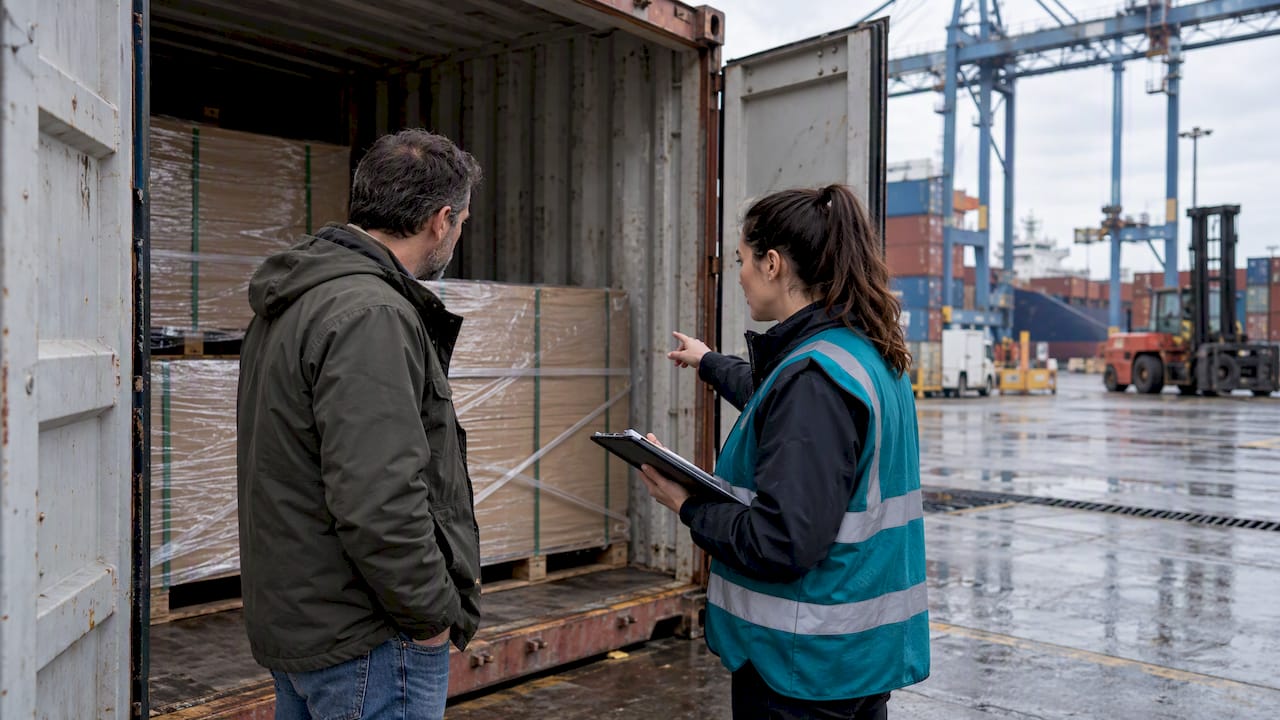
- Pickup and origin documentation. The forwarder arranges drayage or trucking from your facility to the port or airport. Commercial invoice, packing list, and export declaration must be ready before pickup.
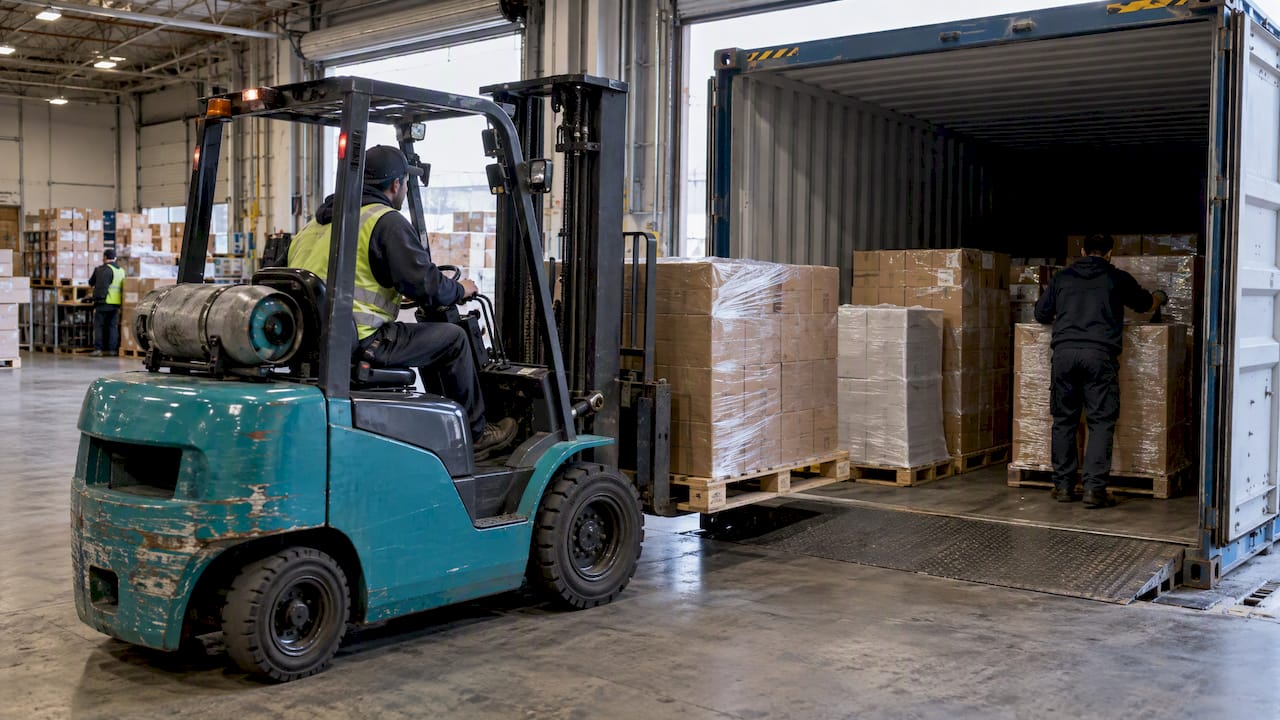
- Consolidation or FCL handling. Less-than-container-load (LCL) cargo gets consolidated with other shippers’ freight at a container freight station (CFS). Full-container-load (FCL) goes directly to the terminal. CFS dwell adds 2–5 days on average.
- International transport. The main leg: ocean vessel, freighter aircraft, rail, or truck depending on mode. This is where the bulk of transit time accumulates.
- Arrival and customs clearance. At the U.S. port of entry, your customs broker files the entry, CBP reviews documentation, and cargo is released. This step takes 1–3 days when documents are clean; holds can stretch it significantly longer.
- Domestic pickup and last-mile delivery. After customs release, drayage moves the container to your warehouse or fulfillment center. Last-mile timing depends on destination and carrier capacity.
Pro Tip: Pre-lodge your customs entry before the vessel arrives. CBP allows advance filing, and doing so cuts port dwell by a day or more on most lanes — one of the highest-ROI process fixes available to U.S. importers.
The freight forwarding procedure guide from Or-ner covers each step with document templates and lane-specific notes.
Which transport mode fits your shipment’s timeline and budget?
Transit times vary widely by overseas freight transport mode, and picking the wrong one is an expensive mistake in either direction.

| Mode | Typical transit time | Cost level | Best use case |
|---|---|---|---|
| Air freight | 1–7 days | High | Urgent, high-value, or time-sensitive cargo |
| Ocean (FCL) | 14–40 days | Low | High-volume, lower-value bulk shipments |
| Ocean (LCL) | 14–45 days (including dwell) | Low–Medium | Smaller volumes not filling a full container |
| Road/truck | up to 7 days | Medium | Cross-border North America, short-haul Europe |
| Rail | 15–25 days | Medium | Asia-Europe corridors, inland China origins |
Several factors move these ranges significantly. Port congestion, seasonal peaks (Q4 and Chinese New Year are the two biggest), and carrier network changes all affect actual door-to-door time. Carriers regularly reposition freighter capacity to match regional demand, which can shorten transit on some lanes while increasing capacity risk on others. On certain Asia-to-U.S. lanes, combining inland rail with an ocean leg actually beats a pure ocean routing by several days.
For urgent electronics, air is the only real answer despite the cost premium. For seasonal home goods or apparel, ocean FCL booked well ahead of peak is almost always the right call.
What drives international freight costs, and how can you control them?
Price is a function of mode, weight, volume, and a stack of surcharges that can add 20–40% on top of the base rate if you’re not watching them.
Primary cost drivers:
- Mode and distance: Air costs roughly 4–6 times ocean on a per-kilogram basis for most trans-Pacific lanes.
- Dimensional vs. actual weight: Carriers charge whichever is higher. Loose, bulky packaging inflates dimensional weight fast.
- FCL vs. LCL: LCL is priced per cubic meter or weight ton; FCL is a flat container rate. The break-even point is typically around 15 CBM.
- Fuel surcharges: Fluctuate with oil markets and are quoted separately from base rates.
- Peak-season surcharges: Carriers add these during Q4 and around major holidays.
- Port and terminal handling fees: Origin and destination terminal handling charges (THC) are real costs often buried in fine print.
- Customs brokerage and duties: U.S. import duties depend on HS code and country of origin; brokerage fees are separate.
| Cost factor | Shipper-controllable | Market-driven |
|---|---|---|
| Packaging density | ✓ | |
| Consolidation timing | ✓ | |
| Documentation accuracy | ✓ | |
| HS code classification | ✓ | |
| Fuel surcharges | ✓ | |
| Carrier capacity | ✓ | |
| Seasonal demand | ✓ | |
| Port congestion fees | ✓ |
Pro Tip: Audit your packing density before every major shipment. Reducing dimensional weight by 10–15% through better carton sizing often saves more than a full round of rate negotiation.

What customs documents do U.S. importers and exporters need?
Clean documentation is what separates a 24-hour customs release from a 10-day hold. The cross-border shipping process at U.S. ports of entry requires a specific set of records, and missing even one triggers a delay.
Core document checklist:
- Commercial invoice (accurate value, seller/buyer details, HS codes, country of origin)
- Packing list (quantities, weights, dimensions per line item)
- Bill of lading (ocean) or air waybill (air)
- Importer of record (IOR) information and bond
- HS (Harmonized System) tariff codes for every line item
- Country of origin declaration
- Any required import licenses or permits (varies by product category)
The three most common triggers for CBP inspections are misdeclared value, incorrect HS codes, and missing licenses for regulated goods. Misdeclared value is the fastest route to penalties; CBP cross-references invoice values against trade data. Incorrect HS codes don’t just cause delays — they can result in duty underpayment assessments. For regulated categories (food, electronics, textiles), missing permits can mean cargo is refused entry entirely.
Operational gains in cross-border shipping consistently come from process fixes like accurate HS codes and pre-lodged entries rather than from rate negotiation alone. Or-ner’s customs resources walk through U.S.-specific compliance requirements in detail.
How do you choose the right freight forwarder for your lanes?
The wrong forwarder costs you more than their fee. Here’s a practical framework for evaluating vendors.
Selection criteria to score:
- Global network coverage and local agent presence at your key origins
- Demonstrated lane experience (not just “we cover 200 countries”)
- U.S. customs expertise and in-house brokerage capability
- Real-time digital tracking and exception alerts
- Transparent pricing with surcharge disclosure upfront
- Clear liability limits and cargo insurance options
- Defined SLAs for claims and exception resolution
12 questions to ask on a vendor call:
- What is your typical transit time on my specific lane?
- Do you have local staff or a vetted agent at the origin port?
- Who acts as importer of record, and what’s your bond arrangement?
- How do you handle customs holds — what’s the escalation process?
- Which carrier networks or vessel services do you use on this lane?
- For air shipments, which service stream will my cargo ride — priority or deferred?
- What surcharges are not included in your base quote?
- What is your cargo insurance coverage and claims SLA?
- How do you provide shipment visibility — portal, API, or email updates?
- What’s your process when a shipment misses a vessel or flight?
- Can you provide references from shippers with similar cargo profiles?
- What are your contract terms and minimum volume commitments?
Red flags: No local presence at origin, surcharges disclosed only after booking, no digital tracking portal, vague or verbal SLAs, and reluctance to name the actual carriers used on your lane.
Asking which air freight service stream your cargo will ride on is particularly revealing. Carriers segment networks into priority, deferred, and lower-priority streams; the difference materially affects both transit time and the risk of being bumped when capacity tightens.
Why Or-ner works as an end-to-end option for U.S. businesses
Or-ner covers the full international cargo shipping workflow: freight booking across air, ocean, and road; customs clearance and documentation support; cross-border warehousing; real-time shipment tracking; and ecommerce integrations including Amazon. That combination matters because most delays happen at handoffs between providers, and a single-platform setup eliminates most of them.
Or-ner’s core capabilities for international freight:
- End-to-end freight booking (air, ocean, road)
- Customs clearance and documentation management
- Cross-border warehousing and fulfillment
- Real-time tracking with exception alerts
- Ecommerce platform integrations
Typical onboarding steps:
- Account setup and lane profile (origins, destinations, typical cargo types)
- Provide commercial documents (invoice templates, HS code list, IOR details)
- Pilot shipment on a single lane to validate transit times and documentation flow
- Scale to additional lanes with established templates
Or-ner’s documented case result shows a 25% reduction in delivery times on a global forwarding engagement. For procurement teams evaluating providers, the practical next step is requesting a lane-specific quote, running a pilot on one SKU, or scheduling an onboarding call to map your current lanes against Or-ner’s network.
Key Takeaways
Choosing the right mode, keeping documentation clean, and working with a forwarder who has genuine lane experience are the three levers that most directly control cost and transit time in global international freight.
| Point | Details |
|---|---|
| Mode selection rule | Air for urgent/high-value; ocean FCL for bulk volume booked ahead of peak season. |
| Biggest cost levers | Packaging density, consolidation timing, and HS code accuracy are shipper-controllable; fuel and capacity are not. |
| Documentation must-haves | Commercial invoice, packing list, bill of lading, IOR info, HS codes, and any required licenses. |
| Transit time expectations | Air: 1–7 days; ocean FCL: 14–40 days; ocean LCL: 14–45 days; road: up to 7 days; rail: 15–25 days. |
| Or-ner track record | Or-ner cut delivery times by 25% on a documented global forwarding engagement. |
The thing most shippers underestimate about international freight
The freight industry sells on rate. Shippers buy on rate. And then they spend the next six months chasing delays, holds, and surcharge invoices they didn’t see coming.
The real differentiator in a forwarder isn’t the base quote — it’s what happens when something goes wrong. A vessel misses its window. CBP flags a hold. A consignee address is wrong. The forwarders who handle those moments well have local staff at origin, a customs team that picks up the phone, and a tracking system that flags the exception before you have to ask. The ones who don’t have any of those things will give you the lowest rate on the quote sheet.
Documentation accuracy is the other underrated lever. Getting HS codes right, pre-lodging entries, and standardizing packing lists across your supplier base will do more for your landed cost and transit consistency than almost any rate negotiation. It’s unglamorous work, but it’s where the actual gains are.
Ready to move cargo? Here’s how to start with Or-ner
Or-ner gives U.S. businesses a single point of contact for the entire international freight chain, from origin booking through customs clearance to last-mile delivery, without the fragmented handoffs that slow most shipments down. The concrete advantage over piecing together separate forwarders, brokers, and carriers is visibility and accountability in one place.
To get an accurate quote, have the following ready: cargo weight and dimensions, HS codes for each product line, pickup and delivery postcodes, and your preferred Incoterm. With that information, Or-ner can return a lane-specific quote with mode options and a realistic transit range.
Start with reliable courier services for U.S. lanes, or reach out directly through the Or-ner website to schedule a freight assessment and map your current lanes against Or-ner’s network.
Useful sources and Or-ner resources
- Global Freight Solutions: What U.S. Shippers Need to Know — Or-ner’s lane-level overview for U.S. importers and exporters, covering mode selection and customs considerations.
- Freight Forwarding Procedure: Global Shipping Guide — Step-by-step workflow with document templates for each stage of an international shipment.
- Customs Clearance Explained — Detailed U.S. import/export compliance guidance, including document checklists and CBP requirements.
- International Freight Shipping: A Comprehensive Guide — Broad overview of freight processes, documentation requirements, and operational best practices.
- International Shipping Explained: Rates, Customs & Complete Guide — Covers transit time ranges by mode and cost tradeoffs for U.S. shippers.
- Global Forwarding Solutions Cut Delivery Times 25% — Or-ner case study documenting operational impact on a global forwarding engagement.
FAQ
How does international freight work?
International freight shipping moves goods across borders through a sequence of steps: quote, booking, origin pickup, consolidation or FCL handling, international transport, customs clearance, and last-mile delivery, coordinated by a freight forwarder who manages carriers, documentation, and compliance at each stage.
How long does international freight take?
Air freight typically takes 1–7 days; ocean FCL runs 14–40 days depending on the lane; LCL timing is usually 14–45 days accounting for consolidation dwell time. Road shipments take up to a week, and rail on Asia-Europe corridors averages 15–25 days.
Is DGF the same as DHL?
DGF stands for DHL Global Forwarding, which is the freight forwarding division of DHL Group focused on air, ocean, and rail freight. It is distinct from DHL Express, which handles time-definite parcel and document delivery; the two operate separate networks and service models.
What is FedEx Global air freight?
FedEx operates one of the world’s largest cargo air networks, with its global hub in Memphis and international hubs across Asia, Europe, and the Middle East. Its air freight services are segmented into priority and deferred streams, and shippers should confirm which stream their cargo is assigned to, since the difference affects both transit time and the risk of being bumped during peak capacity periods.
What’s the difference between a freight forwarder and a courier?
A freight forwarder manages large commercial shipments across international borders, handling booking, consolidation, customs clearance, and multi-modal transport. A courier handles smaller, typically pre-packaged parcels with door-to-door express delivery; the distinction between courier and freight matters for cost, documentation requirements, and which service fits your shipment size.