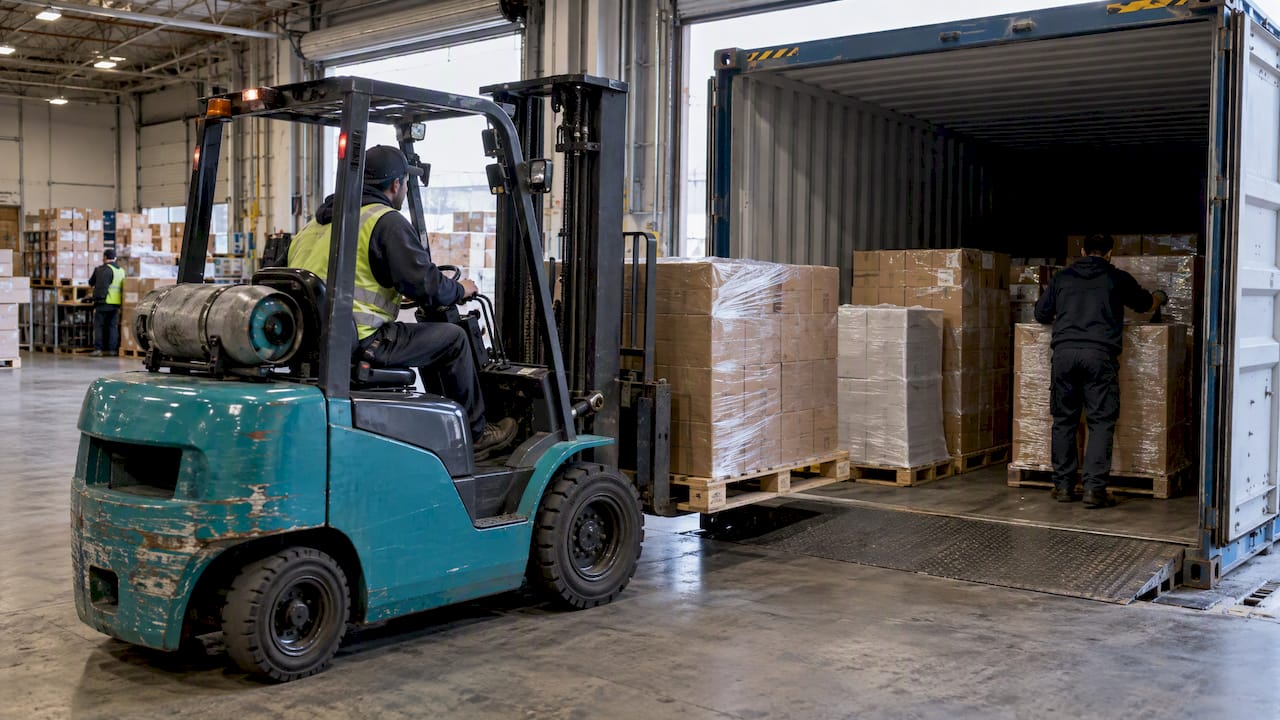
Managing inventory and shipping can quickly become overwhelming for American ecommerce merchants aiming to deliver fast, accurate orders. The choice of fulfillment strategy directly affects customer satisfaction, business flexibility, and profit margins. Fulfillment by Merchant gives sellers complete control over order processing, inventory tracking, and every stage of delivery, creating opportunities for customization and operational efficiency. Explore what makes this approach a strong option for businesses focused on reliability and control.
Table of Contents
- Fulfillment By Merchant Defined
- Types And Processes Of FBM Shipping
- Core Responsibilities For Merchant Fulfillment
- Risks And Challenges Of FBM Operations
- FBM Vs. FBA: Key Comparisons
Key Takeaways
| Point | Details |
|---|---|
| Complete Control | Fulfillment by Merchant allows sellers to manage their inventory and customer relationships directly, offering greater operational control. |
| Cost Efficiency | FBM typically involves lower upfront costs compared to Fulfillment by Amazon, making it favorable for smaller sellers. |
| Critical Responsibilities | Successful FBM requires effective inventory management, order processing, quality control, and customer service to ensure operational efficiency. |
| Risk Management | Sellers must proactively address potential risks associated with inventory management, shipping, and compliance to maintain smooth operations. |
Fulfillment by Merchant Defined
Fulfillment by Merchant (FBM) represents a direct order management strategy where online sellers personally handle all aspects of product storage, packaging, and shipping. Unlike third-party fulfillment services, merchants maintain complete control over their inventory and distribution processes. Fulfillment operations management confirms this approach allows businesses to manage their entire order workflow independently.
In the FBM model, merchants are responsible for critical steps including inventory management, order processing, product picking, packaging, and shipping products directly to customers. This hands-on approach provides significant advantages for smaller online sellers or businesses with specialized product requirements. Order fulfillment processes involve multiple interconnected steps that require strategic coordination and precise execution.
Key characteristics of Fulfillment by Merchant include:
- Total inventory control
- Direct customer relationship management
- Flexible shipping strategies
- Lower initial operational costs
- Ability to customize packaging and handling
Successful FBM implementation demands robust logistics infrastructure, efficient warehouse management, and streamlined shipping protocols. Merchants must invest in technology and systems that enable rapid order processing, accurate tracking, and consistent customer communication.
Pro tip: Invest in warehouse management software that integrates inventory tracking, shipping label generation, and customer communication to optimize your Fulfillment by Merchant operations.
Types and Processes of FBM Shipping
Fulfillment by Merchant (FBM) shipping encompasses several distinct operational approaches that enable online sellers to manage their entire order fulfillment workflow independently. Order processing workflows highlight the critical steps merchants must navigate to successfully deliver products to customers.
Merchants typically employ three primary picking strategies to efficiently manage inventory and order processing:
- Piece Picking: Processing individual orders one at a time
- Batch Picking: Collecting items for multiple orders simultaneously
- Zone Picking: Dividing warehouse space into specialized sections for faster retrieval
Order processing techniques require merchants to master multiple interconnected steps, including precise inventory management, secure packaging, and strategic shipping carrier selection. Successful FBM shipping demands meticulous attention to detail across each phase of order fulfillment.
The comprehensive FBM shipping process typically involves:
- Receiving customer order
- Verifying product availability
- Selecting and retrieving items from inventory
- Carefully packaging products
- Generating shipping labels
- Preparing packages for carrier pickup or dropoff
- Tracking and confirming delivery
American online sellers utilizing FBM must develop robust systems that enable quick, accurate order processing while maintaining high customer satisfaction standards. This requires investment in warehouse management technology, efficient inventory tracking, and streamlined shipping protocols.

Pro tip: Implement barcode scanning and inventory management software to reduce picking errors and accelerate your FBM shipping processes.
Core Responsibilities for Merchant Fulfillment
Merchant fulfillment requires a comprehensive approach to managing every aspect of product delivery, from initial inventory management to final customer satisfaction. Fulfillment operations management emphasizes the critical nature of end-to-end logistics control for online sellers.
The core responsibilities for merchants encompass several key operational domains:
- Inventory Management: Maintaining accurate stock levels
- Order Processing: Efficiently handling customer purchases
- Quality Control: Ensuring product condition and accuracy
- Shipping Coordination: Selecting optimal carrier and delivery methods
- Customer Service: Managing post-purchase communication and support
Perfect order fulfillment strategies highlight the importance of precision in each operational stage. Merchants must develop robust systems that minimize errors, reduce processing time, and maintain high standards of product handling and customer experience.
Here is a concise summary of merchant fulfillment responsibilities and their impact on business efficiency:
| Responsibility Area | Key Function | Impact on Efficiency |
|---|---|---|
| Inventory Management | Stock monitoring and updates | Prevents stockouts, reduces delays |
| Order Processing | Handling sales transactions | Faster turnaround, higher accuracy |
| Quality Control | Product inspection | Fewer returns, better reputation |
| Shipping Coordination | Carrier management | Reliable deliveries, lower costs |
| Customer Service | Handling inquiries | Improved satisfaction, repeat sales |
Successful merchant fulfillment demands continuous optimization of multiple interconnected processes. This includes demand forecasting, strategic inventory positioning, efficient warehouse layout design, and implementing technology that supports real-time tracking and management. American sellers must remain agile, constantly adapting their fulfillment strategies to meet evolving market demands and customer expectations.
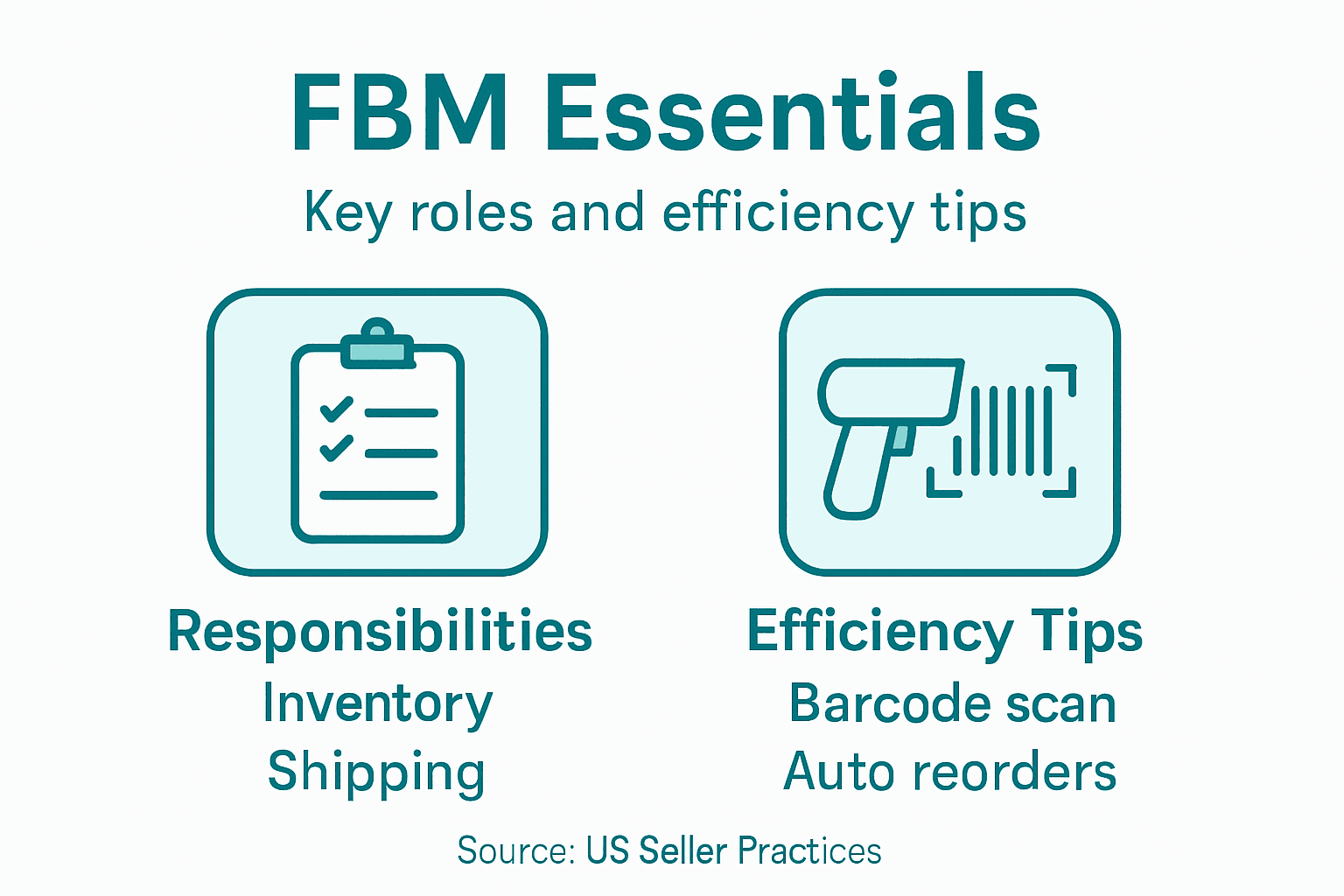
Pro tip: Implement a comprehensive inventory management system that provides real-time tracking and automated reorder alerts to prevent stockouts and optimize your fulfillment efficiency.
Risks and Challenges of FBM Operations
Fulfillment by Merchant (FBM) operations present a complex landscape of potential risks that require strategic management and proactive planning. Supply chain risk management reveals multiple dimensions of potential operational challenges for online sellers.
Merchants face several critical risk categories in their FBM operations:
- Operational Risks: Inventory management failures
- Economic Risks: Price volatility and market fluctuations
- Logistical Risks: Shipping delays and transportation disruptions
- Quality Control Risks: Product damage and inconsistent handling
- Regulatory Risks: Changing compliance requirements
Complex supply chain management demonstrates that independent merchants must develop robust risk mitigation strategies. These strategies involve creating flexible inventory systems, developing contingency plans, and maintaining comprehensive quality control protocols to minimize potential operational disruptions.
American online sellers must remain particularly vigilant about potential risks. This includes maintaining sufficient inventory buffers, establishing relationships with multiple shipping carriers, implementing advanced tracking technologies, and developing comprehensive return management processes. Successful risk management requires continuous monitoring, adaptive strategies, and a proactive approach to potential operational challenges.
Pro tip: Develop a comprehensive risk management dashboard that tracks inventory levels, shipping performance, and potential operational bottlenecks in real time.
FBM vs. FBA: Key Comparisons
Fulfillment strategies represent critical decisions for online sellers, with Fulfillment by Merchant (FBM) and Fulfillment by Amazon (FBA) offering distinctly different operational approaches. Amazon seller fulfillment options reveal nuanced trade-offs that impact business performance and profitability.
Key comparative dimensions between FBM and FBA include:
- Control: FBM offers complete operational management
- Costs: FBM generally provides lower per-unit expenses
- Complexity: FBA simplifies logistics and shipping processes
- Scalability: FBA enables faster market expansion
- Customer Trust: FBA leverages Amazon’s established reputation
Logistics network comparisons demonstrate that each model presents unique advantages for different business sizes and operational strategies. Smaller merchants often prefer FBM for its cost efficiency and direct customer engagement, while larger sellers might gravitate toward FBA’s extensive infrastructure and streamlined processes.
This table compares Fulfillment by Merchant (FBM) and Fulfillment by Amazon (FBA) across important business criteria:
| Criteria | FBM (Merchant) | FBA (Amazon) | Typical User |
|---|---|---|---|
| Control | Total | Limited | Small sellers |
| Cost Structure | Lower upfront | Higher fees | Large volume sellers |
| Shipping Speed | Variable | Fast, guaranteed | Sellers scaling fast |
| Branding | Full custom | Amazon standard | Niche brands |
American online sellers must carefully evaluate their specific business model, product characteristics, and growth objectives when selecting between FBM and FBA. Factors such as inventory volume, profit margins, product complexity, and long-term strategic goals play crucial roles in determining the most suitable fulfillment approach. Successful merchants often develop hybrid strategies that combine elements of both models to optimize their operational effectiveness.
Pro tip: Conduct a detailed cost-benefit analysis comparing your specific product line’s characteristics against FBM and FBA requirements before making a final fulfillment strategy decision.
Take Full Control of Your Fulfillment with Or-Ner’s Reliable Courier Services
Managing order fulfillment independently comes with many challenges such as efficient inventory management, seamless shipping coordination, and maintaining quality control. If you want to eliminate risks like shipping delays or inventory shortages while keeping complete control over your operations as discussed in the article on Fulfillment by Merchant, Or-Ner provides tailored solutions designed to empower American sellers. Our platform offers robust logistics tools that integrate real-time shipment tracking, automated inventory management, and access to a global network of warehouses and fulfillment centers. These features help you optimize your FBM operations without sacrificing flexibility or customer satisfaction.
Ready to elevate your merchant fulfillment strategy with expert support and streamlined workflows? Discover how Or-Ner’s comprehensive services offer fast, scalable, and reliable courier services built specifically for ecommerce sellers. Visit Or-Ner and explore solutions that reduce operational risks and accelerate your growth. Experience the advantage of full logistics control combined with dependable end-to-end support today. Learn more about freight booking and shipment tracking and start transforming your fulfillment by merchant operations now.
Frequently Asked Questions
What is Fulfillment by Merchant (FBM)?
Fulfillment by Merchant (FBM) is a strategy where online sellers manage their own inventory, packaging, and shipping processes, retaining full control over their order fulfillment workflow.
What are the key responsibilities of sellers using FBM?
Sellers using FBM are responsible for inventory management, order processing, quality control, shipping coordination, and customer service to ensure successful order fulfillment and customer satisfaction.
How does FBM differ from Fulfillment by Amazon (FBA)?
FBM offers sellers more control over their logistics and typically incurs lower costs, whereas FBA simplifies shipping and logistics processes, enabling faster scaling but often at a higher expense.
What are some common risks involved with FBM operations?
Common risks of FBM include operational risks like inventory management failures, logistical risks such as shipping delays, quality control issues, and evolving regulatory compliance requirements.