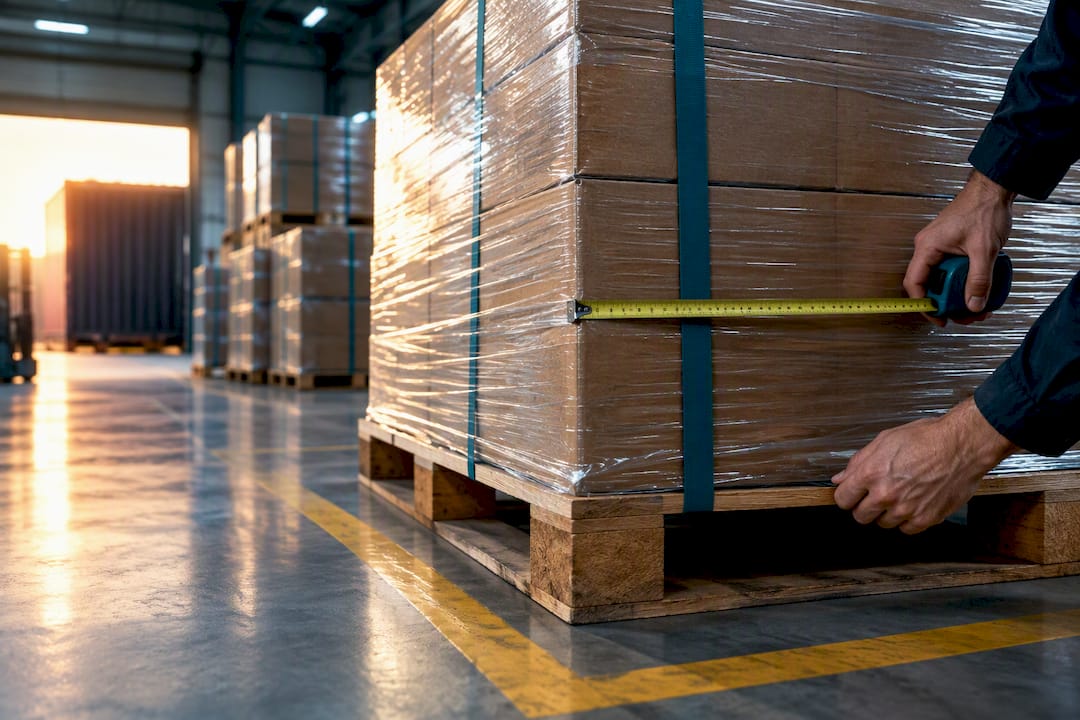
Many ecommerce sellers mistakenly view freight forwarding as simply shipping products overseas. In reality, freight forwarding encompasses complex logistics operations including customs compliance, multi-modal transport coordination, and regulatory documentation that directly impact your international shipping success. This guide reveals how understanding freight forwarding’s full scope can optimize your cross-border operations, reduce shipping costs significantly, and accelerate delivery timelines for your ecommerce business.
Table of Contents
- What Is Freight Forwarding? Definition And Core Functions
- How Freight Forwarders Optimize Supply Chains For Ecommerce
- Customs Clearance And Regulatory Compliance In Freight Forwarding
- Comparing Freight Forwarding Modes: Ocean, Air, And Land
- Common Misconceptions About Freight Forwarding
- Choosing A Reliable Freight Forwarder: Criteria And Best Practices
- The Impact Of Freight Forwarding On Ecommerce Cross-Border Trade
- Streamline Your Ecommerce Shipping With ORNER’s Freight Solutions
Key Takeaways
| Point | Details |
|---|---|
| Core Function | Freight forwarding manages international shipments through multi-modal transport and customs brokerage services. |
| Cost Savings | Consolidation and optimized routing reduce shipping expenses by up to 30%. |
| Customs Efficiency | Professional customs clearance cuts shipment delays by 40%. |
| Mode Selection | Ocean freight offers lowest cost but slowest speed; air freight delivers fastest but costs 3-5 times more; land suits regional trade. |
| Selection Criteria | Evaluate forwarders based on compliance expertise, technology integration, and service flexibility. |
What Is Freight Forwarding? Definition and Core Functions
Freight forwarding coordinates the movement of goods across international borders using multiple transportation modes. Unlike simple shipping services, freight forwarding definition and core functions involve orchestrating complex logistics operations that combine ocean, air, and land transport to move your ecommerce products efficiently.
Freight forwarders act as intermediaries between you and carriers, handling the intricate details that make international shipping possible. They consolidate shipments from multiple clients to negotiate better rates with carriers, which translates directly into cost savings for your business.
Core freight forwarding services include:
- Route planning and carrier selection based on cost, speed, and reliability requirements
- Booking cargo space with ocean liners, airlines, and trucking companies
- Preparing customs documentation including commercial invoices, packing lists, and certificates of origin
- Managing customs brokerage to ensure regulatory compliance across different countries
- Coordinating last-mile delivery to warehouses or fulfillment centers
- Providing cargo insurance options to protect your inventory during transit
These services work together to create a seamless supply chain that moves your products from manufacturers to customers across borders. Without proper freight forwarding coordination, ecommerce sellers face delayed shipments, unexpected fees, and compliance issues that damage customer satisfaction and profitability.
How Freight Forwarders Optimize Supply Chains for Ecommerce
Freight forwarders optimize ecommerce supply chains by leveraging technology platforms and logistics expertise that individual sellers cannot access independently. Their integrated systems provide real-time visibility into shipment status, enabling proactive exception management when delays or issues arise.
Modern freight forwarders use sophisticated tracking systems that monitor your cargo across multiple carriers and transport modes. You receive automatic updates when shipments clear customs, depart ports, or encounter weather delays. This transparency allows you to update customers accurately and adjust inventory planning based on actual arrival times rather than estimates.
Freight forwarders reduce shipping costs by up to 30% through consolidation and mode optimization, making international shipping economically viable for small to medium ecommerce businesses. They combine your shipments with other clients’ cargo to fill containers completely, eliminating wasted space and reducing per-unit costs.
Key optimization strategies include:
- Container consolidation that maximizes cargo density and splits transportation costs
- Mode switching recommendations based on urgency and budget constraints
- Alternative routing during peak seasons to avoid congested ports and reduce delays
- Volume discounts negotiated through long-term carrier relationships
- Automated documentation generation that reduces human error and processing time
Pro Tip: Request your freight forwarder provide detailed cost breakdowns for each shipment leg. Understanding where expenses occur helps you identify optimization opportunities and negotiate better terms for future shipments.
Documentation expertise represents another critical optimization area. Freight forwarders employ specialists who understand regulatory requirements across different countries, reducing the risk of rejected shipments due to paperwork errors. They prepare harmonized system codes, handle restricted goods classifications, and ensure all required certificates accompany your cargo.
Customs Clearance and Regulatory Compliance in Freight Forwarding
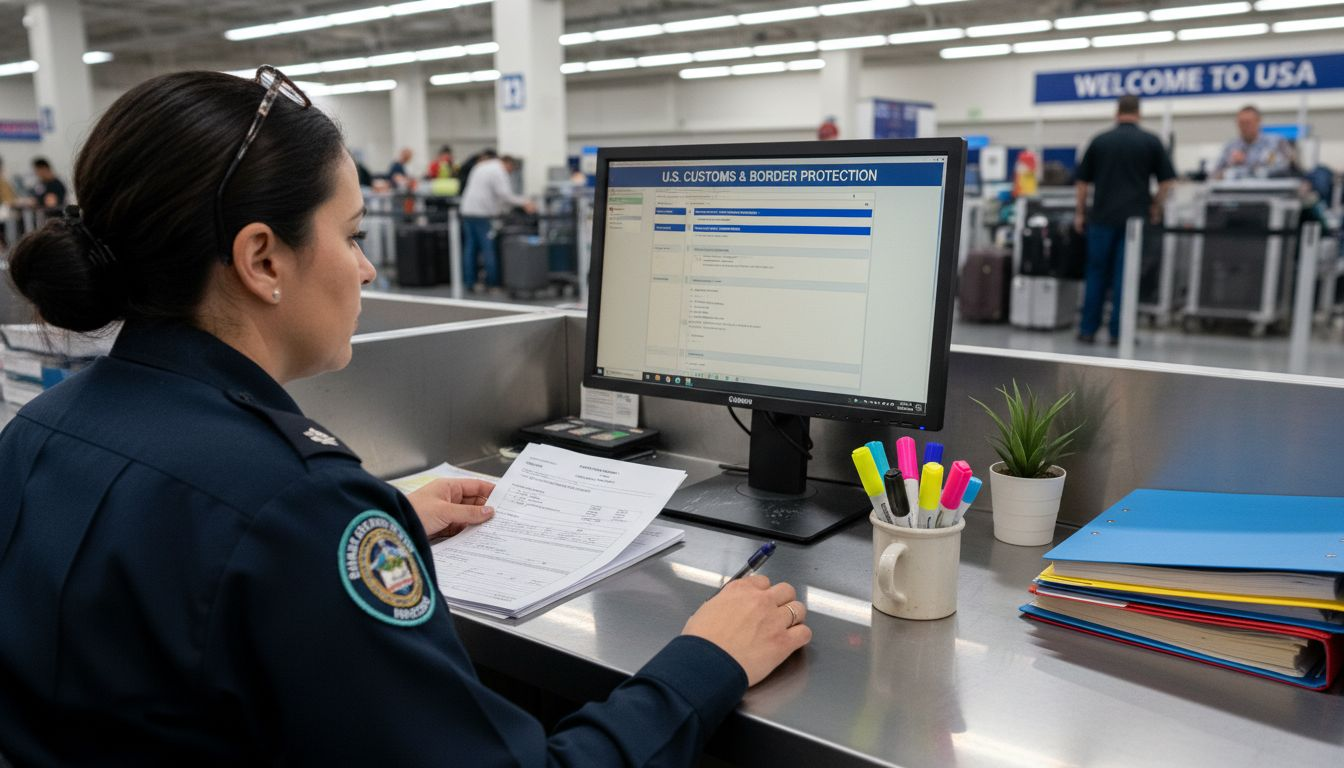
Customs clearance often represents the most challenging aspect of international shipping for ecommerce sellers. Freight forwarders manage this customs clearance process by acting as intermediaries between your business and government agencies, ensuring all legal requirements are met before goods enter destination countries.
Proper customs clearance handled by freight forwarders reduces shipment delays by up to 40%, directly impacting your ability to meet customer delivery expectations. They submit accurate declarations, pay duties and taxes on your behalf, and respond quickly to customs inquiries that could otherwise stall your shipments for weeks.
Integrated customs brokerage services streamline the compliance process significantly. Rather than coordinating between separate shipping and customs providers, freight forwarders handle both functions simultaneously. This integration eliminates communication gaps and ensures customs documentation matches shipping paperwork exactly.
Compliance management includes several critical functions. Freight forwarders classify products using correct harmonized system codes that determine applicable duty rates. They verify trade agreements like USMCA to claim preferential duty treatment when eligible. They also manage restricted goods licenses and ensure prohibited items never enter your supply chain.
Pro Tip: Always provide your freight forwarder with complete product information including materials, intended use, and manufacturing country. Incomplete data forces customs officers to conduct manual inspections that delay clearance and increase storage fees at ports.
Freight forwarders maintain updated knowledge of customs documentation requirements that change frequently across different countries. They track regulatory updates and adjust procedures proactively, protecting you from compliance violations that result in fines or shipment seizures.
Implementing customs clearance best practices through experienced freight forwarders accelerates cross-border delivery timelines significantly. Their established relationships with customs officials and pre-clearance systems enable faster processing compared to first-time shippers navigating unfamiliar procedures.
Comparing Freight Forwarding Modes: Ocean, Air, and Land
Selecting the right freight forwarding mode balances cost, speed, and cargo characteristics to meet your ecommerce shipping requirements. Understanding air vs ocean freight differences helps you make informed decisions that optimize supply chain performance.
| Mode | Transit Time | Relative Cost | Best For | Limitations |
|---|---|---|---|---|
| Ocean | 20-30 days | Lowest (baseline) | Large volumes, heavy goods, non-urgent shipments | Slow, weather dependent, port congestion |
| Air | 3-7 days | 3-5x ocean cost | Small urgent shipments, high-value goods, perishables | Expensive, size/weight restrictions, capacity limits |
| Land | 5-14 days | 1.5-2x ocean cost | Regional cross-border trade, partial loads, flexible timing | Geographic limitations, border delays, road conditions |
Ocean freight offers the lowest cost per kilogram but requires longest transit times. Container shipping suits high-volume ecommerce sellers moving full container loads between continents. Less-than-container-load services allow smaller businesses to share container space, though this adds handling time at consolidation warehouses.
Air freight delivers products quickly but costs significantly more than ocean transport. The best freight forwarding mode for urgent restocks or product launches when speed justifies premium pricing. Airlines impose strict dimensional weight calculations that can make bulky lightweight items extremely expensive to ship.
Land freight using trucks or rail serves regional cross-border trade effectively. For USA ecommerce sellers, land transport connects efficiently with Mexico and Canada under USMCA trade agreements. This mode offers faster transit than ocean with lower costs than air for suitable distances.
Mode selection considerations include:
- Cargo urgency and customer delivery expectations
- Product value and insurance cost implications
- Shipment volume and ability to fill containers or trucks
- Seasonal demand fluctuations requiring mode flexibility
- Destination infrastructure and available transport options
Freight forwarders help determine optimal modes based on your specific circumstances. They analyze freight mode cost comparisons against delivery requirements to recommend solutions that balance expense with service level.
Common Misconceptions About Freight Forwarding
Clearing up widespread misunderstandings helps ecommerce sellers make better freight forwarding decisions and avoid costly mistakes.
-
Myth: Freight forwarding only involves transportation. Reality: Freight forwarding encompasses customs brokerage, regulatory compliance, documentation preparation, cargo insurance, and warehousing coordination beyond simple carrier booking.
-
Myth: All freight forwarders deliver identical service quality. Reality: Service levels vary dramatically based on customs expertise, technology integration, carrier relationships, and geographic coverage. Some forwarders specialize in specific trade lanes or product categories.
-
Myth: Courier services eliminate freight forwarding needs. Reality: Couriers handle small parcel delivery efficiently but lack capacity for consolidated shipments, customs brokerage depth, and multi-modal coordination required for international ecommerce operations at scale.
-
Myth: Freight forwarding costs remain fixed and predictable. Reality: Pricing fluctuates based on fuel surcharges, seasonal demand, port congestion, and carrier capacity. Freight forwarders provide estimates but actual costs adjust based on market conditions.
-
Myth: Digital platforms fully replace human freight forwarding expertise. Reality: While technology improves efficiency, complex customs issues, carrier negotiations, and exception handling still require experienced logistics professionals to resolve effectively.
-
Myth: Freight forwarders only benefit large enterprise shippers. Reality: Small ecommerce businesses gain proportionally greater advantages through access to consolidated rates, compliance expertise, and carrier relationships they cannot develop independently.
Understanding these realities helps you set appropriate expectations and evaluate freight forwarders based on capabilities that actually matter for your ecommerce shipping success.
Choosing a Reliable Freight Forwarder: Criteria and Best Practices
Selecting the right freight forwarding partner requires evaluating multiple factors that impact shipping reliability, cost efficiency, and regulatory compliance. Choosing reliable freight forwarders starts with assessing their customs brokerage capabilities and compliance track record.
Verify customs expertise by asking specific questions about their experience with your product categories and destination markets. Request examples of how they handled complex customs issues similar to challenges you anticipate. Check if they employ licensed customs brokers and maintain direct relationships with customs authorities.
Technology integration separates modern freight forwarders from outdated providers. Prioritize companies offering:
- Real-time shipment tracking across all transport modes
- Automated documentation generation and digital file sharing
- Integration capabilities with your ecommerce platform and inventory management systems
- Exception alerts that notify you immediately when issues arise
- Analytics dashboards showing shipping performance metrics and cost trends
Service flexibility becomes critical during peak seasons when carrier capacity tightens. Evaluate how forwarders handle volume surges, whether they maintain backup carrier relationships, and if they offer flexible contract terms analogy that adjust to your changing business needs.
Pro Tip: Test freight forwarders with small trial shipments before committing to long-term contracts. Actual performance during customs clearance and exception handling reveals service quality more accurately than sales presentations.
Customer support responsiveness directly impacts your ability to resolve shipping issues quickly. Assess their communication channels, response time commitments, and availability across time zones matching your operation. Request references from current clients in similar ecommerce categories.
Cost transparency matters as much as competitive pricing. Reliable forwarders provide detailed quotes breaking down transportation, customs duties, handling fees, and potential surcharges. Avoid providers offering suspiciously low rates that likely hide fees discovered only after your cargo is in transit.
The Impact of Freight Forwarding on Ecommerce Cross-Border Trade
Freight forwarding enables ecommerce growth by making international shipping accessible, reliable, and cost-effective for businesses of all sizes. Cross-border ecommerce growth in the USA increased freight forwarding demand by 20% annually, reflecting how essential these services have become for online retail expansion.
| Impact Area | Measurement | Improvement |
|---|---|---|
| Supply Chain Disruption | Delayed shipments | 40% reduction through proactive tracking |
| Operational Efficiency | Manual documentation errors | 30% decrease via automated systems |
| Cost Management | Shipping expense per unit | 30% savings through consolidation |
| Delivery Reliability | On-time arrival rate | 25% improvement with optimized routing |
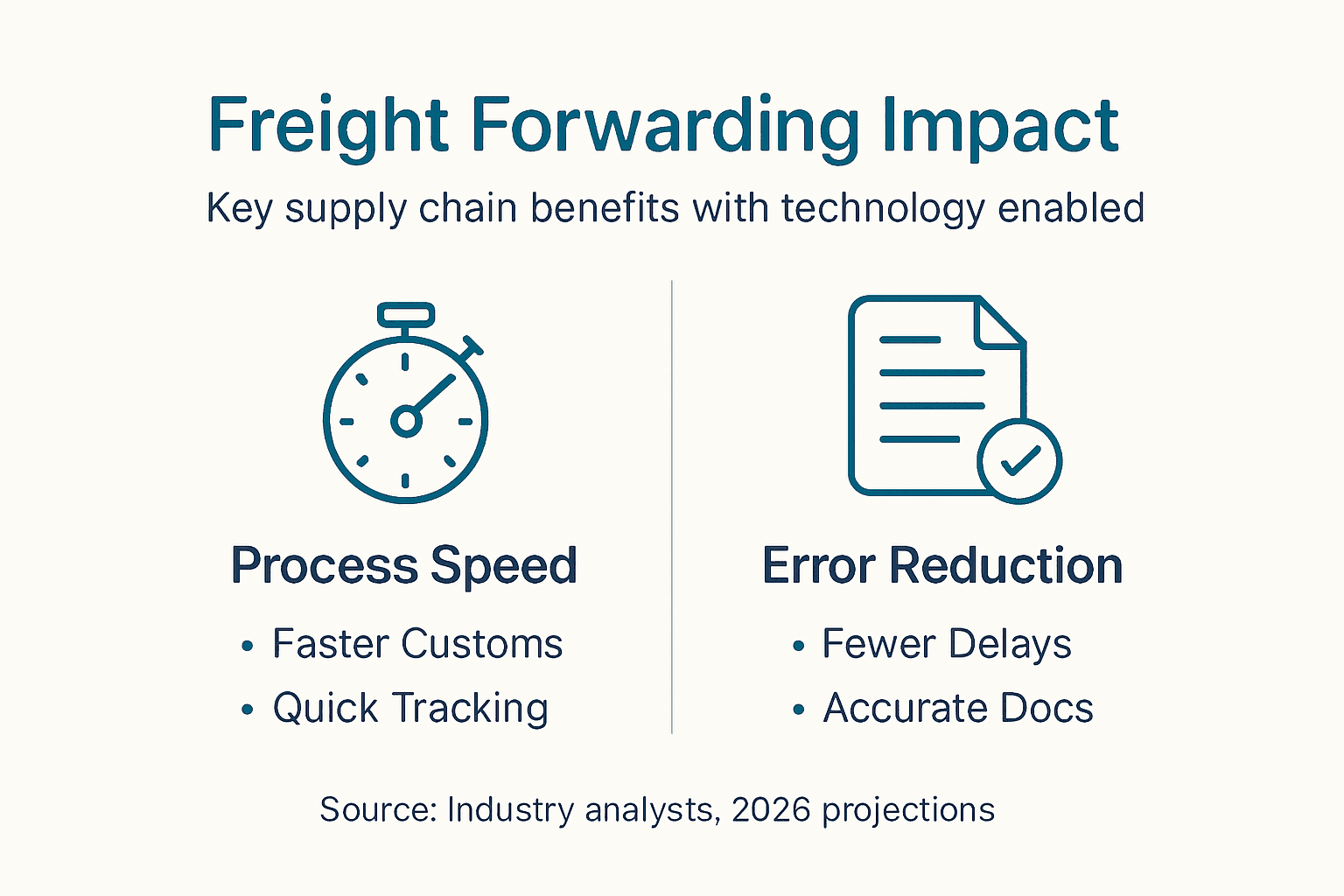
Integrated freight forwarding impact on ecommerce extends beyond individual shipments to transform entire supply chain operations. Consistent delivery performance allows better inventory forecasting and reduces safety stock requirements that tie up working capital.
Technology-enabled freight forwarding supply chain coordination lowers manual errors by automating documentation, tracking, and compliance processes. This automation frees your team to focus on growth activities rather than shipping logistics troubleshooting.
Reliable freight forwarding supports ecommerce expansion into new international markets by removing logistics barriers. You can test demand in different countries without building in-house customs expertise or carrier relationships, reducing market entry risks significantly.
The scalability freight forwarding provides proves especially valuable during rapid growth phases. As order volumes increase, freight forwarders adjust capacity seamlessly while maintaining service quality. This flexibility allows you to accept large wholesale orders or seasonal demand spikes without logistics constraints limiting revenue potential.
Streamline Your Ecommerce Shipping with ORNER’s Freight Solutions
Navigating freight forwarding options becomes simpler when you leverage expert comparisons and integrated booking tools designed specifically for ecommerce logistics.
ORNER provides comprehensive resources comparing top freight forwarding services based on compliance capabilities, technology integration, and service reliability. These detailed evaluations help you identify forwarders matching your specific shipping requirements without researching dozens of providers independently.
Our platform connects you with best freight booking solutions that balance cost efficiency with delivery speed requirements. Compare rates across multiple freight forwarders instantly, book shipments directly, and track cargo movement through a unified dashboard that eliminates juggling multiple carrier portals.
Access step-by-step guidance on streamlined freight documentation to ensure customs clearance proceeds smoothly without delays or compliance issues. Our resources explain complex requirements in practical terms, helping you prepare accurate paperwork that speeds border crossing.
Frequently Asked Questions
What are the main benefits of using a freight forwarder for ecommerce shipments?
Freight forwarders reduce shipping costs through consolidation, provide customs brokerage expertise that prevents delays, offer real-time tracking across multiple carriers, and handle complex documentation automatically. They give small ecommerce businesses access to enterprise-level logistics capabilities and negotiated carrier rates.
How does a freight forwarder handle customs clearance differently than a courier?
Freight forwarders employ licensed customs brokers who specialize in complex shipments, restricted goods, and trade compliance across multiple countries. Couriers typically handle standard parcel clearance but lack depth for consolidated shipments, specialized product classifications, or resolving customs disputes requiring regulatory expertise.
What factors influence the cost differences between ocean, air, and land freight forwarding?
Transit speed, fuel consumption, carrier capacity, and handling complexity drive mode cost variations. Ocean freight spreads costs across massive container volumes resulting in lowest per-unit pricing. Air freight pays premium for speed and limited aircraft cargo space. Land freight balances moderate speed with flexible routing options.
How can technology integration in freight forwarding improve shipment tracking?
Integrated platforms consolidate tracking data from multiple carriers into single dashboards, provide automated exception alerts when delays occur, enable predictive arrival estimates using real-time conditions, and connect directly with inventory management systems. This visibility allows proactive problem solving rather than reactive crisis management.
What should I look for to verify a freight forwarder’s customs brokerage expertise?
Confirm they employ licensed customs brokers, request examples handling your product categories, check their error rate for customs documentation, verify direct relationships with customs authorities, and ask about continuing education programs. Experienced brokers explain complex regulations clearly and proactively identify compliance risks before shipments depart.