
Did you know that over 50 percent of customers say fast delivery influences their online shopping choices? Speed has become a critical part of modern shipping, with express services now shaping the way businesses and consumers move goods. As demand for rapid and reliable delivery grows, understanding express shipping, its benefits, and its common misconceptions could help save time, cut costs, and keep customers coming back.
Table of Contents
- Express Shipping Defined And Common Misconceptions
- Types Of Express Shipping Services Compared
- How Express Shipping Works Step By Step
- Benefits And Limitations For Ecommerce Sellers
- Cost, Timeframes, And Choosing The Right Option
Key Takeaways
| Point | Details |
|---|---|
| Express Shipping Advantages | Express shipping ensures rapid delivery with tracking capabilities, enhancing customer satisfaction and response times for businesses. |
| Service Types Comparison | Options such as overnight, two-day, and international express services cater to different urgency and budget needs, guiding selection based on specific shipment requirements. |
| Ecommerce Seller Considerations | While express shipping boosts customer experience, sellers must weigh higher costs and operational complexities against benefits to maintain profitability. |
| Strategic Decision-Making | Selecting the right express shipping option involves analyzing costs, delivery timeframes, and logistics capabilities to align with business goals. |
Express Shipping Defined and Common Misconceptions
Express shipping represents a specialized logistics solution that enables rapid, time-sensitive transportation of goods and documents across various distances. Express delivery services are designed to provide accelerated transportation options that prioritize speed and efficiency over traditional shipping methods. According to U.S. International Trade Commission, these services involve “expedited collection, transport, and delivery of time-sensitive documents, parcels, and other goods” while maintaining electronic tracking and control throughout the entire supply chain.
Unlike standard shipping, express shipping offers significantly reduced transit times, typically guaranteeing delivery within 1-3 business days. The service often includes advanced features such as real-time tracking, guaranteed delivery windows, and comprehensive logistics management. These services are particularly crucial for businesses requiring urgent document transmission, critical inventory replenishment, or time-sensitive commercial shipments.
However, several common misconceptions surround express shipping. Many people incorrectly assume that express shipping is exclusively for international deliveries or that it’s prohibitively expensive for small businesses. In reality, U.S. legal frameworks recognize various private express service models, indicating a robust and flexible shipping ecosystem. Express shipping can be cost-effective and accessible for diverse business sizes and shipping requirements.
Key characteristics that distinguish express shipping include:
- Guaranteed faster delivery times
- Enhanced package tracking capabilities
- Priority handling and processing
- Flexible routing options
- Potential customs and tax management for international shipments
Whether you’re an ecommerce seller needing rapid inventory movement or a manufacturer requiring swift document transmission, understanding express shipping’s nuanced capabilities can significantly optimize your logistics strategy. Consider essential courier services for small businesses to explore how these shipping solutions can streamline your operational efficiency.
Types of Express Shipping Services Compared
Express shipping services encompass a diverse range of delivery options designed to meet varying business and consumer needs. As documented by the Government Accountability Office, international express mail services provide multiple tiers of delivery solutions, including Global Express Mail Guaranteed (2-3 days), Global Express Mail (3-5 days), and Global Priority Mail (4-6 days), each offering distinct service levels and coverage.
These express shipping services can be broadly categorized into several key types:
Here’s a comparison of common express shipping service types:
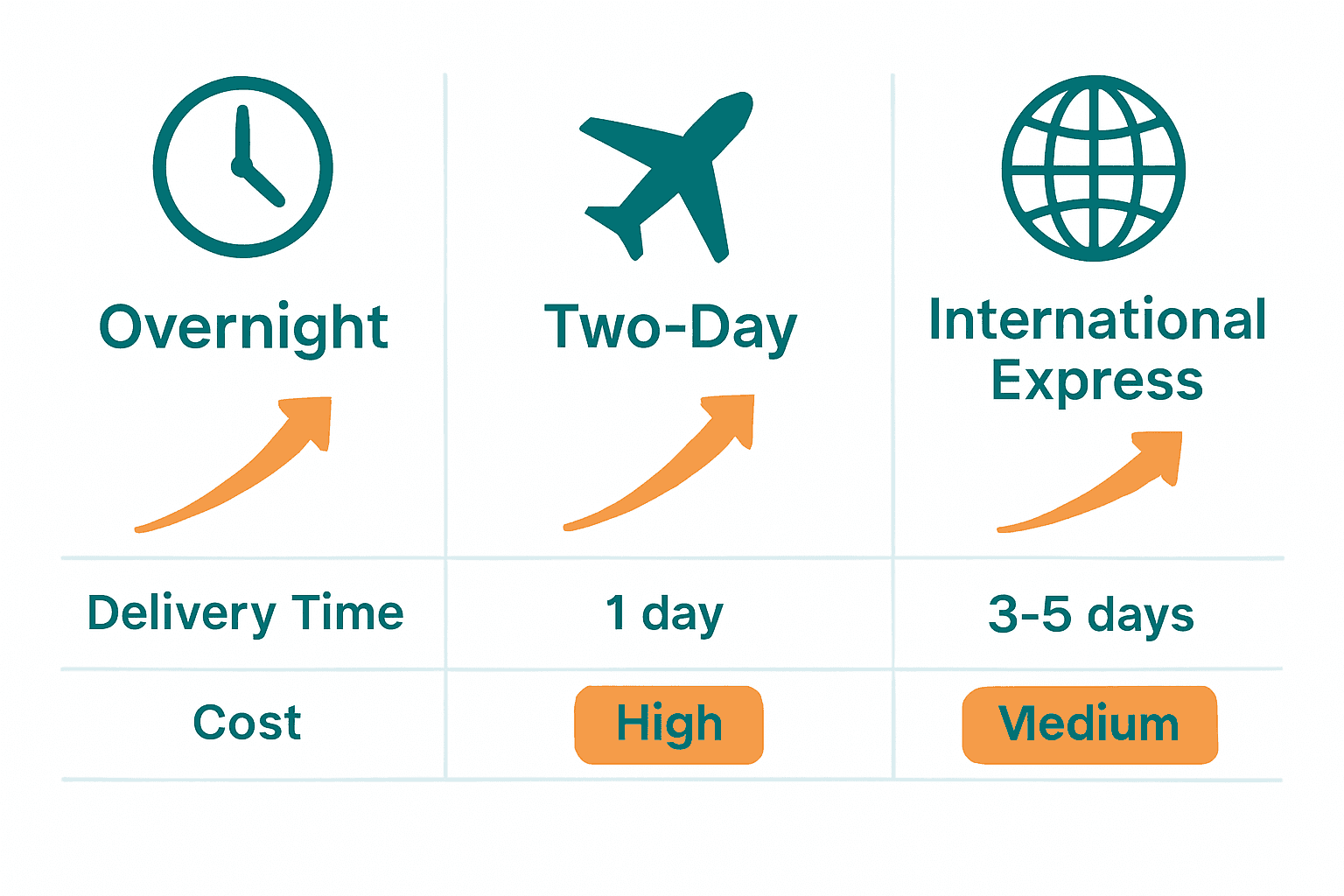
| Service Type | Delivery Speed | Cost Level | Best For |
|---|---|---|---|
| Overnight Shipping | Next business day | Highest | Urgent, time-critical shipments |
| Two-Day Shipping | 2 business days | Moderate | Ecommerce, less urgent packages |
| International Express | Varies by destination | High to moderate | Cross-border, time-sensitive parcels |
- Overnight Shipping
- Fastest available option
- Guaranteed delivery by next business day
- Typically most expensive service tier
- Best for urgent, time-critical shipments
- Two-Day Shipping
- Delivery within 48 hours
- More affordable than overnight options
- Suitable for less urgent but still time-sensitive packages
- Popular among ecommerce retailers
- International Express Services
- Cross-border shipping with expedited processing
- Includes customs clearance support
- Varying delivery windows based on destination
- Enhanced tracking and insurance options
Businesses can strategically select express shipping services based on specific requirements like budget, urgency, and destination. For deeper insights into optimizing shipping strategies, explore our guide on understanding express versus standard shipping.
The choice of express shipping service depends on multiple factors including package weight, destination, delivery speed requirements, and budget constraints. Sophisticated logistics managers often utilize a mix of shipping options to balance cost-effectiveness with delivery performance, ensuring their supply chain remains agile and responsive to changing business needs.
How Express Shipping Works Step by Step
Express shipping is a complex logistical process that transforms package transportation into a highly efficient, time-sensitive operation. According to the U.S. Trade Department, the process involves carefully selecting shipping companies and understanding critical international shipping documentation to ensure smooth delivery.
Key Steps in Express Shipping Workflow
- Shipment Preparation
- Package items securely
- Measure and weigh package accurately
- Select appropriate packaging materials
- Include necessary shipping labels
- Carrier Selection
- Compare shipping service providers
- Evaluate delivery speed options
- Review pricing structures
- Check service reliability and tracking capabilities
- Documentation and Processing
- Complete shipping forms
- Verify address information
- Prepare customs documentation for international shipments
- Generate unique tracking numbers
- Transportation and Routing
- Package enters carrier’s logistics network
- Sorted through advanced sorting facilities
- Routed via optimal transportation methods
- Tracked using real-time digital systems
- Final Mile Delivery
- Local courier handles package distribution
- Delivers to specified destination
- Obtains delivery confirmation
- Provides tracking updates
For businesses seeking deeper insights into expedited shipping strategies, explore our guide on understanding expedited shipping options.
The express shipping workflow demands precision, technological integration, and strategic coordination.
 Successful implementation requires understanding each step’s nuances, from initial packaging to final delivery, ensuring packages reach their destinations efficiently and reliably.
Benefits and Limitations for Ecommerce Sellers
Express shipping presents a complex landscape of strategic advantages and potential challenges for ecommerce sellers. According to the Government Accountability Office, these services offer faster delivery times and enhanced tracking capabilities that can significantly improve customer satisfaction, though they typically come with higher associated costs compared to standard shipping options.
Key Benefits for Ecommerce Sellers
Competitive Advantages
- Improved customer experience
- Faster order fulfillment
- Real-time shipment tracking
- Increased customer loyalty
- Higher potential for positive reviews
Potential Limitations
Cost and Operational Challenges
- Higher shipping expenses
- Reduced profit margins
- Complex logistics management
- Increased operational complexity
- Potential for higher return rates
To mitigate these challenges, successful ecommerce sellers must carefully balance the benefits of express shipping with their specific business model and customer expectations. Understanding ecommerce fulfillment solutions can help businesses develop more strategic shipping approaches.
Ultimately, express shipping is not a one-size-fits-all solution. Ecommerce sellers must conduct thorough cost-benefit analyses, considering factors like product type, target market, competitive landscape, and overall business strategy to determine whether express shipping aligns with their operational goals and customer service commitments.
Cost, Timeframes, and Choosing the Right Option
Express shipping is a nuanced service with multiple pricing and delivery considerations that demand strategic decision-making. According to the Government Accountability Office, international express mail services provide diverse options like Global Express Mail Guaranteed (2-3 days) and Global Express Mail (3-5 days), enabling shippers to select services based on specific urgency and budgetary requirements.
Delivery Timeframe Categories
- Urgent Delivery (Next Day)
- Highest cost tier
- Guaranteed delivery within 24 hours
- Best for critical, time-sensitive shipments
- Ideal for medical supplies, legal documents
- Expedited Delivery (2-3 Days)
- Moderate pricing
- Reliable delivery within 48-72 hours
- Suitable for most ecommerce and business needs
- Balances speed and cost-effectiveness
- Standard Express (3-5 Days)
- Most economical express option
- Broader geographic coverage
- Acceptable for non-critical shipments
- Provides reasonable delivery speed
Cost Considerations
Pricing Factors
- Package weight and dimensions
- Shipping distance
- Delivery speed selected
- Additional service requirements
- Seasonal demand fluctuations
To optimize shipping strategies and minimize expenses, businesses should carefully analyze their specific logistics needs. Understanding expedited shipping options can provide deeper insights into making informed shipping decisions.
Choosing the right express shipping option requires a holistic approach. Businesses must balance delivery speed, cost constraints, customer expectations, and operational capabilities to develop a shipping strategy that supports their overall growth and customer satisfaction objectives.
Streamline Your Express Shipping with Reliable Courier Services
Express shipping demands flawless logistics and precision from start to finish. If you are struggling with balancing faster delivery times and managing high shipping costs while ensuring real-time tracking and customs clearance, you are not alone. Many ecommerce sellers face these exact challenges as they strive to keep customers happy and maintain strong operational control. The good news is that you do not have to navigate this complex landscape alone.
At or-ner.com, you have access to a comprehensive logistics platform built specifically for businesses seeking reliable courier services and end-to-end fulfillment solutions. From international cross-border shipments and customs management to real-time shipment tracking and inventory control, our tools simplify your shipping workflow and help you avoid costly delays or errors. Take advantage of scalable, flexible logistics options designed to meet your unique ecommerce and wholesale needs.
Ready to optimize your express shipping strategy and turn logistics challenges into competitive advantage? Visit or-ner.com now and explore how our platform can boost your operational efficiency. Learn more about understanding expedited shipping options and discover smarter ways to delight your customers every time you ship.
Frequently Asked Questions
What is express shipping?
Express shipping is a specialized logistics service that enables rapid transportation of goods and documents, typically promising delivery within 1-3 business days compared to standard shipping methods.
What are the main advantages of using express shipping for businesses?
The main advantages include faster order fulfillment, improved customer experience, real-time shipment tracking, and increased customer loyalty, which can lead to more positive reviews and repeat business.
What are the common types of express shipping services?
Common types include overnight shipping, which guarantees delivery by the next business day; two-day shipping, offering delivery within 48 hours; and international express services, which vary in delivery speed and provide customs support.
How does the cost of express shipping compare to standard shipping?
Express shipping typically has higher costs than standard shipping due to its prioritized handling, faster delivery times, and enhanced features like real-time tracking. Businesses must consider these factors against their budget and operational needs.