Unexpected shipment delays and regulatory hurdles can quickly disrupt even the most carefully planned logistics operations. For American ecommerce brands, every exception in the supply chain poses a risk to customer satisfaction and operational efficiency. Understanding and harnessing exception management gives logistics managers the power to monitor, identify, and resolve disruptions before they escalate, ensuring a more reliable and adaptive supply chain process.
Table of Contents
- Defining Exception Management In Logistics
- Types Of Exceptions In Courier Services
- Key Processes For Exception Resolution
- Technology’s Role In Reducing Delivery Risks
- Best Practices For Exception Prevention
Key Takeaways
| Point | Details |
|---|---|
| Proactive Exception Management | Continuously monitor and address deviations in logistics to turn disruptions into opportunities for improvement. |
| Technological Integration | Leverage advanced technologies such as AI and IoT for enhanced tracking and predictive risk assessment. |
| Comprehensive Training | Implement regular training programs to reduce human error and ensure compliance within the courier services. |
| Structured Communication | Establish clear protocols for cross-departmental communication to facilitate faster resolution of exceptions. |
Defining Exception Management in Logistics
Exception management is a critical strategic approach within logistics and supply chain operations that proactively monitors, identifies, and resolves unexpected disruptions or deviations from standard operational parameters. At its core, this process involves continuously tracking logistical activities to detect and address potential issues before they escalate into significant problems.
In the context of modern supply chains, exception management represents a sophisticated monitoring mechanism that goes beyond traditional reactive strategies. By establishing predefined performance boundaries, logistics professionals can create an adaptive system designed to quickly recognize and respond to variations in expected performance.
Key characteristics of effective exception management include:
- Continuous real-time monitoring of supply chain processes
- Automated detection of performance deviations
- Rapid response protocols for identified exceptions
- Data-driven decision-making frameworks
- Proactive risk mitigation strategies
The primary objective of exception management is maintaining operational reliability by creating a responsive and intelligent logistics ecosystem. This approach transforms potential disruptions from unexpected challenges into opportunities for process improvement and strategic optimization.
Pro tip: Implement automated monitoring systems that establish clear performance thresholds and generate immediate alerts when logistical metrics deviate from expected ranges.
Types of Exceptions in Courier Services
In the complex world of logistics, courier services encounter numerous types of exceptions that require specialized handling and strategic responses. Operational exceptions represent critical deviations from standard shipping protocols that demand immediate attention and precise management strategies.
Courier services typically encounter several key categories of exceptions, with some being more prevalent than others. License exceptions for shipments play a crucial role in defining how different types of packages can be transported, especially for international or regulated shipments.
Key types of exceptions in courier services include:
-
Delivery Exceptions
- Address verification issues
- Recipient unavailable during delivery attempts
- Incorrect or incomplete shipping information
- Package routing complications
-
Regulatory Exceptions
- Customs clearance challenges
- International shipping restrictions
- Hazardous material transportation protocols
- Special handling requirements for sensitive items
-
Operational Exceptions
- Equipment malfunction
- Weather-related transportation disruptions
- Vehicle breakdown scenarios
- Unexpected logistical bottlenecks
-
Security Exceptions
- Classified material transportation protocols
- High-risk shipment management
- Special security clearance requirements
- Enhanced tracking for sensitive packages
Each exception type demands a unique approach, with courier services developing sophisticated response mechanisms to minimize disruptions and maintain service reliability. The ability to quickly identify, classify, and resolve these exceptions determines the overall effectiveness of a courier’s operational strategy.

Here’s a quick overview of exception types and their typical business impact:
| Exception Type | Frequency | Business Impact | Example Scenario |
|---|---|---|---|
| Delivery | High | Customer dissatisfaction | Incorrect address, missed delivery |
| Regulatory | Medium | Shipping delays, extra costs | Customs issues, restricted items |
| Operational | Medium | Increased expenses, shipment delays | Vehicle breakdown, weather disruption |
| Security | Low | Safety risks, compliance threats | High-risk or classified shipment |
Pro tip: Develop a comprehensive exception management matrix that categorizes potential disruptions and creates predefined resolution protocols for each unique scenario.
Key Processes for Exception Resolution
Exception resolution is a critical operational function that requires a systematic and strategic approach to identifying, analyzing, and resolving logistics disruptions. Comprehensive exception management demands a structured methodology that transforms potential shipping challenges into opportunities for process improvement and service excellence.
Courier services must develop robust investigation protocols to effectively manage and resolve shipping exceptions. These protocols involve multiple interconnected steps designed to quickly diagnose and address shipment anomalies while maintaining service integrity.
Key processes for exception resolution typically include:
-
Initial Exception Detection
- Real-time monitoring systems
- Automated anomaly identification
- Immediate notification triggers
- Comprehensive tracking mechanisms
-
Root Cause Analysis
- Detailed documentation review
- Systematic investigation procedures
- Cross-functional collaboration
- Data-driven diagnostic techniques
-
Corrective Action Development
- Tailored resolution strategies
- Operational workflow adjustments
- Preventative measure implementation
- Performance improvement recommendations
-
Resolution and Recovery
- Clear communication protocols
- Customer notification procedures
- Shipment restoration processes
- Compensation and remediation strategies
Successful exception resolution requires a holistic approach that balances technical precision with customer-centric problem-solving. Courier services must view each exception as an opportunity to demonstrate operational excellence and build long-term customer trust.
Pro tip: Implement a centralized exception management dashboard that provides real-time visibility into resolution status and enables rapid, data-driven decision-making.
Technology’s Role in Reducing Delivery Risks
Modern courier services are increasingly relying on cutting-edge technologies to mitigate potential risks and enhance operational reliability. Technological innovation has transformed the logistics landscape, providing sophisticated tools that proactively identify, predict, and prevent potential delivery disruptions.
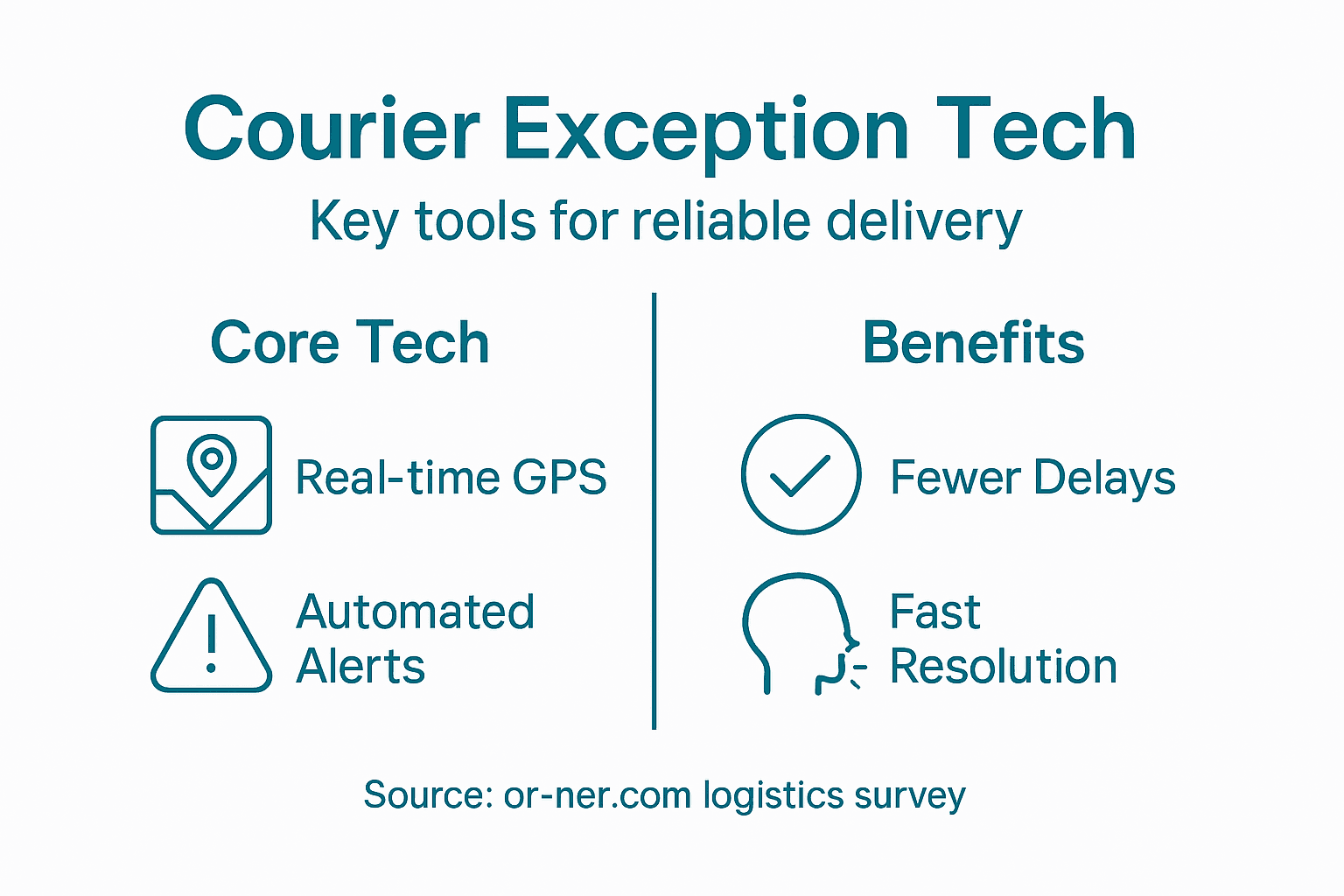
Courier services are strategically implementing advanced cybersecurity and AI technologies to create more robust and resilient delivery ecosystems. These technological solutions go beyond traditional monitoring, offering predictive capabilities that can anticipate and neutralize potential risks before they impact service quality.
Key technological strategies for reducing delivery risks include:
-
Real-Time Tracking Technologies
- GPS-enabled shipment monitoring
- Satellite-based location tracking
- Precise geofencing capabilities
- Automated route optimization
-
Artificial Intelligence Applications
- Predictive risk assessment algorithms
- Anomaly detection systems
- Machine learning-powered route planning
- Automated threat identification
-
Cybersecurity Protective Measures
- End-to-end encryption protocols
- Multi-factor authentication systems
- Network intrusion detection
- Secure data transmission frameworks
-
Internet of Things (IoT) Integration
- Smart sensor technologies
- Environmental condition monitoring
- Automated equipment diagnostics
- Real-time performance tracking
The convergence of these technologies creates a comprehensive risk management framework that enables courier services to deliver with unprecedented levels of accuracy, safety, and reliability. By leveraging sophisticated technological tools, logistics providers can transform potential vulnerabilities into opportunities for operational excellence.
Pro tip: Invest in integrated technological platforms that combine AI, IoT, and advanced cybersecurity to create a holistic risk management ecosystem.
Best Practices for Exception Prevention
Exception prevention is a strategic approach that requires proactive planning, robust operational protocols, and comprehensive organizational commitment. Systematic risk management demands a multifaceted approach that anticipates potential disruptions before they can compromise service reliability and customer satisfaction.
Courier services must develop comprehensive operational security procedures that establish clear guidelines for preventing logistical exceptions. These procedures create a structured framework that enables organizations to identify, mitigate, and minimize potential risks across their entire delivery ecosystem.
Key best practices for exception prevention include:
-
Preventative Training Strategies
- Regular employee skills development
- Comprehensive compliance training
- Scenario-based risk simulation
- Continuous learning programs
-
Documentation and Compliance
- Standardized shipment documentation
- Rigorous verification protocols
- Consistent regulatory compliance checks
- Detailed record-keeping systems
-
Technological Risk Mitigation
- Advanced tracking technologies
- Real-time anomaly detection
- Automated compliance verification
- Predictive risk assessment tools
-
Communication and Coordination
- Clear escalation protocols
- Cross-departmental communication
- Transparent reporting mechanisms
- Collaborative problem-solving approaches
Successful exception prevention requires a holistic approach that integrates technological solutions, human expertise, and robust organizational processes. By implementing comprehensive strategies that address potential risks proactively, courier services can significantly reduce the likelihood of operational disruptions.
To better understand exception prevention, compare these best practices:
| Practice | Main Benefit | Stakeholder Involved |
|---|---|---|
| Preventative training | Fewer human errors | Staff and management |
| Documentation and compliance | Smoother customs processing | Operations team |
| Technological risk mitigation | Early detection of issues | IT and logistics team |
| Communication and coordination | Faster resolution | All departments |
Pro tip: Develop a dynamic exception prevention framework that continuously evolves through regular risk assessments and adaptive learning mechanisms.
Drive Reliable Courier Services with Proactive Exception Management
The challenges highlighted in the article around unexpected delivery delays, regulatory complications, and operational disruptions underline the critical need for a logistics partner that embraces proactive exception management. When your business demands flawless shipping workflows, minimizing risks like delivery exceptions and operational bottlenecks becomes essential to maintain customer trust and competitive advantage.
At or-ner.com, we empower ecommerce sellers and businesses with comprehensive logistics solutions designed to tackle these exact pain points. Our platform offers real-time shipment tracking, automated exception alerts, and end-to-end freight booking that transform reactive problem solving into predictive, data-driven decision making. Seamlessly manage complex cross-border shipments, customs clearance, and inventory visibility all in one place to keep your supply chain agile and reliable.
Are you ready to eliminate costly disruptions and elevate your courier service reliability today

Experience the difference by partnering with or-ner.com. Start streamlining your logistics operations and harness the power of intelligent exception management. Visit our site now to explore how our scalable fulfillment and courier solutions can protect your business from costly delivery risks and drive sustainable growth.
Learn more about how to enhance your logistics with real-time shipment tracking and cross-border logistics solutions tailored to your unique business needs.
Frequently Asked Questions
What is exception management in logistics?
Exception management in logistics is a strategic approach that proactively monitors, identifies, and resolves unexpected disruptions or deviations within supply chain operations. It involves continuous tracking of logistical activities to address potential issues before they escalate.
What are common types of exceptions in courier services?
Common types of exceptions in courier services include delivery exceptions (like incorrect addresses or recipient unavailability), regulatory exceptions (such as customs clearance challenges), operational exceptions (like vehicle breakdowns), and security exceptions (involving high-risk shipments).
How can technology assist in exception management?
Technology can assist in exception management by providing real-time tracking, predictive analytics, and automated monitoring systems. These tools help identify and mitigate risks early, enabling courier services to maintain operational reliability and enhance customer satisfaction.
What best practices can courier services adopt for preventing exceptions?
Best practices for preventing exceptions include implementing preventative training strategies for staff, establishing thorough documentation and compliance procedures, utilizing advanced tracking technologies, and ensuring effective communication and coordination across departments.
Recommended
- Reliable Courier Services in the USA – ORNER
- Reliable Courier Services in the UK: Your Guide to Parcel Delivery – ORNER
- Essential courier services for small businesses – ORNER
- Understanding Reliable Courier Services for Ecommerce Success – ORNER
- Cloud-basierte BPO-Modelle: Effizienzsteigerung für Unternehmen