TL;DR:
- Ecommerce shipping in 2025 faces a significant gap between consumer expectations of free, fast delivery and retailer capabilities. Major trends include micro-fulfillment centers, AI-driven delivery orchestration, and tiered delivery options to meet rising demands. Successful logistics rely on accurate data, strategic planning, and sustainability initiatives to build reliable, scalable delivery networks.
Ecommerce shipping trends in 2025 are defined by a widening gap between what consumers expect and what most retailers can actually deliver. 60% of consumers expected free 2-day shipping in 2025, yet only 35% of retailers delivered on this consistently. That gap is not a minor inconvenience. It is a conversion killer, a loyalty eroder, and the central challenge shaping every major logistics decision this year. For ecommerce business owners and logistics professionals, understanding these shifts means the difference between scaling confidently and losing ground to competitors who move faster. Tools like ShipStation, ShipMatrix, and Shippo are already tracking these changes at scale, and the data they surface tells a clear story about where the industry is heading.
What are the major ecommerce shipping trends shaping 2025?
The defining characteristic of 2025 logistics strategies is volume meeting velocity. U.S. domestic parcel volume hit a record 23.9 billion shipments in 2025, generating $196 billion in revenue. That 0.4% volume growth and 4.1% revenue growth signal that the market is maturing but not slowing. Every additional parcel adds pressure to carrier networks, fulfillment centers, and last-mile operations that were already stretched.
The speed expectation problem is real and measurable. Consumers do not just want fast shipping. They want it free. Same-day delivery now covers 73% of major metro populations, a 340% increase since 2023. That number reflects how aggressively mid-market direct-to-consumer brands have invested in rapid delivery infrastructure to compete with Amazon’s fulfillment network.
The key trends reshaping ecommerce delivery in 2025 include:
- Free and fast delivery as baseline expectations. Consumers no longer treat 2-day shipping as a premium. They treat it as the minimum. Retailers who cannot match this expectation face higher cart abandonment rates.
- Same-day delivery as a competitive necessity. Same-day delivery is transitioning from a competitive advantage to a market requirement in major urban markets.
- Micro-fulfillment center adoption. Brands are placing inventory closer to end customers, often within 15 miles of dense population zones, to make rapid delivery economically viable without relying solely on national carrier networks.
- 3PL partnerships for scalability. Third-party logistics providers give mid-market brands access to fulfillment infrastructure they could not build independently, especially during peak seasons like Black Friday and Cyber Monday.
- 55% of shoppers are willing to pay for expedited same-day or next-day delivery when the option is presented clearly at checkout. This creates a real revenue opportunity for retailers who offer tiered delivery choices.
The brands winning in this environment are not just shipping faster. They are building logistics networks that make speed structurally possible rather than operationally heroic.
How are technology and AI transforming last-mile delivery?
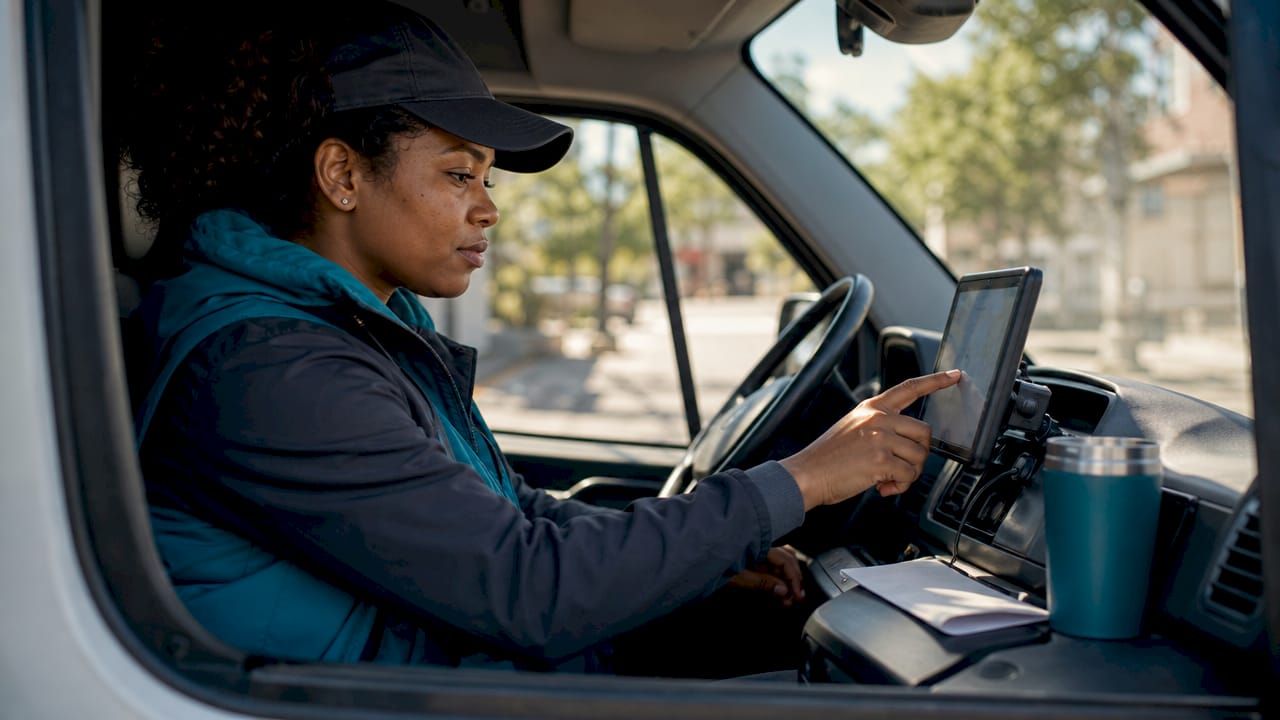
Artificial intelligence is no longer a future-state concept in logistics. It is the operational backbone of the most efficient fulfillment operations running today. AI-driven last-mile delivery tools reduce driven miles by roughly 10% and push on-time delivery accuracy to approximately 98%. For a network processing millions of parcels, a 10% reduction in driven miles translates directly into lower fuel costs, fewer driver hours, and reduced carbon emissions.
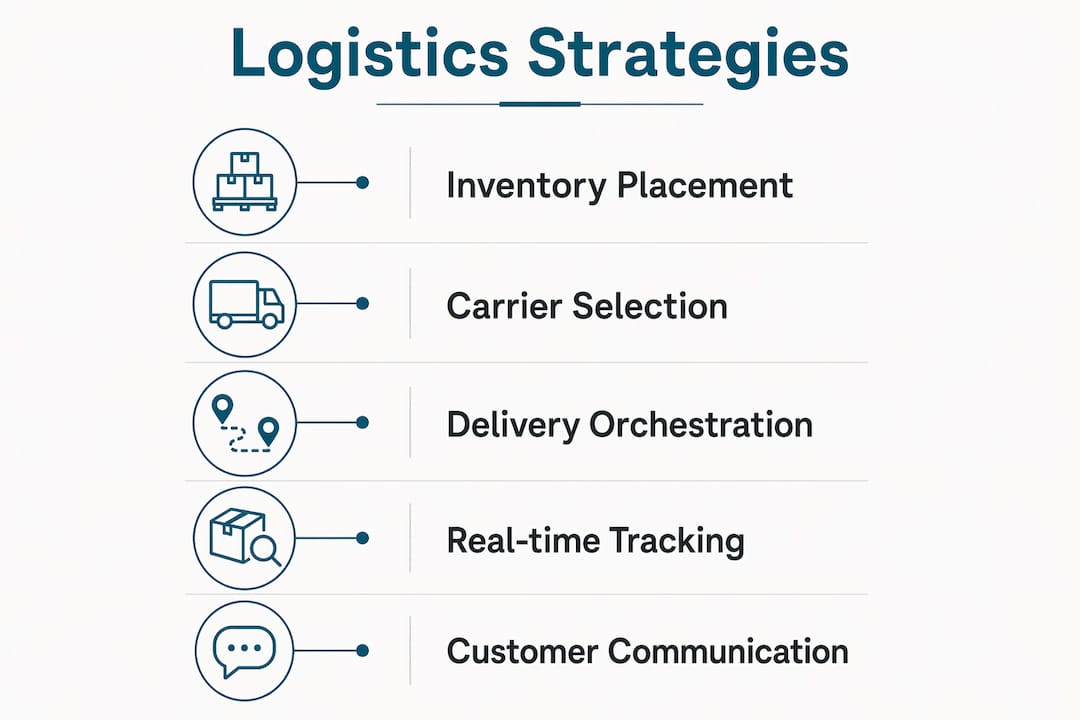
The concept that matters most here is delivery orchestration. Ecommerce delivery orchestration coordinates inventory positioning, carrier selection, and customer-facing communication to meet promised service levels. It is not just about routing a package faster. It is about making sure the right inventory is in the right location before the order is placed, so the delivery promise is achievable from the moment a customer clicks “buy.”
Predictive analytics and real-time tracking are the two technologies making orchestration practical. Predictive analytics identifies demand patterns by region and season, allowing inventory to be pre-positioned before spikes occur. Real-time tracking feeds dynamic routing algorithms that adjust delivery paths based on traffic, weather, and carrier capacity in the moment. Together, these tools shift logistics from reactive to anticipatory.
Pro Tip: Before investing in AI routing tools, audit your current carrier performance data by ZIP code and lane. AI systems are only as good as the historical data you feed them. Clean, lane-level data produces far better routing recommendations than aggregate network averages.
AI and integration across logistics systems are no longer optional given the volatility and complexity of modern ecommerce. Retailers who treat technology adoption as a future project are already falling behind competitors who have embedded these capabilities into their daily operations. The question for 2025 is not whether to adopt AI-driven logistics tools. It is which capabilities to prioritize first.
What are the most effective 2025 logistics strategies for ecommerce?
Operational excellence in 2025 requires moving beyond generic best practices and into specific, data-driven decisions. The following steps represent the highest-leverage changes ecommerce businesses and logistics teams can make right now.
-
Audit your actual OTIF performance before making delivery promises. Retailers commonly set delivery windows 1 to 3 days more optimistic than their actual performance. Auditing real delivery times by lane and ZIP code, then buffering promises accordingly, reduces customer complaints and builds long-term trust.
-
Build or access micro-fulfillment networks positioned within 15 miles of your highest-density customer zones. Inventory proximity is the single most reliable way to make same-day and next-day delivery economically viable. DHL’s micro-fulfillment center operations demonstrate this at scale, but the model works for mid-market brands through 3PL partnerships as well.
-
Plan for 6 to 8 weeks of lead time when implementing micro-fulfillment. Micro-fulfillment center implementations require 6 to 8 weeks or more due to inventory migration and systems integration constraints. Brands that underestimate this timeline create fulfillment gaps during the transition period.
-
Offer tiered delivery options at checkout. Present free standard shipping alongside a paid expedited option. This approach captures revenue from the 55% of shoppers willing to pay for speed while keeping the free shipping option available for price-sensitive customers.
-
Switch from static carrier contracts to lane-level bidding. Carrier selection should be lane-specific rather than network-wide. Analyzing performance and cost data by individual shipping lane allows you to assign the best carrier for each route rather than defaulting to a single provider across your entire network.
These strategies are not theoretical. They are the operational changes separating high-performing ecommerce logistics teams from those still managing shipping as an afterthought. For a deeper look at the challenges driving these decisions, the ecommerce logistics challenges guide from Or-ner covers the volatility factors in detail.
How do shipping costs and consumer preferences affect logistics decisions?
The economics of ecommerce shipping in 2025 are shaped by one dominant consumer behavior: the expectation of free shipping. Free shipping is the top purchase driver for 57% of online shoppers, ranking above lowest price. That finding reframes the entire cost conversation. Shipping is not a fulfillment expense. It is a marketing and conversion tool.
Consumers expect free shipping thresholds between $25 and $49. Thresholds above $50 increase cart abandonment risk meaningfully. This creates a direct tension for retailers: absorbing shipping costs on low-margin orders erodes profitability, but setting thresholds too high pushes customers away. The solution most high-performing brands use is a combination of minimum order thresholds, subscription programs, and tiered delivery pricing.
| Delivery option | Consumer expectation | Retailer cost impact |
|---|---|---|
| Free standard (5-7 days) | Expected on orders above $25-$49 | Absorbed into product margin |
| Free 2-day shipping | Expected by 60% of consumers | Requires proximity fulfillment to be viable |
| Paid same-day delivery | Accepted by 55% willing to pay premium | Revenue-generating if priced correctly |
| Unexpected fees at checkout | Rejected; drives abandonment | Conversion loss, not cost savings |
The cost stability data from peak season is worth noting. Shipping label costs increased only 2.6% year over year during Black Friday to Cyber Monday 2025 despite significant volume growth. That stability reflects carrier capacity investments and competitive pressure keeping rates in check. It also means the cost environment is not the primary threat to profitability. The bigger risk is promising delivery windows you cannot meet, which drives returns, customer service costs, and churn. Understanding the impact of free versus paid shipping on conversion rates is worth studying before setting your threshold strategy.
What sustainability trends are shaping shipping innovations in 2025?
Sustainable shipping methods have moved from a brand positioning choice to an operational priority for ecommerce businesses with serious growth ambitions. Consumers increasingly factor environmental impact into purchase decisions, and major retailers are responding with concrete infrastructure changes rather than marketing commitments.
The most impactful sustainability initiatives in 2025 ecommerce logistics include:
- Electric and low-emission last-mile vehicles. Urban delivery fleets are transitioning to electric vehicles in major metro markets, reducing both emissions and fuel costs over time. Companies like UPS and FedEx have made public commitments to EV fleet expansion, and regional carriers are following.
- AI-driven fuel-efficient routing. The same route optimization tools that improve on-time delivery also reduce fuel consumption. A 10% reduction in driven miles is simultaneously a cost win and an emissions win.
- Packaging optimization. Dimensional weight pricing from carriers creates a direct financial incentive to reduce package size. Brands using right-sized packaging reduce both carrier costs and material waste.
- Green warehousing practices. Solar-powered fulfillment centers, LED lighting systems, and energy-efficient climate control are becoming standard in new warehouse construction and retrofits.
- Carbon offset programs. Retailers like Patagonia and Allbirds have built carbon-neutral shipping options directly into their checkout flows, giving environmentally conscious consumers a choice without making it the default.
Balancing sustainability with speed and cost is the real operational challenge. Electric vehicles have range limitations that affect rural delivery economics. Packaging optimization requires investment in new equipment and processes. The brands making the most progress treat sustainability as a systems design problem, not a PR initiative.
Key takeaways
Ecommerce shipping in 2025 requires delivery orchestration, lane-level carrier strategy, and proximity fulfillment to close the gap between consumer expectations and operational reality.
| Point | Details |
|---|---|
| Delivery promise gap | 60% of consumers expect free 2-day shipping, but only 35% of retailers deliver it consistently. |
| Volume and revenue growth | U.S. parcel volume reached 23.9 billion shipments in 2025, requiring scalable logistics infrastructure. |
| Free shipping drives conversion | 57% of shoppers rank free shipping above lowest price as their top purchase decision factor. |
| AI improves last-mile efficiency | AI-driven routing reduces driven miles by ~10% and achieves ~98% on-time delivery accuracy. |
| Micro-fulfillment requires planning | Implementations take 6 to 8 weeks minimum. Early planning prevents fulfillment gaps during transition. |
The uncomfortable truth about chasing faster shipping
By Maayan
Most ecommerce brands I talk to are obsessed with speed. They want same-day delivery, next-day delivery, two-hour windows. And I understand the instinct. The data on consumer expectations is hard to ignore. But in my experience, the brands that focus exclusively on speed without fixing their underlying data problems end up making things worse.
Here is what I have seen repeatedly: a brand invests in same-day delivery infrastructure, promises aggressive windows at checkout, and then fails to deliver because their inventory data is inaccurate or their carrier performance by lane is worse than they assumed. The result is not just a missed delivery. It is a broken promise to a customer who was already excited enough to pay for speed.
The most underrated move in 2025 logistics strategy is auditing your actual delivery performance before you make any new promises. Pull your OTIF data by lane and ZIP code. Find out where you are consistently late. Buffer those windows. Then invest in the infrastructure to close the gap over time.
Micro-fulfillment centers are genuinely powerful, but they require more lead time than most teams budget for. The 6 to 8 week implementation window is not a vendor estimate. It is a hard constraint driven by inventory migration and systems integration. I have watched brands try to rush this and create fulfillment chaos during their highest-traffic periods.
My honest recommendation: treat delivery orchestration as your primary 2025 logistics investment. Get your inventory, carrier data, and customer communication systems talking to each other before you chase the next speed milestone. Speed built on a shaky operational foundation is just a faster way to disappoint customers.
— Maayan
How Or-ner supports your ecommerce shipping operations
Or-ner is built for ecommerce businesses that need logistics infrastructure to match their growth ambitions. Whether you are managing high-volume domestic shipments or navigating cross-border complexity, Or-ner’s platform gives you real-time shipment visibility, freight booking tools, and access to reliable courier services tailored to ecommerce workflows. The platform integrates with major ecommerce operators including Amazon and supports ocean, air, and land transport modes from a single interface. For businesses ready to move beyond static carrier contracts and reactive logistics, Or-ner’s freight booking guide walks you through a practical, step-by-step process for optimizing your shipping operations in 2026 and beyond.
FAQ
What is the biggest ecommerce shipping trend in 2025?
The most significant trend is the delivery promise gap: 60% of consumers expect free 2-day shipping, but only 35% of retailers deliver it consistently. Closing this gap through micro-fulfillment, delivery orchestration, and accurate OTIF auditing is the central logistics challenge of 2025.
How does free shipping affect ecommerce conversion rates?
Free shipping is the top purchase decision factor for 57% of online shoppers, ranking above lowest price. Retailers with free shipping thresholds above $50 face meaningfully higher cart abandonment rates compared to those offering thresholds between $25 and $49.
How much can AI improve last-mile delivery performance?
AI-driven routing tools reduce driven miles by approximately 10% and improve on-time delivery accuracy to around 98%. These gains come from real-time dynamic routing, predictive demand analytics, and automated carrier selection at the lane level.
What is delivery orchestration and why does it matter?
Delivery orchestration coordinates inventory positioning, carrier selection, and customer communication to meet promised service levels. It matters because speed alone does not solve the delivery promise gap. Orchestration ensures the operational conditions for a delivery promise are in place before the promise is made.
How long does it take to implement a micro-fulfillment center?
Micro-fulfillment center implementations typically require 6 to 8 weeks or more due to inventory migration and systems integration requirements. Brands that underestimate this timeline risk creating fulfillment disruptions during the transition, particularly if the rollout overlaps with peak sales periods.