

Did you know that over 80 percent of ecommerce shoppers will abandon their carts if delivery options do not match their expectations? Getting the right product to the right customer has never been more demanding. With rapidly changing buyer preferences and fierce competition, every step from audience targeting to fast fulfillment shapes your results. Discover practical, actionable ways to fine-tune your strategy and meet the needs of today’s toughest online shoppers.
Quick Summary
| Key Point | Explanation |
|---|---|
| 1. Identify customer segments clearly | Understand unique needs for different groups to tailor your logistics strategy effectively. |
| 2. Establish reliable courier partnerships | Choose flexible courier services to ensure consistent delivery options that suit customer expectations. |
| 3. Utilize data analytics for optimization | Track marketing performance to refine targeting and improve conversion rates through informed adjustments. |
| 4. Automate inventory management systems | Implement tools for real-time updates to maintain accurate product information and streamline operations. |
| 5. Measure strategy impact regularly | Continuously assess the effectiveness of marketing and logistics, adjusting tactics based on performance insights. |
Table of Contents
- Step 1: Define Target Markets And Logistics Needs
- Step 2: Integrate Reliable Courier Services And Fulfillment
- Step 3: Leverage Data Analytics For Optimized Campaigns
- Step 4: Automate Catalog And Inventory Management
- Step 5: Verify Marketing Strategy Impact And Logistics Efficiency
Step 1: Define target markets and logistics needs
Your ecommerce strategy begins with understanding exactly who wants to buy your products and how they expect those products to reach them. According to research on market segmentation, this means breaking down your broader market into meaningful subgroups that share specific characteristics and needs.
Start by mapping out your potential customer segments. Look beyond basic demographics like age and gender. Consider lifestyle factors purchasing behaviors and specific product preferences. Are you targeting budget conscious young professionals or luxury product enthusiasts? Each segment will have unique expectations for product delivery speed pricing and shipping options.
Create detailed customer personas representing your key market segments. For each persona include specific details such as:
- Income level
- Online shopping frequency
- Preferred payment methods
- Typical product categories they purchase
- Geographic location
- Delivery speed expectations
- Price sensitivity
Once you understand your segments map their specific logistics requirements. A young urban professional might want lightning fast 2 hour delivery while a suburban family might prioritize affordable shipping over speed. Your freight forwarding strategy needs to align with these varied expectations.
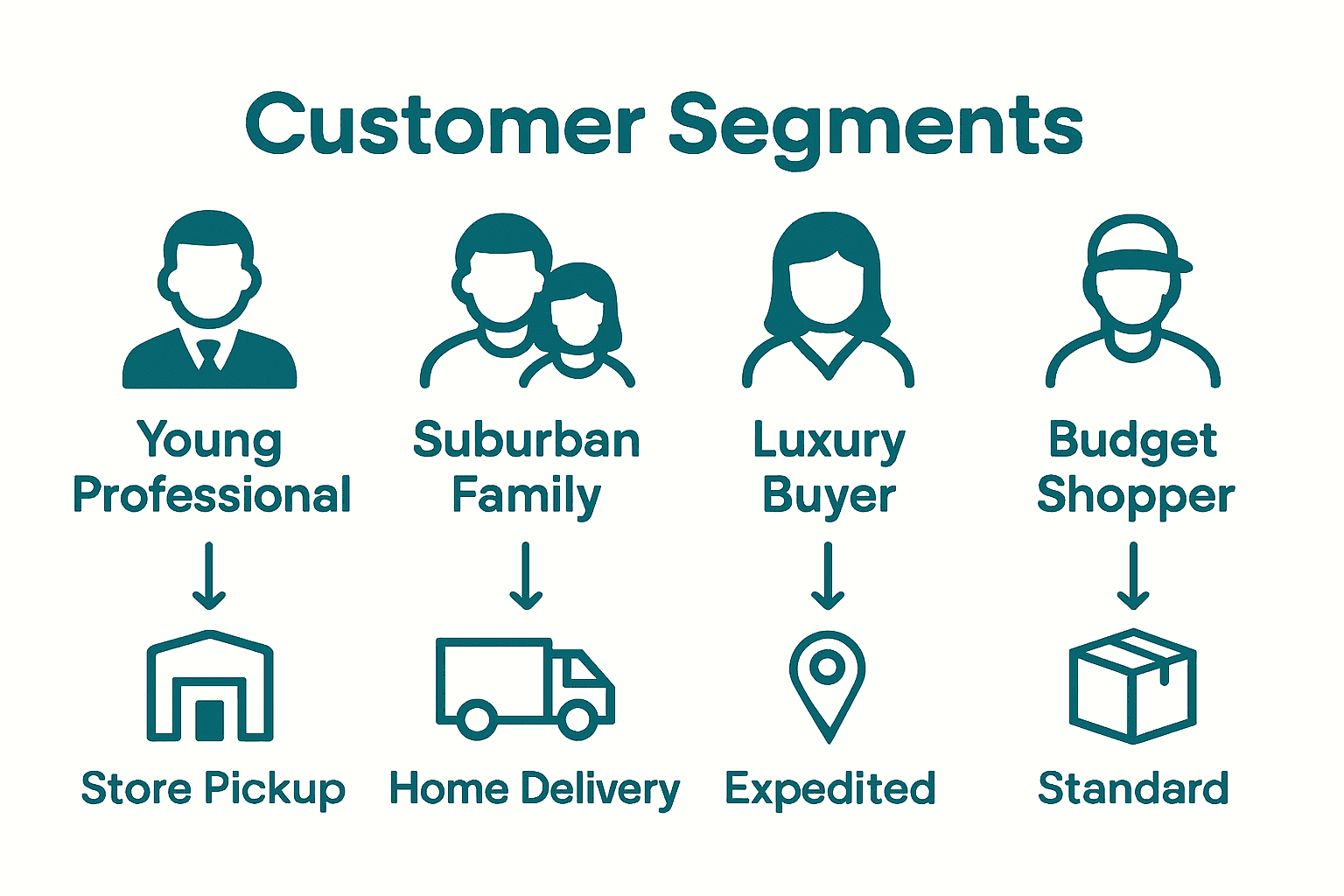
Here’s a summary of how different customer segments influence logistics needs:
| Customer Segment | Delivery Expectations | Preferred Shipping Options |
|---|---|---|
| Young Urban Professionals | 2-hour delivery Fast |
Same-day Express courier |
| Suburban Families | Affordable Reliable |
Standard shipping Flat rate |
| Luxury Product Enthusiasts | White-glove Tracked |
Priority courier Signature required |
| Budget-Conscious Shoppers | Free Economical |
Basic shipping Pick-up points |
Pro Tip: Use customer surveys analytics tools and purchase history data to refine your market understanding continuously.
With your target markets defined you can now design precise marketing messages and logistics solutions that speak directly to each segment’s unique needs. This approach transforms generic marketing into laser focused customer experiences.
Step 2: Integrate reliable courier services and fulfillment
Now that you understand your target markets its time to set up robust shipping and fulfillment systems that deliver consistent customer experiences. According to research on reliable courier services, successful ecommerce businesses create flexible logistics networks that can adapt to different customer segment needs.
Start by evaluating fulfillment platforms that offer comprehensive services. Research indicates platforms like ShipBob provide end-to-end solutions including warehousing order packing two-day shipping returns management and inventory tracking. These integrated systems connect directly with major ecommerce channels ensuring smooth operational workflows.
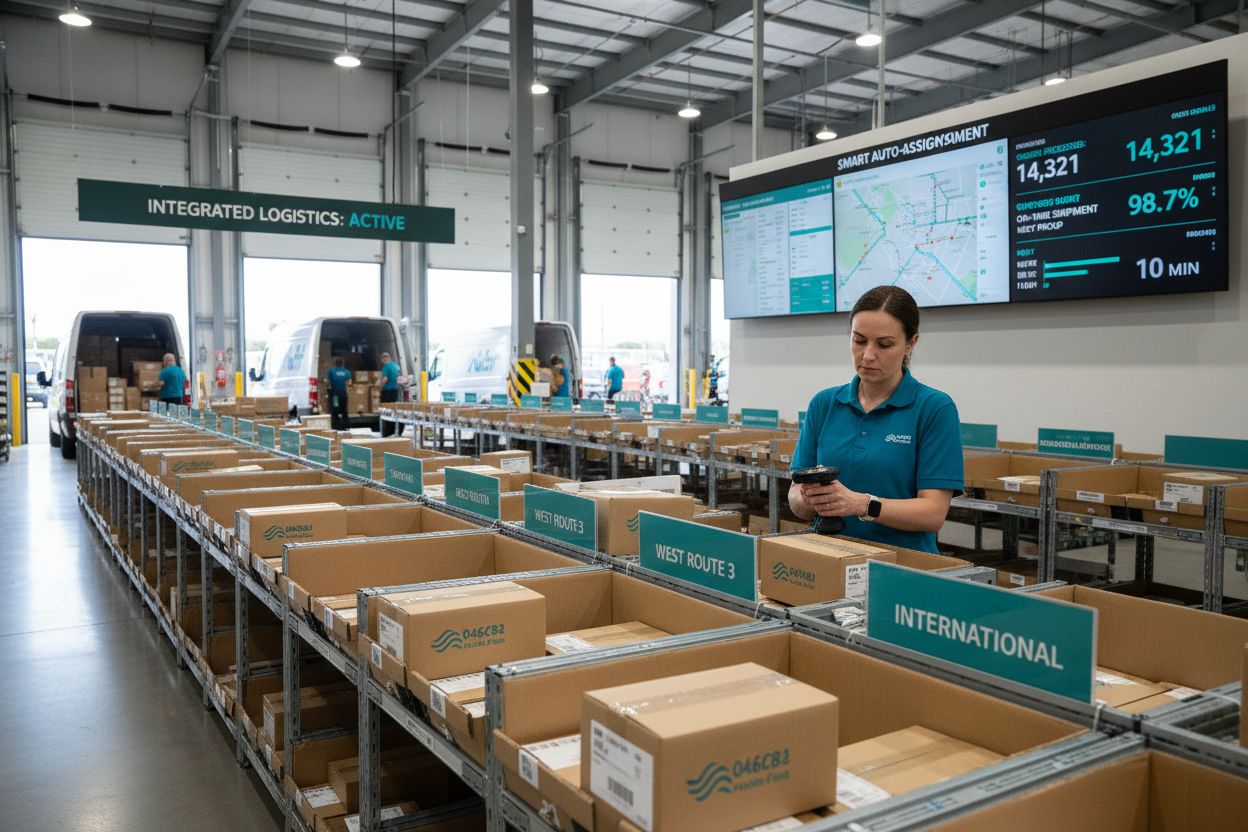
Multiple courier partnerships are crucial for scaling your logistics reliably. Look for solutions that offer:
- Smart auto-assignment rules
- Real-time rate comparisons
- Centralized tracking dashboards
- Automated label generation
- Performance analytics
- Exception handling workflows
Prioritize platforms that provide flexibility and scalability. Your chosen system should seamlessly handle varying order volumes and integrate smoothly with your existing sales channels. Courier services for small businesses often provide modular solutions that grow alongside your enterprise.
Pro Tip: Test multiple courier partners and track their performance metrics before committing to a long-term partnership.
By building a reliable and adaptable logistics infrastructure you transform shipping from a potential pain point into a competitive advantage that delights your customers and supports your business growth.
Step 3: Leverage data analytics for optimized campaigns
Taking your ecommerce marketing strategy from good to great requires transforming raw data into actionable insights. According to research on performance marketing, data-driven strategies enable precise audience targeting and continuous campaign optimization.
Start by setting up comprehensive tracking across all your marketing channels. This means connecting your website analytics social media platforms email marketing tools and advertising platforms into a unified dashboard. The goal is to create a holistic view of customer interactions and campaign performance.
Data-driven performance marketing offers powerful capabilities like:
- Precise audience segmentation
- Real-time campaign adjustments
- Personalized ad targeting
- A/B testing capabilities
- Automated retargeting workflows
- Lookalike audience generation
Focus on metrics that directly impact your bottom line. Conversion rates customer acquisition costs average order value and repeat purchase percentages should be your north star. Dont get lost in vanity metrics that look impressive but dont drive actual revenue.
Pro Tip: Review your analytics weekly and be prepared to pivot quickly when data shows a strategy isnt working.
By embracing data as your strategic partner you can create marketing campaigns that feel personally crafted for each customer segment while continuously improving your approach. The most successful ecommerce brands treat their analytics platform as a living strategic tool that guides every marketing decision.
Step 4: Automate catalog and inventory management
Streamlining your product catalog and inventory management is crucial for reducing operational overhead and providing a seamless customer experience. According to research on reliable courier services, successful ecommerce businesses leverage automation to maintain accurate and dynamic product information across multiple sales channels.
Start by selecting an automation tool that can centralize your catalog management. Research indicates platforms like Datablist can fetch clean and standardize supplier catalog data automatically. These tools can generate product descriptions translate content and sync inventory across different sales platforms with minimal manual intervention.
Key capabilities to look for in catalog management automation include:
- Real-time catalog syncing
- AI-driven product tagging
- Dynamic product recommendations
- Automated content generation
- Cross-channel inventory consistency
- Multilingual product description support
Focus on creating a single source of truth for your product information. This means ensuring that product details pricing inventory levels and descriptions remain consistent whether a customer finds your product on your website marketplace platforms or social media channels.
Pro Tip: Regularly audit your automated systems to ensure accuracy and catch any potential synchronization errors.
By investing in robust catalog and inventory management automation you transform a potentially complex operational task into a streamlined efficient process. Courier services for small businesses often recommend similar automation strategies to reduce operational complexity and improve overall business scalability.
Step 5: Verify marketing strategy impact and logistics efficiency
The final step in your ecommerce marketing journey is measuring what actually works and understanding the true effectiveness of your strategies. According to research on marketing analytics best practices, consolidating data across multiple channels provides the most comprehensive view of performance.
Start by implementing rigorous measurement techniques. As studies on causal machine learning suggest you can apply advanced analytical methods to assess the precise impact of marketing initiatives like coupon programs or targeted campaigns. This means going beyond surface level metrics to understand how specific strategies influence different customer subgroups.
Key performance verification techniques include:
- Unified data consolidation across channels
- A/B testing for campaign variants
- Performance analysis across different time frames
- Customer segment impact assessment
- Return on investment calculations
- Logistics efficiency tracking
Pay special attention to your just in time delivery processes and how they correlate with marketing performance. Efficient logistics can significantly amplify the effectiveness of your marketing strategies by ensuring timely product delivery and customer satisfaction.
Pro Tip: Develop a dashboard that shows real-time performance metrics allowing you to make rapid strategic adjustments.
By treating verification as an ongoing process you transform data into a strategic asset. The most successful ecommerce businesses view performance measurement not as a final step but as a continuous cycle of learning optimization and improvement.
Power Up Your Sales With Reliable Courier Solutions
Are you tired of losing sales due to inconsistent shipping and complex fulfillment challenges? Your ecommerce business deserves better. The article highlights how essential it is to build trust with customers through fast and dependable delivery, clear inventory visibility, and seamless cross-border shipping. Yet, navigating reliable courier partnerships and streamlining logistics processes can feel overwhelming—especially when your goal is to deliver a tailored experience for every market segment.
Explore our QA Archives to see how real businesses overcome these ecommerce logistics hurdles, and get actionable insights into industry best practices.
Achieve the reliable growth your brand needs. With ORNER’s reliable courier services, you get an all-in-one logistics platform designed for modern ecommerce and wholesale requirements. Gain real-time shipment tracking, flexible fulfillment, rapid returns management, and the confidence of a global support network. Do not let subpar shipping hold back your marketing success. Visit ORNER now and unlock end-to-end logistics tailored for your business needs—because customers expect fast, seamless delivery today.
Frequently Asked Questions
How can I define my target market for ecommerce marketing?
To define your target market, begin by analyzing demographic and lifestyle factors that influence purchasing behavior. Create detailed customer personas based on income levels, shopping frequency, and product preferences to better understand their logistics needs and tailor your marketing messages accordingly.
What logistics options should I consider for different customer segments?
Different customer segments require unique logistics solutions. For instance, young urban professionals might prioritize fast delivery options, while budget-conscious shoppers may prefer reliable and economical shipping. Assess your customer personas and align your logistics strategies with their expectations.
How can I improve my ecommerce fulfillment process?
To improve your fulfillment process, evaluate comprehensive fulfillment platforms that offer services like warehousing, order packing, and returns management. Implement multiple courier partnerships to create a flexible and reliable shipping network that scales with your business needs.
What role does data analytics play in optimizing my ecommerce marketing strategy?
Data analytics is crucial for optimizing your ecommerce marketing strategy by providing insights into customer behavior and campaign performance. Set up comprehensive tracking tools to gather data, and regularly review this information to make informed adjustments to your marketing tactics, improving conversion rates over time.
How can I automate inventory management for my ecommerce business?
Automate your inventory management by selecting a tool that centralizes your catalog and synchronizes stock across multiple sales platforms. This not only ensures real-time accuracy but also reduces operational overhead, enabling you to focus on scaling your business more effectively.
What key performance indicators should I track for my ecommerce marketing efforts?
Track key performance indicators such as conversion rates, customer acquisition costs, and return on investment to measure the efficacy of your marketing strategies. Regularly monitoring these metrics allows for timely adjustments and can lead to improved sales outcomes within a few weeks.