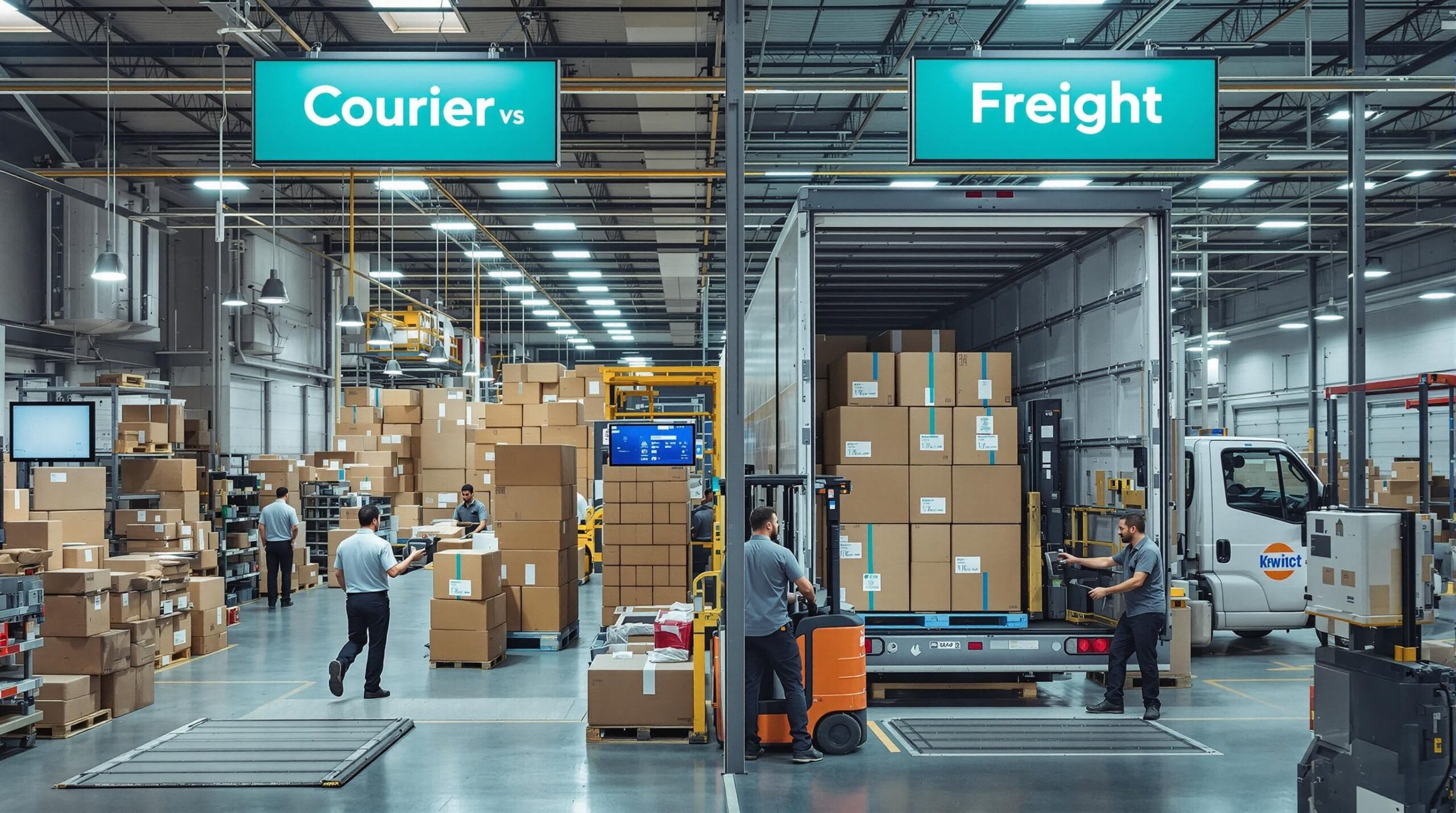
Shipping might sound straightforward, but choosing between courier and freight services can seriously impact your business’s bottom line. Most people think they’re almost the same thing, just with different vehicles or companies. Actually, the two methods handle packages from completely opposite ends of the size spectrum. Couriers rarely carry anything over 70 pounds, while freight services can move shipments topping 45,000 pounds at a time. That means picking the wrong one can cost you days in delays or thousands in unnecessary fees.
Table of Contents
- Courier Vs Freight: Key Service Differences
- Choosing The Right Option For Your Products
- Cost, Speed, And Tracking: What To Expect
- Real-World Applications For Businesses
Quick Summary
| Takeaway | Explanation |
|---|---|
| Understand size and weight limits | Couriers handle packages under 70 pounds, while freight services manage larger shipments from 10,000 to 45,000 pounds. |
| Evaluate shipping speed needs | Courier services offer rapid deliveries, ideal for urgent shipments, while freight services take longer due to logistics complexity. |
| Consider shipping frequency and volume | Businesses with regular, small shipments benefit from courier services; bulk orders are more suited for freight shipping. |
| Analyze cost structures | Courier pricing is straightforward based on weight, while freight involves complex calculations that include multiple variables. |
| Choose based on product characteristics | Tailor shipping methods to your product’s weight, dimensions, fragility, and urgency to optimize logistics efficiency. |
Courier vs Freight: Key Service Differences
Businesses navigating shipping and logistics must understand the critical differences between courier and freight services to optimize their transportation strategies. While both services move goods from one location to another, they serve fundamentally different purposes and operate with distinct characteristics.

Package Size and Weight Specifications
The primary distinction between courier and freight services lies in the package size and weight capabilities. The National Academies Press defines freight transportation as involving large shipments typically exceeding 150 pounds, often utilizing trucks, trains, ships, or airplanes for bulk or heavy items. In contrast, courier services specialize in smaller, lightweight packages.
Courier Service Characteristics:
- Packages usually under 70 pounds
- Rapid delivery timeframes
- Ideal for individual or small business shipments
- Door-to-door delivery options
Freight Service Characteristics:
- Shipments ranging from 10,000 to 45,000 pounds
- Complex logistics involving multiple transportation modes
- Designed for commercial and industrial volume shipping
- Typically palletized or containerized goods
To help clarify the major differences between courier and freight services, the table below summarizes their key characteristics:
| Feature | Courier Services | Freight Services |
|---|---|---|
| Typical Package Weight | Up to 70 pounds | 10,000–45,000 pounds |
| Shipment Size | Small parcels | Pallets, containers (large loads) |
| Delivery Speed | Rapid (same/next-day available) | Slower, more variable |
| Handling | Minimal, standardized | Specialized, complex |
| Transportation Modes | Van, small trucks, bikes | Truck, rail, ship, airplane |
| Best For | Individuals, small businesses | Manufacturers, wholesalers |
| Common Examples | Documents, small packages | Raw materials, inventory, bulk goods |
Transportation Mode and Complexity
According to the Federal Highway Administration, freight transportation involves intricate logistics across diverse transportation networks. Freight carriers manage complex shipping requirements, including cross-border transportation, customs clearance, and specialized handling for industrial goods.
Courier services, by comparison, offer streamlined, standardized shipping processes. They focus on quick, predictable delivery routes with minimal handling complexities. Small packages move through centralized sorting facilities and are typically delivered within days or even hours, depending on the service level selected.
Businesses must carefully evaluate their specific shipping needs. Manufacturers and wholesalers requiring large volume transportation will naturally gravitate toward freight services. Ecommerce sellers and small businesses shipping individual products will find courier services more cost-effective and efficient.
Understanding these key differences allows companies to select the most appropriate shipping method, balancing speed, cost, and logistical complexity. Whether moving a single package or managing extensive industrial shipments, choosing the right transportation service is crucial for operational success.
Choosing the Right Option for Your Products

Selecting the appropriate shipping method is a critical decision that directly impacts your business operations, customer satisfaction, and overall logistics efficiency. Different products demand unique transportation strategies, making it essential to understand how courier and freight services align with specific shipping requirements.
Product Characteristics and Shipping Considerations
Inbound Logistics highlights that the choice between courier and freight services depends on multiple factors beyond just package dimensions. Businesses must carefully evaluate their product characteristics to determine the most suitable shipping approach.
Recommended Shipping Selection Criteria:
- Weight: Parcels under 70 pounds suit courier services
- Dimensions: Large or irregularly shaped items require freight shipping
- Fragility: Delicate items need specialized handling
- Delivery Urgency: Time-sensitive products demand faster courier options
To provide a clear overview, the following table summarizes criteria businesses should consider when choosing between courier and freight shipping:
| Criteria | Courier Services Suitability | Freight Services Suitability |
|---|---|---|
| Weight | Best for under 70 pounds | Best for 10,000+ pounds |
| Dimensions | Small, regular shaped packages | Large, irregular, or palletized items |
| Fragility | Suitable for delicate, well-packed items | Handles specialized/fragile large goods |
| Delivery Urgency | Same/next day, time-sensitive shipments | Not ideal for urgent, except expedited |
| Typical Volume | Low, frequent shipments | High, batch or bulk shipments |
Volume and Frequency of Shipments
Red Stag Fulfillment provides comprehensive insights into shipping strategies based on shipment volume. Businesses must consider their typical order quantities and shipping frequencies when selecting between courier and freight services.
For ecommerce sellers managing smaller, consistent product volumes, courier services offer flexibility and cost-effectiveness. These services excel at handling individual orders with quick turnaround times. Manufacturers and wholesalers dealing with bulk shipments will find freight services more economical and practical for transporting large quantities of goods.
Cost and Logistics Efficiency
The Area News emphasizes that transportation costs vary significantly between courier and freight services. Factors such as shipping distance, package weight, and delivery speed directly influence pricing structures.
Courier services typically charge based on package weight and dimensions, with pricing increasing proportionally to size and delivery speed. Freight shipping involves more complex pricing models, often calculated by total shipment volume, weight, and transportation mode. Businesses should conduct thorough cost-benefit analyses to determine the most financially prudent shipping strategy.
Additionally, consider specialized requirements like temperature-controlled shipping for perishable goods, international customs clearance for cross-border transactions, and tracking capabilities. Each product category presents unique logistical challenges that demand tailored shipping solutions.
Successful shipping strategies require ongoing evaluation and adaptation. Regularly assess your shipping performance, gather customer feedback, and remain flexible in your approach. The right shipping method can significantly enhance customer satisfaction, reduce operational costs, and support your business growth.
Cost, Speed, and Tracking: What to Expect
Navigating the complex landscape of shipping services requires a deep understanding of cost structures, delivery speeds, and tracking capabilities. Businesses must carefully analyze these critical factors to make informed decisions about their logistics strategies.
Pricing Dynamics and Cost Considerations
Freightos reveals that shipping costs involve multiple variables beyond simple weight and distance calculations. Courier and freight services employ distinctly different pricing models that can significantly impact a company’s operational expenses.
Courier services typically use a straightforward pricing structure based on package weight, dimensions, and delivery speed. Key pricing factors include:
- Dimensional weight calculations
- Delivery time selection
- Origin and destination zones
- Additional service fees
Freight shipping pricing becomes more complex, incorporating factors such as:
- Total shipment volume
- Transportation mode
- Fuel surcharges
- Handling requirements
- Customs and international logistics expenses
Delivery Speed and Performance Expectations
Supply Chain Dive indicates that delivery speed varies dramatically between courier and freight services. Courier services excel in rapid, point-to-point delivery, while freight transportation involves more intricate logistics networks.
Typical delivery timeframes demonstrate the fundamental differences:
Courier Services:
- Local deliveries: 1-2 business days
- National shipments: 2-5 business days
- Express options: Same-day or next-day delivery
Freight Shipping:
- Less-than-truckload (LTL): 3-10 business days
- Full truckload: 2-5 business days
- International freight: 14-45 days depending on transportation mode
The table below provides a direct comparison of the typical delivery timeframes for courier and freight services:
| Shipping Method | Local | National | Express | International |
|---|---|---|---|---|
| Courier Services | 1–2 days | 2–5 days | Same/next-day | Varies (limited) |
| Freight (LTL) | 3–10 days | 3–10 days | N/A | 14–45 days |
| Freight (FTL) | 2–5 days | 2–5 days | N/A | 14–45 days |
Advanced Tracking and Visibility
Modern businesses demand real-time tracking and comprehensive shipment visibility. LogisticsTrends highlights the technological advancements in shipping tracking systems that provide unprecedented transparency.
Courier services typically offer:
- Real-time GPS tracking
- Precise delivery time estimates
- Mobile and web-based tracking interfaces
- Instant notification systems
Freight tracking technologies include:
- Comprehensive shipment milestone updates
- Detailed logistics network visibility
- Integration with enterprise resource planning systems
- Advanced analytics and reporting
Businesses must recognize that tracking complexity increases with shipment size and international transit. Selecting a shipping partner with robust technological infrastructure ensures better visibility, risk management, and operational planning.
Understanding these nuanced differences allows companies to optimize their shipping strategies, balance cost-efficiency with performance requirements, and ultimately enhance customer satisfaction through reliable and transparent logistics solutions.
Real-World Applications for Businesses
Different industries require unique shipping strategies that leverage the strengths of courier and freight services. Understanding how various sectors utilize these transportation methods can help businesses optimize their logistics and supply chain operations.
Manufacturing and Industrial Sector
The National Academies Press highlights the critical role of freight logistics in facilitating complex supply chain movements. Manufacturers rely heavily on freight services for transporting large volumes of raw materials, components, and finished products across extensive distribution networks.
Manufacturing Shipping Strategies:
- Raw material transportation between production facilities
- Large component shipments for assembly lines
- Bulk inventory transfers between warehouses
- International supply chain logistics
- Heavy machinery and equipment transportation
Manufacturers often utilize less-than-truckload (LTL) and full truckload shipping options to move significant quantities of goods efficiently. vLex United States explains that LTL freight involves shipments weighing less than 10,000 pounds, which typically move through a structured five-step process including local pick-up, terminal sorting, line haul, destination sorting, and final delivery.
Ecommerce and Retail Applications
Inbound Logistics demonstrates that ecommerce and retail businesses require a more nuanced approach to shipping, often combining both courier and freight services to meet diverse customer expectations.
Retail Shipping Approaches:
- Small product deliveries using courier services
- Bulk inventory transfers via freight shipping
- Cross-border international product distribution
- Reverse logistics and returns management
- Seasonal inventory transportation
Small to medium-sized online retailers typically rely on courier services for direct-to-consumer shipments, leveraging quick delivery times and cost-effective pricing. Larger retailers and wholesalers complement these services with freight shipping for warehouse-to-warehouse transfers and large inventory movements.
Technology and Specialized Industries
Technology companies and specialized industries present unique shipping challenges that require sophisticated logistics solutions. These sectors often need precise handling, temperature-controlled transportation, and advanced tracking capabilities.
Specialized Shipping Requirements:
- Sensitive electronic equipment transportation
- Pharmaceutical and medical supply logistics
- Precision instrument handling
- Research and laboratory equipment shipping
- High-value technology product distribution
In these industries, businesses must carefully select shipping methods that provide maximum protection, minimal handling, and comprehensive tracking. Courier services offer specialized handling for delicate items, while freight services manage larger scientific equipment and bulk medical supplies.
Successful businesses recognize that no single shipping solution fits all scenarios. The most effective logistics strategies involve flexible, adaptable approaches that combine courier and freight services to meet specific operational needs. By understanding the unique capabilities of each shipping method, companies can create optimized transportation solutions that reduce costs, improve efficiency, and enhance overall customer satisfaction.
Frequently Asked Questions
What is the main difference between courier and freight services?
Courier services specialize in small, lightweight packages typically weighing under 70 pounds, offering rapid delivery, while freight services handle larger shipments ranging from 10,000 to 45,000 pounds, involving more complex logistics.
When should I choose courier services over freight services?
Choose courier services for urgent, small-package deliveries, while freight services are ideal for bulk shipments, large quantities, or heavier goods that need to be moved economically.
How do costs compare between courier and freight services?
Courier services generally have straightforward pricing based on weight and dimensions, while freight costs are evaluated by multiple factors including total shipment volume, transportation mode, and handling requirements, making it more complex.
What factors should I consider when selecting a shipping method?
Consider the weight and dimensions of your products, the urgency of delivery, the frequency of shipments, and the specific logistics requirements of your goods to determine the most suitable shipping method.
Unlock Reliable Shipping That Matches Your Business Growth
Are you struggling to balance rapid courier needs with the complexities of freight shipments? If you find yourself hesitating between different shipping options, you are not alone. The main challenge many businesses face, as outlined in our guide, is selecting the right solution to fit unique product sizes, shipping urgency, and cost considerations. This choice is critical for eCommerce sellers, wholesalers, and manufacturers who need both flexibility and cost control across their supply chains.
Do not let logistics hurdles slow your business down. Whether you need fast, reliable courier services for small parcels or a trusted partner for heavy freight, or-ner.com brings everything together in one easy-to-manage platform. You get real-time tracking, support with customs and cross-border logistics, and end-to-end fulfillment tailored for businesses of every size. Take the next step toward frictionless shipping and scale your operations with confidence. Explore reliable courier services or start with our homepage for access to tailored logistics solutions you can trust.