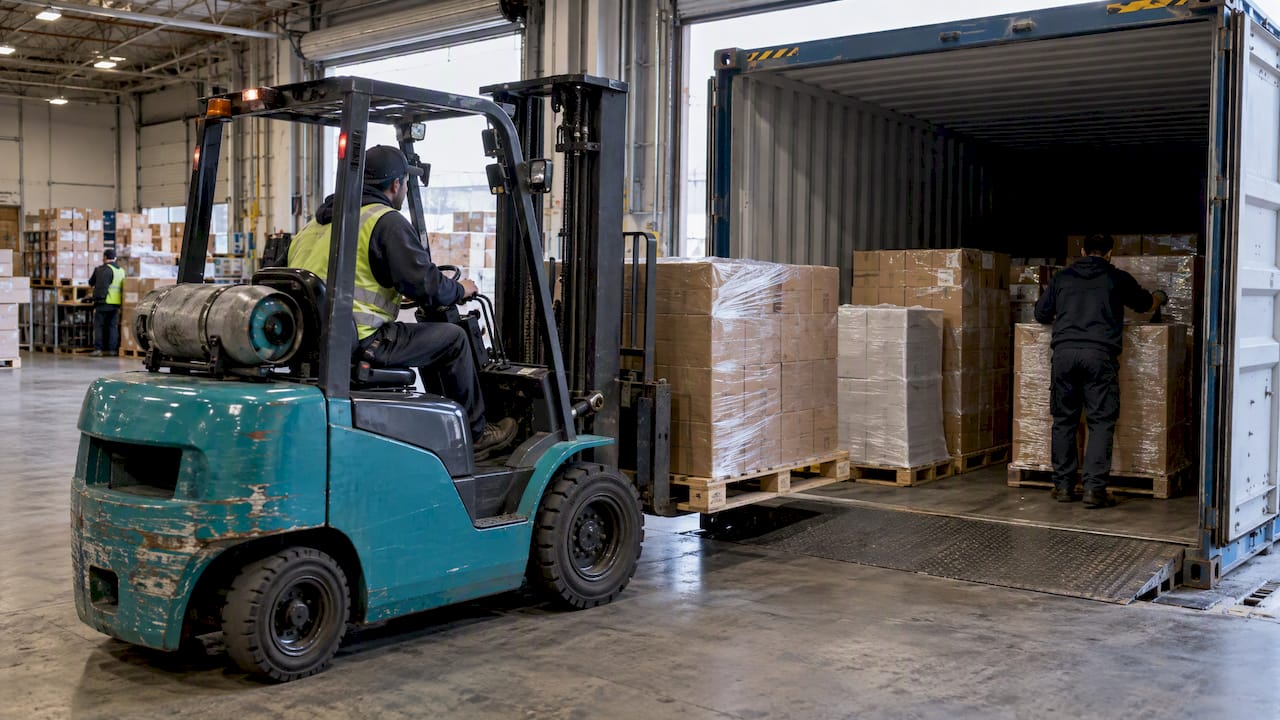
The best shipping company for fragile items is the one that treats damage prevention as a system, not a hope. That means documented SKU-level pack rules, inbound inspection with quarantine, minimal handovers in transit, and insured, telemetry-tracked shipping. If a provider can’t show you damage-rate data and a written packing protocol, keep looking. Some fulfillment providers build their workflows around exactly these controls.
TL;DR:
- Damage rates can be significantly reduced by choosing providers that track post-shipment damage data and enforce SKU-specific packing protocols.
- A clear inbound inspection process with sampling, photo documentation, and root-cause tagging prevents damaged inventory from reaching customers.
- Minimizing handovers during transit cuts the risk of mishandling, especially when using dedicated ground or air routes with real-time tracking and chain-of-custody logs.
- Comprehensive insurance terms, including declared value and clear claim evidence requirements, are crucial for high-value fragile shipments.
- Implementing SKU-tiered packing rules, with mandatory reordering thresholds and weekly audits during early onboarding, improves packaging consistency and reduces damage spikes.
Table of Contents
- What Should You Look for in a Fragile-Goods Shipping Partner?
- How Do You Set SKU-Level Packaging Rules That Packers Actually Follow?
- Why Inbound Inspection Stops Damage Before It Reaches Customers
- Does Fewer Handovers Actually Mean Less Damage?
- What Insurance Terms Should Be in Your Fragile-Shipping Contract?
- Onboarding Mistakes That Spike Damage Rates in the First 90 Days
- Where Or-ner Fits Into This Checklist
- Sources
- FAQ
What Should You Look for in a Fragile-Goods Shipping Partner?
Most sellers vet a 3PL on price and delivery speed. That’s backward. For fragile SKUs, the contract terms and operational discipline matter more than the quote on the invoice, because a $2 savings on shipping evaporates the moment a $40 item arrives shattered.
Here’s the checklist that actually separates a competent partner from one that will quietly rack up damage claims:
- Documented pack rules at the SKU level. Ask for a sample pack rule sheet before you sign anything. A provider that packs a ceramic vase the same way it packs a phone case hasn’t thought this through.
- Written substitution policy. When a packer runs out of the specified box or foam insert, what happens next? Providers who enforce consistent packaging materials instead of letting staff improvise on the floor see fewer corner-crush and dimensional-weight surprises.
- Inbound inspection and quarantine process. Every unit entering the warehouse should get a sampling check, photo documentation, and a timestamp. Damaged inventory should never reach a pick face.
- Packout consistency guarantees backed by KPIs. Ask for actual numbers: damage rate by SKU category, claims turnaround time, inspection pass rate. If a provider can’t produce these, they aren’t tracking them.
- Real-time telemetry on shipments. Shock sensors and GPS logging create an audit trail that proves what happened in transit, not just what the carrier claims happened.
- Insurance terms spelled out in the contract, including declared-value handling and claims SLA language, not just a vague reference to “standard liability.”
Pro Tip: Before signing, ask for 90 days of real damage-rate data from an existing client in your product category. A provider that hesitates to share this either doesn’t track it or doesn’t want you to see it.
Providers who build this into their standard operating model, rather than treating it as a premium add-on, are worth paying slightly more for. Or-ner’s courier services for fragile items page walks through how claims handling and KPI tracking fit within a standard fulfillment agreement.
How Do You Set SKU-Level Packaging Rules That Packers Actually Follow?
A packaging rule that lives in someone’s head, or in a memo nobody reads, isn’t a rule. It’s a suggestion, and suggestions get ignored on a busy shift. The fix is a decision matrix that removes judgment calls from the packing floor.
- Tier every SKU by fragility. Group products into three or four tiers, from “durable, minimal protection needed” to “extreme fragility, custom containment required.”
- Assign a required packaging spec to each tier. Tier one might get standard corrugate and air pillows. Tier four, like glass sculpture or musical instrument bodies, needs custom crates, floating decks, or foam-in-place inserts.
- Lock in material substitution rules. Specify exactly what happens when a preferred box size runs out, and require sign-off before a packer swaps materials on their own.
- Set reorder triggers. Tie packaging material inventory to automatic reorder points so a stockout never forces improvisation.
- Audit weekly during the first quarter, then monthly. Pull a random sample of completed packouts and check them against the matrix.
Custom crates and floating decks aren’t overkill for high-value fragile freight. Specialized handling that minimizes touchpoints and uses engineered packaging like custom crates is standard practice for freight specialists moving irreplaceable or high-value cargo, and the same logic scales down to individual ecommerce SKUs.
Pro Tip: Run a 30-day pilot with your top five fragile SKUs before rolling a new pack matrix across your full catalog. It’s easier to fix a bad rule for five products than for five hundred. Or-ner’s guide to shipping fragile items step by step covers packout procedures in more depth.
Why Inbound Inspection Stops Damage Before It Reaches Customers
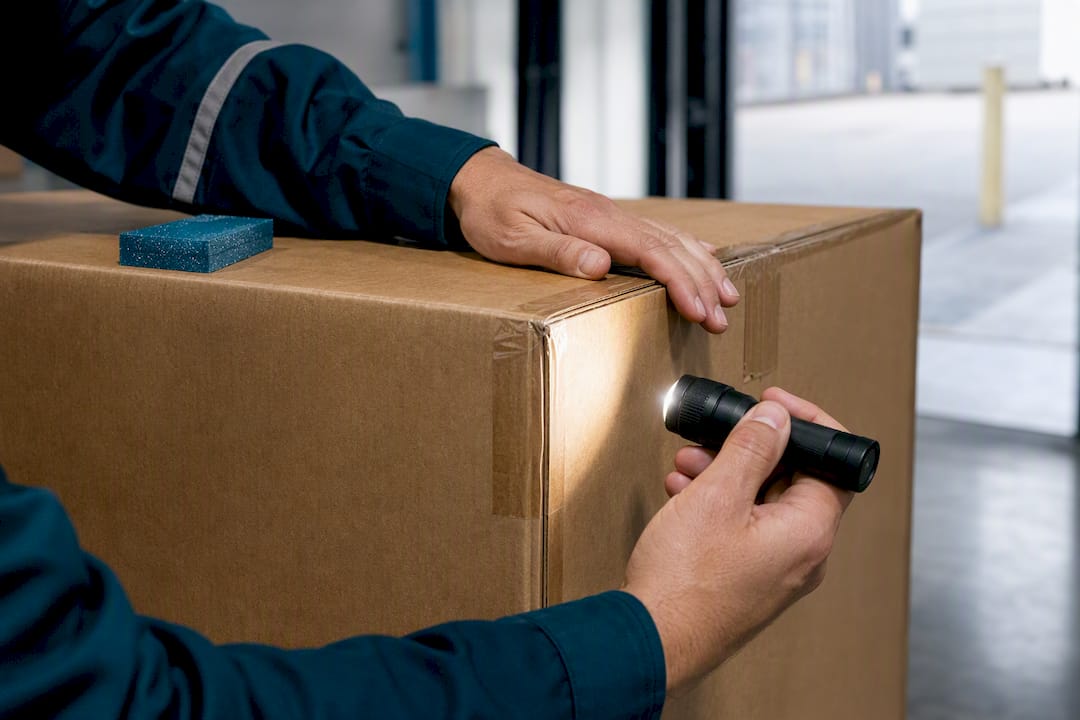
Damage that slips through receiving doesn’t disappear. It sits on a shelf until a customer orders it, then comes back as a return, a one-star review, or a chargeback. Inbound QC is where a fragile-goods operation either catches the problem or inherits it.
A real inbound protocol includes:
- Sampling checks on every inbound batch, not just a visual scan of the outer carton.
- Photo capture and timestamps for any unit showing signs of damage, so there’s a record tied to a specific shipment and carrier.
- Root-cause tagging that flags whether damage happened in transit, at the manufacturer, or during unpacking.
- A quarantine process that routes damaged units to repair, return-to-vendor, or credit, rather than letting them sit in general inventory.
Without a recorded inspection step, damaged inventory just becomes tomorrow’s customer return. That data loop matters more than most sellers realize: once you’re tagging root causes, you can trace a spike in damage back to a specific packing material change or a specific carrier lane, and fix it before it scales.
Does Fewer Handovers Actually Mean Less Damage?
Yes, and the relationship is closer to linear than most sellers expect. Every time a package changes hands, from warehouse to local courier to line-haul truck to a regional sort facility, it gets a new chance to get dropped, crushed under heavier freight, or mishandled by someone who has never touched your product before.
The trade-off is cost and speed. Dedicated ground transport or air freight with specialized handling costs more than consolidated multimodal shipping, but it eliminates co-loading hazards and cuts touchpoints dramatically. For urgent or high-value fragile freight, dedicated ground or specialized air handling is generally the safer call, even at a premium.
Before committing volume to any route, ask providers for:
- Shock and temperature sensor data from actual past shipments, not marketing claims.
- Real-time tracking with chain-of-custody logs showing every handover point.
- A short pilot run on the specific lane you plan to use, measuring damage rate, shock event frequency, and transit time variance.
Handling standards and the number of handovers on a route materially change fragile outcomes, and testing a route before scaling volume is the only reliable way to know if a carrier’s claims hold up in practice. A provider that resists a pilot test is telling you something.
What Insurance Terms Should Be in Your Fragile-Shipping Contract?
Carrier liability limits almost never cover the real replacement cost of a fragile, high-value item. Standard carrier liability might cap out at a fraction of what a broken item actually costs to replace, which means declared-value coverage or full cargo insurance is often necessary to recover full costs on anything beyond low-value goods.
Four things to negotiate before you sign:
- Declared value versus default carrier liability. Know the gap and decide whether you’re insuring the difference yourself or requiring it in the contract.
- Evidence requirements for claims. Get clarity on what you’ll need to submit: photos, inbound inspection records, packaging approval sign-offs. Claims get denied for missing documentation more often than for coverage disputes.
- SLA credits and substitution penalties. If the provider misses a damage-rate target or swaps packaging materials without approval, the contract should specify a financial consequence.
- Cost trade-off between full cargo insurance and limited liability. Full coverage costs more per shipment but removes the guesswork on high-value SKUs.
Onboarding Mistakes That Spike Damage Rates in the First 90 Days
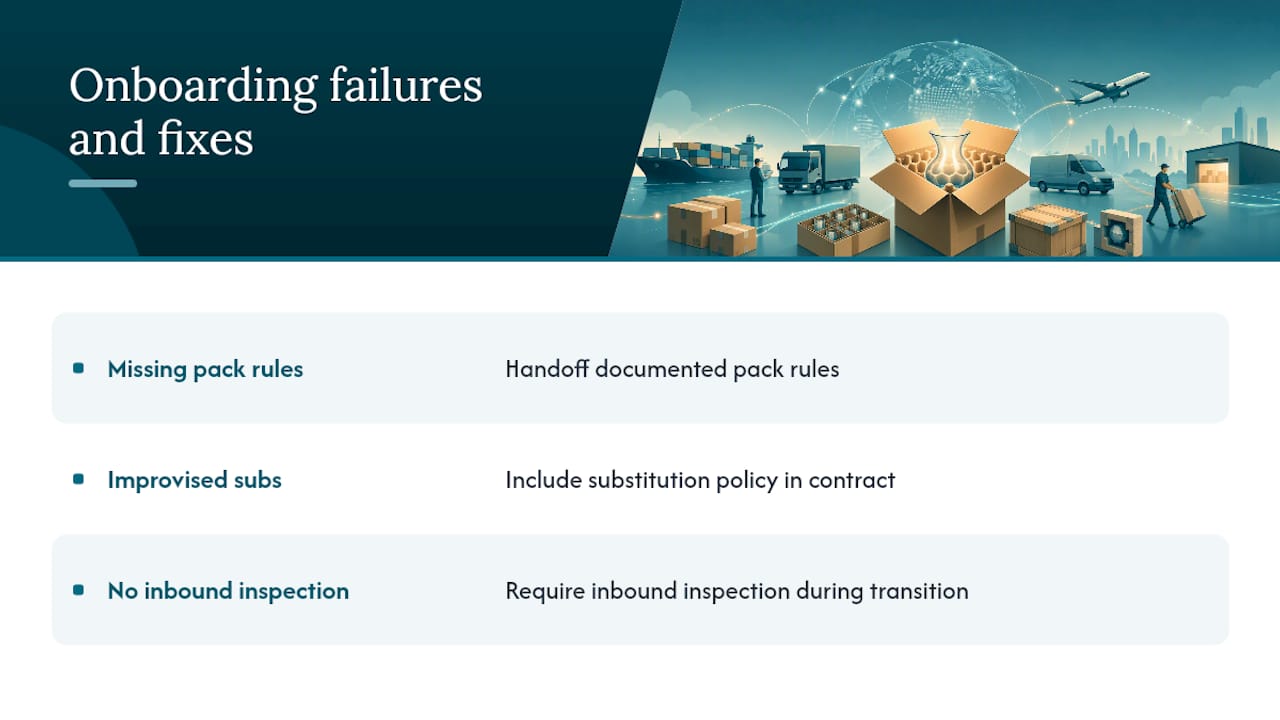
Most damage spikes after switching providers trace back to the same three failures: no documented pack rules handed over during onboarding, packers improvising substitutions because nobody set a policy, and zero inbound inspection during the transition period. Sellers who catch this early write substitution rules and pack approvals directly into the onboarding contract, and it tends to save them from the worst of it.
The first 90 days should follow a fixed rhythm: run a small pilot batch of your highest-risk SKUs, audit pack quality weekly, test the actual transit route rather than trusting a sales pitch, and review damage data every week without exception. Tracking damage rate per SKU and tying it back to the specific packing material used gives you a fast feedback loop, fast enough to fix a bad packaging choice in week three instead of discovering it in month four after thousands of units have shipped.
Lock in your operational rules and KPI targets once that early data stabilizes, not before.
— Maayan
Where Or-ner Fits Into This Checklist
Everything in this checklist, SKU-level pack rules, inbound inspection, fewer handovers, insured telemetry-tracked transit, reflects best practices for fulfillment networks rather than an add-on tier.
Onboarding starts with a pilot: your highest-risk SKUs move through Or-ner’s global fulfillment and warehousing network first, with pack rules and inbound inspection standards documented before volume scales. From there, some fulfillment solutions provide KPI dashboards tracking damage rate and claims turnaround by SKU, real-time shipment visibility across ocean, air, and ground modes, and support for cross-border moves without losing inbound QC discipline. Deciding between piecing together a courier, a warehouse, and a customs broker, or consolidating that into one accountable partner affects how you track damage rates. Start by requesting a quote through Or-ner’s reliable courier services page and ask specifically about pilot terms for your fragile SKU tier.
Sources
For deeper detail on packaging specs and material selection, see Or-ner’s packaging best practices for ecommerce shipping and the 2026 guide to shipping fragile goods safely. Both cover ground this article only touches on.
- Top Fragile Freight Transport Specialists for Safe Delivery
- How to choose a carrier for fragile shipments – FLEX.
FAQ
What Makes a Shipping Company “Best” for Fragile Items?
The best shipping company for fragile items enforces documented, SKU-level pack rules, runs inbound inspection with quarantine, and minimizes handovers during transit. It should also offer telemetry tracking and clear insurance terms, not just a low quote.
How Much Should I Expect to Pay for Fragile Item Shipping?
Pricing depends heavily on packaging tier, transit mode, and insurance level, so there’s no single flat rate across providers. Or-ner’s freight booking and estimate tool generates a quote based on your specific SKU and route rather than a generic average.
How Do I Know if a 3PL’s Inbound Inspection Process Is Real?
Ask for a sample inspection report, including photo evidence, timestamps, and root-cause tagging from a recent shipment batch. A provider running a genuine process will have this on hand immediately; one that doesn’t will stall or offer a vague description instead.
Does Fewer Carrier Handovers Really Reduce Damage Risk?
Yes. Each handover adds a new point where a package can be dropped, crushed, or mishandled, so routes with fewer transfers consistently show lower damage rates than multi-stop consolidated shipping. Dedicated ground or air routing costs more but is often worth it for high-value fragile SKUs.
What Insurance Should I Require for High-Value Fragile Shipments?
Standard carrier liability rarely covers full replacement cost, so declared-value coverage or full cargo insurance is usually necessary for high-value fragile goods. Make sure your contract also specifies exactly what evidence, photos, inspection records, and pack approvals, is required to file a valid claim.