

Shipping an order across cities or continents can feel like a puzzle with many moving pieces. Tracking every package and keeping customers happy can seem overwhelming for any business. The right logistics partner turns these challenges into opportunities for growth and efficiency. With so many options out there promising speed and simplicity, the difference often lies in the details you do not see at first glance. Discover how different solutions bring clarity to the chaos and help transform the way you move products from point A to point B.
Table of Contents
orner
At a Glance
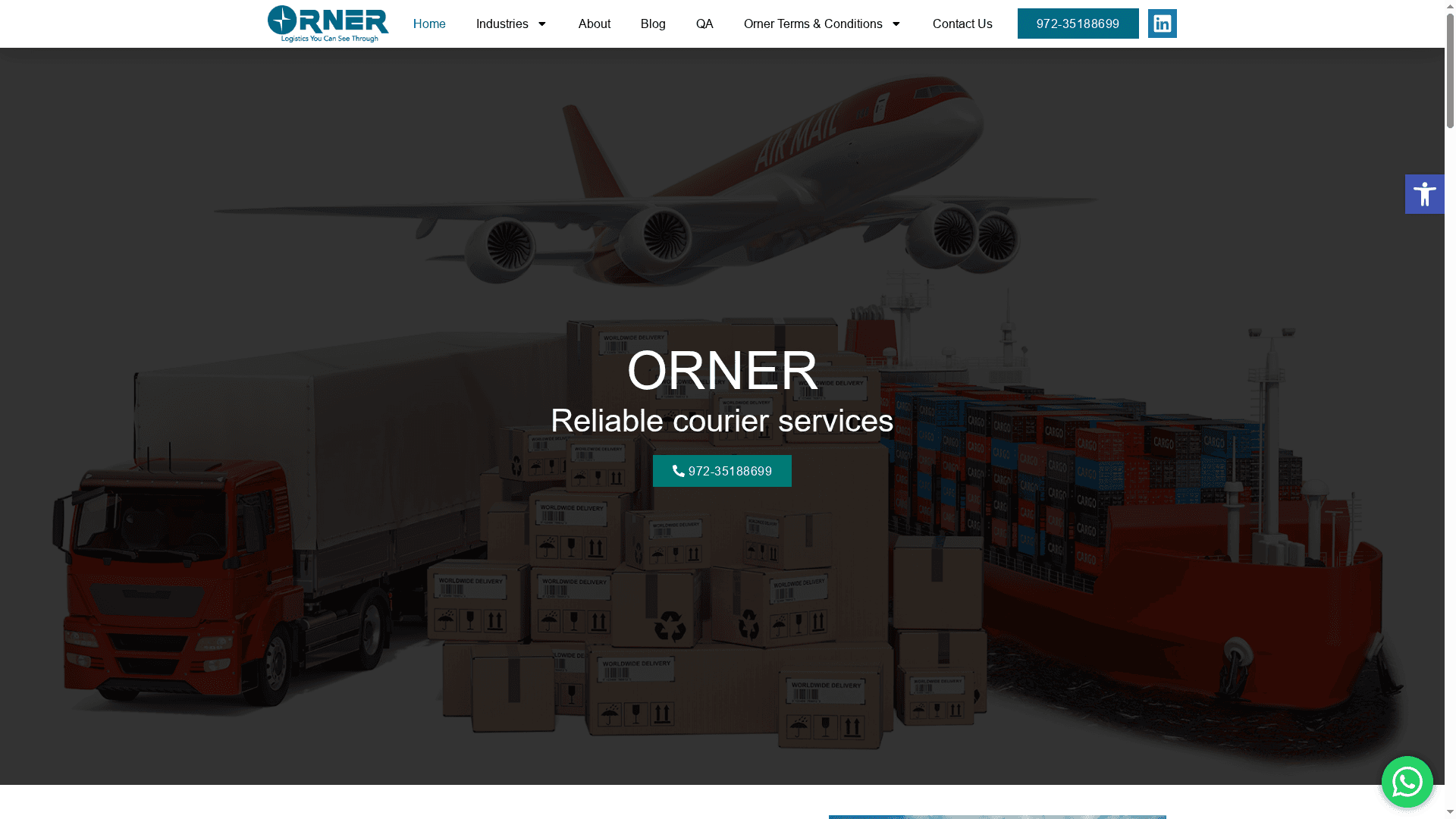
orner is an end-to-end logistics platform built for e-commerce sellers who need reliable courier services from factory to customer door. It consolidates catalog management, cross-border logistics, customs handling, and final-mile delivery into a single workflow, giving merchants real-time shipment tracking and supply chain visibility. The platform scales from small retailers to global brands and emphasizes fast, flexible warehousing across strategic international hubs.
Core Features
orner’s core capabilities focus on comprehensive logistics management: end-to-end logistics management, real-time shipment tracking, supply chain visibility, customs and documentation handling, and multi-location warehouse and inventory management. Warehouses and fulfillment centers are positioned across China, the US, Canada, Europe, and Australia — including fulfillment operations in Shenzhen and warehouses abroad — enabling regional inventory placement and faster delivery windows. The UI surfaces analytics, exception management, and real-time communication to support data-backed decision-making and automated workflows.
Fast. Flexible. Global.
Pros
- Streamlined supply chain workflows with real-time data: orner centralizes order, inventory, and shipment data so you can reduce manual reconciliation and act on exceptions faster.
- Supports large and small businesses with comprehensive services: The platform is designed to serve solo sellers up to enterprise brands without forcing a one-size-fits-all process.
- Global warehousing and fulfillment options: Strategic warehouses in China, the US, Canada, Europe, and Australia — plus a Shenzhen fulfillment presence — let you place inventory where demand is, reducing transit time.
- Automation of workflows to match work methodologies: orner automates routine tasks while adapting to your existing workflows, which minimizes disruption during onboarding.
- Integrated platform for inventory, order, and shipment management: A single interface for catalog to delivery eliminates fractured toolchains and improves visibility across ocean, air, and land movements.
Who It’s For
orner is ideal for e-commerce sellers, manufacturers, distributors, and wholesalers that need integrated logistics and supply chain solutions, especially those operating internationally. If you manage multi-country inventory, ship cross-border frequently, or need a partner that can combine customs clearance with fulfillment and last-mile delivery, orner fits your operational profile. It’s built for logistics managers who prefer consolidated control rather than juggling separate carriers, warehouses, and customs brokers.
Unique Value Proposition
orner’s unique value is the consolidation of the entire fulfillment lifecycle into one platform tailored for commerce: from catalog management through customs and on to the customer door. Unlike fragmented setups that force manual handoffs, orner provides consolidated visibility, automation, and strategically located warehousing — including Shenzhen fulfillment — enabling faster delivery options and lower landed costs for sellers with international demand. That consolidation reduces touchpoints, shortens issue-resolution time, and supports scaled cross-border growth, making orner a superior choice for merchants prioritizing reliability and operational simplicity.
Real World Use Case
A small online retailer uses orner to centralize inventory across Asia, North America, and Europe, processes orders through the platform, and relies on orner’s customs documentation and fulfillment centers to deliver to customers worldwide. The retailer shortens delivery windows and reduces stockouts by rebalancing inventory across orner’s global warehouses.
Pricing
Not specified on the website.
Website: https://or-ner.com
ShipBob
At a Glance
ShipBob is a global ecommerce fulfillment partner built to scale online brands with end-to-end order fulfillment, inventory distribution, and international shipping. It combines a broad fulfillment-network footprint with real-time inventory visibility and carrier discounts to speed deliveries and reduce costs. If you need multi-warehouse distribution, 2-day domestic shipping, and DDP-capable cross-border fulfillment, ShipBob is a strong contender—though exact costs require a custom quote.
Core Features
ShipBob provides ecommerce-focused fulfillment: inventory distribution across its global warehouse network, order picking and packing, and international shipping to 250+ destinations with standard and expedited options (including DDP for duty-paid delivery). Key operational features include 2-day shipping across the continental U.S., real-time inventory tracking with reorder alerts, and the option to create customized unboxing experiences. The platform also advertises advanced analytics and warehouse management tools that support optimization and growth.
Pros
- Transparent and straightforward pricing structure helps merchants understand the cost components of fulfillment and shipping in principle.
- Scalability across more than 60 fulfillment centers worldwide enables brands to place inventory closer to customers and reduce transit times.
- Advanced technology and analytics provide actionable insights that support inventory optimization and order-routing decisions.
- Bulk shipping discounts negotiated with major carriers deliver lower per-parcel rates for sellers with higher volumes.
- On-site customer support at fulfillment centers gives merchants a local touchpoint for receiving, kitting, and issue resolution.
Cons
- Pricing is customized and may vary, requiring merchants to request a quote to know exact costs.
- Additional fees may apply for services such as kitting, labeling, or custom packaging, which can raise total fulfillment expenses.
- International shipping rates and available services can differ by route and may require further inquiry to confirm landed-cost expectations.
Who It’s For
ShipBob is best suited to ecommerce businesses and brands that need a reliable, scalable, and technology-driven fulfillment partner—especially those expanding into new regions or managing multi-warehouse inventory. If you sell at volume, need two-day domestic delivery, or require DDP cross-border options, ShipBob aligns well with your operational needs.
Unique Value Proposition
ShipBob’s core advantage is its combination of a sizable global fulfillment footprint and ecommerce-first technology: real-time inventory visibility, analytics for optimization, and negotiated carrier discounts. That mix lets brands reduce transit times and improve customer experience while maintaining centralized control over distributed inventory.
Real World Use Case
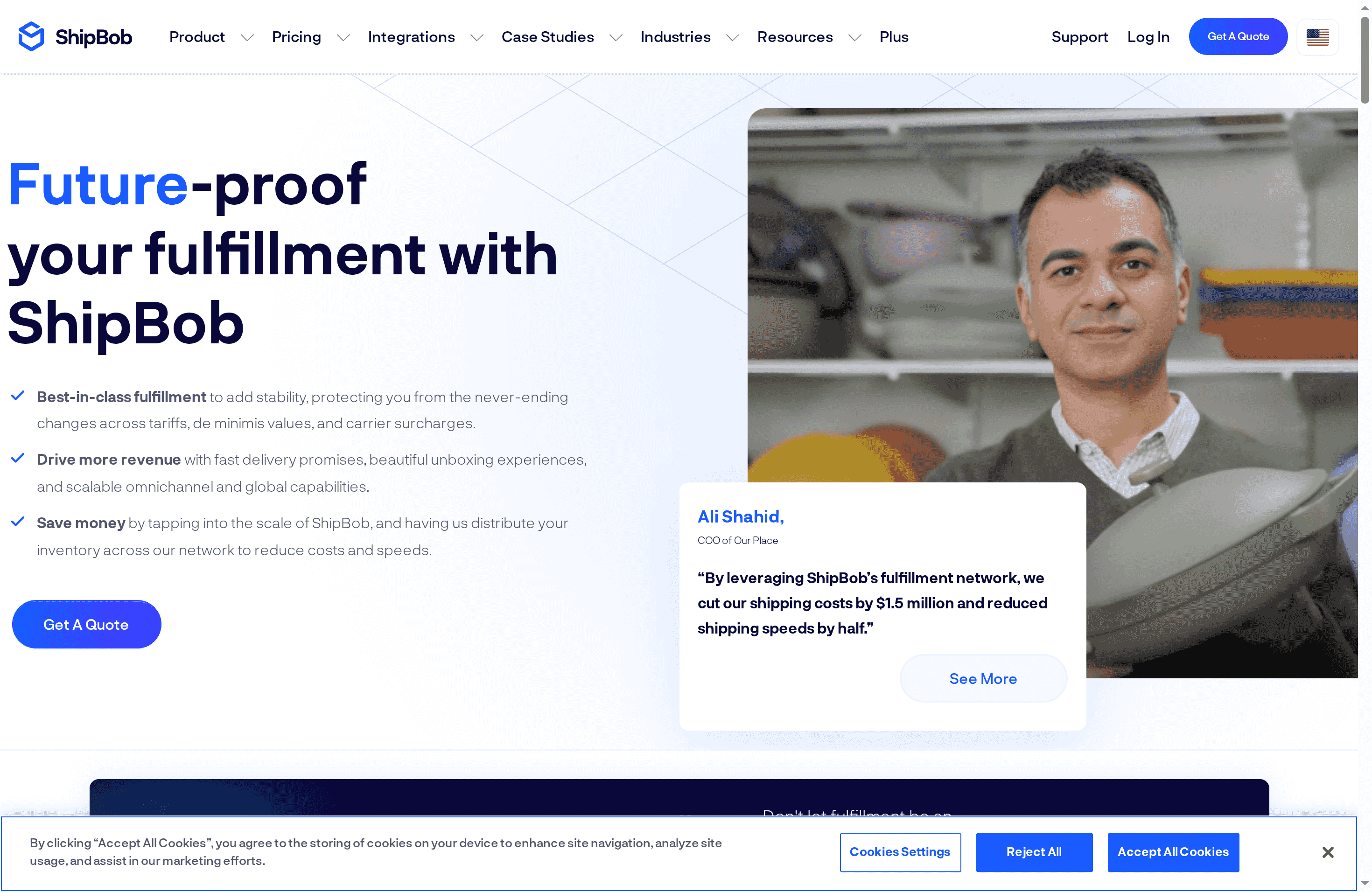
A concrete example: ShipBob helped Our Place reduce shipping times by half and cut shipping costs by over $1.5 million through optimized inventory distribution and logistics management—demonstrating how networked warehousing plus analytics can drive measurable savings and faster delivery.
Pricing
Quote-based. ShipBob’s pricing is calculated from total fulfillment costs—implementation, receiving, warehousing, picking, packing, and shipping—and is customized depending on volume, services required, and geographic footprint.
Website: https://shipbob.com
Flexport
At a Glance
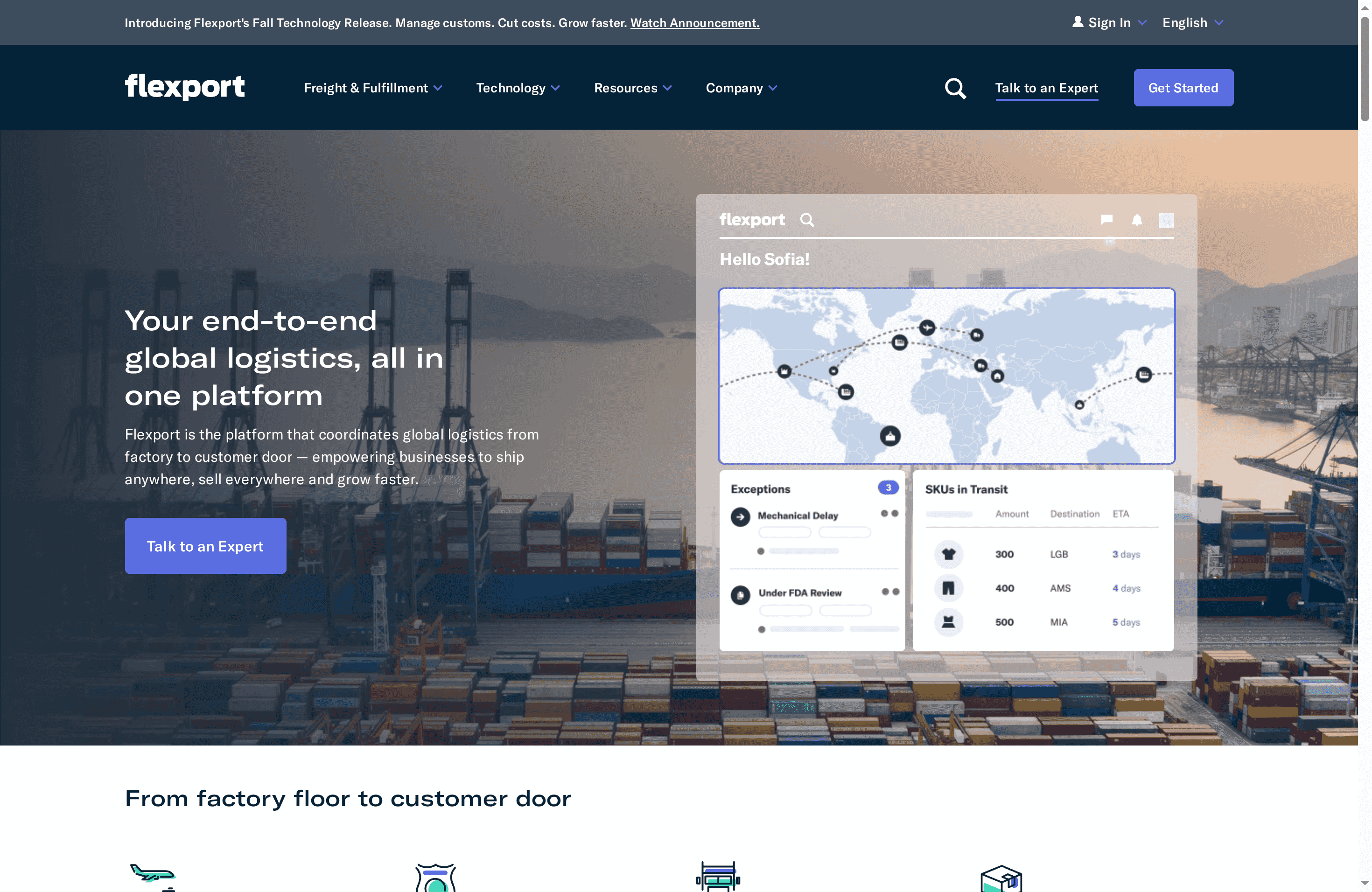
Flexport is an end-to-end logistics platform built to coordinate shipments from factory to customer door with real-time visibility and integrated services. It streamlines ocean and air freight, customs brokerage, trucking, and fulfillment into a single platform that aims to reduce complexity for cross-border commerce. For mid-to-large sellers and manufacturers, Flexport provides centralized control and data to make global shipping more predictable. Not the simplest option for one-off shippers, but powerful where scale and integration matter.
Core Features
Flexport’s core capabilities center on digitizing the full supply chain: ocean and air freight management, SKU-level tracking for visibility, customs brokerage and clearance services, and trucking for both international and domestic legs. The platform bundles fulfillment services that integrate with e-commerce systems and offers data visualization, insurance, duty management, and tools for duty drawback — all intended to give you end-to-end control and reporting on shipments and costs.
Pros
- Comprehensive end-to-end logistics platform: Flexport consolidates freight, customs, trucking, and fulfillment into one coordinated system so you don’t juggle multiple vendors.
- Real-time data and shipment tracking: SKU-level visibility and live tracking help you spot delays and communicate ETA changes to customers quickly.
- Integrated customs and trucking services: Having customs brokerage and trucking under the same platform reduces hand-offs and simplifies cross-border clearance workflows.
- Support for e-commerce fulfillment and global shipping: The platform’s fulfillment integrations make it easier to connect inventory and fulfillment pipelines to online storefronts.
- Strong customer support and expert team: Expert support is positioned as part of the offering to help manage complex international logistics and exceptions.
Cons
- Potentially complex for very small or infrequent shippers: The platform’s breadth and integration requirements can feel heavyweight for low-volume merchants.
- Pricing details are not specified and may vary: Public pricing is not available, so budgeting requires direct engagement and a custom quote.
- Requires some technical integration for optimal use: To unlock the full automation and visibility, you’ll likely need technical work to integrate systems and data feeds.
Who It’s For
Flexport is best suited to mid-sized and large businesses — manufacturers, wholesalers, and e-commerce retailers — that need an integrated, technology-driven logistics partner for global expansion. If you manage regular ocean or air shipments, require customs expertise, and want centralized reporting across freight and fulfillment, this platform fits your needs.
Unique Value Proposition
Flexport’s value lies in combining freight forwarding, customs brokerage, trucking, and fulfillment with SKU-level visibility and data visualization in one platform. That combination reduces operational friction and gives supply chain teams a single pane of glass for global shipments.
Real World Use Case
A growing online retailer expanding into new markets uses Flexport to coordinate ocean freight, clear customs efficiently, and route inventory into fulfillment networks — keeping operations transparent, reducing clearance delays, and improving delivery predictability for customers worldwide.
Pricing
Quote-based — not publicly specified; contact Flexport for a custom quote based on volume and service mix.
Website: https://flexport.com
Easyship
At a Glance
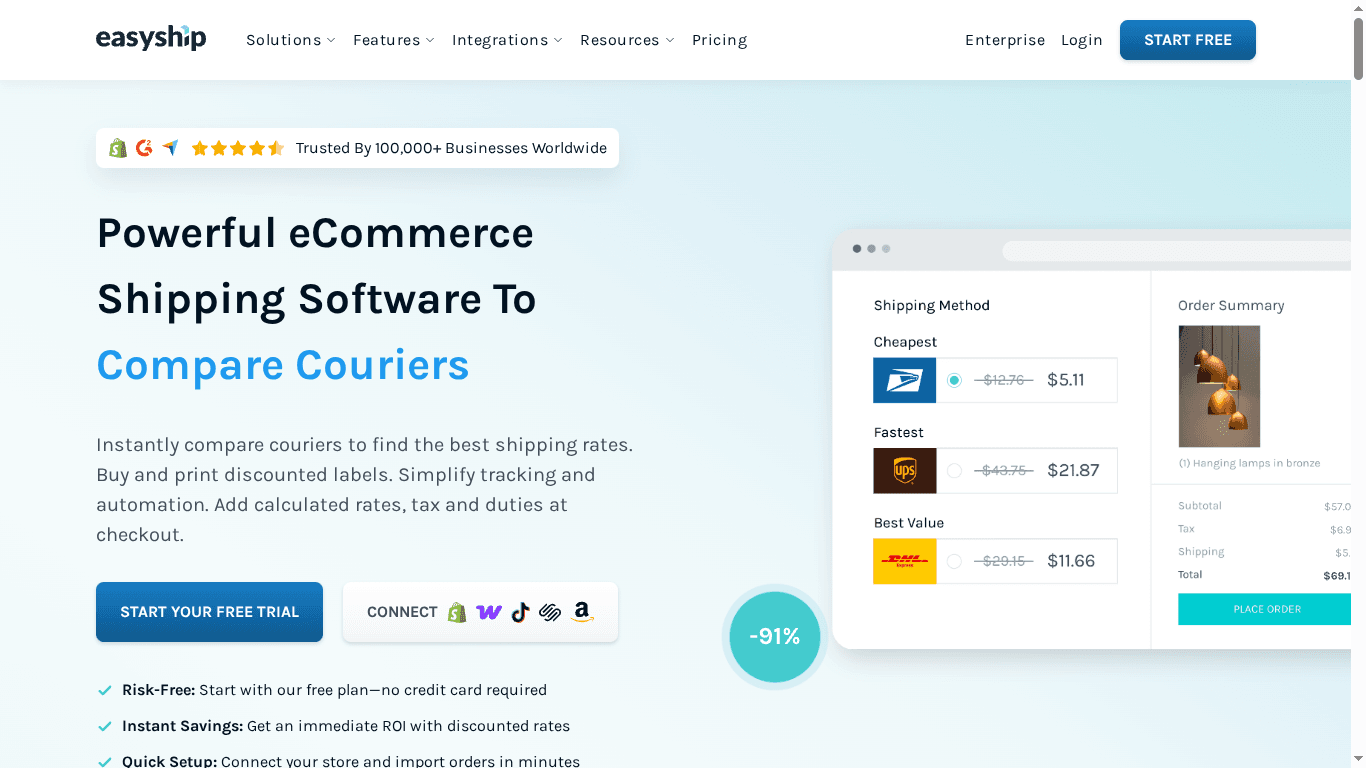
Easyship is a multi-carrier shipping platform built to help ecommerce businesses compare rates, automate fulfillment steps, and manage international tax and duty complexity from a single dashboard. It shines when you need rapid rate shopping across many couriers and want to apply discounted labels at scale. The platform’s automation and integrations reduce manual work, but the breadth of features can feel overwhelming for brand-new sellers. Bottom line: powerful for scale and international shipping, but expect a learning curve.
Core Features
Easyship lets you instantly compare courier rates across 550+ carriers and buy discounted labels directly through the platform, while its cloud dashboard centralizes tracking, automated workflows, and shipment monitoring. It adds calculated rates, taxes, and duties at checkout and supports automatic import tax and tariff calculations for cross-border orders. Integrations connect to 60+ ecommerce platforms and marketplaces in minutes, and a global network of 3PL and fulfillment centers reduces transit times and costs. For teams building custom flows, Easyship offers API and app integrations plus branded delivery notifications and customizable packing slips to preserve the customer experience.
Pros
- Deep courier coverage and savings: The platform compares rates across 550+ carriers and offers discounts up to 91% on labels from top couriers, which can materially lower fulfillment costs.
- Fast integrations with major platforms: Easyship connects with over 60 ecommerce platforms and marketplaces in minutes, helping you onboard shipping automation quickly.
- Automation improves operational efficiency: Workflow automation and cloud-based shipment monitoring cut manual steps and free staff to focus on exceptions and growth.
- Built for international complexity: Calculated rates, taxes, duties, and automatic tariff handling simplify international checkout and customs compliance.
- End-to-end customer experience tools: Branded delivery notifications and customizable packing slips let you keep the unboxing and delivery experience on-brand.
Cons
- Opaque pricing beyond a free tier: There is no detailed pricing on the website; only a free plan and a 14-day professional trial are disclosed, making long-term budgeting difficult.
- Feature volume can overwhelm new sellers: The platform’s extensive capabilities may feel complex for very small businesses just starting out.
- Cloud reliance requires connectivity: Because operations center on a cloud dashboard, intermittent internet connectivity can interrupt access to shipping workflows.
Who It’s For
Easyship is ideal for ecommerce businesses that ship domestically and internationally and are looking to reduce carrier costs, automate repetitive shipping tasks, and scale fulfillment across channels. It fits small stores ready to grow, high-volume brands optimizing costs, and enterprises that need API-driven integrations and global 3PL options.
Unique Value Proposition
Easyship’s unique strength is combining broad carrier access and deep label discounts with automated tax, duty, and checkout rate calculations, all presented through a centralized cloud dashboard and extensible APIs that support scaling merchants and global fulfillment networks.
Real World Use Case
A Shopify store owner uses Easyship to compare multiple courier quotes on each order, automatically generate discounted labels, and send branded tracking notifications to customers, which reduces shipping spend and improves post-purchase communication.
Pricing
Free tier available; professional plans free for 14 days; specific pricing details are not provided on the website.
Website: https://easyship.com
ShipStation
At a Glance
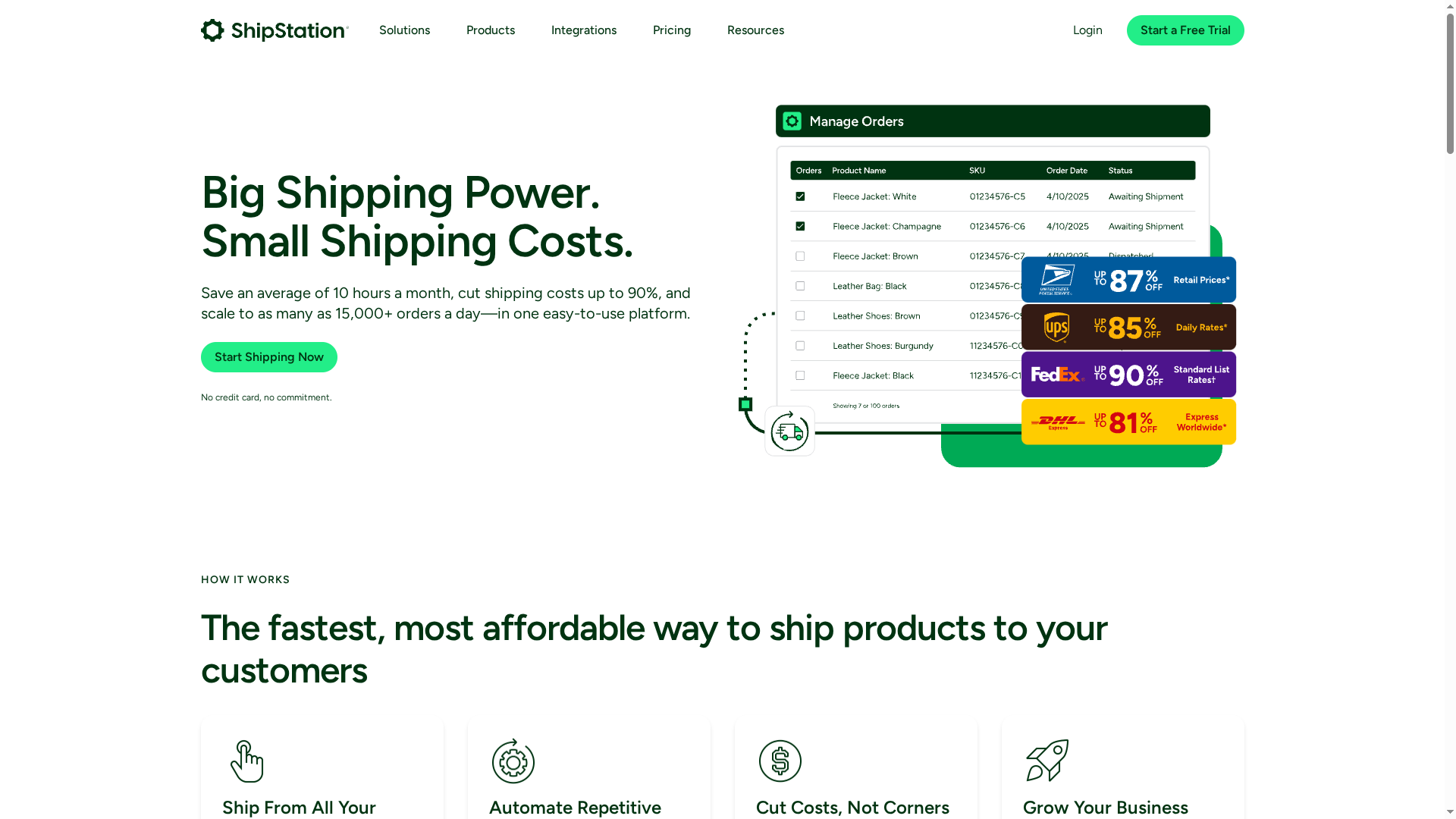
ShipStation is shipping and fulfillment software built for ecommerce sellers who need centralized control over orders, labels, and inventory. It combines rate shopping, multi-carrier label buying, order management, returns, and branding in one web-based platform so teams can save time and reduce costs. It’s a strong fit for small businesses scaling to mid-size enterprises, though pricing and initial complexity can be barriers for very high-volume shippers.
Core Features
ShipStation’s core capabilities focus on turning scattered marketplace orders into a streamlined fulfillment workflow: rate shopping to find the lowest carrier prices, buying and printing labels across multiple carriers, and integrations with major carriers and ecommerce platforms for seamless order import. It also supports order management operations (import, combine, split, validate), inventory and basic warehouse management, returns handling, and configurable automation and branding options to improve customer-facing tracking and packaging experiences.
Pros
- Streamlines shipping process and automates workflows so teams spend less time on repetitive tasks and more time on growth initiatives.
- Provides discounted carrier rates that can lower per-shipment costs when used consistently across channels.
- Supports multiple integrations with carriers and ecommerce platforms, enabling consolidated order import and unified fulfillment operations.
- Allows scaling for growing businesses by handling increased order volume and more complex fulfillment rules as needs evolve.
- Offers branding options to enhance customer experience through branded tracking pages and return flows that keep customers informed.
Cons
- Pricing can be high for larger volumes or advanced plans, which may erode savings for very large retailers unless negotiated carefully.
- Complex for new users without prior experience in shipping solutions, meaning onboarding can require dedicated time or training.
- Reliance on internet connection for a web-based platform makes it vulnerable to connectivity disruptions during critical shipping windows.
Who It’s For
ShipStation is designed for ecommerce businesses and third-party logistics providers that need an integrated shipping and order management solution that scales. If you sell across multiple marketplaces, print lots of labels, and want to centralize fulfillment rules and branding, ShipStation fits well. If you’re a solo seller with only occasional shipments, the learning curve and paid tiers may be more than you need.
Unique Value Proposition
ShipStation’s unique value lies in combining rate shopping, broad carrier and channel integrations, and automation into a single cloud platform—so businesses can both reduce shipping spend and standardize fulfillment practices across channels. The added branding and returns tools keep the post-purchase experience under your control, not the carrier’s.
Real World Use Case
A mid-sized online retailer integrates ShipStation to automate shipping across marketplaces, consolidating orders into one dashboard, printing batch labels, and applying automation rules. The retailer reports saving hours each week and—according to reported results—reducing shipping costs by up to 90% while delivering branded tracking pages to customers.
Pricing
Starting at a free plan with limited shipments; paid plans range from $14.99/month to $349.99/month depending on features and volume.
Website: https://shipstation.com
E-commerce Logistics Platform Comparison
This table provides a comprehensive comparison of logistics platforms tailored for e-commerce sellers, detailing features, pros, cons, and pricing.
| Platform | Core Features | Pros | Cons | Pricing |
|---|---|---|---|---|
| orner | End-to-end logistics, real-time tracking, global warehousing | Streamlined workflows, supports businesses of all sizes, automation, integrated platform | Pricing not specified | Not specified |
| ShipBob | Broad fulfillment network, 2-day shipping, DDP cross-border | Transparent pricing, scalable, advanced analytics, carrier discounts | Requires custom quote, additional fees possible | Quote-based |
| Flexport | Ocean/air freight, SKU tracking, customs and trucking | Comprehensive platform, real-time tracking, strong support | Complex for small shippers, custom pricing | Quote-based |
| Easyship | Compare rates across 550+ carriers, discounts, automation | Deep courier coverage, fast integrations, automation | Opaque pricing beyond free tier, complex for new sellers | Free tier, professional plans for 14 days |
| ShipStation | Rate shopping, label buying, order management | Streamlines shipping, discounts, supports scaling, branding | High pricing for volume, complex for new users | Free to $349.99/month |
Streamline Your Shipping with Reliable Courier Services from orner
Choosing the best courier service often feels overwhelming with so many options and complex logistics challenges. This article highlights key frustrations like fractured toolchains, slow delivery windows, and complicated customs clearance — problems that can stall your ecommerce growth and frustrate customers. If you want a unified platform that consolidates catalog management, international warehousing, customs handling, and real-time tracking, orner is built exactly for your needs. Our end-to-end logistics platform offers fast and scalable solutions designed for ecommerce sellers who demand reliable courier services with complete visibility and automation.
Don’t let disjointed logistics hold back your business. Explore how orner’s global network and integrated workflows can cut delivery times, reduce costs, and simplify your cross-border shipping. Start optimizing your supply chain today by visiting our homepage to see how our platform helps sellers like you gain control over every shipment. Discover the power of streamlined cross-border logistics and unlock faster end-customer delivery with orner’s warehousing and fulfillment solutions. Take the next step now toward reliable, scalable courier services at https://or-ner.com.
Frequently Asked Questions
What should I consider when comparing courier services?
When comparing courier services, assess factors such as delivery speed, service reliability, pricing structures, and extra features like tracking and customer support. Create a checklist to evaluate each option based on your specific delivery needs and volume.
How can I reduce shipping costs with a courier service?
To reduce shipping costs, negotiate bulk rates, choose the right service level for your shipping frequency, and consider using a multi-carrier approach. Start by analyzing your historical shipping data to identify potential savings areas, like consolidating shipments or optimizing packaging.
What types of courier services are available for e-commerce businesses?
E-commerce businesses can typically choose from standard delivery, express shipping, same-day delivery, and international shipping options. Evaluate your business model to select services that align with customer expectations, ensuring you meet delivery timeframes effectively.
How do I track my shipments with a courier service?
Most courier services provide tracking numbers that allow you to monitor your shipment’s progress online. After you ship, ensure you log the tracking number to check delivery updates, which can help you provide accurate information to your customers and reduce inquiries about shipment status.
What is the difference between express and standard courier services?
Express courier services offer faster delivery options, usually within 1-3 business days, while standard services may take longer, often 3-7 business days. Decide based on your urgency; for time-sensitive deliveries, opt for express services to meet tight deadlines.
How can I improve my shipping efficiency with a courier service?
To improve shipping efficiency, automate label printing and shipment notifications, and integrate your e-commerce platform directly with your courier service. Focus on streamlining processes to reduce manual steps, potentially improving your overall shipping speed by ~20%.