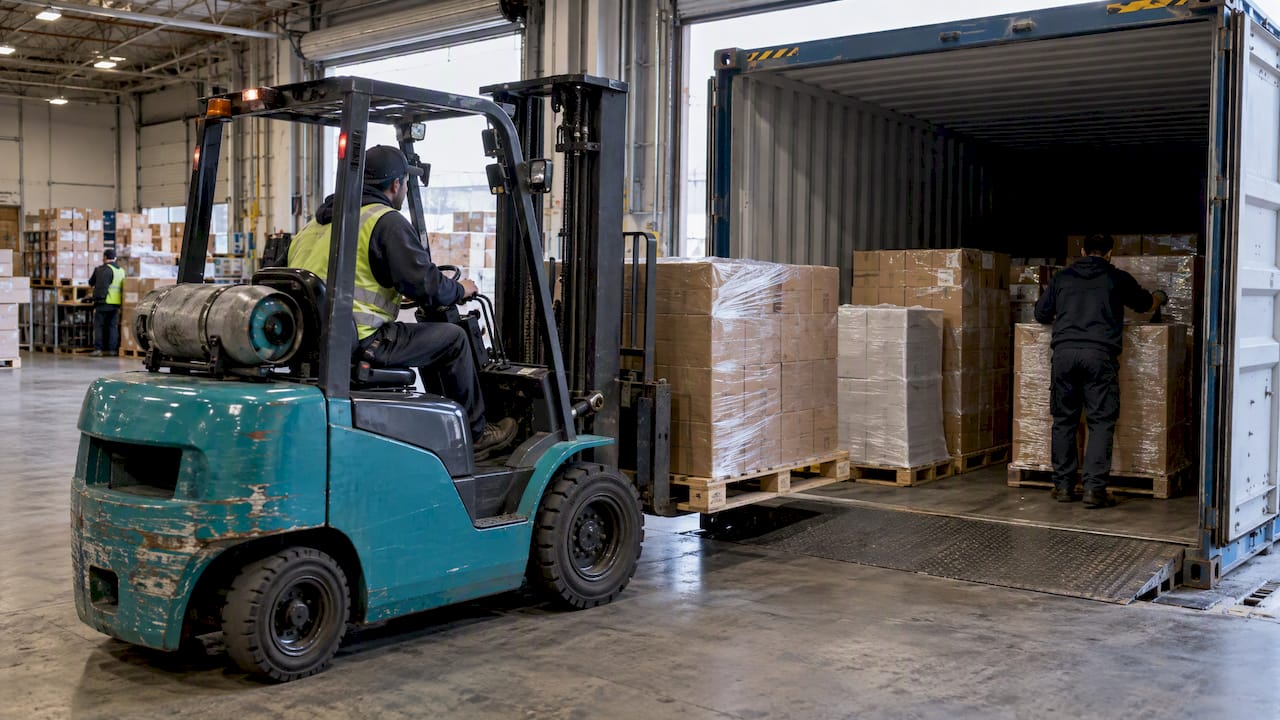
Nearly 60% of logistics leaders say spiraling transportation costs are threatening their global supply chains. Skyrocketing shipping fees and unpredictable regulations are putting pressure on businesses everywhere. Navigating these changes calls for smarter inventory management, swift delivery solutions, and data-driven decision making. In this new era of logistics, agility and clear communication separate those who struggle from those who thrive.
Quick Summary
| Takeaway | Explanation |
|---|---|
| 1. Optimize Transportation Routes | Analyze shipping paths to find the most cost-effective options for logistics operations. |
| 2. Embrace Regulatory Compliance Tools | Utilize technology to track and manage cross-border regulations efficiently. |
| 3. Implement Predictive Inventory Management | Use data analytics to forecast demand and optimize inventory levels effectively. |
| 4. Revolutionize Last-Mile Delivery | Enhance final delivery processes with real-time tracking and flexible options for customers. |
| 5. Invest in Warehouse Automation | Adopt AI-driven technologies to improve efficiency and scalability in fulfillment operations. |
Table of Contents
- Rising Transportation Costs And Cost-Saving Tactics
- Adapting To Evolving Cross-Border Regulations
- Managing Inventory Amid Changing Demand
- Ensuring Fast And Reliable Last-Mile Delivery
- Leveraging Data Analytics For Workflow Automation
- Strengthening Supply Chain Visibility And Communication
- Implementing Scalable Fulfillment And Warehouse Solutions
1. Rising Transportation Costs and Cost-Saving Tactics
Transportation costs have become a massive challenge for global logistics, with shipping expenses spiraling unpredictably. According to recent Reuters reporting, new port fees between the U.S. and China are disrupting cargo flows and driving up shipping expenses dramatically.
Understanding the Cost Challenge
The global shipping landscape is experiencing unprecedented volatility. Port fees, fuel surcharges, and geopolitical tensions are creating a perfect storm for increased transportation expenses. Businesses must now navigate a complex environment where traditional cost management strategies no longer work.
Strategic Cost Reduction Tactics
Successful logistics managers are implementing several key strategies to mitigate rising transportation costs:
- Optimize Route Planning: Analyze and select the most cost effective shipping routes
- Consolidate Shipments: Combine smaller shipments to reduce per unit transportation expenses
- Negotiate Long Term Contracts: Lock in rates with carriers to prevent sudden price fluctuations
- Leverage Technology: Use freight forwarding solutions to find the most economical shipping options
Proactive Financial Management
The key is not just reducing costs but creating a flexible logistics strategy. By implementing smart technologies and strategic planning, businesses can turn transportation challenges into competitive advantages. Those who adapt quickly will minimize financial impact and maintain operational efficiency.
Prepare now. The shipping landscape of 2025 demands agility and strategic thinking.
2. Adapting to Evolving Cross-Border Regulations
The global logistics landscape is increasingly complex, with international trade regulations changing faster than ever. Businesses must become agile navigators of this intricate regulatory environment to maintain smooth cross border operations.
Understanding Regulatory Complexity
Cross border shipping involves navigating a web of international rules that impact everything from product classifications to customs documentation. Regulations can vary dramatically between countries and change rapidly based on geopolitical shifts, trade agreements, and economic policies.
Key Strategies for Regulatory Compliance
Successful logistics managers are adopting proactive approaches to manage regulatory challenges:
- Stay Informed: Continuously monitor regulatory updates from official government sources
- Invest in Compliance Technology: Use digital tools that track and manage international shipping regulations
- Build Flexible Supply Chain Processes: Design workflows that can quickly adapt to regulatory changes
- Partner with Local Experts: Work with regional specialists who understand specific country requirements
Technology and Expert Support
Advanced international shipping regulations platforms now offer real-time updates and automated compliance checks. These tools can help businesses predict potential regulatory hurdles and develop strategic contingency plans.
Proactive Compliance Mindset
The most successful companies view regulatory compliance not as a burden but as a strategic opportunity. By developing robust, adaptable systems and maintaining a learning mindset, businesses can turn complex regulations into a competitive advantage.
3. Managing Inventory Amid Changing Demand
Inventory management has become a high stakes balancing act for modern businesses. According to research from Platinum Ridge Management, inefficient inventory practices are driving up operational costs through complex delivery dynamics.
The Demand Volatility Challenge
Consumer buying patterns have become increasingly unpredictable. Traditional inventory strategies that worked in previous years now struggle to keep pace with rapid market shifts. Businesses must develop adaptive approaches that can quickly respond to fluctuating consumer needs.
Strategic Inventory Management Techniques
Successful organizations are implementing sophisticated inventory control methods:
- Implement Predictive Analytics: Use data modeling to forecast demand more accurately
- Develop Flexible Supply Chains: Create agile inventory systems that can quickly scale
- Utilize Just in Time Delivery Strategies: Minimize excess inventory while maintaining product availability
- Embrace Real Time Tracking: Deploy advanced inventory monitoring technologies
Technology Driven Solutions
Modern inventory management goes beyond traditional spreadsheets. Advanced software platforms now provide real time insights into stock levels, purchasing trends, and potential supply chain disruptions. These tools transform inventory from a static resource into a dynamic strategic asset.
Proactive Inventory Intelligence
The most resilient businesses view inventory management as a continuous optimization process. By combining technological tools with strategic thinking, you can create an inventory system that responds quickly to market changes and minimizes unnecessary holding costs.
4. Ensuring Fast and Reliable Last-Mile Delivery
Last mile delivery represents the final and most critical stage of the shipping journey. This crucial segment determines customer satisfaction and can make or break a brand’s reputation in the competitive ecommerce landscape.
The Last Mile Challenge
Customers now expect lightning fast delivery with pinpoint accuracy. The pressure on logistics providers has never been more intense. Businesses must transform last mile delivery from a basic transportation service into a strategic competitive advantage.
Strategic Delivery Optimization Techniques
Successful companies are revolutionizing their approach through several key strategies:
- Leverage Local Distribution Centers: Reduce delivery distances and improve response times
- Implement Advanced Route Optimization: Use AI to create the most efficient delivery paths
- Provide Real Time Tracking: Give customers transparent visibility into their shipment
- Offer Flexible Delivery Options: Enable customers to customize delivery preferences
Technology Powered Solutions
Modern same day delivery platforms are transforming customer expectations. These advanced systems use predictive algorithms and real time data to create unprecedented delivery speed and reliability.
Customer Centric Approach
The future of last mile delivery is not just about speed. It is about creating a seamless, personalized experience that makes customers feel valued. By investing in smart technologies and customer focused strategies, businesses can turn last mile delivery into a powerful brand differentiator.
5. Leveraging Data Analytics for Workflow Automation
Data analytics has emerged as the secret weapon for logistics transformation. According to recent research from Last Mile Leaders, while 43% of companies are in early AI stages, only 4% have fully embedded advanced analytics technologies.
The Data Driven Revolution
Workflow automation is no longer a luxury but a critical competitive strategy. Businesses that harness data effectively can dramatically improve operational efficiency, reduce costs, and create more predictable logistics systems. The key is moving from reactive to proactive management.
Strategic Data Analytics Approaches
Successful organizations are implementing powerful data strategies:
- Implement Predictive Analytics: Forecast demand and optimize resource allocation
- Deploy Machine Learning Models: Automate complex decision making processes
- Create Real Time Tracking Systems: Monitor performance and identify improvement opportunities
- Integrate Comprehensive Reporting Tools: Generate actionable insights from complex data sets
Technology Powered Transformation
As highlighted by Business Service Hub, AI powered solutions like route optimization and machine learning can revolutionize delivery planning. These technologies transform raw data into strategic intelligence, enabling smarter operational decisions.
Building a Data Driven Culture
The most successful logistics teams view data not as a technical function but as a strategic asset. By investing in advanced analytics and creating a culture of continuous learning, businesses can unlock unprecedented levels of operational efficiency and customer satisfaction.
6. Strengthening Supply Chain Visibility and Communication
Supply chain communication has become increasingly complex in the global marketplace. Recent technological innovations are transforming how businesses track, monitor, and collaborate across intricate logistics networks.
The Visibility Revolution
Modern supply chains demand unprecedented levels of transparency. As demonstrated by Walmart’s recent initiative, battery free IoT sensors are enabling real time tracking and reducing manual intervention across distribution centers. This technological approach represents a significant leap in operational intelligence.
Strategic Communication Enhancement Techniques
Successful organizations are implementing comprehensive communication strategies:
- Deploy Advanced Tracking Technologies: Implement IoT and sensor based monitoring systems
- Create Integrated Communication Platforms: Enable seamless information sharing across departments
Cutting Edge Technological Solutions
Recent academic research suggests revolutionary approaches like federated learning with graph convolutional networks can dramatically improve supply chain visibility while maintaining strict data privacy protocols. These advanced technologies allow businesses to predict potential disruptions and manage risks proactively.
Building Collaborative Ecosystems
The future of supply chain management is not just about tracking products. It is about creating intelligent, responsive networks that can adapt quickly to changing market conditions. By investing in advanced communication technologies, businesses can transform their supply chains from rigid structures into dynamic, interconnected ecosystems.
7. Implementing Scalable Fulfillment and Warehouse Solutions
Warehouse and fulfillment operations are undergoing a technological transformation that is reshaping how businesses manage inventory and process orders. Global logistics players are rapidly adopting innovative solutions to meet increasing consumer expectations.
The Scalability Imperative
Modern businesses require flexible fulfillment systems that can quickly adapt to market changes. As highlighted by recent reports, companies like Brightpick are deploying AI driven autonomous mobile robots to revolutionize warehouse automation. These technological advances are not just improving efficiency they are fundamentally redesigning logistics workflows.
Strategic Fulfillment Enhancement Techniques
Successful organizations are implementing comprehensive scalability strategies:
- Invest in Autonomous Robotics: Integrate AI powered warehouse automation technologies
- Develop Flexible Warehouse Layouts: Create adaptable storage and processing environments
- Implement Advanced Inventory Management: Use predictive analytics for demand forecasting
- Expand Geographic Reach: Strategically lease warehouses in key markets
Technology Powered Solutions
Leading companies are exploring ecommerce fulfillment solutions that leverage cutting edge technologies. According to recent reports, Asian logistics operators are already leasing warehouses in strategic U.S. markets like New Jersey and Los Angeles to accelerate delivery capabilities.
Building Adaptive Logistics Ecosystems
The future of warehouse management is about creating intelligent, responsive systems. By embracing technological innovation and maintaining operational flexibility, businesses can transform their fulfillment operations from static storage facilities into dynamic logistical powerhouses.
Below is a comprehensive table summarizing the strategies and solutions discussed for overcoming challenges in global logistics, including transportation costs, regulatory changes, inventory management, last-mile delivery, data analytics, supply chain visibility, and warehouse solutions.
| Focus Area | Strategies & Tactics | Expected Outcomes |
|---|---|---|
| Rising Transportation Costs | Optimize route planning, consolidate shipments, negotiate long-term contracts, leverage technology | Reduced costs, enhanced efficiency |
| Evolving Cross-Border Regulations | Stay informed, invest in compliance technology, build flexible processes, partner with local experts | Improved regulatory compliance, competitive advantage |
| Inventory Management | Implement predictive analytics, develop flexible supply chains, utilize Just-In-Time Delivery, embrace real-time tracking | Better demand forecasting, minimized holding costs |
| Last-Mile Delivery | Leverage local distribution centers, implement advanced route optimization, provide real-time tracking, offer flexible options | Quick, reliable deliveries, improved customer satisfaction |
| Data Analytics and Automation | Use predictive analytics, deploy machine learning, create real-time tracking systems, integrate reporting tools | Enhanced operational efficiency, actionable insights |
| Supply Chain Visibility | Deploy advanced tracking technologies, create integrated communication platforms | Increased transparency, better risk management |
| Scalable Fulfillment Solutions | Invest in autonomous robotics, develop flexible layouts, expand geographic reach | Scalable and efficient warehouse operations |
Turn 2025’s Toughest Logistics Challenges Into Growth Opportunities
Are rising transportation costs and complex global regulations holding your business back? You are not alone. Many ecommerce sellers and brands in 2025 are struggling with unpredictable fees, changing cross-border rules, inventory headaches, and customer demands for faster delivery. Staying ahead in logistics means adapting with smarter technology, real-time tracking, and flexible fulfillment options. But few platforms bring those solutions together in one place.
If you want to stop losing time and money to logistics issues, now is your chance. or-ner.com delivers all-in-one support for reliable courier services, scalable warehousing, and seamless real-time shipment tracking. Get peace of mind with end-to-end ecommerce fulfillment solutions and cross-border expertise tailored for your industry. Visit or-ner.com today, and let your supply chain become a source of growth—not stress.
Frequently Asked Questions
What are the main logistics challenges businesses will face in 2025?
Transportation costs, evolving cross-border regulations, inventory management, last-mile delivery, and supply chain visibility are among the key logistics challenges. To tackle them, assess your current logistics practices and identify areas for improvement by the end of the quarter.
How can I reduce rising transportation costs effectively?
You can reduce transportation costs by optimizing route planning, consolidating shipments, and negotiating long-term contracts with carriers. Start by analyzing your current shipping routes within the next month to identify potential savings opportunities.
What steps can I take to ensure compliance with changing cross-border regulations?
To ensure compliance, stay informed about regulatory updates, invest in compliance technology, and partner with local experts who understand specific requirements. Schedule regular reviews of your compliance processes every quarter to adapt to new regulations as they arise.
What methods can help improve inventory management amid changing demand?
Implement predictive analytics and develop flexible supply chain processes to respond quickly to fluctuating consumer needs. Begin by integrating at least one predictive analytics tool in your operations within 60 days for better demand forecasting.
How can I enhance last-mile delivery for better customer satisfaction?
Enhancing last-mile delivery can involve leveraging local distribution centers and providing real-time tracking for customers. Begin by assessing your current delivery routes and customer preferences within the next month to tailor your delivery strategy.
What technologies should I consider for improving supply chain visibility?
Consider deploying IoT-based tracking technologies and creating integrated communication platforms for better transparency across your supply chain. Start implementing simple tracking technologies within the next two months to monitor shipments more effectively.
Recommended
- Top Benefits of Freight Forwarding for Growing Businesses 2025 – ORNER
- What Is Freight Forwarding? Guide for Modern Supply Chains 2025 – ORNER
- Just in Time Delivery: Essential Guide for 2025 Success – ORNER
- What Is Same Day Delivery? 2025 Guide for Online Retailers – ORNER
- Understanding IT Outsourcing Challenges Explained | NineArchs
- Transform42 New