Door-to-door delivery has changed how people shop, making it possible for millions to get anything from groceries to gadgets without leaving home. Most assume convenience is the main draw, and for good reason. But get this. Businesses that implement their own delivery service see a 7.8 percent jump in monthly customer spending. Speed and simplicity might get the headlines, but the real surprise is that these services can drive customer loyalty and open up bold new markets.
Table of Contents
- Improved Customer Satisfaction
- Increased Convenience For Customers
- Streamlined Logistics Processes
- Enhanced Brand Loyalty
- Real-Time Tracking And Updates
- Cost-Effective Delivery Solutions
- Expansion Opportunities For Businesses
Quick Summary
| Takeaway | Explanation |
|---|---|
| Enhance Customer Satisfaction | Door-to-door delivery directly addresses customer needs, increasing satisfaction through convenience, flexibility, and transparency. |
| Streamline Logistics Processes | Direct delivery minimizes handling points and improves efficiency, reducing operational complexity and costs. |
| Build Brand Loyalty | Reliable and personalized delivery experiences foster emotional connections, leading to repeat purchases and customer advocacy. |
| Utilize Real-Time Tracking | Implementing real-time tracking offers transparency and helps resolve issues quickly, enhancing customer trust. |
| Unlock Market Expansion | Door-to-door delivery allows businesses to reach new markets and diversify offerings, boosting customer spending and frequency. |
1: Improved Customer Satisfaction
Door-to-door delivery services have revolutionized how businesses connect with their customers, providing a direct and personalized approach to product distribution. By eliminating intermediate steps and delivering products straight to the customer’s doorstep, companies can significantly enhance overall customer satisfaction.
According to research published in PubMed, timely deliveries play a critical role in customer satisfaction. The study highlights that when businesses prioritize precise and reliable delivery, they create positive experiences that encourage customer loyalty and repeat purchases.
Customer satisfaction in door-to-door delivery hinges on several key factors:
- Convenience: Customers appreciate the ability to receive products without leaving their homes
- Flexibility: Offering multiple delivery time slots and tracking options
- Transparency: Providing real-time updates about shipment status
Moreover, door-to-door delivery services reduce potential friction points in the purchasing journey. By managing the entire delivery process, businesses can control the quality of customer interactions, ensuring a seamless and professional experience. This level of service demonstrates a commitment to customer needs and builds trust.
The psychological impact of door-to-door delivery should not be underestimated. When customers receive their packages directly at their doorstep, they feel valued and appreciated. This emotional connection can transform a simple transaction into a memorable brand experience, potentially leading to positive reviews, recommendations, and increased customer retention.
Businesses that invest in robust door-to-door delivery systems are essentially investing in customer relationships. By prioritizing convenience, speed, and reliability, they create a competitive advantage that sets them apart in an increasingly crowded marketplace.
2: Increased Convenience for Customers
Door-to-door delivery represents a paradigm shift in customer convenience, transforming how consumers receive products and interact with businesses. Research from transportation experts demonstrates that direct delivery eliminates multiple intermediary steps, providing customers with a streamlined purchasing experience.
The core advantages of door-to-door delivery for customers include:
- Minimal effort: No need to travel to pickup locations
- Time savings: Products delivered directly to personal address
- Reduced transportation costs: Eliminates customer travel expenses
Customers increasingly value services that reduce friction in their purchasing journey. Door-to-door delivery meets this demand by offering maximum accessibility and eliminating logistical challenges. Consumers no longer need to adjust their schedules or allocate additional time for product collection.
Modern customers expect personalized, efficient services. Door-to-door delivery satisfies this expectation by providing flexible delivery windows, real-time tracking, and precise location drop-offs. This approach caters to diverse customer lifestyles, whether they work from home, have limited mobility, or maintain busy schedules.
For individuals with mobility constraints or those residing in remote areas, door-to-door delivery becomes more than a convenience – it becomes a critical service. The ability to receive products directly addresses significant accessibility challenges, ensuring everyone can participate equally in the consumer marketplace.
Businesses can learn more about optimizing delivery strategies by understanding how door-to-door services transform customer experiences. By prioritizing convenience, companies demonstrate a commitment to customer satisfaction that extends far beyond traditional transactional relationships.
3: Streamlined Logistics Processes
Door-to-door delivery dramatically transforms logistics processes by creating a direct and efficient distribution channel that minimizes unnecessary intermediary steps. According to USDA logistics research, streamlined delivery systems can reduce operational complexity and improve overall supply chain efficiency.
Key components of streamlined logistics through door-to-door delivery include:
- Reduced handling points: Minimizing package transfers between different transportation modes
- Precise tracking: Real-time monitoring of product movement
- Integrated route optimization: Calculating most efficient delivery paths
Businesses benefit from a consolidated logistics approach that eliminates multiple touchpoints. By managing the entire delivery process from origin to final destination, companies can significantly reduce administrative overhead, transportation costs, and potential errors associated with complex logistics networks.
Digital technologies have further enhanced door-to-door delivery efficiency. Advanced routing algorithms, GPS tracking, and automated scheduling systems enable businesses to create highly responsive and adaptable delivery networks. These technologies allow for dynamic route adjustments, real-time problem solving, and predictive management of potential delivery challenges.
Learn more about advanced freight forwarding strategies that complement door-to-door delivery approaches. By integrating sophisticated logistics technologies, businesses can transform their delivery processes from traditional models to intelligent, data-driven systems that prioritize speed, accuracy, and customer satisfaction.
4: Enhanced Brand Loyalty
Door-to-door delivery services have emerged as a powerful strategy for building and maintaining strong customer relationships. According to research in the International Journal of Logistics Systems and Management, service quality and convenience are critical drivers of customer loyalty in home delivery services.
Key factors that contribute to brand loyalty through door-to-door delivery include:
- Consistent performance: Reliable and predictable delivery experiences
- Personalized service: Tailored delivery options that meet individual customer preferences
- Transparent communication: Real-time updates and proactive problem resolution
Businesses that implement exceptional door-to-door delivery demonstrate a commitment to customer satisfaction that goes beyond the transactional relationship. By providing a seamless, convenient delivery experience, companies create emotional connections that transform one-time buyers into loyal brand advocates.
The psychological impact of a positive delivery experience should not be underestimated. When customers receive their products exactly as expected – with precision, care, and attention to detail – they develop trust and confidence in the brand. This emotional resonance encourages repeat purchases and positive word-of-mouth recommendations.
Modern consumers have increasingly high expectations for delivery services. They seek brands that understand their unique needs and can adapt quickly to their preferences. Door-to-door delivery allows businesses to showcase their commitment to customer-centric service, differentiating themselves in a competitive marketplace.
Explore advanced strategies for building customer loyalty through innovative delivery approaches. By prioritizing customer experience at every touchpoint, businesses can transform door-to-door delivery from a logistical function into a powerful brand-building tool.
5: Real-Time Tracking and Updates
Real-time tracking represents a transformative technology in door-to-door delivery services, providing businesses and customers unprecedented visibility into shipment journeys. According to U.S. Bureau of Transportation Statistics research, advanced tracking technologies enable more accurate and responsive delivery systems.
Key advantages of real-time tracking include:
- Immediate location visibility: Precise package positioning at every stage
- Predictive arrival estimates: Accurate delivery time predictions
- Proactive problem resolution: Quick identification and mitigation of potential delivery issues
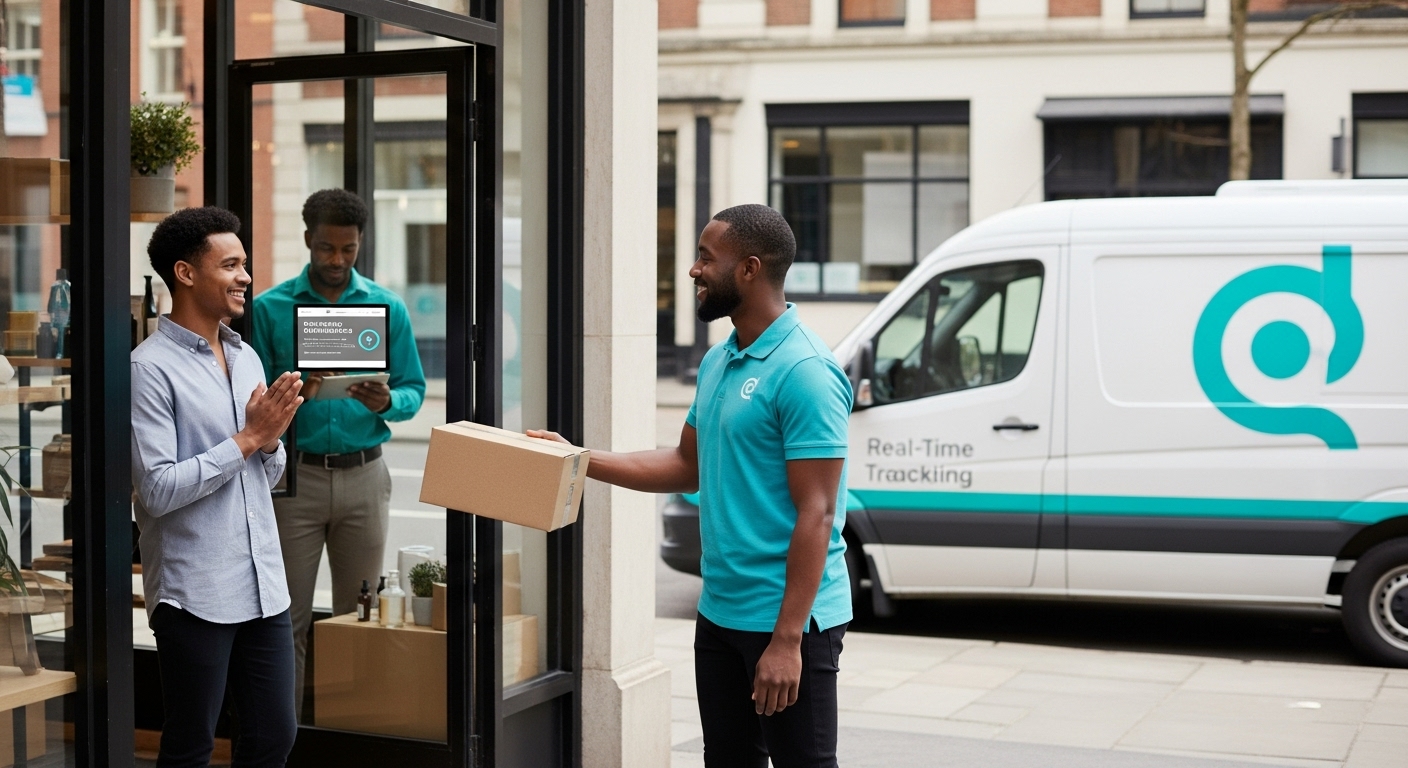
Modern digital tracking platforms empower customers with comprehensive shipment insights. By providing granular details about package movement, businesses transform the traditional delivery experience from a black box of uncertainty to a transparent, interactive process. Customers can now monitor their deliveries with the same ease as tracking a rideshare or food delivery.
Businesses benefit significantly from real-time tracking technologies. These systems generate valuable data streams that help optimize routing, identify operational inefficiencies, and improve overall logistics performance. The ability to collect and analyze real-time movement data allows companies to make rapid, informed decisions about their delivery networks.
Moreover, real-time tracking builds customer trust and confidence. When individuals can see exactly where their package is and when it will arrive, they feel more connected to the purchasing process. This transparency reduces anxiety about delivery times and demonstrates a company’s commitment to customer communication.
Discover advanced tracking strategies for modern logistics that can revolutionize your delivery operations. By embracing real-time tracking technologies, businesses can create more responsive, customer-centric delivery experiences that set them apart in a competitive marketplace.
6: Cost-Effective Delivery Solutions
Door-to-door delivery offers businesses innovative strategies for reducing operational expenses while maintaining high-quality service standards. Research on geographic pooling demonstrates that strategic delivery consolidation can significantly lower transportation costs.
Key cost-reduction strategies include:
- Route optimization: Minimizing travel distances and fuel consumption
- Bulk delivery planning: Consolidating packages for efficient transportation
- Automated logistics systems: Reducing manual labor and administrative overhead
Businesses can transform their delivery economics by implementing intelligent logistics technologies. Advanced routing algorithms enable companies to maximize vehicle capacity, reduce unnecessary trips, and allocate resources more efficiently. This approach not only cuts direct transportation expenses but also minimizes the environmental footprint associated with multiple delivery attempts.
The financial benefits extend beyond immediate transportation costs. By streamlining delivery processes, businesses reduce indirect expenses related to customer service, returns management, and potential redelivery attempts. Precision in first-time delivery becomes a critical financial strategy that directly impacts the bottom line.
Small and medium enterprises can particularly benefit from these cost-effective delivery solutions. Learn more about optimizing courier services that help businesses scale their delivery capabilities without exponentially increasing operational expenses.
Moreover, door-to-door delivery models allow businesses to convert fixed logistics costs into variable expenses. This flexibility enables companies to scale their delivery infrastructure dynamically, matching capacity with actual market demand and avoiding unnecessary overhead during slower business periods.
7: Expansion Opportunities for Businesses
Door-to-door delivery services unlock significant market expansion potential for businesses across diverse industries. Research from the Journal of Marketing reveals that implementing own delivery services can boost monthly customer spending by 7.8% and increase purchase frequency by 4.2%.
Key expansion opportunities include:
- Geographic market reach: Accessing previously unavailable customer segments
- Product diversification: Enabling delivery of more complex or fragile products
- Cross-border trading: Facilitating international sales and distribution
Businesses can leverage innovative delivery models to transform their market positioning. By offering comprehensive door-to-door services, companies can differentiate themselves from competitors and create unique value propositions that attract new customer demographics.
The strategic implementation of door-to-door delivery enables businesses to overcome traditional geographical limitations. Small and medium enterprises can now compete with larger organizations by providing flexible, customer-centric delivery experiences that were previously accessible only to major corporations.
Digital technologies have further democratized market expansion capabilities. Advanced logistics platforms allow businesses to scale their delivery infrastructure rapidly, testing new markets with minimal upfront investment. This approach reduces financial risks associated with traditional expansion strategies.
Explore strategies for scaling your business through advanced delivery solutions that can help you unlock new revenue streams and market opportunities. Door-to-door delivery is no longer just a logistical function but a powerful strategic tool for business growth and market penetration.
The table below provides a comprehensive summary of the seven key benefits of door-to-door delivery for businesses as discussed throughout the article.
| Benefit | Description | Key Outcomes |
|---|---|---|
| Improved Customer Satisfaction | Direct, reliable home delivery enhances flexibility, convenience, and transparency, boosting customer happiness. | Greater trust, positive reviews, increased retention |
| Increased Convenience for Customers | Streamlined purchasing removes the need for store visits or pickups, saving customers time and effort. | Higher accessibility, personalized experience, broader inclusion |
| Streamlined Logistics Processes | Delivery from origin to doorstep reduces handling and optimizes routes via digital tools and tracking. | Lower costs, fewer errors, improved efficiency |
| Enhanced Brand Loyalty | Personalized, consistent, and transparent service fosters strong emotional connections with customers. | Repeat purchases, brand advocacy, higher lifetime value |
| Real-Time Tracking and Updates | Advanced tracking lets customers see exactly where their package is and when it will arrive. | Increased transparency, faster issue resolution, improved trust |
| Cost-Effective Delivery Solutions | Automated systems and route optimization lower transportation and administrative expenses reliably. | Reduced costs, scalable logistics, improved first-time delivery rates |
| Expansion Opportunities for Businesses | Door-to-door models open new markets and enable product diversification, including cross-border capabilities. | Increased sales, larger customer base, direct market entry |
Unlock True Door-to-Door Success with Reliable Courier Services
Delivering a seamless door-to-door experience can feel out of reach when faced with late shipments, tracking gaps, and complex logistics. As highlighted in our latest article, businesses need more than just basic delivery. You want reliable courier services, real-time visibility, and end-to-end control. Without a partner who can handle everything from freight booking to fast last-mile fulfillment, customer satisfaction and brand loyalty suffer.
Ready to turn door-to-door delivery into a competitive advantage? Discover how or-ner.com solves these pain points for ecommerce sellers and brands. With our reliable courier services, automated workflows, and real-time shipment tracking, you gain the confidence to exceed customer expectations every time. Stop losing customers to unpredictable operations. Explore solutions for streamlining your logistics process today, and set your business apart with fast, transparent, and scalable delivery. Take control of your growth now—visit our home page and see how we empower you to deliver with certainty.
Frequently Asked Questions
What are the advantages of door-to-door delivery for businesses?
Door-to-door delivery enhances customer satisfaction, provides convenience, and streamlines logistics processes. It allows businesses to build brand loyalty through reliable service and real-time tracking, all while being cost-effective.
How does real-time tracking benefit both businesses and customers?
Real-time tracking offers immediate visibility of package locations, accurate delivery estimates, and proactive problem resolution. This transparency builds customer trust and allows businesses to optimize shipping routes and logistics operations.
Can door-to-door delivery increase customer loyalty?
Yes, when businesses provide consistent, personalized, and transparent delivery experiences, customers are more likely to develop trust and loyalty. This emotional connection can encourage repeat purchases and positive word-of-mouth.
What are the cost benefits of implementing door-to-door delivery?
Door-to-door delivery can reduce operational expenses by optimizing routes, consolidating shipments, and utilizing automated logistics systems. These efficiencies can lead to significant savings in transportation costs and reduce the need for manual labor.