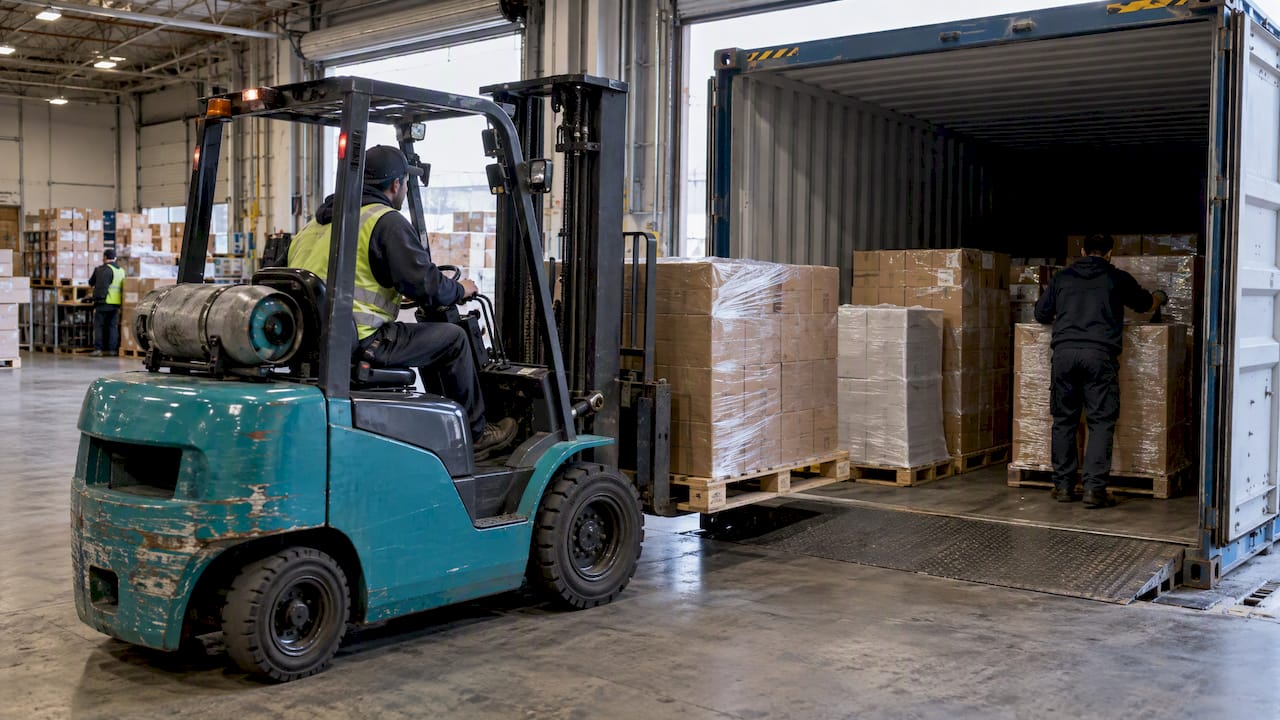
Retailers are scrambling to keep up with the fast-changing world of global supply chains and ecommerce. But shockingly, communication breakdowns can cost companies up to millions of dollars each year due to misunderstood logistics terminology. Most people think a logistics glossary is just technical fluff, but that knowledge is turning into the sharpest tool for gaining a real business edge in 2025.
Table of Contents
- Introduction To Logistics Terminology
- Understanding Supply Chain Management
- Key Concepts Of Last-Mile Delivery
- Importance Of Inventory Management
- What Is Cross-Docking?
- Defining Freight Forwarding
- Insights On 3PL (Third-Party Logistics)
- The Role Of Demand Forecasting
- Navigate Warehouse Management Systems
- Trends In Sustainable Logistics Practices
Quick Summary
| Takeaway | Explanation |
|---|---|
| Master logistics terminology for success | Understanding key terms reduces errors and improves communication in supply chains. |
| Integrate technology in supply chain management | Leverage tech for real-time visibility and efficient operations amid complex networks. |
| Optimize last-mile delivery for competitiveness | Enhance delivery speed and reliability to boost customer satisfaction and brand reputation. |
| Utilize sophisticated inventory management strategies | Adopt data-driven practices to maintain optimal stock levels and meet customer demands effectively. |
| Implement sustainable logistics practices | Emphasize eco-friendly methods to improve operational efficiency and brand image through responsibility. |
1: Introduction to Logistics Terminology
The logistics glossary represents more than just a collection of technical terms—it serves as a strategic roadmap for retailers navigating complex global supply chains. As ecommerce continues to evolve rapidly, understanding key logistics terminology becomes crucial for operational success.
In 2025, the logistics landscape demands precise communication and comprehensive knowledge. Retailers who master these fundamental terms gain a significant competitive advantage, enabling smoother interactions with shipping partners, more accurate operational planning, and enhanced decision making.
Why Logistics Terminology Matters
Mastering logistics vocabulary goes beyond academic exercise. It directly impacts:
-
Reducing communication errors between supply chain partners
-
Improving operational efficiency and cost management
-
Enabling more strategic negotiations with freight providers
According to the U.S. Department of Transportation’s Federal Highway Administration, precise terminology standardization is critical in preventing misunderstandings that could lead to significant supply chain disruptions.
The upcoming sections will decode essential logistics terms every retailer must understand, providing practical insights that transform complex jargon into actionable business intelligence. Learn more about modern freight strategies that can revolutionize your supply chain approach.
By the end of this guide, you will have a comprehensive understanding of the logistics glossary 2025, empowering your business to communicate, negotiate, and optimize with unprecedented clarity and confidence.
2: Understanding Supply Chain Management
Supply Chain Management (SCM) represents the strategic coordination of all business activities involved in transforming raw materials into finished products and delivering them to end consumers. In 2025, this complex network goes far beyond traditional transportation and inventory management.
The Holistic Approach to Supply Chain Management
Modern supply chain management integrates multiple interdependent processes, requiring retailers to think comprehensively about their operational ecosystem. The goal is not just moving products but creating seamless, efficient, and responsive systems that adapt quickly to market changes.
Key components of effective Supply Chain Management include:
-
Strategic sourcing and procurement
-
Inventory optimization
-
Demand forecasting
-
Logistics and distribution planning
-
Risk management and mitigation
According to Gartner Research, successful supply chain management now demands technological integration, predictive analytics, and real-time visibility across all operational touchpoints.
The contemporary supply chain is no longer linear but a dynamic, interconnected network that requires sophisticated technological solutions. Retailers must leverage advanced tools and platforms to track, analyze, and optimize their entire supply chain ecosystem.
Explore advanced just-in-time delivery strategies that can transform your supply chain performance. By understanding these intricate management principles, businesses can create more resilient, agile, and competitive operational frameworks that respond swiftly to global market dynamics.
3: Key Concepts of Last-Mile Delivery
Last-mile delivery represents the final and most critical stage of product transportation, where goods are transported from a distribution center to the end customer’s doorstep. In 2025, this segment has become increasingly complex, demanding unprecedented levels of efficiency and customer satisfaction.
The Strategic Importance of Last-Mile Delivery
For retailers, last-mile delivery is no longer just a logistical challenge but a competitive differentiator. The speed, reliability, and cost-effectiveness of this final transportation segment directly impact customer experience, brand reputation, and overall business performance.
Critical challenges in last-mile delivery include:
-
Managing escalating delivery costs
-
Ensuring timely and accurate package tracking
-
Maintaining sustainable and environmentally friendly delivery methods
-
Creating flexible delivery options for diverse customer preferences
According to the National Transportation Library, emerging technologies are revolutionizing last-mile delivery, with innovations like autonomous vehicles, drone delivery, and crowdsourced logistics networks transforming traditional transportation models.
Modern retailers must embrace technological integration and customer-centric approaches to succeed in this dynamic landscape. Explore advanced same-day delivery strategies that can help your business stay ahead of evolving consumer expectations.
Successful last-mile delivery in 2025 requires a perfect blend of cutting-edge technology, strategic planning, and an unwavering commitment to meeting customer needs with precision and speed.
4: Importance of Inventory Management
Inventory management represents a critical strategic function that directly impacts a retailer’s financial health, operational efficiency, and customer satisfaction. In 2025, the approach to inventory management has evolved from simple stock tracking to a sophisticated, data-driven discipline that requires precision and adaptability.
The Strategic Role of Inventory Management
Effective inventory management goes beyond counting products. It involves predicting demand, optimizing stock levels, and minimizing holding costs while ensuring products are available when customers need them. The right strategy can transform inventory from a potential financial burden into a competitive advantage.
Key strategic considerations for modern inventory management include:
-
Implementing real-time tracking technologies
-
Developing predictive demand forecasting models
-
Balancing stock levels to prevent overstock and stockouts
-
Creating flexible supply chain responses
Advanced retailers recognize that inventory management is not just about having products available, but about maintaining the right products, in the right quantities, at the right time. This requires a sophisticated approach that combines technological intelligence with strategic planning.
The most successful businesses leverage data analytics, artificial intelligence, and machine learning to create dynamic inventory management systems that can adapt to market fluctuations in real-time. These technologies enable precise demand prediction, automated reordering, and optimized stock allocation.
Learn more about advanced inventory optimization techniques that can transform your operational efficiency. By mastering inventory management, retailers can reduce costs, improve customer satisfaction, and create more resilient and responsive business models.
5: What is Cross-Docking?
Cross-docking represents a revolutionary logistics strategy that transforms traditional warehouse operations by eliminating extended product storage. In this approach, goods are transferred directly from inbound to outbound transportation vehicles with minimal to no intermediate warehousing time.
The Strategic Mechanics of Cross-Docking
At its core, cross-docking is about maximizing efficiency and minimizing product handling. Goods arrive at a distribution center, are quickly sorted, consolidated, and immediately transferred to outbound trucks or transportation modes, dramatically reducing storage costs and accelerating delivery timelines.
Critical components of successful cross-docking include:
-
Precise scheduling and coordination
-
Advanced tracking and communication technologies
-
Efficient loading and unloading infrastructure
-
Real-time inventory management systems
According to the Chief Information Officer of NOAA, cross-docking serves as a sophisticated logistics technique that supports just-in-time inventory principles, enabling businesses to respond rapidly to market demands.
Modern retailers leverage cross-docking to create more agile and responsive supply chain networks. By minimizing product storage and handling, businesses can reduce operational costs, accelerate delivery times, and improve overall supply chain flexibility.
Discover advanced logistics optimization strategies that can transform your supply chain performance. Cross-docking represents more than a logistical technique—it’s a strategic approach that helps businesses stay competitive in an increasingly dynamic global marketplace.
6: Defining Freight Forwarding
Freight forwarding represents a critical intermediary service in global logistics, bridging complex transportation networks and enabling smooth international trade. These specialized professionals act as essential connectors between shippers and various transportation carriers, managing intricate shipment logistics across multiple modes of transport.
The Strategic Role of Freight Forwarders
Modern freight forwarders do far more than simply moving goods from one point to another. They orchestrate complex logistics ecosystems, handling everything from documentation and customs clearance to cargo consolidation and route optimization.
Key responsibilities of freight forwarders include:
-
Negotiating transportation rates with carriers
-
Preparing comprehensive shipping documentation
-
Managing customs compliance and regulations
-
Selecting optimal transportation routes and methods
According to Cornell Law’s Legal Information Institute, freight forwarding involves intricate processes of dispatching shipments on behalf of clients, which requires extensive knowledge of international shipping regulations and transportation networks.
Successful freight forwarding demands technological sophistication and strategic planning. Modern forwarders leverage advanced digital platforms, real-time tracking systems, and predictive analytics to ensure shipment efficiency.
Explore the comprehensive benefits of freight forwarding for growing businesses. By understanding these complex logistics mechanisms, retailers can transform their global shipping strategies and create more resilient, efficient supply chains.
7: Insights on 3PL (Third-Party Logistics)
Third-Party Logistics (3PL) represents a strategic outsourcing model where businesses delegate complex logistics operations to specialized external providers. In 2025, 3PL has evolved from a simple service offering to a sophisticated ecosystem of integrated supply chain solutions.
The Strategic Value of 3PL Partnerships
Modern 3PL providers offer far more than traditional transportation and warehousing services. They deliver comprehensive, technology-driven logistics solutions that enable businesses to focus on their core competencies while leveraging expert operational capabilities.
Critical capabilities of advanced 3PL providers include:
-
Comprehensive supply chain optimization
-
Advanced technological integration
-
Scalable and flexible logistics solutions
-
Global network and compliance management
According to Kansas State University research, 3PL firms are increasingly becoming strategic partners that provide not just logistical support, but also financial and operational insights that drive business growth.
Successful 3PL partnerships require careful vendor selection, clear communication, and aligned technological capabilities. Retailers must view these relationships as collaborative ecosystems rather than transactional service agreements.
Emerging Trends in 3PL
The most progressive 3PL providers now offer data analytics, predictive modeling, and end-to-end supply chain visibility. They leverage artificial intelligence, machine learning, and real-time tracking to deliver unprecedented operational efficiency.
By understanding the nuanced role of 3PL in modern logistics, businesses can transform their supply chain strategies and gain significant competitive advantages.
8: The Role of Demand Forecasting
Demand forecasting represents a critical strategic process that enables businesses to predict future product requirements with remarkable precision. In 2025, this discipline has transformed from traditional statistical modeling to a sophisticated, technology-driven approach that leverages artificial intelligence and real-time data analytics.
The Strategic Significance of Demand Forecasting
Modern demand forecasting goes beyond simple prediction. It serves as a comprehensive strategic tool that helps businesses optimize inventory, reduce operational costs, and enhance customer satisfaction by anticipating market needs before they emerge.
Key elements of effective demand forecasting include:
-
Analyzing historical sales data
-
Monitoring market trends and consumer behavior
-
Integrating machine learning predictive models
-
Considering external economic indicators
According to the Defense Acquisition University, demand forecasting is crucial for predicting product requirements over future periods, enabling organizations to make proactive operational decisions.
Advanced Forecasting Techniques
The most progressive retailers now utilize multi-dimensional forecasting strategies that combine quantitative data with qualitative insights. These approaches incorporate machine learning algorithms, social media sentiment analysis, and predictive statistical models to create increasingly accurate projections.
Modern demand forecasting is not about perfect prediction, but about creating flexible, adaptive strategies that can quickly respond to market fluctuations. By understanding these sophisticated techniques, businesses can transform uncertainty into strategic advantage.
9: Navigate Warehouse Management Systems
Warehouse Management Systems (WMS) represent the technological backbone of modern logistics operations, transforming traditional storage facilities into intelligent, data-driven environments. In 2025, these systems have evolved far beyond simple inventory tracking to become comprehensive strategic platforms that optimize every aspect of warehouse performance.
The Strategic Evolution of Warehouse Management
Modern WMS technologies integrate advanced automation, real-time tracking, and predictive analytics to create unprecedented operational efficiency. These systems now serve as mission-critical infrastructure that enables businesses to make rapid, informed decisions about inventory, space utilization, and resource allocation.
Critical capabilities of advanced Warehouse Management Systems include:
-
Automated inventory tracking and management
-
Real-time location and movement monitoring
-
Predictive maintenance and operational planning
-
Seamless integration with broader supply chain technologies
According to research examining IoT technologies, warehouse management systems are increasingly leveraging Internet of Things (IoT) solutions to enhance real-time information perception and storage efficiency.
Technological Integration and Intelligence
The most sophisticated WMS platforms now utilize artificial intelligence, machine learning, and advanced sensor technologies to create self-optimizing warehouse ecosystems. These systems can predict potential bottlenecks, recommend layout improvements, and automatically adjust operational workflows.
Explore cutting-edge warehouse management strategies that can transform your logistics operations. By understanding and implementing these advanced systems, businesses can create more responsive, efficient, and intelligent warehousing environments.
10: Trends in Sustainable Logistics Practices
Sustainable logistics practices have transitioned from optional strategies to essential business imperatives in 2025. Modern retailers recognize that environmental responsibility is not just a moral obligation but a critical competitive advantage that directly impacts brand reputation, operational efficiency, and long-term profitability.
The Environmental Imperative in Logistics
Businesses are now reimagining logistics through a sustainability lens, focusing on reducing carbon footprints, minimizing waste, and creating circular supply chain ecosystems that balance economic performance with environmental stewardship.
Key sustainable logistics strategies include:
-
Implementing electric and hybrid transportation fleets
-
Optimizing route planning for fuel efficiency
-
Utilizing recyclable and biodegradable packaging materials
-
Investing in carbon offset and neutralization programs
According to the Transportation Research Board, freight transportation accounts for approximately 30% of transportation emissions, underscoring the critical need for sustainable practices across supply chain operations.
Technological Innovations Driving Sustainability
Advanced technologies are enabling unprecedented levels of sustainability. Machine learning algorithms now help businesses predict and minimize environmental impact, while IoT sensors provide real-time emissions tracking and optimization opportunities.
Explore sustainable logistics strategies that can transform your operational approach. By embracing these innovative practices, businesses can create more resilient, environmentally responsible supply chains that deliver value to both shareholders and the planet.
Below is a comprehensive table summarizing the key logistics terms, concepts, and strategic benefits retailers need to know for operational success in 2025.
| Key Logistics Term / Concept | Description | Strategic Benefits |
|---|---|---|
| Logistics Terminology Mastery | Understanding and standardizing core logistics vocabulary | Reduces communication errors, enhances efficiency, and sharpens negotiation skills |
| Supply Chain Management (SCM) | End-to-end coordination of sourcing, inventory, logistics, and risk | Creates agility, resilience, and seamless operations with real-time visibility |
| Last-Mile Delivery | Final product delivery stage from distribution to customer doorstep | Elevates customer satisfaction, brand reputation, and delivery competitiveness |
| Inventory Management | Data-driven methods to balance, track, and predict stock levels | Lowers costs, prevents stockouts/overstocking, and boosts responsiveness |
| Cross-Docking | Direct transfer of goods inbound to outbound transport with minimal storage | Minimizes handling, accelerates delivery, and reduces warehousing costs |
| Freight Forwarding | Management of complex global shipment logistics across carriers and borders | Ensures compliance, optimal routing, and efficient international trade |
| 3PL (Third-Party Logistics) | Outsourcing logistics functions to specialized external partners | Integrates scalable, tech-driven logistics and operational focus |
| Demand Forecasting | Predicting future customer/product demand using technology and analytics | Optimizes inventory, reduces costs, anticipates market needs |
| Warehouse Management Systems (WMS) | Automated tech platforms optimizing storage, movement, and resource allocation | Maximizes efficiency, real-time tracking, and data-informed decision-making |
| Sustainable Logistics Practices | Eco-friendly transportation, packaging, and supply chain operations | Reduces emissions, builds brand value, supports regulatory and ethical goals |
Transform Your Logistics Knowledge Into Real-World Results
Navigating the new logistics landscape in 2025 can feel overwhelming. As this article highlighted, understanding terms like last-mile delivery, cross-docking, and inventory management is just the first step. The real challenge is turning these concepts into efficient workflows and streamlining your supply chain for better results. Many retailers struggle with miscommunication, rising operational costs, and unpredictable delivery schedules, especially without access to reliable courier services and comprehensive fulfillment solutions.
Explore our QA knowledge library to see how real businesses tackled similar logistics issues.
Now is the time to move beyond definitions and put your logistics strategy into action. Visit or-ner.com and discover how our reliable courier services and all-in-one supply chain solutions can simplify freight booking, shipment tracking, and global fulfillment for your ecommerce business. Take control of your delivery process and gain the operational transparency you need to stay ahead. Ready for streamlined growth? Start optimizing your logistics with us today.
Frequently Asked Questions
What is the importance of understanding logistics terminology for retailers?
Mastering logistics vocabulary helps retailers reduce communication errors, improve operational efficiency, and negotiate better with freight providers, ultimately enhancing their competitive advantage.
How does Supply Chain Management (SCM) contribute to operational success?
SCM strategically coordinates all activities involved in transforming raw materials into finished products, aiming to create seamless, efficient systems that quickly adapt to market changes.
What are the key components of effective last-mile delivery?
Effective last-mile delivery comprises managing delivery costs, ensuring timely package tracking, maintaining sustainable delivery methods, and catering to diverse customer preferences.
Why is demand forecasting essential for retailers?
Demand forecasting helps retailers predict future product requirements, optimize inventory, reduce costs, and enhance customer satisfaction by anticipating market needs before they arise.