Every product you buy travels through a web of warehouses, trucks, and data systems before it lands in your hands. Most people think the magic is all about speedy shipping and massive storage spaces. But the real secret is in how businesses strategically design these logistics networks from the ground up, and some companies have reported annual cost savings of over $2.6 million just by rethinking their supply chain structure.
Table of Contents
- Defining Logistics Network Design: Key Concepts And Components
- The Significant Of Logistics Network Design In Supply Chain Management
- How Logistics Network Design Enhances Efficiency And Cost-Effectiveness
- Factors Influencing Effective Logistics Network Design
- Real-World Applications And Case Studies In Logistics Network Design
Quick Summary
| Takeaway | Explanation |
|---|---|
| Optimize logistics network design for efficiency | Streamlining supply chain operations can significantly reduce costs and improve responsiveness. |
| Leverage technology for better decision-making | Using data analytics and real-time tracking enhances operational agility and effectiveness. |
| Evaluate key factors influencing design | Geographic distribution, transportation infrastructure, and cost dynamics must be analyzed for optimization. |
| Adopt a strategic approach | Treating logistics network design as a competitive advantage enables quicker adaptation to market changes. |
| Implement cost-reduction strategies | Focus on minimizing transportation expenses and optimizing inventory to enhance financial performance. |
Defining Logistics Network design: Key Concepts and Components
Logistics network design represents a strategic framework for organizing complex supply chain operations, enabling businesses to optimize their physical infrastructure and movement of goods. At its core, this discipline involves systematically planning and structuring how products flow from manufacturers to end consumers.
The following table summarizes the core components of logistics network architecture and their specific roles within the supply chain.
| Component | Description |
|---|---|
| Nodes | Physical locations like manufacturing plants, warehouses, and distribution centers |
| Transportation Links | Routes connecting nodes via road, rail, air, or sea |
| Information Systems | Digital platforms tracking inventory, shipments, and supply chain metrics |
Core Components of Logistics Network Architecture
A logistics network consists of interconnected elements that work together to facilitate efficient product movement. The primary components include:
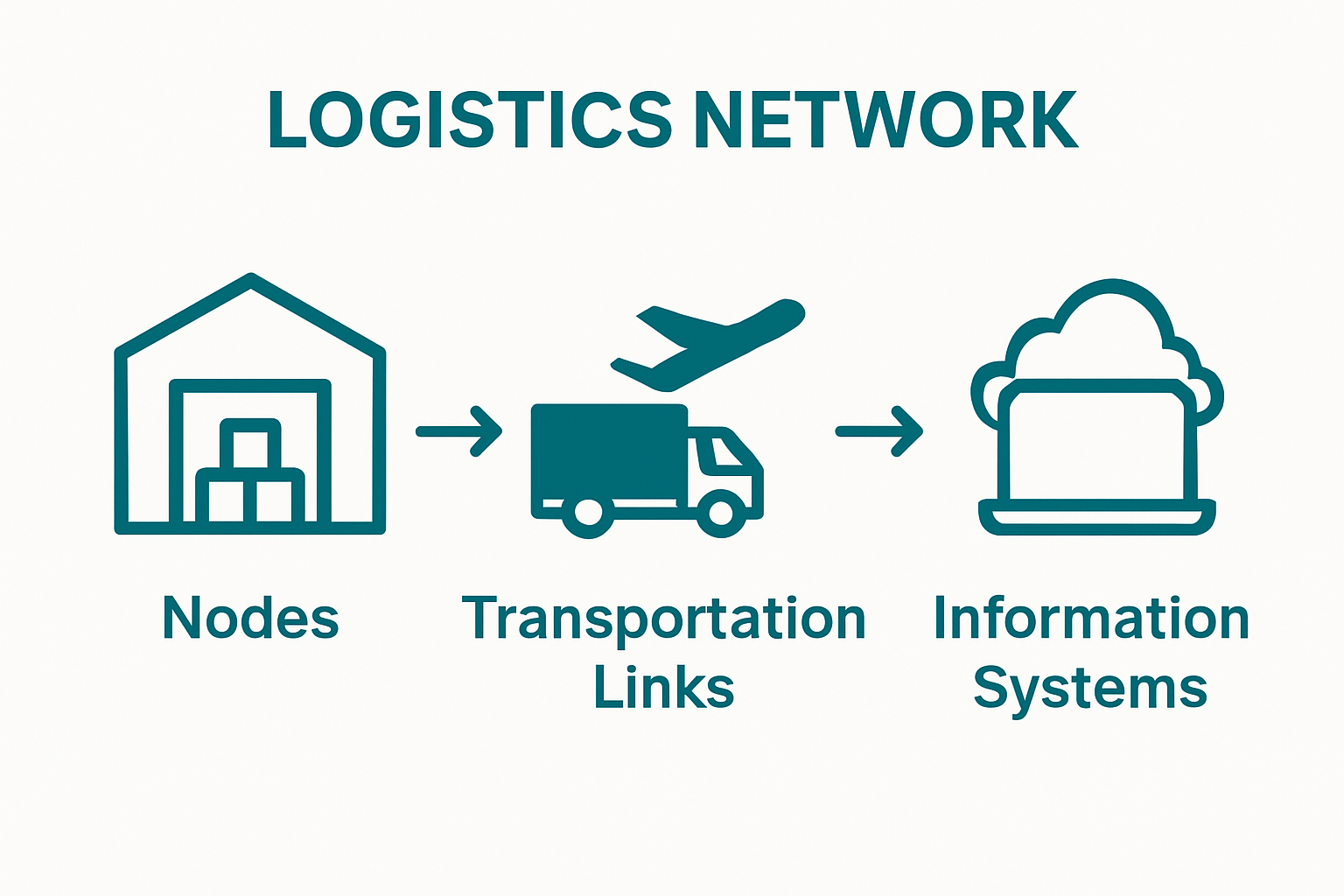
- Nodes: Physical locations like manufacturing plants, distribution centers, and warehouses
- Transportation Links: Routes connecting different nodes via road, rail, air, or maritime channels
- Information Systems: Digital platforms tracking inventory, shipments, and supply chain performance
Strategic Decision Making in Network Configuration
Successful logistics network design requires comprehensive analysis across multiple dimensions. According to research from the National Academies Press, organizations must consider facility locations, product allocation strategies, and potential risk scenarios when developing their logistics infrastructure.
Key strategic considerations include evaluating total transportation costs, minimizing delivery times, maintaining inventory efficiency, and creating adaptable supply chain architectures. Companies must balance complex variables like geographic distribution, demand forecasting, and operational scalability.
Performance Optimization Strategies
To maximize network effectiveness, businesses implement advanced analytical techniques and technological solutions. Modern logistics network design integrates data analytics, predictive modeling, and real-time tracking to create responsive and resilient supply chains. Learn more about optimizing ecommerce logistics to understand how technology transforms traditional supply chain management.
Ultimately, logistics network design transforms from a purely operational function into a strategic competitive advantage, enabling businesses to respond quickly to market changes, reduce costs, and enhance customer satisfaction through precise, efficient product delivery systems.
The Significant of Logistics Network design in Supply Chain Management
Logistics network design plays a critical role in transforming supply chain operations from fragmented processes into integrated, strategic systems that drive business performance and competitive advantage. By systematically organizing how goods move through complex distribution channels, organizations can dramatically improve operational efficiency and customer satisfaction.
Strategic Impact on Business Performance
The strategic importance of logistics network design extends far beyond simple transportation management. According to research from transportation logistics experts, effective network design allows businesses to coordinate multiple complex elements including suppliers, manufacturing facilities, warehouses, and distribution centers.
Key strategic benefits include:
- Cost Optimization: Reducing transportation and inventory holding expenses
- Operational Flexibility: Creating adaptable supply chain architectures
- Customer Responsiveness: Accelerating product delivery and improving service levels
Technological Transformation in Network Management
Modern logistics network design leverages advanced technologies to create intelligent, responsive supply chain ecosystems. Digital platforms now enable real-time tracking, predictive analytics, and dynamic route optimization, allowing businesses to make faster, more informed decisions about product movement and resource allocation.
Discover advanced logistics management strategies that help companies transform traditional supply chain limitations into competitive opportunities.
The complexity of contemporary global markets demands sophisticated logistics network designs that can quickly adapt to changing economic conditions, consumer preferences, and technological innovations. By treating logistics network design as a strategic capability rather than a mere operational function, businesses can create resilient, efficient supply chains that deliver sustainable competitive advantages.
How Logistics Network design Enhances Efficiency and Cost-effectiveness
Logistics network design represents a strategic approach to optimizing supply chain performance, enabling businesses to dramatically reduce operational expenses while improving overall system responsiveness. By systematically analyzing and restructuring how goods move through distribution channels, organizations can unlock significant economic advantages.
Quantifying Cost Reduction Strategies
Effective logistics network design directly impacts a company’s bottom line through multiple cost reduction mechanisms. According to research from transportation logistics experts, strategic network optimization can generate substantial financial benefits.
Key cost reduction strategies include:
- Transportation Expense Minimization: Reducing fuel consumption and route redundancies
- Inventory Holding Cost Control: Optimizing warehouse space and inventory turnover
- Resource Allocation Efficiency: Strategically positioning distribution centers
Technological Integration for Operational Excellence
Modern logistics networks leverage advanced technologies to enhance efficiency. Digital platforms now enable real-time tracking, predictive analytics, and dynamic routing algorithms that transform traditional supply chain limitations into competitive advantages.
Explore critical logistics performance insights to understand how technological innovations are reshaping business operations.
By implementing sophisticated network design principles, businesses can create agile, responsive supply chains capable of adapting quickly to market changes. The ability to balance cost-effectiveness with operational flexibility becomes a critical differentiator in today’s complex global marketplace, where speed, accuracy, and economic efficiency are paramount to sustainable business success.

Factors Influencing Effective Logistics Network design
Logistics network design represents a complex strategic process involving multiple interconnected variables that determine a supply chain’s overall performance and efficiency. Understanding the critical factors that shape network design allows businesses to create more resilient, adaptable, and cost-effective distribution systems.
The table below outlines critical factors influencing effective logistics network design, helping organizations identify which variables have the most significant impact on supply chain performance.
| Factor | Relevance |
|---|---|
| Geographic Distribution | Determines market reach and proximity to customers |
| Transportation Infrastructure | Influences available routes, connectivity, and reliability |
| Cost Dynamics | Affects transportation, inventory, and overall operational expenses |
| Facility Location | Impacts efficiency, speed, and adaptability of distribution systems |
| Inventory Management | Determines stock availability, turnover, and service levels |
Strategic Complexity of Network Configuration
Effective logistics network design demands comprehensive analysis across multiple dimensions. According to transportation network research, organizations must carefully evaluate several key criteria that impact overall network performance.
Critical influencing factors include:
- Geographic Distribution: Analyzing market reach and customer proximity
- Transportation Infrastructure: Assessing available routes and connectivity
- Cost Dynamics: Evaluating transportation, inventory, and operational expenses
Technological and Operational Considerations
Modern logistics networks require sophisticated technological integration and strategic decision making. Facility location, inventory management, and transportation decisions are deeply interconnected, each influencing the others in complex ways that determine overall supply chain effectiveness.
Discover advanced logistics management techniques that help businesses navigate these intricate network design challenges.
The most successful logistics networks balance multiple competing priorities, including cost efficiency, speed, reliability, and flexibility. By understanding and strategically managing these influential factors, businesses can transform their logistics network from a basic operational function into a powerful competitive advantage that delivers exceptional value to customers and shareholders alike.
Real-World Applications and Case Studies in Logistics Network design
Logistics network design transforms from theoretical concept to practical solution through strategic implementation across diverse industries. Real-world case studies demonstrate how organizations leverage sophisticated network design principles to solve complex operational challenges and drive significant business value.
Emergency Response and Public Service Applications
During critical scenarios, logistics network design becomes paramount for effective resource management. Research analyzing pandemic response logistics revealed how strategic network configuration can dramatically improve emergency relief distribution, highlighting the critical role of efficient logistics infrastructure.
Notable application areas include:
- Healthcare Logistics: Rapidly distributing medical supplies and vaccines
- Disaster Relief: Coordinating humanitarian aid across challenging geographical regions
- Public Health Management: Creating resilient supply chains for essential resources
Business Transformation Through Strategic Network redesign
Commercial enterprises consistently leverage logistics network design to unlock substantial economic advantages. A comprehensive study from the MIT Center for Transportation and Logistics demonstrated how strategic network optimization could generate significant financial benefits, with one consumer packaged goods company identifying potential annual savings exceeding $2.6 million through intelligent network restructuring.
Explore innovative logistics management strategies that help businesses transform their operational capabilities.
Successful logistics network design transcends simple cost reduction. By creating adaptable, intelligent distribution systems, organizations can respond more effectively to market changes, customer demands, and unexpected disruptions. The most advanced networks integrate predictive analytics, real-time tracking, and dynamic routing to create truly responsive supply chain architectures that deliver competitive advantage.
Unlock Seamless Logistics Network Design with Reliable Courier Services
Are you struggling to turn complex logistics network design strategies into real-world efficiency for your ecommerce business? If you have ever felt challenged by rising transportation costs, slow deliveries, or lack of supply chain visibility, you are not alone. This article highlights the crucial impact of an optimized logistics network on cost reduction, speed, and customer satisfaction. But putting theory into action requires a dependable partner that can translate these core concepts into practical, results-driven solutions.

Experience the difference with reliable courier services trusted by merchants, wholesalers, and global brands. Take control of your end-to-end logistics by leveraging integrated tools for real-time shipment tracking, warehouse management, cross-border fulfillment, and data-driven decision making. Explore our all-in-one platform today at https://or-ner.com and build a logistics network that grows with your ecommerce ambitions. Start optimizing now to secure faster deliveries and stronger business performance.
Frequently Asked Questions
What is logistics network design?
Logistics network design is a strategic framework that organizes supply chain operations, enabling businesses to optimize the movement of goods from manufacturers to end consumers through interconnected elements like nodes, transportation links, and information systems.
Why is logistics network design important for businesses?
Logistics network design is crucial as it transforms fragmented supply chain processes into integrated systems. It helps reduce costs, improve operational flexibility, and enhance customer responsiveness, ultimately driving business performance and competitive advantage.
What are the key components of a logistics network?
The main components of a logistics network include nodes (physical locations such as warehouses and distribution centers), transportation links (routes connecting the nodes), and information systems that track inventory and shipments.
How does technology influence logistics network design?
Technology enhances logistics network design by enabling real-time tracking, predictive analytics, and dynamic route optimization. These advancements allow businesses to make informed decisions quickly, improving overall supply chain effectiveness and responsiveness.