Over 80 percent of American ecommerce sellers overlook hidden fees that drive up the price of global sales. Mastering the complexities of landed costs can make or break international profitability, especially when products cross multiple borders on their journey from supplier to buyer. Understanding which expenses truly impact bottom lines reveals strategies for smarter pricing, improved forecasting, and confident expansion into global markets.
Table of Contents
- Defining Landed Costs in Global Commerce
- Key Components of Landed Costs Explained
- How to Calculate Landed Costs Accurately
- Landed Costs in Ecommerce Fulfillment Workflows
- Mistakes to Avoid When Managing Landed Costs
Key Takeaways
| Point | Details |
|---|---|
| Understanding Landed Costs is Essential | Landed costs encompass all expenses from product origin to destination, affecting pricing and profitability for ecommerce sellers. |
| Components of Landed Costs Must be Evaluated | Key elements include raw material, manufacturing, transportation, customs duties, and more, which directly impact financial planning. |
| Accurate Calculation is Crucial | Sellers should adopt a structured methodology for calculating landed costs to avoid financial surprises and improve decision-making. |
| Avoid Common Mistakes | Common pitfalls include incomplete cost tracking and inadequate supplier negotiations, which can undermine financial performance. |
Defining Landed Costs in Global Commerce
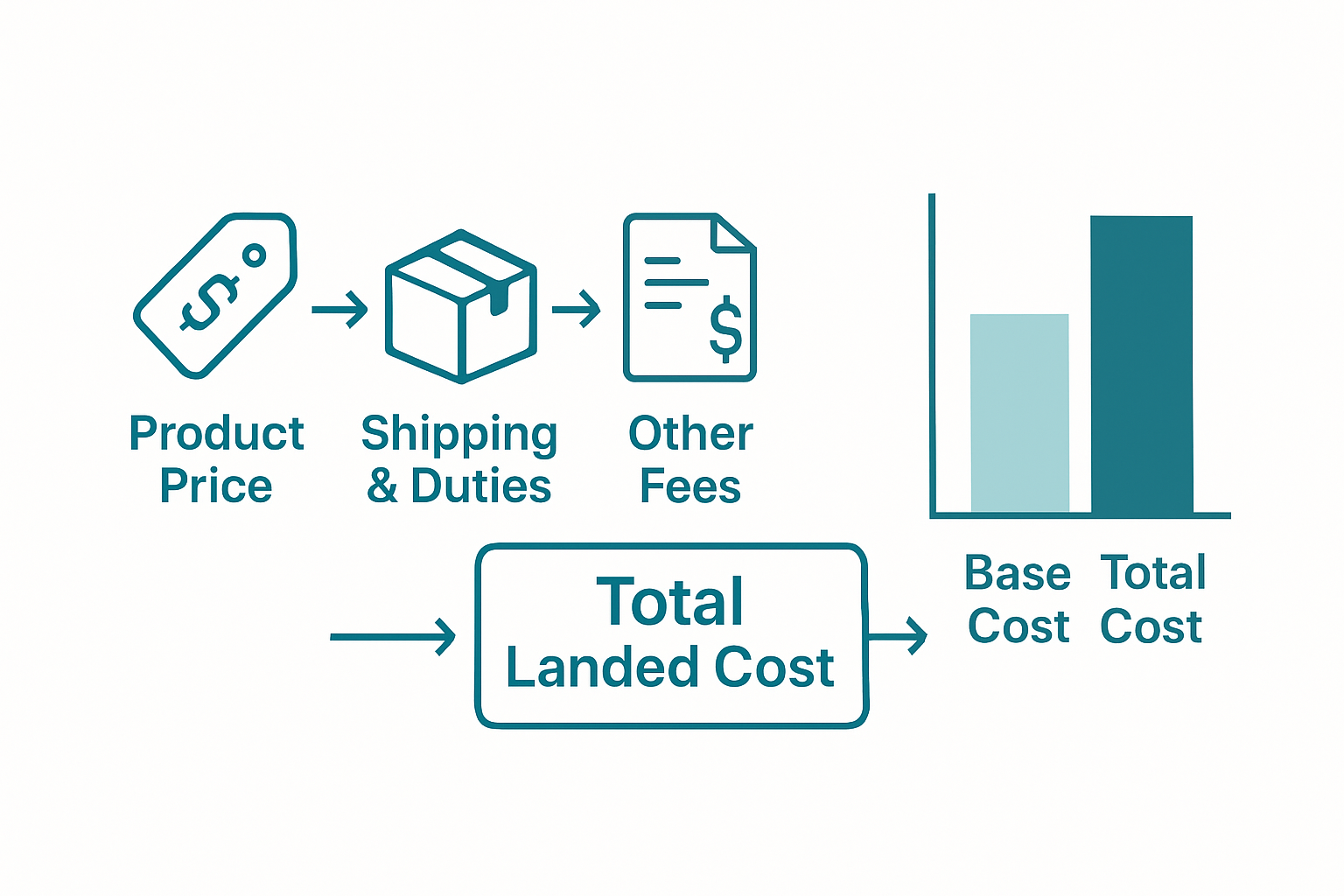
In global commerce, landed costs represent the complete financial picture of bringing a product from its point of origin to its final destination. More than just shipping expenses, landed costs encompass a comprehensive range of expenses that impact an ecommerce seller’s total product investment. Total landed cost models provide critical insights into understanding the true economic complexity of international product procurement and distribution.
At its core, landed costs include multiple interconnected expense categories that extend far beyond basic transportation fees. These typically involve raw material expenses, manufacturing costs, international shipping charges, customs duties, tariffs, insurance, handling fees, and potential currency exchange variations. Ecommerce sellers must meticulously calculate these expenses to establish accurate product pricing, maintain profit margins, and make strategic sourcing decisions.
The significance of understanding landed costs cannot be overstated for online retailers operating in a global marketplace. By comprehensively analyzing the aggregate costs associated with product delivery, businesses can:
- Identify hidden financial inefficiencies
- Make more informed procurement choices
- Develop competitive pricing strategies
- Optimize supply chain operations
- Minimize unexpected financial surprises
Successful global commerce requires a nuanced approach to financial planning. Landed costs serve as a critical metric that transforms complex international transactions from potential financial risks into strategic opportunities for growth and profitability.
Key Components of Landed Costs Explained
Understanding the nuanced elements of landed costs requires a comprehensive breakdown of the multiple financial factors that contribute to a product’s total transportation and procurement expense. Detailed research from transportation logistics experts reveals that landed costs extend far beyond simple shipping charges, encompassing a complex network of interconnected expenses that directly impact an ecommerce seller’s bottom line.
The primary components of landed costs typically include several critical categories that ecommerce sellers must carefully evaluate. These fundamental elements encompass:
- Raw Material Expenses: The foundational costs of product components
- Manufacturing Costs: Direct labor, production overhead, and facility expenses
- Transportation Fees: International and domestic shipping charges
- Customs Duties and Tariffs: Government-imposed import and export charges
- Insurance Costs: Protection against potential shipping and handling risks
- Handling and Processing Fees: Warehousing, packaging, and logistics management expenses
- Currency Exchange Variations: Financial fluctuations impacting international transactions
Comprehensive analysis of total landed cost models demonstrates that each of these components plays a crucial role in determining the true economic impact of product procurement. Ecommerce sellers who meticulously track and understand these expenses can develop more strategic pricing models, identify potential cost-saving opportunities, and maintain competitive market positioning.

Successful global commerce demands a granular approach to financial management. By breaking down landed costs into these distinct yet interconnected components, online retailers can transform complex international transactions from potential financial challenges into strategic opportunities for operational optimization and profitability.
How to Calculate Landed Costs Accurately
Landed cost calculation demands a methodical and comprehensive approach that goes beyond simple arithmetic. Sophisticated total landed cost models provide ecommerce sellers with a strategic framework for capturing every nuanced expense associated with international product procurement and delivery.
To calculate landed costs accurately, sellers must follow a structured methodology that encompasses multiple financial dimensions:
- Gather Foundational Product Expenses
- Product purchase price
- Raw material costs
- Manufacturing expenses
- Direct labor charges
- Calculate Transportation and Logistics Expenses
- International shipping fees
- Freight forwarding charges
- Insurance costs
- Handling and packaging expenses
- Factor in Regulatory and Financial Considerations
- Customs duties and tariffs
- Import/export taxes
- Currency exchange rates
- Potential compliance fees
Comprehensive supply chain analysis techniques suggest implementing a dynamic calculation approach that accounts for potential market fluctuations. Ecommerce sellers should develop a flexible model that allows for real-time adjustments, enabling more precise financial forecasting and strategic decision-making.
Successful landed cost calculation requires ongoing refinement and attention to detail. By creating a robust, adaptable framework that captures every potential expense, online retailers can transform complex international procurement processes into streamlined, financially optimized operations.
Landed Costs in Ecommerce Fulfillment Workflows
Landed costs represent a critical strategic component in ecommerce fulfillment workflows, directly impacting operational efficiency and profitability. Comprehensive total landed cost models provide ecommerce businesses with a sophisticated framework for analyzing and optimizing every expense associated with product procurement, warehousing, and delivery.
In ecommerce fulfillment, landed costs intersect with multiple critical operational stages:
- Product Sourcing: Evaluating total expenses beyond initial purchase price
- Inventory Management: Calculating true storage and handling costs
- Shipping and Logistics: Incorporating transportation, customs, and insurance expenses
- Last-Mile Delivery: Factoring in final distribution and handling charges
Strategic global logistics analysis reveals that successful ecommerce fulfillment requires a dynamic approach to cost management. Online retailers must develop flexible workflows that can rapidly adapt to changing market conditions, currency fluctuations, and international trade regulations.
Effective landed cost integration transforms fulfillment from a simple transactional process into a strategic competitive advantage. By meticulously tracking and optimizing every expense across the supply chain, ecommerce businesses can create more resilient, cost-efficient operations that deliver exceptional value to customers while maintaining healthy profit margins.
Mistakes to Avoid When Managing Landed Costs
Navigating the complex landscape of landed costs requires strategic awareness and meticulous attention to detail. Comprehensive cost modeling research reveals that ecommerce sellers frequently make critical errors that can significantly undermine their financial performance and operational efficiency.
Common mistakes in landed cost management include:
- Incomplete Cost Tracking
- Overlooking hidden expenses
- Failing to account for minor administrative fees
- Ignoring currency exchange fluctuations
- Neglecting potential compliance costs
- Inadequate Financial Forecasting
- Using static pricing models
- Underestimating market volatility
- Relying on outdated expense calculations
- Neglecting potential tariff changes
- Poor Supplier and Logistics Negotiations
- Accepting first-offered pricing
- Lacking comprehensive contract understanding
- Failing to negotiate comprehensive shipping terms
- Overlooking alternative logistics strategies
Strategic global logistics analysis demonstrates that successful cost management requires a dynamic, proactive approach. Ecommerce businesses must develop robust systems that continuously monitor, evaluate, and adapt to changing market conditions.
Effective landed cost management is not about cutting corners, but about creating a comprehensive, transparent financial strategy. By understanding and avoiding these common pitfalls, online retailers can transform potential financial risks into opportunities for strategic growth and operational optimization.
Master Your Landed Costs with Reliable Courier Services and Expert Logistics Solutions
Managing landed costs can feel overwhelming with so many factors like customs duties, shipping fees, and currency fluctuations impacting your profit margins. The article highlights how thorough calculation and ongoing cost tracking are essential to avoid hidden expenses and financial surprises that hurt ecommerce growth. If you want to streamline complex cross-border shipments and gain full visibility over every cost component, you need a logistics partner who truly understands these challenges.
Discover how reliable courier services and comprehensive supply chain solutions from Or-Ner.com can simplify your fulfillment workflows. Our platform covers everything from freight booking and customs clearance to inventory management. By integrating real-time tracking, flexible warehousing, and strategic logistics automation, we empower online sellers to optimize landed costs and improve pricing accuracy. Start transforming your global ecommerce operations today with our all-in-one logistics services at Or-Ner.com. Take control of your landed cost calculations and secure your competitive advantage now.
Frequently Asked Questions
What are landed costs in ecommerce?
Landed costs in ecommerce refer to the total expenses involved in bringing a product from its origin to its final destination, including purchase price, shipping, customs duties, insurance, and other related fees.
Why is it important to understand landed costs?
Understanding landed costs is crucial for ecommerce sellers as it provides a complete financial picture, helping them set accurate product pricing, maintain profit margins, and make informed sourcing decisions.
How do I calculate landed costs accurately?
To calculate landed costs accurately, gather all foundational product expenses, calculate shipping and logistics costs, and factor in regulatory and financial considerations, including customs duties and currency exchange rates.
What common mistakes should I avoid when managing landed costs?
Common mistakes in managing landed costs include incomplete cost tracking, inadequate financial forecasting, and poor negotiations with suppliers and logistics providers, which can hinder financial performance and operational efficiency.
Recommended
- What Is Freight Forwarding? Guide for Modern Supply Chains 2025 – ORNER
- What Is Same Day Delivery? 2025 Guide for Online Retailers – ORNER
- Transportation Mode Selection: Complete Guide for Ecommerce – ORNER
- Last Mile Delivery Challenges: Impact on U.S. Ecommerce – ORNER
- Best Type of Cologne: The Essential Guide