
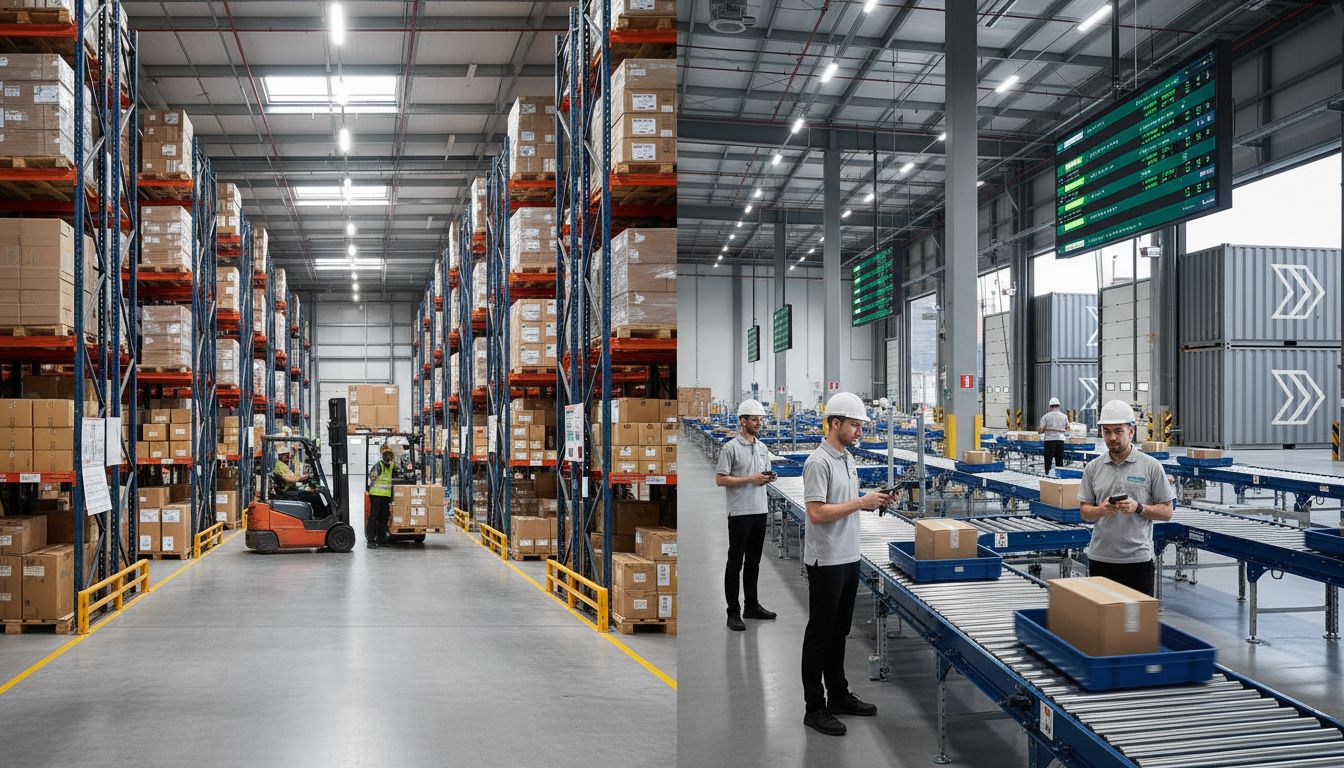
Most american companies depend on both warehouses and fulfillment centers, yet over 60 percent of business owners mix up their roles. The difference matters because each facility serves a separate function in the supply chain, directly shaping delivery speed and customer satisfaction. Understanding how these operations work helps american businesses choose smarter logistics strategies, save costs, and deliver a better experience to every customer.
Table of Contents
- Warehouse and Fulfillment Center Defined
- Key Differences in Operations and Purpose
- Types of Warehousing and Fulfillment Models
- Real-World Applications and Industry Uses
- Choosing the Right Solution for Your Business
Key Takeaways
| Point | Details |
|---|---|
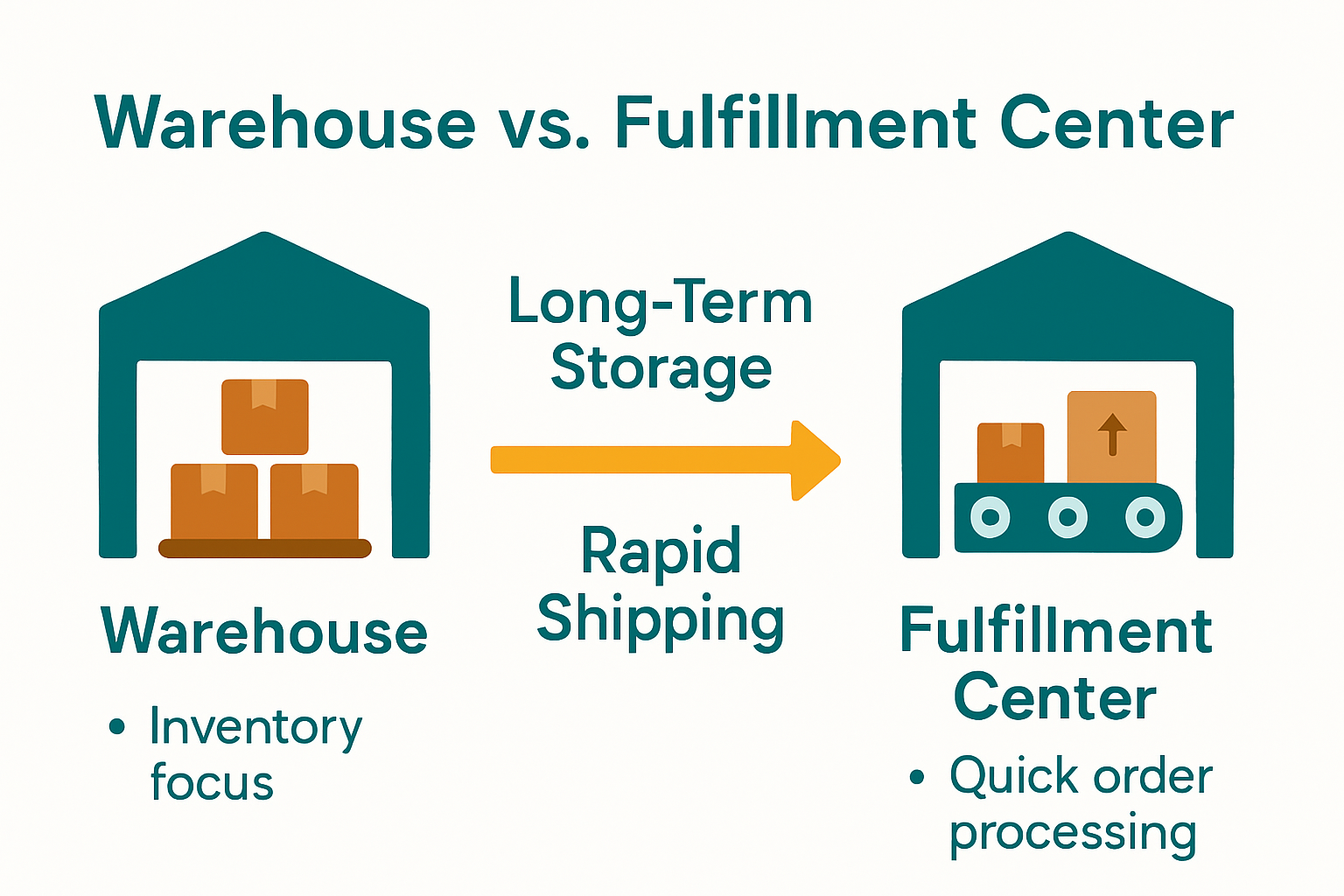
| Difference Between Warehouses and Fulfillment Centers | Warehouses focus on long-term inventory storage, while fulfillment centers prioritize rapid order processing and shipping. |
| Technological Integration | Fulfillment centers leverage advanced technology for order handling, while warehouses typically use more manual processes. |
| Variety of Models | Different warehousing and fulfillment models exist to address specific operational needs, enhancing supply chain effectiveness. |
| Strategic Selection | Businesses should tailor their warehousing and fulfillment strategies based on sales volume, product characteristics, and geographic distribution. |
Warehouse and Fulfillment Center Defined
Understanding the fundamental differences between warehouses and fulfillment centers is crucial for ecommerce sellers and supply chain professionals. According to Georgia Tech, these storage facilities might seem similar but serve distinctly different operational purposes in modern logistics networks.
A warehouse traditionally functions as a static storage facility where goods are received, stored, and held for extended periods. These spaces prioritize inventory preservation, offering controlled environments for products waiting to be distributed. Warehouses typically handle large inventory volumes, often serving manufacturers, wholesalers, and businesses requiring substantial inventory holding capacity. They focus on maximizing storage density and maintaining product integrity through strategic inventory management.
In contrast, a fulfillment center represents a dynamic logistics hub designed for rapid product movement and order processing. As Harper College’s Supply Chain Management curriculum highlights, these centers are engineered to streamline order processing, packaging, and shipping. Key characteristics of fulfillment centers include:
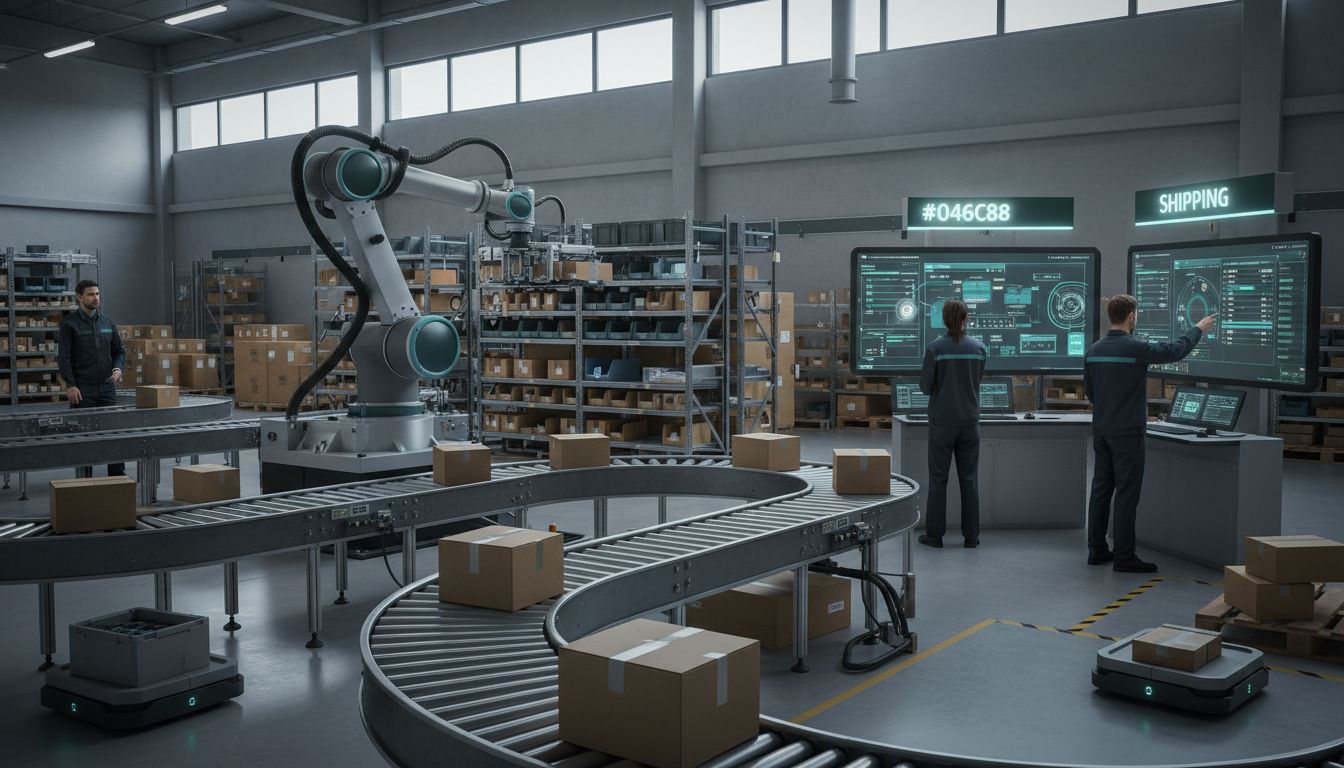
- Rapid order turnaround times
- Advanced inventory tracking systems
- Integrated shipping and packaging workflows
- Real-time inventory management capabilities
- Direct connection to ecommerce platforms
While warehouses store products, fulfillment centers transform stored inventory into customer-ready shipments. They represent the critical link between online sales platforms and end consumers, ensuring products move quickly from digital purchase to physical delivery. For modern ecommerce businesses, understanding these distinctions helps optimize logistics strategies and improve overall operational efficiency.
Key Differences in Operations and Purpose
The operational distinctions between warehouses and fulfillment centers extend far beyond simple storage, representing fundamental differences in logistics strategy and execution. According to research from NJIT, internet fulfillment warehouses have developed unique product flow models that dramatically transform traditional storage paradigms.
Order Processing Speed represents the most critical operational divergence. While traditional warehouses focus on bulk inventory management, fulfillment centers prioritize individual order processing. NJIT’s research highlights that fulfillment centers are engineered for rapid, precise order handling, often processing multiple unique customer orders simultaneously. This requires sophisticated technological infrastructure, including:
- Advanced picking and packing systems
- Real-time inventory synchronization
- Automated sorting and routing mechanisms
- Integrated shipping label generation
- Multichannel order management platforms
Another significant operational difference lies in technological integration. Fulfillment centers function as complex technological ecosystems, seamlessly connecting ecommerce platforms, inventory management systems, and shipping networks. Traditional warehouses typically operate with more manual processes, focusing on storage optimization rather than immediate order execution. These centers leverage advanced software to track product locations, manage inventory levels, and ensure immediate order processing, transforming logistics from a static storage model to a dynamic, customer-centric delivery network.
Ultimately, the operational purpose distinguishes these facilities. Warehouses serve as inventory repositories, while fulfillment centers act as active logistics hubs that transform digital sales into physical deliveries. This shift represents more than a technological upgrade – it’s a fundamental reimagining of how products move from manufacturers to consumers in the age of ecommerce.
Types of Warehousing and Fulfillment Models
Modern logistics has evolved to include diverse warehousing and fulfillment models that cater to specific business needs and operational strategies. According to Georgia Tech, these models represent sophisticated approaches to inventory management and product distribution.
Warehouse Models can be categorized into several distinct types, each serving unique logistical purposes:
- Holding Warehouses: Designed for long-term inventory storage
- Distribution Warehouses: Focused on rapid product movement
- Cross-Docking Warehouses: Minimize storage time by transferring products directly
- Consolidated Warehouses: Combine shipments from multiple suppliers
- Refrigerated Warehouses: Specialized storage for temperature-sensitive goods
Fulfillment Center Models represent an even more nuanced approach to logistics. These specialized facilities are typically organized around specific operational strategies:
- Omnichannel Fulfillment Centers: Support multiple sales channels simultaneously
- Dedicated Ecommerce Fulfillment Centers: Optimize for online retail operations
- Hybrid Fulfillment Models: Combine traditional warehousing with advanced order processing
- Automated Fulfillment Centers: Leverage robotics and advanced technology
- Regional Fulfillment Hubs: Strategically located to minimize shipping times
The key distinguishing factor between these models lies in their operational flexibility and technological integration.
 Learn more about just-in-time delivery strategies that further enhance these warehousing and fulfillment approaches. Modern businesses must carefully select models that align with their specific inventory management, shipping requirements, and customer experience goals.
Real-World Applications and Industry Uses
Different industries leverage warehousing and fulfillment models to address unique logistical challenges, transforming supply chain operations across multiple sectors. Rensselaer Polytechnic Institute research highlights how specialized logistics models can dramatically improve operational efficiency across various industry contexts.
Manufacturing and Industrial Sectors typically utilize complex warehousing strategies to manage intricate supply chains. These industries rely on specialized warehouse models that support:
- Just-in-time inventory management
- Component storage for precision manufacturing
- Raw material preservation
- High-volume parts distribution
- Specialized climate-controlled storage
Ecommerce and Retail represent the most dynamic application of modern fulfillment centers. These businesses require rapid, precise order processing that traditional warehousing cannot support. Specialized fulfillment models enable:
- Multichannel order management
- Same-day and next-day shipping capabilities
- Integrated inventory across multiple sales platforms
- Automated picking and packing systems
- Advanced return processing workflows
Freight forwarding strategies further enhance these logistics models, providing businesses with flexible solutions for complex distribution challenges. From maritime logistics to global retail networks, modern warehousing and fulfillment models represent a critical technological infrastructure that enables businesses to compete in an increasingly complex global marketplace.
Choosing the Right Solution for Your Business
Selecting the appropriate warehousing and fulfillment solution requires a strategic approach that aligns with your specific business objectives. According to Harper College’s Supply Chain Management curriculum, businesses must carefully evaluate multiple critical factors when making this crucial decision.
Key Evaluation Criteria for selecting the right warehousing and fulfillment model include:
- Sales Volume: Assess current and projected order frequencies
- Product Characteristics: Consider storage requirements, fragility, and handling needs
- Geographic Distribution: Analyze customer base and shipping distances
- Budget Constraints: Evaluate cost-effectiveness of different models
- Technological Integration: Determine required system compatibility
Specific Business Scenarios demand tailored logistics approaches:
- Startup Ecommerce: Prioritize flexible, scalable fulfillment options
- Seasonal Businesses: Require adaptable storage and processing capabilities
- Global Manufacturers: Need complex, multi-location logistics solutions
- Niche Product Sellers: Demand specialized handling and storage
Essential courier services for small businesses can further complement your warehousing strategy, providing additional support for your logistics infrastructure. The most successful businesses treat their warehousing and fulfillment model not just as a storage solution, but as a critical competitive advantage that directly impacts customer satisfaction and operational efficiency.
Unlock the Full Potential of Your Warehousing and Fulfillment Strategy
Navigating the choice between warehouses and fulfillment centers can be overwhelming as your ecommerce business grows. The key challenge is balancing fast order processing with efficient inventory management while maintaining control over shipping speed and customer satisfaction. Whether you need scalable storage solutions, advanced order fulfillment, or seamless integration with ecommerce platforms like Amazon, understanding these logistics options is just the first step.
At or-ner.com, we specialize in providing reliable courier services alongside a global network of warehouses and fulfillment centers designed to keep your supply chain flexible and fast. Our platform supports everything from real-time shipment tracking to inventory management so you can focus on growing your business instead of logistics headaches.
Take control of your fulfillment today by partnering with an all-in-one logistics platform purpose-built for ecommerce. Visit or-ner.com now and explore how our customizable warehousing and fulfillment solutions can transform your supply chain into a competitive advantage. Don’t wait to deliver faster and operate smarter.
Frequently Asked Questions
What is the primary difference between a warehouse and a fulfillment center?
A warehouse primarily serves as a static storage facility for long-term inventory storage, while a fulfillment center is designed for rapid order processing and shipping, transforming stored inventory into customer-ready shipments.
How do order processing speeds differ between warehouses and fulfillment centers?
Warehouses focus on bulk inventory management, leading to slower order processing speeds. In contrast, fulfillment centers prioritize individual order handling, often utilizing advanced technology to process multiple customer orders quickly and efficiently.
What types of businesses benefit from using a fulfillment center?
Ecommerce and retail businesses typically benefit the most from fulfillment centers, as they require rapid and precise order processing, multichannel order management, and fast shipping capabilities to meet consumer demand effectively.
How do I choose the right warehousing or fulfillment solution for my business?
When choosing a warehousing or fulfillment solution, consider factors such as sales volume, product characteristics, geographic distribution, budget constraints, and the level of required technological integration to align with your specific business needs.