
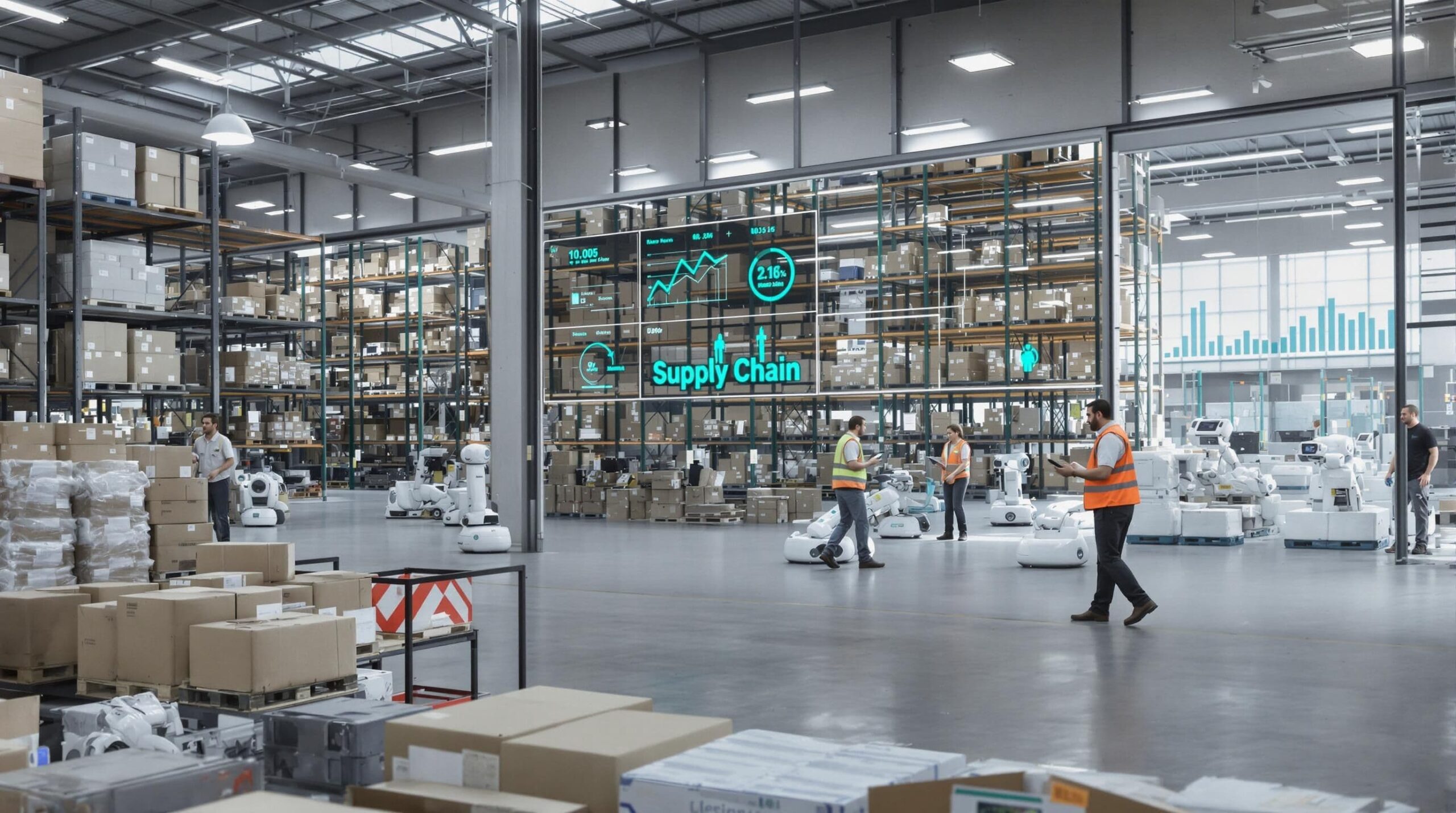
Warehouse management systems are quietly reinventing how products move from shelves to doorsteps. Most people focus on the physical buildings or the forklifts, but smart software is where the real magic happens. In fact, AI-powered warehouse management can cut inventory errors by up to 40 percent and boost efficiency by 30 percent. That kind of hidden power is reshaping the entire supply chain in 2025, and most businesses have no idea just how far these tools can take them.
Table of Contents
- What Are Warehouse Management Systems And How They Work
- Key Features Of Modern Warehouse Management Systems
- Benefits For Ecommerce Sellers, Retailers, And Manufacturers
- Choosing The Right Warehouse Management System For Your Business
Quick Summary
| Takeaway | Explanation |
|---|---|
| Leverage Warehouse Management Systems for Efficiency | Implementing a WMS automates resource allocation and improves spatial efficiency to reduce operational costs significantly. |
| Utilize Advanced Inventory Features for Accuracy | Features like real-time tracking and automated alerts minimize inventory discrepancies, enhancing accuracy in stock management. |
| Select WMS Based on Business Needs | Thoroughly assess scalability, integration, and industry specifics before choosing a WMS to align it with operational goals. |
| Implement Change Management During Integration | Successful adoption of a WMS requires comprehensive staff training and strategic planning to ensure optimal use and productivity. |
| Incorporate Intelligent Technology for Adaptability | Integrating AI, IoT, and predictive analytics creates smarter warehouses that can dynamically adjust to market changes. |
What Are Warehouse Management Systems and How They Work
Warehouse management systems (WMS) represent a critical technological backbone for modern logistics and supply chain operations. These sophisticated software solutions transform how businesses track, manage, and optimize their inventory and warehouse processes.
Core Functionality of Warehouse Management Systems
TechTarget defines a warehouse management system as an enterprise software application that automates and manages warehouse operational processes through a centralized interface. At its core, a WMS provides comprehensive control over inventory movement, storage, and tracking.
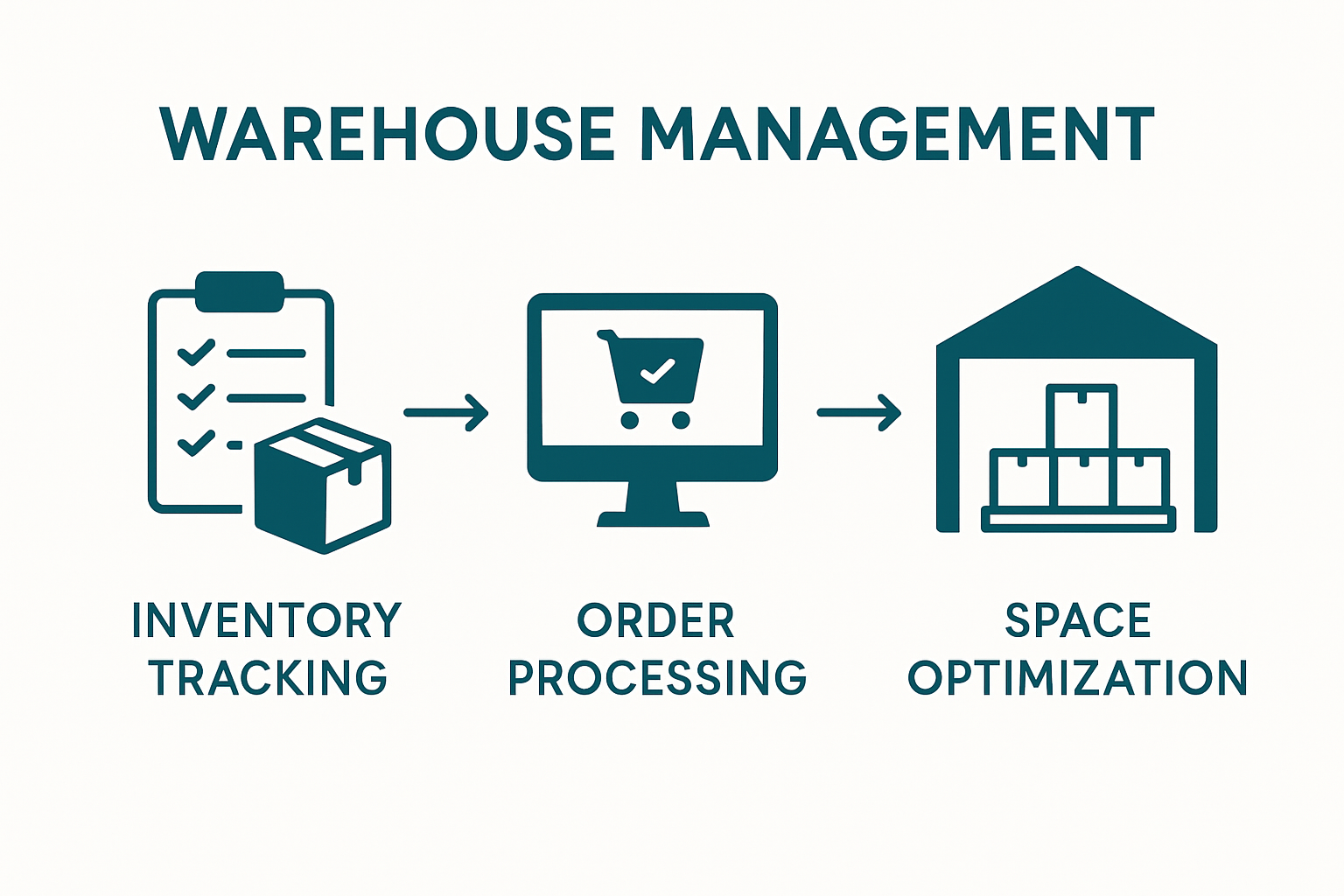
The primary functions of a warehouse management system include:
- Inventory Tracking: Real-time monitoring of product locations, quantities, and status
- Order Processing: Automated picking, packing, and shipping workflows
- Space Optimization: Intelligent storage allocation and warehouse layout management
These systems go beyond simple record-keeping. They integrate advanced technologies like barcode scanning, RFID tracking, and machine learning algorithms to provide unprecedented visibility and efficiency in warehouse operations.
Technical Architecture and Integration
GeekSforGeeks explains that warehouse management systems are designed to support complex logistics environments. The technical architecture typically involves multiple interconnected components that work seamlessly to streamline warehouse processes.
Modern WMS solutions leverage cloud-based platforms, enabling real-time data synchronization across multiple warehouses, distribution centers, and even global supply chain networks. This architectural approach allows businesses to:
- Centralize inventory data
- Enable remote monitoring
- Scale operations quickly
- Reduce manual data entry errors
The integration capabilities of warehouse management systems mean they can connect with enterprise resource planning (ERP) systems, transportation management platforms, and ecommerce marketplaces. This interconnectedness creates a holistic view of inventory movement from supplier to customer.
Advanced warehouse management systems now incorporate artificial intelligence and predictive analytics. These technologies help businesses forecast demand, optimize stock levels, and proactively identify potential logistical challenges before they impact operations.
By providing granular insights and automated workflows, warehouse management systems have become an essential tool for businesses seeking to maintain competitive advantage in an increasingly complex global marketplace. The ability to track every item, optimize storage, and streamline order fulfillment represents a significant leap forward in logistics technology.
To highlight the core functions and technological advancements of WMS, the table below summarizes key warehouse management system functionalities and their benefits as described in this section:
| Core WMS Function | Description | Key Benefit |
|---|---|---|
| Inventory Tracking | Real-time monitoring of product locations and quantities | Reduces errors and improves visibility |
| Order Processing | Automated picking, packing, and shipping workflows | Speeds up fulfillment and accuracy |
| Space Optimization | Intelligent storage allocation and layout management | Enhances efficiency, reduces waste |
| Tech Integration | Barcode, RFID, and machine learning technologies | Unlocks automation and insights |
| Data Synchronization | Real-time updates across multiple warehouses | Streamlines multi-site operations |
Key Features of Modern Warehouse Management Systems
Modern warehouse management systems have evolved far beyond simple inventory tracking. These sophisticated technological solutions now incorporate advanced features that dramatically transform logistics and supply chain operations.
Advanced Inventory and Location Management
Mintsoft highlights that contemporary warehouse management systems offer comprehensive inventory tracking capabilities. These systems provide real-time visibility into product locations, quantities, and movement patterns across multiple storage zones.
Key inventory management features include:
- Precise Tracking: Granular monitoring of individual product units
- Automated Alerts: Instant notifications for low stock or potential inventory discrepancies
- Dynamic Location Mapping: Intelligent storage allocation based on product characteristics
The ability to track inventory with unprecedented accuracy helps businesses minimize waste, reduce carrying costs, and optimize warehouse space utilization.

Intelligent Technology Integration
JIT Transportation reveals that emerging technologies are revolutionizing warehouse management systems. Artificial Intelligence (AI), Internet of Things (IoT), and robotics are now fundamental components of advanced WMS platforms.
Cutting-edge technological integrations deliver remarkable operational improvements:
- AI-powered demand forecasting
- Predictive maintenance for warehouse equipment
- Automated picking and sorting mechanisms
- Real-time performance analytics
Research indicates these technologies can reduce inventory inaccuracies by up to 40% and improve operational efficiency by 30% through continuous monitoring and intelligent decision-making.
The convergence of these technologies creates a smart, adaptive warehouse environment that responds dynamically to changing business requirements. Warehouse management systems now function as strategic tools that provide comprehensive insights and drive operational excellence.
By leveraging advanced features like machine learning algorithms, IoT sensors, and predictive analytics, modern warehouse management systems transform traditional logistics operations into agile, data-driven ecosystems. These technological innovations enable businesses to achieve unprecedented levels of efficiency, accuracy, and competitive advantage in an increasingly complex global marketplace.
The following table organizes the advanced features of modern WMS, highlighting the technology and operational improvements described above:
| Advanced WMS Feature | Technology Involved | Operational Improvement |
|---|---|---|
| AI-powered Demand Forecasting | Artificial Intelligence | Better demand planning, inventory control |
| Predictive Maintenance | IoT Sensors, Analytics | Less downtime for equipment |
| Automated Picking & Sorting | Robotics, Automation | Faster, more accurate fulfillment |
| Real-time Performance Analytics | Data Analytics/AI | Continuous process improvement |
| Automated Alerts | Software, Sensors | Prevents stockouts/discrepancies |
Benefits for Ecommerce Sellers, Retailers, and Manufacturers
Warehouse management systems deliver transformative benefits across diverse business sectors, offering strategic advantages that extend far beyond traditional inventory tracking. These sophisticated technological solutions provide comprehensive operational improvements for ecommerce sellers, retailers, and manufacturers.
Operational Cost Reduction and Efficiency
TechTarget reveals that warehouse management systems can significantly reduce operating costs by optimizing product, material, and equipment placement. Companies implementing these systems experience enhanced resource utilization and improved spatial efficiency.
Key operational benefits include:
- Space Optimization: Intelligent inventory arrangement
- Resource Allocation: Precise tracking of equipment and workforce
- Waste Minimization: Implementing strategies like first-in, first-out (FIFO)
By streamlining warehouse processes, businesses can dramatically reduce unnecessary expenses and improve overall productivity.
Enhanced Inventory Management and Forecasting
Research from GMA CPA indicates that warehouse management systems serve as the operational backbone for manufacturers and distributors. These systems centralize critical tasks such as stock tracking, inventory level monitoring, and operational planning.
Advanced inventory management capabilities provide businesses with:
- Real-time stock visibility
- Accurate demand forecasting
- Automated replenishment triggers
- Reduced inventory holding costs
Manufacturers can leverage these insights to make data-driven decisions, reducing excess inventory and minimizing potential stockout scenarios.
Strategic Competitive Advantage
E-commerce Fulfillment Research demonstrates that warehouse management systems provide critical strategic advantages in competitive markets. By automating processes and integrating seamlessly with other business systems, these solutions enable faster, more accurate order fulfillment.
Modern warehouse management systems empower businesses to:
- Accelerate order processing
- Improve customer satisfaction
- Enable scalable growth strategies
- Adapt quickly to market changes
The ability to quickly process orders, maintain accurate inventory, and provide transparent tracking represents a significant competitive differentiator in today’s fast-paced digital marketplace. Warehouse management systems transform logistical challenges into strategic opportunities, positioning businesses for sustained growth and operational excellence.
Choosing the Right Warehouse Management System for Your Business
Selecting the appropriate warehouse management system represents a critical strategic decision that can dramatically impact operational efficiency and business growth. The complexity of modern logistics demands a thoughtful, comprehensive approach to evaluating and implementing the right technological solution.
Defining Your Business Requirements
ResearchGate emphasizes the importance of establishing clear objectives and quantifiable goals before selecting a warehouse management system. Businesses must conduct a thorough internal assessment to understand their unique operational needs.
Key considerations include:
- Scalability: System capacity to grow with your business
- Integration Capabilities: Compatibility with existing technological infrastructure
- Specific Industry Requirements: Unique operational challenges in your sector
- Budget Constraints: Total cost of ownership and return on investment
A comprehensive evaluation requires examining current workflows, identifying performance bottlenecks, and projecting future operational requirements. This strategic approach ensures the selected system aligns precisely with your business objectives.
Technical Evaluation and Vendor Selection
Gartner Research recommends adopting a model-driven approach when evaluating warehouse management system options. This methodology focuses on aligning business processes with technological capabilities, ensuring a more strategic implementation.
Critical technical evaluation criteria include:
- Real-time reporting and analytics capabilities
- Flexibility of configuration and customization
- Cloud-based infrastructure and security protocols
- Mobile accessibility and user interface design
- Vendor support and ongoing technical maintenance
Businesses should request comprehensive demonstrations, conduct thorough reference checks, and potentially implement pilot programs to validate system performance before full-scale deployment.
Implementation and Change Management
The Cold Chain Federation highlights that successful warehouse management system implementation extends beyond technological selection. Effective change management and comprehensive staff training are equally crucial for achieving operational excellence.
Strategic implementation steps include:
- Developing a detailed migration roadmap
- Conducting comprehensive staff training programs
- Establishing performance metrics and monitoring protocols
- Creating contingency plans for potential disruptions
- Ensuring continuous feedback and system optimization
The most advanced warehouse management system will only deliver value if it is implemented thoughtfully and embraced by the entire organizational ecosystem. Successful adoption requires a holistic approach that balances technological capabilities with human factors, organizational culture, and strategic business objectives.
Ultimately, choosing the right warehouse management system is not just a technological decision but a strategic investment in your business’s future operational capabilities. Careful, methodical selection and implementation can transform warehouse operations from a cost center into a competitive advantage.
Frequently Asked Questions
What is a Warehouse Management System (WMS)?
A Warehouse Management System (WMS) is an enterprise software application that automates and manages warehouse operational processes, including inventory tracking, order processing, and space optimization.
How can a WMS improve supply chain efficiency?
A WMS enhances supply chain efficiency by automating resource allocation, reducing inventory errors by up to 40%, and boosting overall operational efficiency by 30% through features like real-time tracking and intelligent integration.
What are the key features of modern warehouse management systems?
Key features of modern WMS include advanced inventory and location management, AI-powered demand forecasting, automated alerts for low stock, and predictive maintenance capabilities for warehouse equipment.
How do I choose the right WMS for my business?
To choose the right WMS, assess your business requirements, including scalability, integration capabilities, industry-specific needs, and budget constraints. It’s essential to conduct comprehensive evaluations and consider vendor support during selection.
Unlock Seamless Warehouse Efficiency with a Complete Logistics Solution
Is your business feeling the pressure of managing complex warehouse operations and real-time inventory demands? According to our article on Warehouse Management Systems 2025, many retailers and manufacturers struggle with inventory errors, slow fulfillment, and adapting to rapid changes in the supply chain. Staying ahead requires more than just technology—it demands end-to-end visibility, automation, and a reliable partner who truly understands the needs of ecommerce.
Take control of your warehouse management and overcome common pitfalls by partnering with or-ner.com, your all-in-one logistics platform. Our solution brings together advanced inventory tracking, real-time shipment visibility, and scalable, flexible logistics services, connecting your warehouse directly to global fulfillment centers. Experience unmatched reliable courier services designed to eliminate delays, maximize accuracy, and support your growth—no matter your industry. Visit or-ner.com today to see how your warehouse efficiency can reach its full potential. This is your chance to future-proof your supply chain. Act now and transform your operations.