
Vendor management keeps the wheels turning in logistics, touching everything from deliveries to data flow. Surprising, right? Over 25 percent of organizations see a direct bump in vendor satisfaction just by improving communication, and that leads to higher supply chain efficiency. The real eye-opener is how technology like blockchain and artificial intelligence are not just helping but actually rewriting the rules for building trust, cutting costs, and boosting resilience in ways that go way beyond old-school methods.
Table of Contents
- Understanding Vendor Management In Logistics
- Key Challenges And Solutions For Logistics Teams
- Best Practices To Boost Efficiency And Performance
- Technology Trends Shaping Vendor Management In Logistics
Quick Summary
| Takeaway | Explanation |
|---|---|
| Establish Clear Performance Metrics | Define quantifiable metrics aligned with business objectives to evaluate vendor performance effectively. |
| Embrace Technological Integration | Utilize advanced platforms for real-time tracking, compliance monitoring, and data-driven decision-making in vendor management. |
| Develop Strategic Vendor Relationships | Shift from transactional interactions to collaborative partnerships that promote mutual growth and long-term success. |
| Implement Regular Performance Reviews | Conduct quarterly assessments to provide vendors with feedback and encourage open communication for continuous improvement. |
| Focus on Risk Management Strategies | Create contingency plans and diversify vendor portfolios to mitigate risks and ensure business continuity in logistics operations. |
Understanding Vendor Management in Logistics
Vendor management in logistics represents a critical strategic approach for businesses seeking to optimize their supply chain performance and operational efficiency. At its core, this process involves carefully selecting, evaluating, and managing relationships with third-party logistics providers who play pivotal roles in transportation, warehousing, and distribution networks.
The Strategic Importance of Vendor Management
Effective vendor management goes far beyond simple transactional interactions. According to the U.S. Department of Transportation, it ensures supply chain reliability by aligning third-party logistics providers with organizational goals and compliance requirements. Businesses must develop comprehensive strategies that transform vendor relationships from mere service agreements into collaborative partnerships.
The complexity of modern logistics demands a sophisticated approach. Companies need robust vendor management systems that can assess vendor performance across multiple dimensions, including cost efficiency, delivery reliability, technological capabilities, and adaptability to changing market conditions. This multifaceted evaluation helps organizations mitigate risks and drive continuous improvement in their supply chain operations.
Key Components of Successful Vendor Management
Successful vendor management in logistics requires a systematic approach that encompasses several critical elements. First, companies must establish clear performance metrics and expectations from the outset. These metrics should be quantifiable and aligned with broader business objectives. Learn more about strategic logistics management to understand how performance tracking integrates with overall business strategy.
The article details several essential components for successful vendor management in logistics. The table below summarizes these key components and their brief descriptions for easy reference:
| Component | Description |
|---|---|
| Clear Performance Metrics | Set quantifiable KPIs that align with business objectives |
| Comprehensive Vendor Screening | Assess financial stability, technology, and past performance before selection |
| Effective Communication | Ensure regular, transparent interaction and feedback with vendors |
| Technological Integration | Leverage real-time tracking, compliance monitoring, and data-driven decision-making platforms |
| Risk Management | Develop contingency plans and diversify vendor portfolio to ensure business continuity |
The selection process involves comprehensive due diligence. Organizations must conduct thorough background checks, assess financial stability, review technological infrastructure, and evaluate past performance records. This initial screening helps prevent potential disruptions and ensures vendors can meet the organization’s specific logistical requirements.
Communication stands as another fundamental pillar of effective vendor management. Regular performance reviews, transparent dialogue, and collaborative problem-solving create an environment of mutual understanding and continuous improvement. Vendors who feel valued and understand the strategic importance of their role are more likely to deliver exceptional service and adapt to evolving business needs.
Technological integration plays an increasingly crucial role in modern vendor management. Advanced platforms enable real-time performance tracking, automated compliance monitoring, and data-driven decision-making. By leveraging these technologies, businesses can create more responsive and agile logistics networks that can quickly adapt to market fluctuations and customer demands.
Risk management remains a critical consideration in vendor management. Organizations must develop robust contingency plans, diversify their vendor portfolios, and maintain flexibility in their logistics strategies. This approach helps mitigate potential disruptions and ensures business continuity even in challenging economic environments.
Ultimately, vendor management in logistics is not a static process but a dynamic, ongoing strategy that requires continuous attention, refinement, and strategic thinking. By treating vendors as strategic partners and implementing comprehensive management approaches, businesses can transform their logistics operations from cost centers into competitive advantages.
Key Challenges and Solutions for Logistics Teams
Logistics teams face increasingly complex challenges in a rapidly evolving global marketplace. These challenges demand innovative solutions, strategic thinking, and technological integration to maintain competitive advantage and operational efficiency.
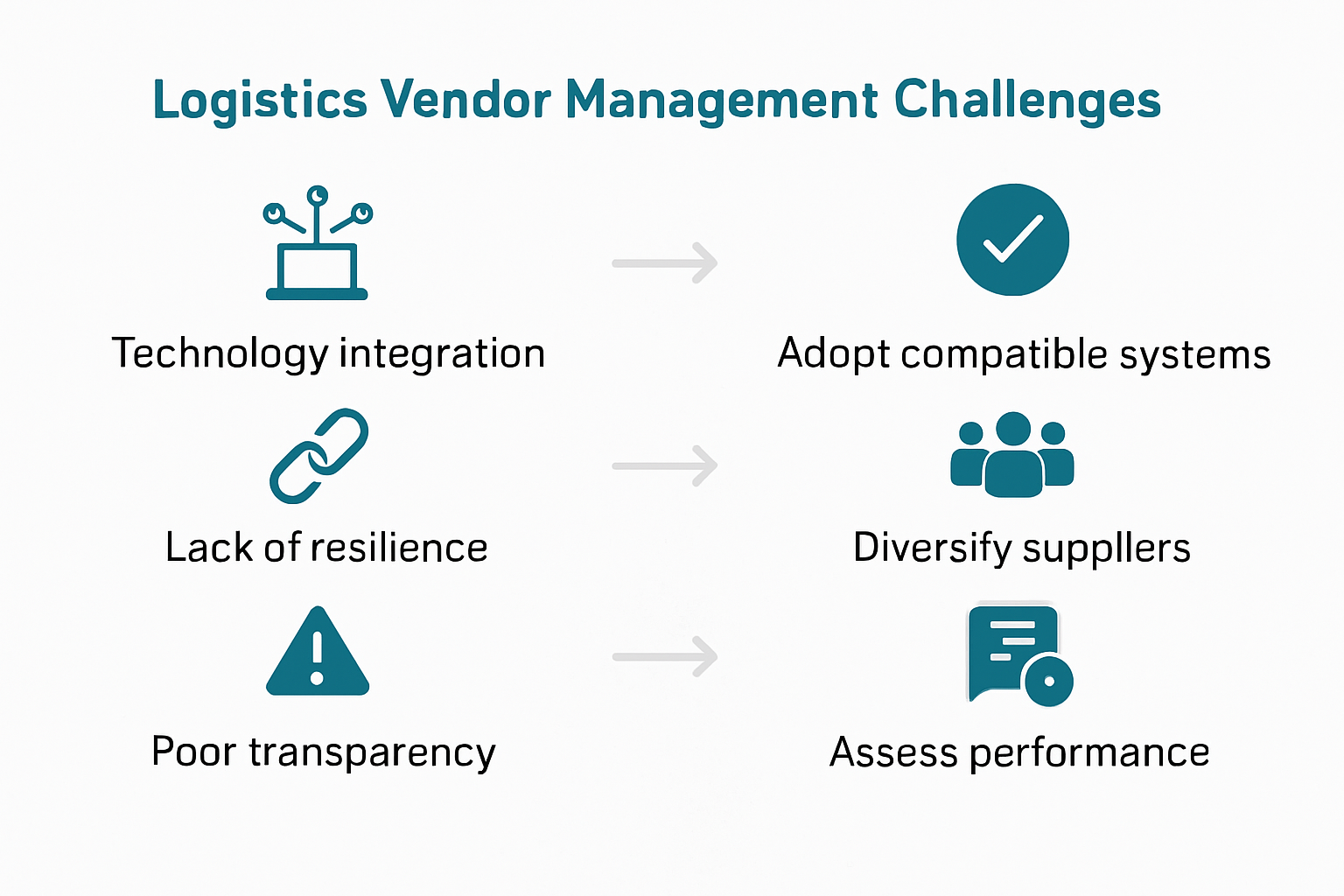
To help readers quickly understand the main challenges faced by logistics teams and the solutions proposed in the article, the following table summarizes these key points:
| Challenge | Key Solution(s) |
|---|---|
| Technology & Data Integration | IoT for real-time tracking; integrating TMS, WMS, CRM, and inventory systems |
| Supplier Resilience & Risk Management | Use Decision Support Systems for supplier selection; diversify vendors; robust contingency plans |
| Trust & Transparency in the Supply Chain | Blockchain frameworks; transparent communication; trust management strategies |
Technology and Data Integration Challenges
Modern logistics operations are confronting significant technological hurdles. According to research from arxiv.org, Internet of Things (IoT) solutions are emerging as critical tools for addressing supply chain management challenges. IoT technologies can enhance tracking, security, and traceability, providing logistics teams with unprecedented visibility into their operations.
The integration of disparate systems remains a primary technical challenge. Logistics teams must effectively combine data from multiple sources, including transportation management systems, warehouse management platforms, inventory tracking tools, and customer relationship management software. This complex integration requires robust technological infrastructure and sophisticated data processing capabilities.
Supplier Resilience and Risk Management
Selecting and managing resilient suppliers has become increasingly critical. Research from academic sources highlights the importance of developing advanced Decision Support Systems (DSS) that can process heterogeneous information for effective supplier selection. These systems help logistics teams rank potential vendors based on multiple performance metrics, including reliability, cost-effectiveness, and adaptability.
Risk management has evolved beyond traditional approaches. Learn more about comprehensive logistics risk strategies to understand the multifaceted nature of modern supply chain challenges. Organizations must now consider geopolitical uncertainties, environmental risks, technological disruptions, and potential global economic fluctuations when developing vendor management strategies.
Trust and Transparency in Supply Chain Operations
Building trust among supply chain participants has become increasingly complex. Innovative technologies like blockchain are emerging as powerful solutions for ensuring transparency and integrity. A groundbreaking study on TrustChain management proposes a three-layered framework that dynamically assigns trust and reputation scores based on interactions among supply chain participants.
Logistics teams must implement comprehensive trust management strategies that go beyond traditional contractual agreements. This involves creating transparent communication channels, establishing clear performance expectations, and developing mechanisms for continuous performance evaluation.
Technological solutions play a crucial role in addressing these challenges. Advanced analytics, artificial intelligence, and machine learning algorithms can help logistics teams predict potential disruptions, optimize vendor selection processes, and create more resilient supply chain networks.
The most successful logistics teams will be those that can seamlessly integrate technological innovation, data-driven decision-making, and strategic vendor management. By embracing these approaches, organizations can transform potential challenges into opportunities for growth, efficiency, and competitive differentiation.
Continuous learning, adaptability, and a proactive approach to technological integration will be key differentiators in the complex and dynamic world of modern logistics operations. Logistics teams must remain agile, continuously updating their skills, technologies, and strategic approaches to navigate the intricate global supply chain landscape.
Best Practices to Boost Efficiency and Performance
Improving vendor management performance in logistics requires a strategic, multifaceted approach that combines technological innovation, clear communication, and data-driven decision-making. Organizations must develop comprehensive strategies that transform vendor relationships from transactional interactions into collaborative partnerships.
Performance Measurement and Continuous Evaluation
Effective vendor management begins with establishing robust performance measurement frameworks. According to the Institute for Supply Management, organizations with effective communication channels report a 25% increase in vendor satisfaction and a 10% improvement in supply chain efficiency.
Implementing comprehensive performance tracking involves developing clear, quantifiable metrics that align with organizational objectives. These metrics should cover multiple dimensions, including on-time delivery rates, quality consistency, cost-effectiveness, technological capabilities, and responsiveness to changing business requirements. Learn more about supply chain management strategies to understand how detailed performance tracking integrates with broader operational goals.
Regular performance reviews are crucial. Companies should conduct quarterly or bi-annual assessments that provide vendors with detailed feedback, highlighting strengths and identifying areas for improvement. These reviews should be collaborative, encouraging open dialogue and joint problem-solving approaches.
Technology and Data Analytics Integration
Data analytics has transformed vendor management from a reactive to a predictive discipline. Research indicates that using advanced analytics in procurement helps organizations identify cost-saving opportunities, spot inefficiencies, and improve supplier performance management.
Advanced technological tools enable real-time performance tracking, automated compliance monitoring, and predictive analytics. Machine learning algorithms can analyze historical vendor performance data, helping businesses anticipate potential disruptions and make proactive management decisions.
Implementing integrated vendor management platforms allows for centralized data collection, comprehensive performance tracking, and enhanced communication. These platforms should provide dashboards that offer real-time insights, enable seamless document sharing, and facilitate transparent communication channels.

Strategic Relationship Development
Transforming vendor relationships from transactional interactions to strategic partnerships requires a holistic approach. Organizations must invest time in understanding vendor capabilities, challenges, and long-term objectives. This approach goes beyond traditional contract management, focusing on creating mutual value and collaborative growth opportunities.
Effective communication stands as a cornerstone of successful vendor relationships. Regular check-ins, transparent performance discussions, and joint strategic planning sessions help build trust and alignment. Vendors who feel valued and understand the strategic importance of their role are more likely to deliver exceptional service and adapt to evolving business needs.
Risk mitigation remains a critical consideration. Companies should develop comprehensive contingency plans, maintain diverse vendor portfolios, and create flexible engagement models that can quickly adapt to changing market conditions.
Ultimately, successful vendor management is an ongoing process of continuous improvement. By embracing technological innovation, data-driven insights, and collaborative relationship-building strategies, organizations can transform their logistics vendor management from a cost center into a strategic competitive advantage.
The most successful businesses will be those that view vendor management as a dynamic, collaborative journey rather than a static, transactional process. Continuous learning, technological adaptation, and a commitment to mutual growth will define the most effective vendor management strategies in the evolving logistics landscape.
Technology Trends Shaping Vendor Management in Logistics
Technology is rapidly transforming vendor management in logistics, introducing unprecedented levels of transparency, efficiency, and strategic capabilities. As digital innovation accelerates, organizations must understand and leverage emerging technological trends to maintain competitive advantage and operational excellence.
Blockchain and Decentralized Technologies
Blockchain technology is revolutionizing vendor management by providing secure, transparent, and immutable transaction records. Recent research proposes an advanced blockchain-enhanced framework for third-party vendor risk management, ensuring comprehensive traceability and accountability in vendor interactions.
Decentralized platforms enable real-time verification of vendor credentials, performance history, and compliance documentation. Smart contracts can automatically enforce agreement terms, reducing administrative overhead and minimizing potential disputes. By creating a transparent, tamper-proof record of vendor interactions, blockchain technologies build unprecedented levels of trust and reliability in logistics vendor relationships.
Artificial Intelligence and Predictive Analytics
Artificial intelligence is transforming vendor management from a reactive to a predictive discipline. Learn more about advanced logistics strategies to understand how AI-driven insights are reshaping vendor selection and performance management.
Machine learning algorithms can now analyze complex datasets, predicting vendor performance, identifying potential risks, and recommending optimal vendor strategies. These advanced systems can process vast amounts of historical and real-time data, providing logistics teams with actionable insights that were previously impossible to obtain.
Large Language Models and Intelligent Automation
Emerging technologies like large language models are introducing new dimensions of intelligent automation in vendor management. Cutting-edge research explores how these advanced AI systems can transform decision-making processes, enhance predictive analytics, and streamline operational efficiency.
Intelligent automation platforms can now handle complex vendor communication, generate comprehensive performance reports, and even negotiate contract terms based on predefined organizational parameters. Natural language processing enables more nuanced vendor interactions, reducing communication barriers and improving overall collaboration.
These technological innovations are not just incremental improvements but fundamental shifts in how organizations approach vendor management. Advanced data analytics, artificial intelligence, and blockchain technologies are creating more transparent, efficient, and intelligent vendor ecosystems.
Companies that successfully integrate these technologies will gain significant competitive advantages. They will be able to make more informed decisions, reduce operational risks, and create more adaptive and responsive vendor management strategies.
The future of vendor management in logistics is inherently digital. Organizations must invest in technological infrastructure, develop digital skills among their teams, and maintain a forward-looking approach to technological adoption. Those who view technology as a strategic enabler rather than a mere operational tool will be best positioned to thrive in the evolving logistics landscape.
Frequently Asked Questions
What is vendor management in logistics?
Vendor management in logistics is the strategic process of selecting, evaluating, and managing relationships with third-party logistics providers, aimed at enhancing supply chain performance and operational efficiency.
Why is effective vendor management important?
Effective vendor management is crucial because it ensures supply chain reliability, aligns vendors with organizational goals, and promotes continuous improvement, ultimately leading to enhanced vendor satisfaction and efficiency.
What are the key components of successful vendor management?
Key components include establishing clear performance metrics, conducting comprehensive vendor screening, ensuring effective communication, leveraging technological integration, and implementing robust risk management strategies.
How can technology improve vendor management in logistics?
Technology enhances vendor management by enabling real-time tracking, automated compliance monitoring, and data-driven decision-making, which help organizations respond more quickly to market changes and customer demands.
Transform Vendor Management With End-to-End Logistics Solutions
Are you struggling to align your vendors with the fast pace of your supply chain or facing delays due to communication gaps, poor transparency, and inconsistent performance? The article highlights how vendor management is not just about tracking KPIs or technology adoption. It is about building resilient, data-driven relationships that move your entire logistics operation forward. Improving how you work with third-party providers can make a real difference—but only if you partner with a platform that understands the unique pain points of ecommerce, wholesale, and global trade.
Step into a new era of reliable courier services, inventory control, and cross-border logistics with or-ner.com. Our all-in-one platform connects you to powerful real-time tracking, warehouse management, and automated workflows built for merchants, manufacturers, and brands. Boost vendor collaboration, gain end-to-end visibility, and manage inventory with tools designed for your business growth. Do not wait to streamline your logistics. Explore our comprehensive solutions today and see how easy it is to strengthen your supply chain from supplier to final mile.