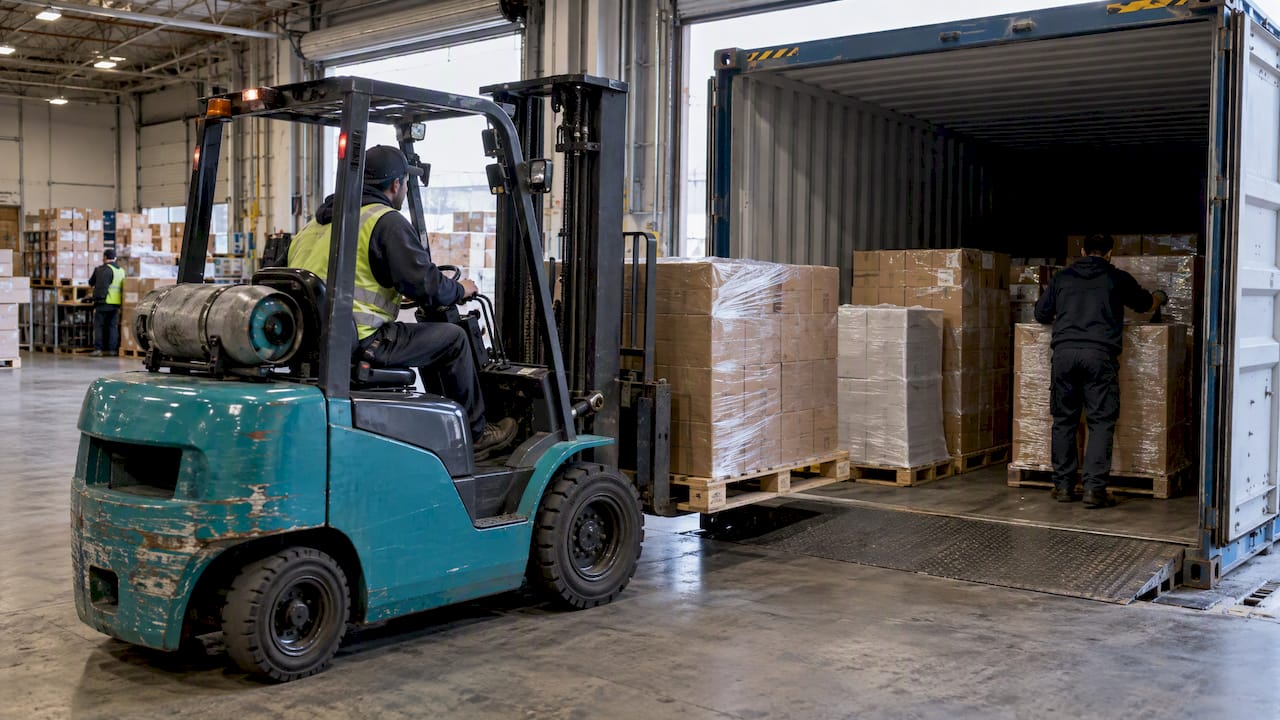
Running out of stock at the worst moment or sitting on shelves packed with unsold items can make or break ecommerce growth. As rapid order cycles and shifting American consumer demands keep logistics managers on their toes, finding the right balance between too much and too little inventory is more challenging than ever. Vendor Managed Inventory systems offer a new level of collaborative decision-making and real-time information sharing, helping your business reduce costs and create a more responsive supply chain environment.
Table of Contents
- Defining Vendor Managed Inventory Systems
- How VMI Streamlines Ecommerce Supply Chains
- Key Features and Real-World Applications
- Cost Reduction and Inventory Accuracy Impacts
- Comparing VMI to Traditional Inventory Models
Key Takeaways
| Point | Details |
|---|---|
| Collaborative Approach | Vendor Managed Inventory (VMI) promotes a proactive relationship between suppliers and customers, enhancing supply chain efficiency through real-time data sharing. |
| Cost Reduction | Implementing VMI can decrease inventory levels and operational costs significantly, with potential savings of up to 25%. |
| Demand Responsiveness | VMI enables suppliers to adapt quickly to market changes, improving demand forecasting accuracy and reducing stockout risks. |
| Technology Integration | Advanced technologies, such as ERP systems, are essential for effective VMI implementation, providing the required data visibility for better decision-making. |
Defining Vendor Managed Inventory Systems
Vendor Managed Inventory (VMI) represents a strategic approach in supply chain management where suppliers take direct responsibility for monitoring and controlling inventory levels at their customer’s locations. Unlike traditional inventory models, VMI introduces a collaborative framework that transforms how businesses track, manage, and replenish product stock.
At its core, VMI fundamentally shifts inventory management from a reactive to a proactive model. The key characteristics of this system include:
- Real-time information sharing between supplier and customer
- Centralized inventory decision-making
- Automated replenishment processes
- Reduced overall supply chain costs
- Enhanced coordination and communication
Collaborative Decision-Making becomes the hallmark of vendor managed inventory systems. Suppliers gain direct access to their customer’s inventory data, enabling them to make informed decisions about stock levels, production schedules, and distribution strategies. This approach eliminates traditional communication barriers and creates a more integrated supply chain ecosystem.
Sustainable supply chain models are increasingly adopting VMI as a strategic tool to optimize logistics and improve resource efficiency. By coordinating demand information and inventory management, companies can achieve significant operational improvements.
Information Transparency is another critical component of VMI. Suppliers receive real-time insights into product consumption, sales trends, and inventory levels, allowing them to anticipate customer needs more accurately. This data-driven approach helps prevent stockouts, reduce excess inventory, and create more responsive supply chain networks.
Pro tip: Start small by selecting one product category or strategic supplier to implement VMI, allowing your organization to learn and adapt the system gradually.
How VMI Streamlines Ecommerce Supply Chains
Vendor Managed Inventory (VMI) has become a critical strategy for ecommerce businesses seeking to optimize their supply chain operations. Integrated supply chains leverage VMI to enhance real-time inventory management, enabling suppliers to access immediate demand data and respond rapidly to market fluctuations.
The key advantages of VMI in ecommerce supply chains include:
- Faster inventory response times
- Reduced stockout risks
- Improved demand forecasting accuracy
- Enhanced supplier-retailer collaboration
- More efficient cost management
Demand Responsiveness is a critical benefit of VMI for online retailers. By providing suppliers direct access to sales and inventory data, ecommerce businesses can create more agile and adaptive supply chain networks. This approach allows for unprecedented levels of coordination and information sharing.

Collaborative partnerships between suppliers and buyers help mitigate supply chain risks like the bullwhip effect. These strategic relationships enable more precise inventory turns, reduce transaction costs, and maintain consistent fill rates across complex ecommerce ecosystems.
By establishing mutual agreements on inventory management, VMI transforms traditional supply chain dynamics. Suppliers can proactively monitor stock levels, anticipate demand shifts, and implement just-in-time replenishment strategies that minimize holding costs and maximize operational efficiency.
Pro tip: Implement VMI gradually by first selecting high-volume, predictable product categories to build trust and demonstrate value before expanding to more complex inventory segments.
Key Features and Real-World Applications
Vendor Managed Inventory represents a sophisticated approach to supply chain management with robust features designed to transform traditional inventory strategies. Key operational characteristics define VMI systems as dynamic, collaborative platforms that enable suppliers to take proactive control of inventory tracking and replenishment processes.
The core features of VMI include:
- Real-time data sharing between suppliers and buyers
- Automated inventory tracking and monitoring
- Predictive demand forecasting capabilities
- Integrated replenishment algorithms
- Transparent performance reporting
- Risk mitigation strategies
Demand Forecasting emerges as a critical component of VMI implementation. Suppliers gain unprecedented visibility into customer inventory levels, enabling them to anticipate stock requirements with remarkable precision. This approach dramatically reduces the likelihood of stockouts while simultaneously minimizing excess inventory holding costs.
Global companies successfully utilize VMI across diverse industry sectors, including chemical manufacturing, retail, and technology. These strategic implementations demonstrate VMI’s versatility in creating more responsive and efficient supply chain ecosystems.
Industry-specific applications reveal VMI’s adaptability. Retailers leverage these systems to maintain optimal stock levels, manufacturers use them to streamline production planning, and ecommerce platforms deploy VMI to ensure rapid, accurate order fulfillment. The technology bridges communication gaps, transforming traditional transactional relationships into collaborative partnerships.
Pro tip: Conduct a comprehensive data integration audit before implementing VMI to ensure seamless information flow and compatibility between your existing systems and potential vendor platforms.
Cost Reduction and Inventory Accuracy Impacts
Cost Management represents one of the most significant advantages of Vendor Managed Inventory (VMI) for ecommerce businesses. Precise inventory optimization techniques demonstrate that companies can dramatically reduce operational expenses through strategic inventory control.
The quantifiable financial benefits of VMI include:
- Inventory level reductions up to 30%
- Stockout decreases around 20%
- Overall cost savings of 25%
- Enhanced forecast accuracy
- Reduced storage and holding expenses
- Lower transaction processing costs
Inventory Accuracy emerges as a critical metric for ecommerce operations. By implementing real-time data sharing and advanced tracking mechanisms, businesses can maintain precise stock levels that directly align with actual market demand. This approach eliminates unnecessary inventory surplus while preventing potential revenue losses from stockout scenarios.
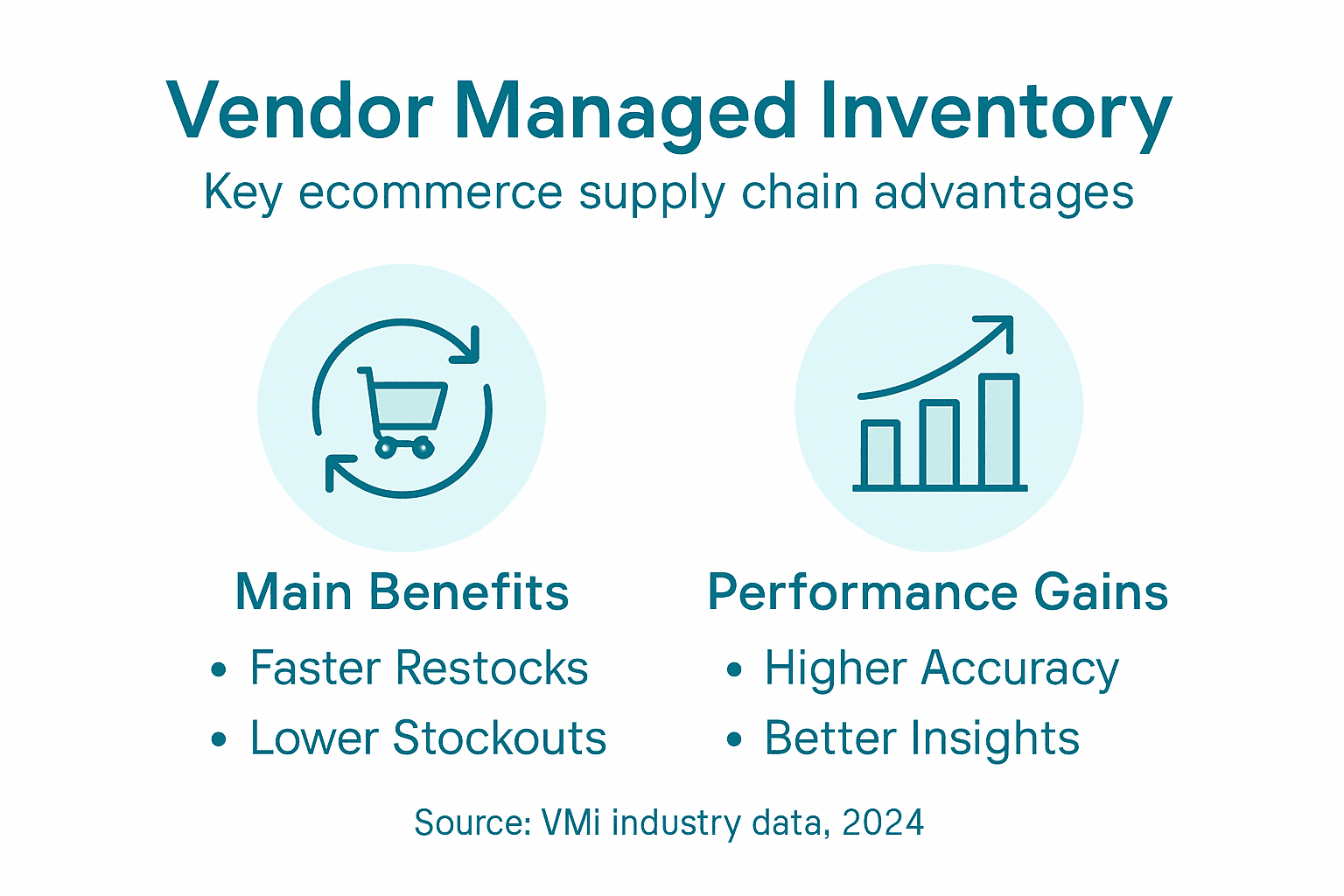
Streamlined inventory planning processes enable companies to transform traditional inventory management into a dynamic, responsive system. Vendors can now anticipate demand fluctuations with unprecedented precision, creating a more efficient supply chain ecosystem that benefits both suppliers and retailers.
Technology integration plays a pivotal role in achieving these efficiency gains. Advanced Enterprise Resource Planning (ERP) systems and data analytics platforms enable granular tracking and predictive modeling, allowing businesses to make informed inventory decisions that minimize financial risks and maximize operational performance.
Below is a summary of VMI business impacts across major supply chain functions:
| Function | VMI Business Impact | Operational Outcome |
|---|---|---|
| Replenishment | Automated, just-in-time | Fewer stockouts, less surplus |
| Demand Forecasting | Enhanced accuracy via sharing | Better alignment to demand |
| Cost Management | Optimized inventory levels | Lower holding and transaction costs |
| Supplier Coordination | Direct data access and control | Improved supply chain agility |
Pro tip: Implement a pilot VMI program with one strategic vendor to measure tangible cost savings and inventory accuracy improvements before full-scale adoption.
Comparing VMI to Traditional Inventory Models
Traditional inventory management has long been characterized by a reactive, fragmented approach that creates significant inefficiencies across supply chains. Comparative studies reveal stark differences between conventional inventory models and the more dynamic Vendor Managed Inventory (VMI) systems.
Key differences between traditional and VMI inventory models include:
- Information visibility
- Decision-making control
- Inventory responsiveness
- Cost management strategies
- Risk allocation mechanisms
- Communication frequency
Inventory Visibility represents the most critical distinguishing factor. Traditional models operate with limited real-time data, creating information silos that prevent proactive inventory management. VMI, by contrast, enables continuous, transparent data exchange between suppliers and buyers, allowing for instantaneous demand tracking and predictive planning.
In traditional inventory systems, buyers typically bear the entire inventory risk and management burden. This approach leads to inefficient stock management, higher carrying costs, and increased likelihood of stockouts or surplus inventory. VMI fundamentally transforms this dynamic by shifting responsibility and creating a collaborative ecosystem where suppliers actively monitor and optimize inventory levels.
Here’s a comparison of Vendor Managed Inventory (VMI) and Traditional Inventory approaches:
| Criteria | Vendor Managed Inventory (VMI) | Traditional Inventory Model |
|---|---|---|
| Inventory Control | Handled by supplier in real time | Buyer manages, often manually |
| Data Visibility | Continuous, shared between parties | Limited, often siloed |
| Decision-Making Speed | Rapid and data-driven | Slower, can be delayed |
| Risk Allocation | Shared between supplier and buyer | Entire risk borne by buyer |
| Technology Use | Integrates ERP and analytics platforms | Minimal automation, manual reporting |
Technology plays a pivotal role in enabling VMI’s superior performance. Electronic Data Interchange (EDI) and advanced analytics platforms provide the infrastructure for seamless information sharing, enabling suppliers to make data-driven decisions that minimize waste and maximize operational efficiency. These technological capabilities are simply unavailable in conventional inventory management approaches.
Pro tip: Conduct a comprehensive technology and communication readiness assessment before transitioning from traditional to VMI models to ensure smooth implementation.
Elevate Your Ecommerce Supply Chain with Vendor Managed Inventory and Reliable Courier Services
Managing inventory accurately and reducing costly stockouts are top challenges for ecommerce businesses in the United States. This article highlights how Vendor Managed Inventory (VMI) systems transform these pain points by enabling real-time data sharing, automated replenishment, and proactive supplier collaboration. These strategies directly align with your goals of faster inventory response times, improved demand forecasting, and cost-efficient supply chain management.
At or-ner.com, we understand the critical role seamless logistics and dependable inventory oversight play in scaling your online business. Our platform offers end-to-end reliable courier services, freight booking, and advanced inventory management tools designed to complement VMI strategies. Through integrated warehousing, cross-border logistics, and real-time tracking, we empower you to maintain optimal stock levels while delivering exceptional fulfillment experiences.
Discover the difference of combining Vendor Managed Inventory insights with our comprehensive logistics solutions. Visit or-ner.com today to streamline your ecommerce supply chain with trusted services tailored to your unique product categories. Take the first step toward reducing costs and boosting customer satisfaction by partnering with a platform committed to your growth and operational agility.
Frequently Asked Questions
What are the primary benefits of Vendor Managed Inventory (VMI) for ecommerce businesses?
Vendor Managed Inventory (VMI) allows ecommerce businesses to improve inventory management through faster response times, reduced stockout risks, and enhanced demand forecasting accuracy. This creates a more efficient supply chain and strengthens supplier-retailer collaboration.
How does VMI improve inventory accuracy in ecommerce operations?
VMI enhances inventory accuracy by facilitating real-time data sharing between suppliers and retailers. This allows for precise stock level maintenance that aligns closely with actual market demand, thereby reducing excess inventory and preventing stockouts.
In what ways does VMI reduce overall supply chain costs for ecommerce businesses?
VMI can lead to significant cost reductions by optimizing inventory levels, decreasing stockouts by approximately 20%, and lowering transaction processing costs. Businesses using VMI often experience overall cost savings of around 25% due to improved inventory management practices.
How can a business effectively implement VMI in its ecommerce supply chain?
A business can effectively implement VMI by starting small—selecting one product category or strategic supplier to pilot the system. This gradual approach allows the organization to learn and adapt the VMI system before wider deployment across other inventory segments.
Recommended
- Just in Time Delivery: Essential Guide for 2025 Success – ORNER
- What Is Freight Forwarding? Guide for Modern Supply Chains 2025 – ORNER
- Top Benefits of Freight Forwarding for Growing Businesses 2025 – ORNER
- Bonded Warehousing: Streamlining U.S. Ecommerce Compliance – ORNER
- Wat is Just In Time Levering voor E-commerce – Send with Parcel International