Omnichannel supply chains are changing how products get from businesses to your doorstep by weaving together online shops, physical stores, and mobile apps into one smooth experience. It sounds futuristic, but the numbers are already staggering. Companies with strong omnichannel strategies keep about 89% of their customers, while those stuck in the old ways only hold on to 33%. You might expect the toughest part to be building fancy tech or juggling endless inventory, but the real game is about turning everyday logistics into a flexible network that quickly reacts to what shoppers want before they even ask.
Table of Contents
- What Are Omnichannel Supply Chains?
- The Importance Of Omnichannel Supply Chains In Retail
- Key Components Of Omnichannel Supply Chains
- How Omnichannel Supply Chains Function In Real-World Scenarios
- Challenges And Innovations In Omnichannel Supply Chains
Quick Summary
| Takeaway | Explanation |
|---|---|
| Integrate digital and physical platforms | To create a unified customer purchasing experience, both online and in-store systems must work seamlessly together. |
| Leverage real-time data for inventory | Use real-time data to improve stock visibility and enhance inventory management across all sales channels. |
| Personalize customer interactions | A successful omnichannel strategy tailors experiences based on customer behavior, improving satisfaction and retention. |
| Invest in technological infrastructure | Advanced systems like ERP and CRM are essential for efficient operations and improving customer service. |
| Adapt swiftly to market changes | Businesses must utilize analytics to anticipate market shifts and adjust supply chain strategies regularly. |
What are Omnichannel Supply Chains?
Omnichannel supply chains represent a sophisticated approach to integrated logistics that transcends traditional linear distribution models. Unlike conventional supply chain strategies, these systems create a seamless, interconnected network that allows businesses to deliver products and experiences consistently across multiple channels.
Core Components of Omnichannel Supply Chains
At its foundation, an omnichannel supply chain integrates physical and digital platforms to provide customers with a unified purchasing experience. This means inventory, order processing, and fulfillment are synchronized across various touchpoints including:
- Online marketplaces
- Physical retail stores
- Mobile applications
- Direct-to-consumer shipping
- Call center sales
The primary goal is eliminating operational silos and creating a fluid, responsive logistics ecosystem that can adapt quickly to customer demands. According to Council of Supply Chain Management Professionals, this approach enables businesses to provide consistent service quality regardless of how or where a customer chooses to interact with the brand.
Strategic Advantages of Omnichannel Approaches
Businesses implementing omnichannel supply chains gain significant competitive advantages. By breaking down traditional barriers between sales channels, companies can optimize inventory management, reduce redundant processes, and create more personalized customer experiences. Real-time data integration allows for precise inventory tracking, enabling features like:
- Buy online, pick up in-store capabilities
- Accurate cross-channel stock visibility
- Flexible return and exchange processes
These integrated systems transform supply chains from rigid, linear models into dynamic, responsive networks that can quickly adjust to market fluctuations and customer preferences. The result is improved operational efficiency, enhanced customer satisfaction, and a more agile business model capable of meeting modern consumer expectations.
This table compares the retention rates and outcomes for businesses with strong versus fragmented omnichannel supply chain strategies, using statistics discussed in the article.
| Strategy Type | Customer Retention Rate | Key Outcomes |
|---|---|---|
| Strong Omnichannel | 89% | Consistent cross-channel experience, customer loyalty |
| Fragmented/Linear | 33% | Disconnected interactions, lower retention |
| Integrated, Adaptable | Up to 91% (per Deloitte) | Higher flexibility, improved shopping experience |
The Importance of Omnichannel Supply Chains in Retail
In today’s rapidly evolving retail landscape, omnichannel supply chains have transformed from a competitive advantage to an operational necessity. Modern consumers demand seamless, flexible shopping experiences that blur the lines between digital and physical retail environments.
Consumer Expectations and Retail Evolution
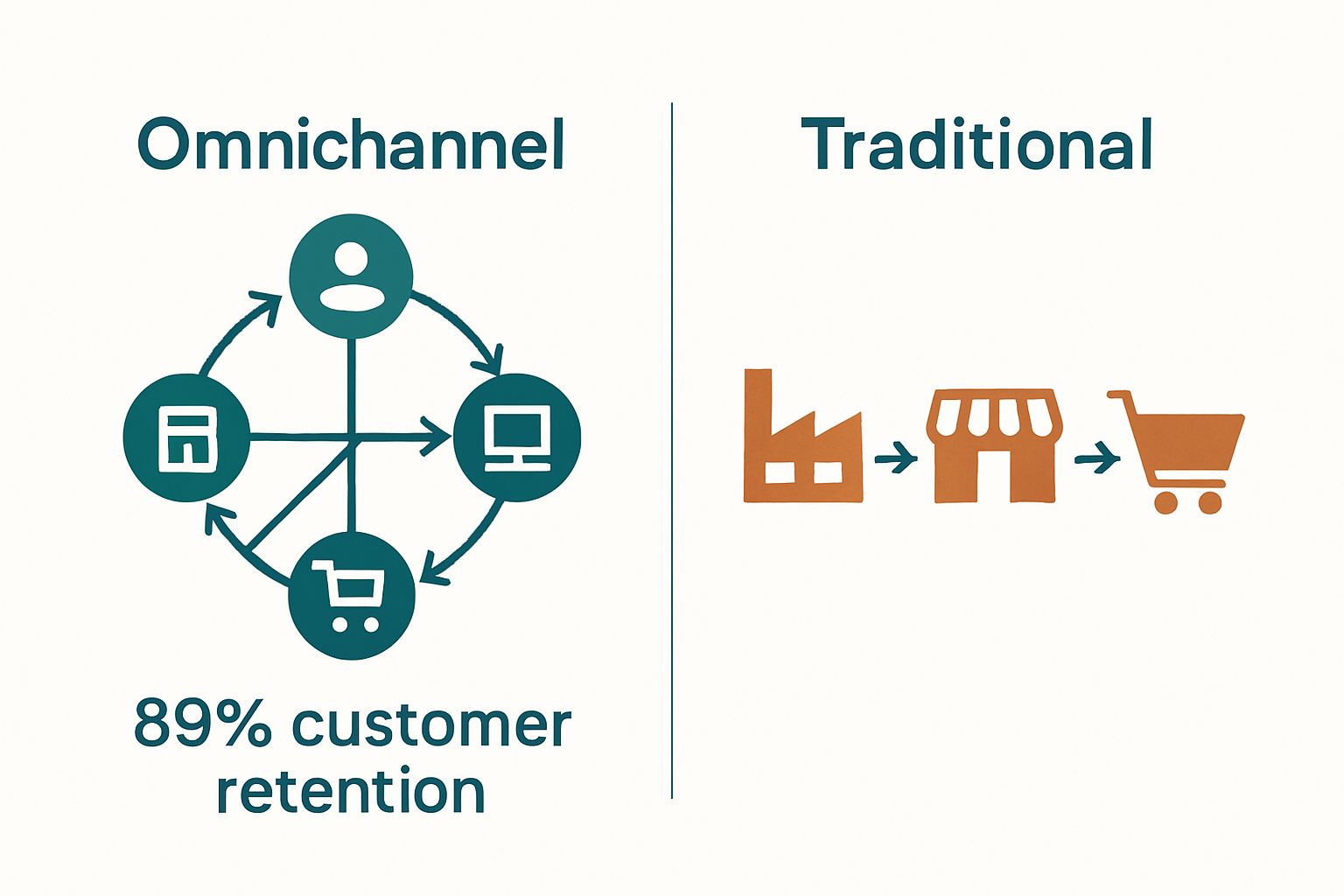
Customer behavior has radically shifted, with shoppers expecting instant gratification, multiple purchase options, and highly personalized interactions. Retailers must now provide consistent experiences across every potential touchpoint, whether a customer is browsing online, shopping in a physical store, or engaging through mobile platforms. Harvard Business Review reports that businesses with robust omnichannel strategies retain approximately 89% of their customers, compared to just 33% for companies with fragmented approaches.
Economic and Operational Benefits
Omnichannel supply chains deliver significant economic advantages beyond customer retention. By integrating inventory management and leveraging advanced analytics, retailers can:
- Reduce overall inventory holding costs
- Minimize waste through precise demand forecasting
- Optimize warehouse and distribution center operations
Moreover, these integrated systems enable businesses to learn more about just-in-time delivery strategies, which further enhances operational efficiency and responsiveness.
Strategic Competitive Differentiation
In a market where competition is increasingly digital and global, omnichannel supply chains represent more than just a technological upgrade. They are a strategic imperative that allows retailers to adapt quickly, personalize customer interactions, and create memorable shopping experiences. By breaking down traditional operational barriers, businesses can transform their supply chains from rigid, linear models into dynamic, responsive networks capable of meeting the sophisticated demands of modern consumers.
Key Components of Omnichannel Supply Chains
Omnichannel supply chains are complex ecosystems comprised of interconnected technological and strategic elements that enable seamless product movement and customer experiences across multiple channels. Understanding these key components is crucial for businesses seeking to develop robust, responsive logistics networks.
The following table summarizes the core components, descriptions, and examples of omnichannel supply chain elements explained in the article.
| Component | Description | Example Implementation |
|---|---|---|
| Technological Infrastructure | Synchronizes data and operations across touchpoints | ERP systems, CRM platforms |
| Inventory and Fulfillment | Maintains dynamic stock visibility and flexible fulfillment | Distributed inventory models |
| Collaborative Ecosystem | Connects suppliers, logistics, and tech partners for agility | Shared performance metrics |
| Real-time Data Integration | Enables fast, accurate info flow across all channels | Buy online, pick up in store |
| Analytics and Predictive Tools | Optimizes allocation, forecasting, and responsiveness | Advanced analytics platforms |
Technological Infrastructure
Digital integration platforms form the backbone of successful omnichannel supply chains. These advanced systems synchronize data across various touchpoints, enabling real-time inventory tracking, order processing, and customer communication. McKinsey & Company highlights that companies investing in sophisticated digital infrastructure can reduce operational costs by up to 20% while dramatically improving customer satisfaction.
Critical technological components include:
- Enterprise resource planning (ERP) systems
- Warehouse management software
- Customer relationship management (CRM) platforms
- Advanced analytics and predictive modeling tools
Inventory and Fulfillment Strategies
Flexible inventory management represents another crucial component of omnichannel supply chains. Modern businesses must maintain dynamic stock visibility across all sales channels, allowing customers to purchase, return, or exchange products through multiple platforms. Explore our comprehensive guide on freight forwarding to understand how advanced logistics strategies support these complex inventory networks.
Key inventory approaches include:
- Distributed inventory models
- Cross-channel stock allocation
- Centralized inventory tracking systems
- Automated replenishment mechanisms
Collaborative Ecosystem Design
Successful omnichannel supply chains transcend traditional organizational boundaries, creating collaborative networks that integrate suppliers, logistics providers, and technology partners. This holistic approach requires transparent communication, shared performance metrics, and agile response mechanisms. By breaking down operational silos, businesses can create more responsive, customer-centric supply chain architectures that adapt quickly to changing market demands.
How Omnichannel Supply Chains Function in Real-World Scenarios
Omnichannel supply chains transform theoretical logistics concepts into practical, dynamic systems that adapt to complex market demands. These sophisticated networks demonstrate remarkable flexibility and responsiveness across diverse industry contexts, creating seamless customer experiences.
Retail Ecosystem Integration
In contemporary retail environments, omnichannel supply chains enable unprecedented customer interaction models. A customer might browse products online, verify availability through a mobile app, purchase in-store, and potentially arrange home delivery or return through multiple channels. Deloitte reports that businesses implementing integrated omnichannel strategies see up to 91% higher customer retention rates compared to traditional linear supply chain models.
Key operational scenarios include:
- Buy online, pick up in-store
- Real-time inventory synchronization
- Cross-channel product returns
- Personalized shipping options
Technological Synchronization
Advanced technological platforms orchestrate these complex interactions, creating intelligent, interconnected networks. Enterprise systems communicate instantaneously across warehouses, retail locations, digital platforms, and logistics providers. Learn more about same-day delivery strategies that further enhance these sophisticated supply chain capabilities.
Critical technological integrations involve:
- Cloud-based inventory management
- Machine learning demand forecasting
- Automated routing and logistics optimization
- Real-time tracking and communication systems
Performance and Adaptability
Successful omnichannel supply chains distinguish themselves through continuous adaptation and performance optimization. By leveraging data analytics and predictive modeling, businesses can anticipate market shifts, optimize inventory allocation, and create more responsive logistics networks. This approach transforms supply chains from static, reactive systems into dynamic, proactive business assets capable of delivering exceptional customer experiences across multiple interaction points.

Challenges and Innovations in Omnichannel Supply Chains
Omnichannel supply chains represent a complex technological and strategic frontier, presenting businesses with significant challenges while simultaneously offering unprecedented opportunities for innovation and customer engagement. Navigating these intricate landscapes requires sophisticated approaches and continuous technological adaptation.
Technological Integration Complexity
Seamless system interoperability remains one of the most significant hurdles in developing robust omnichannel supply chains. Organizations must create intricate digital ecosystems that enable real-time communication across multiple platforms, requiring substantial technological investments and strategic planning. Gartner reports that 67% of companies struggle with comprehensive technological integration, highlighting the profound complexity of these transformative initiatives.
Primary technological integration challenges include:
- Legacy system compatibility
- Data standardization across platforms
- Cybersecurity and information protection
- Real-time synchronization mechanisms
Cost and Investment Considerations
Implementing comprehensive omnichannel supply chain strategies demands significant financial resources and organizational commitment. Strategic investments in advanced technological infrastructure, data analytics, and workforce training become critical differentiators. Explore our guide on same-day delivery strategies to understand how innovative logistics approaches can mitigate implementation challenges.
Key investment focus areas involve:
- Advanced analytics platforms
- Machine learning integration
- Flexible technological architectures
- Continuous employee skill development
Future Innovation Trajectories
Forward-thinking organizations are addressing omnichannel supply chain challenges through emerging technologies like artificial intelligence, blockchain, and predictive analytics. These innovations promise to transform complex logistical networks into intelligent, self-optimizing systems capable of anticipating market demands, reducing operational friction, and delivering exceptional customer experiences across multiple interaction points.
Elevate Your Omnichannel Strategy with Reliable Courier Services
Are you struggling to keep your omnichannel supply chain synchronized across every sales channel? The article highlights how fragmentation in logistics, lack of real-time data, and inadequate inventory management can create invisible barriers in your retail operation. For ecommerce sellers, wholesalers, and brands, these challenges can result in missed sales, delays, and unhappy customers. At or-ner.com, we understand the pain of trying to offer buy online pick up in store or seamless cross-border shipping without the right tools and support. You deserve a robust partner who makes these connections work every day.
Ready to transform your logistics into a fast and fully integrated engine for growth? Tap into Reliable courier services equipped with real-time tracking, automated workflows, and a global network that matches the agility your customers expect. Explore our platform’s end-to-end solutions for just-in-time delivery strategies and same-day delivery innovation now. Take the next step and build a future-proof supply chain at or-ner.com.
Frequently Asked Questions
What are the key components of an omnichannel supply chain?
The key components of an omnichannel supply chain include technological infrastructure, inventory and fulfillment strategies, and collaborative ecosystem design. To develop a robust network, ensure that your technology can integrate systems like ERP and CRM, and consider implementing dynamic inventory management techniques.
How can I enhance customer experience with an omnichannel supply chain?
You can enhance customer experience by providing features like buy online, pick up in-store, and real-time inventory synchronization. Focus on creating a seamless purchasing process across channels, which can significantly boost customer satisfaction and retention.
What are the economic benefits of adopting an omnichannel supply chain?
Adopting an omnichannel supply chain can lead to reduced inventory holding costs, minimized waste through better demand forecasting, and improved operational efficiency. To realize these benefits, assess your current inventory practices and consider integrating advanced analytics within 60 days.
What challenges should I expect when implementing an omnichannel supply chain?
Common challenges include technological integration complexities, legacy system compatibility, and the need for real-time data synchronization. Based on previous implementations, consider allocating time for research and investment in modern systems to overcome these hurdles effectively.
How does real-time data integration impact omnichannel supply chains?
Real-time data integration enhances visibility across all sales channels, allowing businesses to make informed decisions and respond quickly to market changes. Start by synchronizing your inventory and order processing systems to improve operational agility within the first few months of implementation.