

Every business wants a faster supply chain and smoother deliveries. The problem? Most companies do not realize that over 50 percent of logistics costs are hidden from plain sight. Tracking random numbers does not solve this. The real advantage comes from knowing which logistics KPIs actually move the needle. That is where things get interesting.
Table of Contents
- What Are Logistics Kpis And Why Are They Important?
- Key Types Of Logistics Kpis To Monitor
- How Logistics Kpis Impact Supply Chain Efficiency
- Interpreting Logistics Kpi Examples For Better Performance
- Real-World Applications Of Logistics Kpis In Business
Quick Summary
| Takeaway | Explanation |
|---|---|
| Logistics KPIs enhance decision-making | They provide measurable insights that inform strategic choices, optimizing logistics operations. |
| Identify critical bottlenecks quickly | Effective KPIs help businesses pinpoint inefficiencies in their supply chain for immediate improvement. |
| Monitor customer satisfaction metrics | KPIs related to customer service ensure quality delivery and enhance overall customer experience. |
| Utilize operational KPIs for efficiency | Tracking metrics like delivery lead time and order accuracy can significantly boost logistics efficiency. |
| Leverage financial KPIs to cut costs | Understanding total logistics costs helps organizations minimize unnecessary expenditures and optimize resources. |
What are Logistics KPIs and Why Are They Important?
Logistics Key Performance Indicators (KPIs) are quantifiable measurements that help businesses track, analyze, and optimize their supply chain and transportation operations. These metrics provide critical insights into operational efficiency, performance quality, and strategic decision-making processes.
Defining Logistics KPIs
At their core, logistics KPIs are specific, measurable indicators that reveal how effectively an organization manages its logistics and supply chain functions. According to research from Kent University, KPIs create an analytical basis for decision-making and help focus attention on what matters most in complex operational environments.
Logistics KPIs typically measure various critical aspects of supply chain performance, including:
- Transportation speed and reliability
- Inventory management efficiency
- Cost control and optimization
- Customer satisfaction levels
- Operational productivity
Strategic Importance of Logistics KPIs
Understanding and implementing robust logistics KPIs is crucial for modern businesses seeking competitive advantage. By tracking these metrics, organizations can identify bottlenecks, streamline processes, and make data-driven decisions. Learn more about operational performance tracking to gain deeper insights into how KPIs transform logistics management.
Businesses that effectively leverage logistics KPIs can achieve significant benefits, such as:
- Reducing operational costs
- Improving delivery speed and accuracy
- Enhancing customer experience
- Identifying potential process improvements
- Enabling more accurate forecasting and planning
In an increasingly complex global marketplace, logistics KPIs serve as essential navigational tools, helping companies maintain agility, efficiency, and strategic responsiveness in their supply chain operations.
Key Types of Logistics KPIs to Monitor
Navigating the complex world of logistics requires a strategic approach to measuring performance. By understanding and tracking the right Key Performance Indicators (KPIs), businesses can transform raw data into actionable insights that drive operational excellence.
Operational Performance KPIs
Operational KPIs focus on the core mechanics of logistics and supply chain management. According to research from the Logistics Operational Guide, these metrics help organizations assess their efficiency and effectiveness. Critical operational KPIs include:
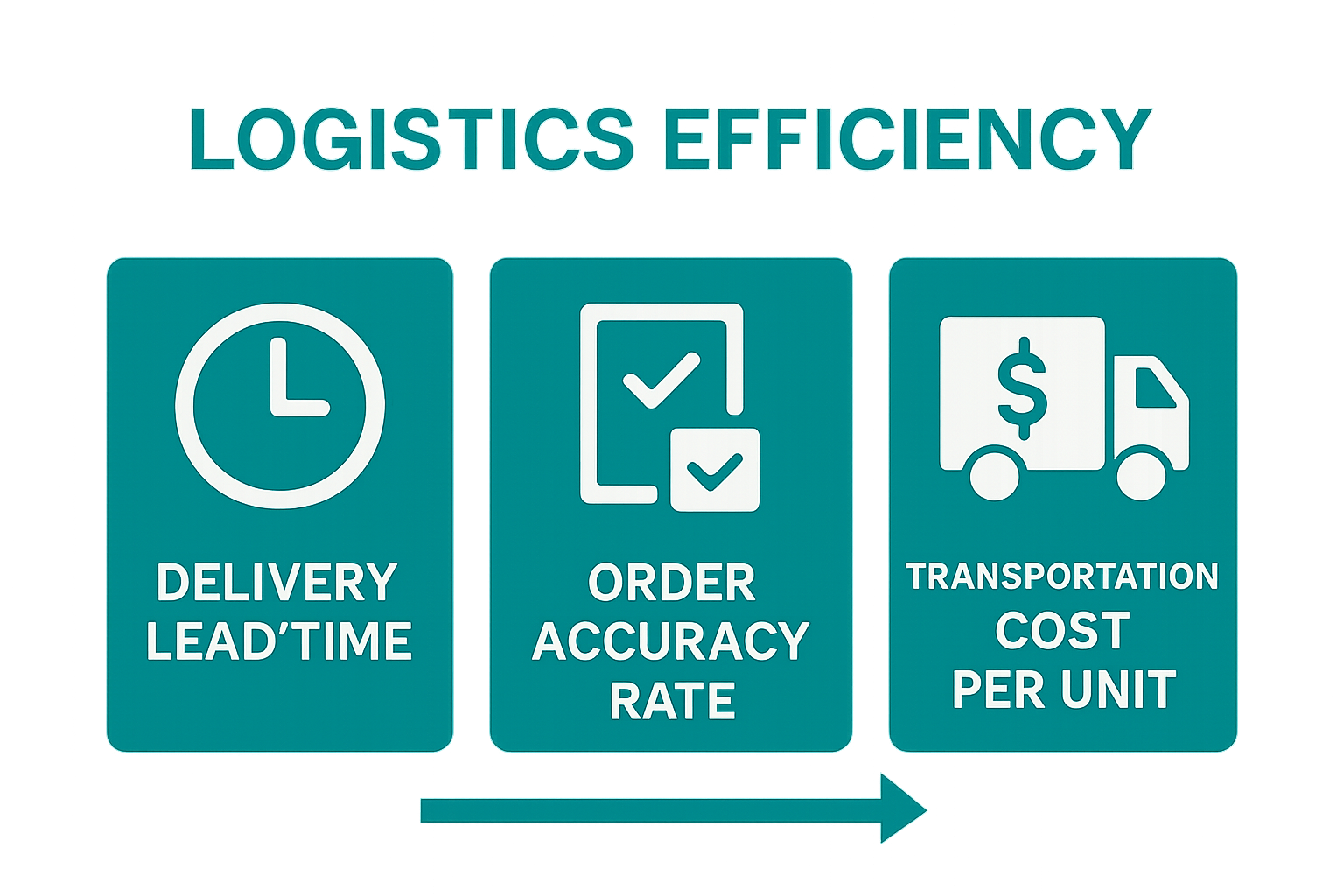
- Delivery Lead Time: Measures the duration between order placement and delivery completion
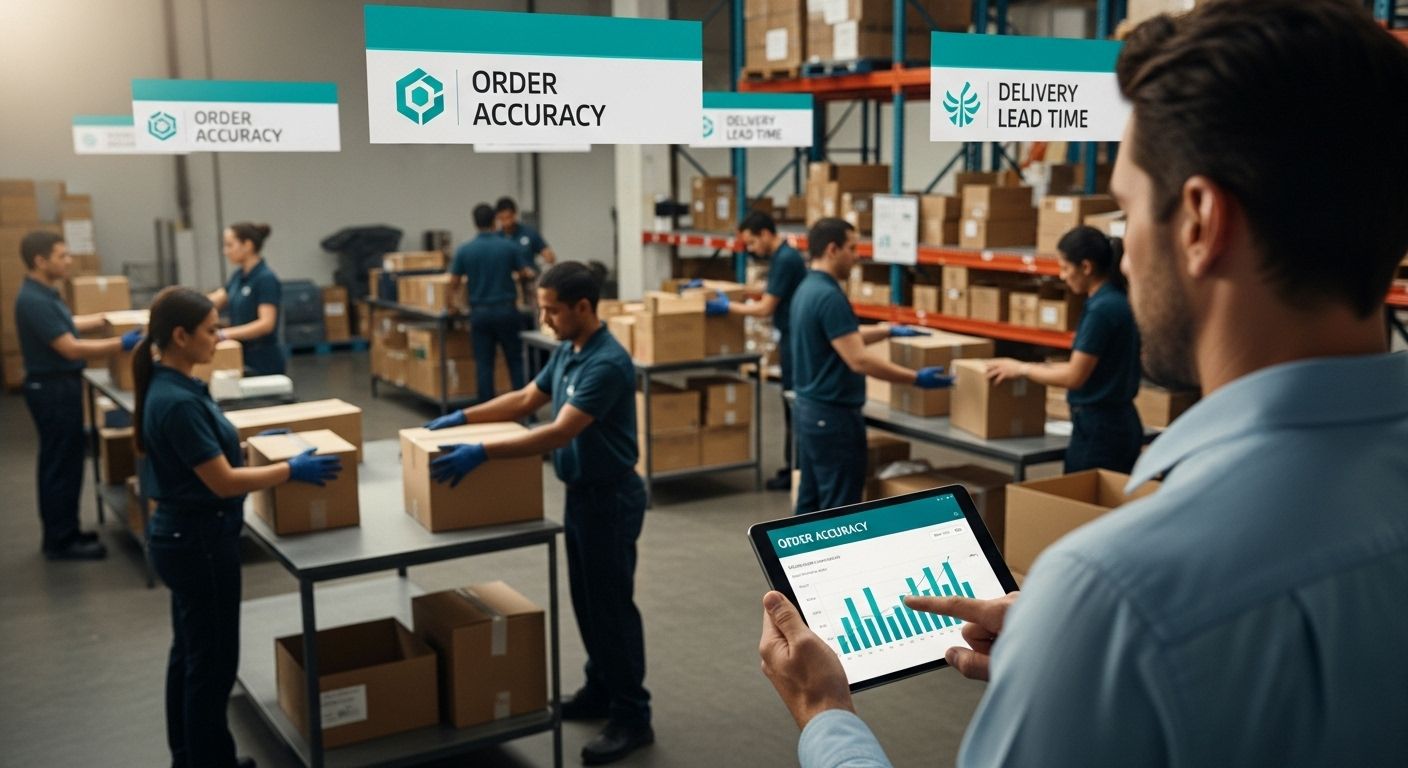
- Order Accuracy Rate: Tracks the percentage of orders fulfilled without errors
- Warehouse Capacity Utilization: Evaluates how effectively storage space is being used
- Transportation Cost per Unit: Calculates the expense of moving goods
Financial and Cost Management KPIs
Financial KPIs provide a clear picture of logistics economic performance. Explore comprehensive supply chain tracking strategies to understand how these metrics impact overall business performance. Key financial logistics KPIs encompass:
- Total Logistics Cost: Comprehensive measurement of all expenses related to logistics operations
- Inventory Carrying Cost: Expense of storing and maintaining inventory
- Cost of Goods Sold: Direct costs associated with product production and transportation
- Return on Logistics Investment: Measures the financial efficiency of logistics investments
Customer Service and Quality KPIs
Ultimately, logistics performance is measured by customer satisfaction and service quality. These KPIs help businesses understand their performance from the customer perspective:
- On-Time Delivery Percentage: Proportion of orders delivered within promised timeframe
- Perfect Order Rate: Percentage of orders completed without complications
- Customer Complaint Resolution Time: Speed and effectiveness of addressing customer issues
- Shipping Damage Rate: Frequency of goods damaged during transportation
By systematically monitoring these diverse KPIs, businesses can create a comprehensive view of their logistics performance, identify improvement opportunities, and maintain a competitive edge in a dynamic marketplace.
To help clarify the differences, here is a table categorizing key types of logistics KPIs by their focus area and primary function in logistics operations.
| KPI Category | Example Metrics | Primary Focus |
|---|---|---|
| Operational Performance KPIs | Delivery Lead Time, Order Accuracy Rate, Warehouse Capacity Utilization, Transportation Cost per Unit | Efficiency and effectiveness of logistics processes |
| Financial and Cost Management KPIs | Total Logistics Cost, Inventory Carrying Cost, Cost of Goods Sold, Return on Logistics Investment | Economic performance and cost control |
| Customer Service and Quality KPIs | On-Time Delivery Percentage, Perfect Order Rate, Customer Complaint Resolution Time, Shipping Damage Rate | Customer satisfaction and service quality |
How Logistics KPIs Impact Supply Chain Efficiency
Logistics Key Performance Indicators (KPIs) are more than just metrics. They are powerful diagnostic tools that can transform supply chain performance, enabling businesses to optimize operations, reduce costs, and enhance overall organizational effectiveness.
Performance Diagnostics and Process Optimization
KPIs serve as critical diagnostic instruments that reveal hidden inefficiencies within supply chain processes. By providing granular insights into operational performance, these indicators help organizations identify bottlenecks, streamline workflows, and make data-driven improvements. Discover advanced supply chain management strategies to unlock your operational potential.
The diagnostic power of logistics KPIs manifests through:
- Real-time Performance Tracking: Immediate visibility into operational health
- Comparative Benchmarking: Comparing performance against industry standards
- Predictive Analysis: Identifying potential future operational challenges
- Continuous Improvement Mechanisms: Establishing systematic enhancement protocols
Cost Reduction and Resource Allocation
According to research from the USAID Global Health Supply Chain Program, strategic KPI implementation can dramatically reduce operational expenses. By quantifying performance across multiple dimensions, businesses can:
- Minimize unnecessary expenditures
- Optimize resource allocation
- Identify and eliminate inefficient processes
- Reduce waste and redundancies
Strategic Decision Making and Competitive Advantage
Logistics KPIs transform raw operational data into strategic intelligence. They provide leadership with comprehensive insights that enable:
- Proactive problem solving
- More accurate forecasting
- Enhanced operational agility
- Data driven strategic planning
By integrating these performance indicators into their operational framework, businesses can create a responsive, efficient supply chain that adapts quickly to market changes and maintains a competitive edge.
Interpreting Logistics KPI Examples for Better Performance
Interpreting logistics KPIs requires more than simply collecting numbers. It demands a strategic approach to transforming raw data into meaningful insights that drive operational excellence and business growth.
Understanding KPI Context and Benchmarking
Successful KPI interpretation begins with understanding the contextual significance of each metric. Explore comprehensive delivery performance metrics to gain deeper insights into meaningful performance evaluation. According to the Federal Highway Administration’s Freight Performance Measure Primer, effective KPI interpretation involves:
- Comparative Analysis: Measuring performance against industry standards
- Trend Identification: Recognizing patterns and long-term performance trajectories
- Contextual Evaluation: Understanding metrics within broader operational frameworks
- Normalized Measurement: Adjusting metrics for relevant business variables
Practical Interpretation Strategies
Interpreting logistics KPIs requires a nuanced approach that goes beyond surface-level number crunching. Effective interpretation involves:
- Connecting individual metrics to overall business objectives
- Identifying root causes behind performance fluctuations
- Developing actionable insights from complex data sets
- Creating cross-functional understanding of performance indicators
Advanced KPI Analysis Techniques
Advanced KPI interpretation transforms raw data into strategic intelligence. Businesses can leverage sophisticated analysis techniques to:
- Implement predictive modeling
- Develop comprehensive performance dashboards
- Correlate multiple performance indicators
- Create adaptive strategic frameworks
By mastering the art of KPI interpretation, organizations can convert complex logistics data into powerful decision-making tools that drive continuous improvement and competitive advantage.
The following table outlines essential strategies for interpreting logistics KPIs, including the core approach and key actions businesses should take for each strategy.
| Interpretation Strategy | Core Approach | Key Actions |
|---|---|---|
| Comparative Analysis | Benchmark against industry standards | Measure performance relative to peers |
| Trend Identification | Analyze patterns and trajectories over time | Track long-term changes in key metrics |
| Contextual Evaluation | Consider metrics within operational frameworks | Apply results to specific business contexts |
| Normalized Measurement | Adjust for relevant variables | Standardize data to improve comparability |
| Root Cause Analysis | Link metrics to underlying issues | Investigate fluctuations for actionable insights |
| Actionable Insight Development | Synthesize data for improvement plans | Transform metrics into targeted business actions |
Real-World Applications of Logistics KPIs in Business
Logistics Key Performance Indicators are not abstract concepts but powerful tools that drive tangible business improvements across various industries. By translating complex data into actionable insights, KPIs transform operational challenges into strategic opportunities.
Manufacturing and Production Logistics
In manufacturing environments, logistics KPIs serve as critical diagnostic tools for operational efficiency. Learn more about sustainable logistics practices to enhance your operational strategy. According to research from the Pacific Northwest National Laboratory, manufacturers leverage KPIs to:
- Optimize Equipment Performance: Track maintenance cycles and downtime
- Reduce Production Delays: Monitor supply chain interruptions
- Improve Resource Allocation: Analyze material flow and inventory management
- Enhance Quality Control: Measure defect rates and production consistency
Transportation and Delivery Sector
Transportation companies utilize logistics KPIs to streamline complex delivery networks and improve customer satisfaction. Critical applications include:
- Measuring fleet efficiency and fuel consumption
- Tracking delivery time accuracy
- Monitoring route optimization
- Analyzing cost per mile and load factors
- Evaluating driver performance and safety metrics
E-commerce and Retail Logistics
E-commerce businesses rely on precise logistics KPIs to maintain competitive advantage in a rapidly evolving market. Key application areas encompass:
- Order fulfillment speed tracking
- Inventory turnover rate analysis
- Customer return rate monitoring
- Shipping cost optimization
- Warehouse space utilization assessment
By integrating these KPIs, businesses transform raw operational data into strategic intelligence, enabling more informed decision-making and continuous performance improvement.
Turn Logistics KPIs Into Your Competitive Edge With Reliable Courier Services
Are you struggling to make informed decisions because your logistics data is scattered or unclear? Many businesses find it difficult to turn complex performance metrics like delivery lead time, order accuracy, and cost per shipment into clear actions that drive real growth. When you need to identify bottlenecks, boost efficiency, and improve customer satisfaction, dependable tools that turn your KPIs into real results make all the difference.
Discover how or-ner.com provides powerful solutions designed specifically for eCommerce sellers and brands who want to unlock the full potential of their logistics KPIs. Our platform offers real-time shipment tracking, automated exception management, and end-to-end visibility so you can act on your data with confidence. From reliable courier services to full-scale warehouse and inventory management, every feature is built to address your most pressing logistics challenges right now. Visit or-ner.com today to simplify your decision-making, increase performance, and get your fulfillment on the fast track.
Frequently Asked Questions
What are logistics KPIs?
Logistics Key Performance Indicators (KPIs) are quantifiable metrics that help businesses track and optimize their supply chain and transportation operations. They provide insights into operational efficiency and performance quality.
Why are logistics KPIs important for decision-making?
Logistics KPIs are essential for decision-making because they highlight bottlenecks, enable data-driven improvements, and help organizations maintain a competitive edge by ensuring efficient operations and better customer service.
What types of logistics KPIs should businesses monitor?
Businesses should monitor a variety of KPIs, including delivery lead time, order accuracy rate, transportation cost per unit, total logistics cost, and customer service metrics like on-time delivery percentage.
How do logistics KPIs influence process optimization?
Logistics KPIs influence process optimization by revealing inefficiencies, enabling real-time performance tracking, and allowing for comparative benchmarking. This insight allows businesses to streamline workflows and implement data-driven improvements.