Logistics data analytics is changing the way companies run their supply chains and keep goods moving around the world. You might expect it’s all about high-tech gear and dashboards. But the real surprise is that businesses using advanced analytics can cut transportation and operations costs by up to 30 percent and respond to supply chain disruptions faster than ever. This shift is making raw data the most valuable driver of strategy in today’s global supply web.
Table of Contents
- What Is Logistics Data Analytics?
- Why Logistics Data Analytics Matters For Businesses
- How Logistics Data Analytics Works In Supply Chains
- Key Concepts In Logistics Data Analytics Explained
- Real-World Applications Of Logistics Data Analytics
Quick Summary
| Takeaway | Explanation |
|---|---|
| Leverage data for decision making | Utilizing logistics data analytics enables organizations to make informed, strategic decisions that enhance overall performance. |
| Forecast potential disruptions | Predictive modeling helps identify supply chain risks, allowing businesses to implement proactive measures to minimize impact. |
| Optimize operational efficiency | Analyzing shipping and inventory data leads to reduced costs and improved resource allocation throughout the supply chain. |
| Enhance customer satisfaction | By improving delivery reliability and speed through data insights, companies can significantly boost customer experience and loyalty. |
| Integrated data strategies are essential | Successful logistics analytics rely on comprehensive data collection across various sources for a holistic view of operations. |
What is Logistics Data Analytics?
Logistics data analytics transforms raw transportation and supply chain information into strategic insights that help businesses optimize their operational performance. Advanced analytics research reveals this discipline enables companies to make data driven decisions across complex logistics networks.
Core Components of Logistics Data Analytics
At its foundation, logistics data analytics involves collecting, processing, and interpreting massive volumes of data generated through shipping, warehousing, inventory management, and transportation activities. The primary goal is converting complex operational data into actionable intelligence that drives efficiency and reduces operational costs.
Below is a breakdown of the core components of logistics data analytics, summarizing their functions to support understanding of how each element contributes to optimized operations.
| Component | Description |
|---|---|
| Performance Tracking | Measures key logistics metrics such as delivery times, transportation costs, and route efficiency |
| Predictive Modeling | Uses historical data to anticipate potential supply chain disruptions |
| Real Time Monitoring | Instantly tracks shipments, inventory levels, and identifies operational bottlenecks |
| Data Integration | Combines data from diverse sources for a unified view of logistics operations |
| Analytics Platforms | Applies advanced algorithms and machine learning to extract actionable insights from collected data |
Key components include:
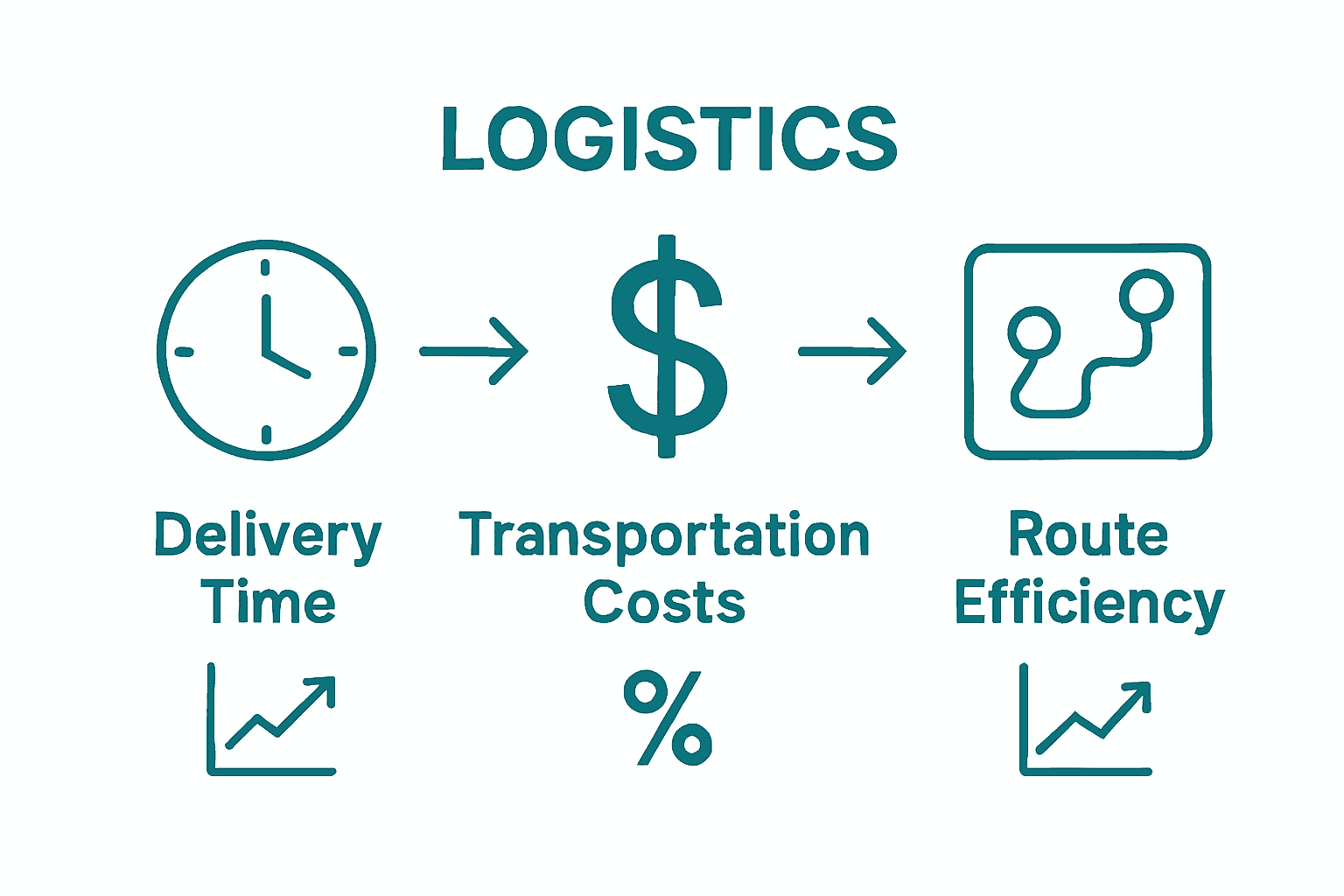
- Performance Tracking: Measuring critical logistics metrics like delivery times, transportation costs, and route efficiency
-
Predictive Modeling: Using historical data to forecast potential supply chain disruptions
-
Real Time Monitoring: Tracking shipments, inventory levels, and operational bottlenecks instantly
Strategic Business Applications
Businesses leverage logistics data analytics to solve critical challenges. By understanding precise patterns in their supply chain, organizations can:
- Reduce transportation expenses
- Improve delivery reliability
- Optimize inventory management
- Enhance customer satisfaction
These insights enable proactive decision making. Learn more about freight optimization strategies that complement advanced data analytics approaches.
Ultimately, logistics data analytics transforms raw information into a powerful strategic asset, helping businesses navigate increasingly complex global supply chains with unprecedented precision and efficiency.
Why Logistics Data Analytics Matters for Businesses
In today’s hyper competitive business environment, logistics data analytics has transformed from a technological advantage to an operational necessity. Research from supply chain experts demonstrates that organizations leveraging advanced analytics achieve significant competitive advantages in operational efficiency and strategic planning.
Cost Reduction and Operational Efficiency
Logistics data analytics enables businesses to identify and eliminate inefficiencies across their supply chain. By analyzing transportation routes, inventory levels, and operational workflows, companies can:
- Minimize unnecessary shipping expenses
- Reduce warehousing costs
- Optimize resource allocation
- Streamline transportation routes
These targeted interventions can result in substantial financial savings and improved operational performance.
 Explore advanced freight forwarding strategies that complement data analytics approaches.
Strategic Decision Making and Risk Management
Beyond cost savings, logistics data analytics provides critical insights for strategic decision making. By transforming complex data into actionable intelligence, businesses can:
- Predict potential supply chain disruptions
- Understand market demand fluctuations
- Develop proactive risk mitigation strategies
- Make data driven investment decisions
This predictive capability allows businesses to stay agile, responding quickly to changing market conditions and maintaining a competitive edge.
This table highlights the main business benefits of logistics data analytics, allowing readers to clearly see the connection between analytics-driven actions and their impact across operations.
| Business Benefit | Resulting Impact |
|---|---|
| Cost Reduction | Minimizes shipping and warehousing expenses, leading to substantial financial savings |
| Operational Efficiency | Streamlines processes and improves resource allocation throughout the supply chain |
| Strategic Decision Making | Enables data-driven strategies, market adaptation, and investment planning |
| Risk Management | Predicts potential supply chain disruptions and supports proactive risk mitigation |
| Customer Experience | Improves delivery reliability, speed, and satisfaction through optimized logistics operations |
Ultimately, logistics data analytics is not just a technological tool but a strategic asset that empowers businesses to make informed decisions, reduce operational risks, and drive sustainable growth in an increasingly complex global marketplace.
How Logistics Data Analytics Works in Supply Chains
Logistics data analytics functions through a complex system of data collection, processing, and interpretation across multiple supply chain touchpoints. Advanced research in supply chain technologies demonstrates the intricate mechanisms that transform raw operational data into strategic insights.
Data Collection and Integration
The foundation of logistics data analytics involves gathering information from diverse sources within the supply chain ecosystem. These data streams include:
- GPS tracking systems
- Warehouse management platforms
- Transportation management software
- Inventory tracking sensors
- Customer order databases
By integrating these varied data sources, businesses create a comprehensive view of their entire logistics network. Explore advanced just in time delivery strategies that leverage such integrated data approaches.
Advanced Analytics and Predictive Modeling
Once data is collected, sophisticated analytics platforms apply complex algorithms and machine learning techniques to extract meaningful insights. These advanced processes enable businesses to:
- Identify hidden patterns in logistics performance
- Predict potential supply chain disruptions
- Simulate different operational scenarios
- Optimize routing and resource allocation
- Understand complex interdependencies within the supply chain
The goal is transforming raw data into actionable intelligence that supports strategic decision making and operational efficiency.
Ultimately, logistics data analytics serves as a powerful technological framework that translates complex operational information into clear, strategic guidance, helping businesses navigate increasingly complex global supply networks with unprecedented precision and insight.
Key Concepts in Logistics Data Analytics Explained
Logistics data analytics encompasses a range of sophisticated methodologies and technological approaches designed to transform complex operational data into strategic business intelligence. Advanced analytics research highlights the intricate framework that enables businesses to unlock profound insights from their supply chain operations.
Fundamental Data Collection Strategies
Successful logistics data analytics relies on comprehensive and strategic data gathering techniques. Modern businesses utilize multiple data collection methods to create a holistic view of their logistics ecosystem:
- Real time tracking technologies
- Automated sensor networks
- Digital transaction logging
- Integrated enterprise systems
- Cross platform data synchronization
These strategies ensure businesses capture granular details about every logistics touchpoint. Learn more about advanced freight management techniques that complement sophisticated data collection approaches.
Predictive and Prescriptive Analytics Models
Beyond simple data collection, logistics data analytics leverages advanced analytical models to generate actionable insights. These models help businesses:
- Forecast potential supply chain disruptions
- Optimize routing and transportation strategies
- Predict inventory requirements
- Understand complex performance patterns
- Simulate potential operational scenarios
By transforming historical and current data into predictive intelligence, organizations can make proactive strategic decisions that minimize risks and maximize operational efficiency.
Ultimately, logistics data analytics represents a powerful technological framework that translates complex operational information into clear, strategic guidance, enabling businesses to navigate increasingly dynamic global supply networks with unprecedented precision and strategic insight.
Real-World Applications of Logistics Data Analytics
Logistics data analytics has emerged as a transformative tool across multiple industries, enabling organizations to solve complex operational challenges with unprecedented precision. Research from logistics optimization experts demonstrates how data-driven strategies deliver tangible performance improvements across diverse business environments.
E-commerce and Retail Logistics
In the rapidly evolving e-commerce landscape, logistics data analytics provides critical capabilities for businesses seeking competitive advantages. Online retailers leverage advanced analytics to:
- Optimize inventory management
- Predict customer demand patterns
- Reduce shipping and warehousing costs
- Enhance delivery speed and reliability
- Personalize shipping strategies
These data-driven interventions enable businesses to create more responsive and efficient supply chains. Explore advanced freight forwarding strategies that support modern e-commerce logistics requirements.
Manufacturing and Supply Chain Optimization
Manufacturing companies utilize logistics data analytics to streamline complex production and distribution networks. By analyzing intricate operational data, businesses can:
- Identify potential production bottlenecks
- Optimize transportation routes
- Predict maintenance requirements
- Reduce inventory carrying costs
- Improve overall operational efficiency
These strategic insights enable manufacturers to create more agile and responsive supply chain ecosystems, minimizing disruptions and maximizing resource utilization.
Ultimately, logistics data analytics transforms raw operational information into a powerful strategic tool, empowering businesses across industries to make more informed decisions, reduce risks, and drive sustainable competitive advantages in an increasingly complex global marketplace.
Unlock the Power of Data-Driven Logistics for Your Business
Is your business struggling to turn complex supply chain data into real-world results? Many companies face costly challenges when trying to manage inventory, streamline transportation, or maintain transparency across their logistics network. Harnessing effective logistics data analytics is no longer just an option—it is essential. By combining actionable insights with reliable solutions, you can cut costs, avoid disruptions, and gain a true edge in today’s fast-paced market. For more insights, explore our QA Archives to see how others are overcoming similar logistics challenges.
Ready to experience seamless data analytics and reliable courier services in one platform? ORNER empowers ecommerce businesses, wholesalers, and manufacturers with end-to-end tools that simplify freight booking, real-time tracking, and flow automation. Get started now with our reliable courier services to transform your logistics into a true competitive advantage.
Frequently Asked Questions
What is logistics data analytics?
Logistics data analytics is the process of transforming raw transportation and supply chain information into strategic insights that help businesses optimize operational performance and make data-driven decisions across complex logistics networks.
How does logistics data analytics improve operational efficiency?
By analyzing transportation routes, inventory levels, and workflows, logistics data analytics allows businesses to identify and eliminate inefficiencies, reducing costs in shipping, warehousing, and resource allocation, leading to improved operational performance.
What are the key components of logistics data analytics?
The key components include performance tracking, predictive modeling, and real-time monitoring of logistics metrics. These elements help businesses collect, process, and interpret data effectively to make informed decisions.
What industries benefit from logistics data analytics?
Various industries, including e-commerce, retail, and manufacturing, benefit from logistics data analytics as it helps streamline operations, optimize supply chains, enhance customer satisfaction, and reduce operational risks.